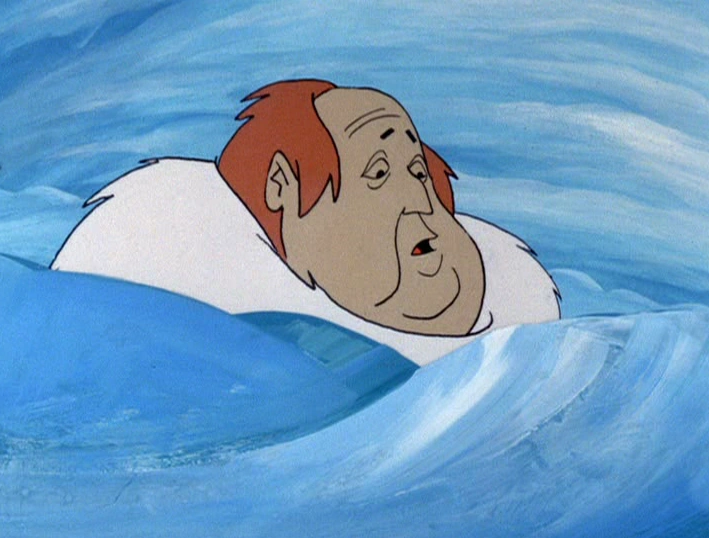
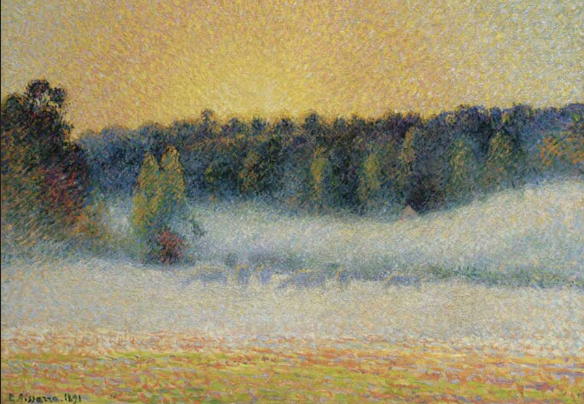
Featured Image : The Snow Ghost – Scooby Doo, 1969
How a Dublin-Controlled Civil Service in cahoots with politicians Has Systematically Blocked Western Rail for Fifteen Years — And Why They Want Your Railway Tracks for Cycle Paths
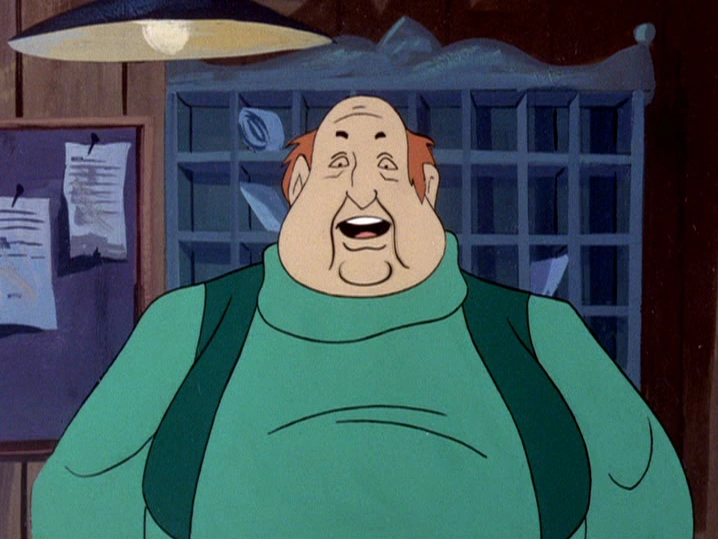
“Mr. Greenway welcomed Mystery Inc. when they came to stay at his ski resort. He issued ominous warnings to guests and dressed up as the ghost to scare people away from the diamond and jewel smuggling operation he operated with Mr. Leech.”
— Scoobypedia, on the villain of “That’s Snow Ghost” (1969)
The suspicious Mr Greenway (yes thats his name!).
In the classic Scooby-Doo episode “That’s Snow Ghost,” the gang encounters a terrifying phantom haunting a ski resort. The locals are frightened. Tourism is dying. Everyone focuses on the ghost.
But the ghost isn’t real. It’s a costume worn by the resort’s manager, Mr. Greenway, to distract from his actual business: smuggling. The scary story keeps people from looking too closely at what’s really happening.
The parallels to Ireland’s Western Rail Corridor debate are, I must admit, a little on the nose.
For fifteen years, we’ve been told the railway is the ghost — an unviable fantasy, economically irrational, impossible to fund. The greenway, we’re assured, is the sensible alternative. Stop chasing spectres. Accept the cycle path. Move on.People are often threatened that they can have the greenway, or nothing.
But what if the greenway debate itself is the ghost costume? What if the endless studies, the truncated scopes, the predetermined conclusions are all designed to distract from the real operation underneath?
And why does the greenway have to be on the rail line? Surely an amenity can be built in many different places. But for years, no matter what is suggested, the lobby groups and politicians that support this greenway persist that it MUST be on the Sligo -Galway rail line. They show no interest whatsoever in placing it anywhere else. And this is how we know its a “Snow Ghost”, a chimera dreamed up and promoted to distract us from the real story. And so far, its worked.
The terrifying “Snow Ghost”. The ghost of a Tibetan Yeti? Or a distraction from a money making scheme? Sligos Greenway is also a distraction, so you dont see the real schemes behind it.
Mr. Greenway had Mr. Leech, his jewellry smuggling partner. Dublin has MetroLink, Dublin Airport, and a civil service whose institutional DNA treats the west as a resource to be extracted rather than a region to be developed.
Time to pull off the mask.
The Western Rail Corridor isn’t blocked because it “unviable” It’s blocked because Dublin killed it — deliberately, repeatedly, and with malice aforethought. This is the story of how they did it, and why.
The Cost of Neglect
Before we examine the mechanism of obstruction, let’s be clear about what’s at stake.
The West and Northwest of Ireland contain more land area than the east coast. More cities. Three international airports. The largest natural harbour in these islands. The only airport in Europe with US customs pre-clearance. A major distributed university. Nineteenth-century intermodal port infrastructure that aligns perfectly with EU coastal shipping policy.
And yet this region is bleeding out. Every year, thousands of young people leave Sligo, Mayo, Roscommon, Leitrim, and Donegal — not because they want to, but because they have to. There are no jobs. There is no infrastructure. There is no future, because Dublin has decided there shouldn’t be one.
This isn’t regional jealousy or parish-pump politics. This is a systematic policy of extraction: take the people, take the talent, take the graduates — and now, as we’ll see, take the water from the Shannon — while giving nothing back. No investment. No connectivity. No opportunity.
The population imbalance in Ireland is now grotesque. The Greater Dublin Area contains over 40% of the national population and continues to grow, while rural Ireland — particularly the northwest — continues to hollow out. Young families who might stay if they could commute to regional employment centres are forced instead into Dublin’s overheated rental market, or onto emigrant flights.
Meanwhile, Brexit has fundamentally changed Ireland’s strategic position. The old UK route dependencies are fading. Direct European connections matter more than ever. Cork’s port is becoming Ireland’s primary EU-facing gateway. The EU is prioritising cross-border connectivity and coastal shipping. Everything points toward developing the western corridor.
Instead, Dublin is converting the railway tracks to cycle paths.
This didn’t happen by accident. It happened by design.
The 2011 Intervention: Where It All Began
In 2011, something remarkable happened. Leo Varadkar, then Minister for Transport, personally intervened to remove the Western Rail Corridor (WRC) and all western transport projects from Ireland’s submission to the EU’s Trans-European Transport Network (Ten-T) programme.
This wasn’t a bureaucratic oversight. It was a deliberate political act.
The Ten-T programme provides EU funding for transport infrastructure that meets specific criteria: multimodal connectivity, cross-border elements, and strategic importance. All of which the WRC fulfills. The previous Fianna Fáil government had submitted the western/Atlantic road and rail cross-border route from Cork to Derry, including the Western Rail Corridor extension.
Varadkar struck it from the list.
His own Fine Gael colleague, MEP Jim Higgins, warned him explicitly: “failure to act now might mean closing off the project to future EU funding for good.”
Varadkar proceeded anyway.
When challenged in the Dáil, Varadkar claimed that the Ten-T core network was “proposed by the European Commission and not by member states.” This was, to put it charitably, untrue. EU Transport Commissioner Violeta Bulc later confirmed in writing that the Commission’s role was to specify targets and criteria, while member states retained “substantial sovereign rights” to decide on projects.
Varadkar knew what he was doing. He did it anyway. And he lied about it afterwards.
The effect was immediate and permanent: western Ireland was locked out of EU transport funding streams. Projects must first be in the “comprehensive” network before qualifying for “core” status. Without inclusion, there is no pathway to funding. The west was written off before the decade began.
The Dublin Lock: Who Controls Transport Policy?
To understand how this obstruction continues, you need to understand who actually runs transport in Ireland.
The National Transport Authority — the body that oversees all transport policy and infrastructure — was originally constituted as the Dublin Transport Authority. That’s not a nickname. That’s what the legislation called it. The Dublin Transport Authority Act (2008) established a body whose statutory functional area covers the Greater Dublin Area: Dublin City, Dún Laoghaire-Rathdown, South Dublin, Fingal, Wicklow, Kildare, and Meath.
It gained national licensing functions later, through subsequent legislation, but its DNA remains Dublin-centric. Its board, its priorities, its institutional culture — all oriented toward the capital.
Transport Infrastructure Ireland (TII), which handles rail and roads infrastructure, operates under NTA oversight. The Railway Procurement Agency, which previously managed light rail projects, was merged into TII in 2015.
The result is a governance structure where Dublin institutions control national transport policy, and national transport policy consistently prioritises Dublin.
The former Transport Minister Eamon Ryan admitted as much in a 2025 interview, recalling how “I saw infighting between CIE, Dublin Bus, the Dublin Transportation Office (now the NTA), the Department…. and meanwhile, the NRA (National Roads Authority, now TII) just ruled the roost.”
Where is the Western Transport Authority? Where is the voice for Connacht in these structures? Where is the advocacy for the Atlantic corridor that could connect Cork to Derry?
It doesn’t exist. The west has no institutional representation in transport governance. Decisions about western infrastructure are made by Dublin bodies, staffed by Dublin officials, oriented toward Dublin priorities.
And Dublin has decided the west doesn’t need rail.
The Rigged Studies: How to Kill a Railway Without Saying No
You can’t simply refuse to build a railway. You need to prove it’s not viable. And the way you prove something isn’t viable is by designing studies that cannot possibly demonstrate viability.
This is the pattern that has repeated for over a decade.
The EY Report: Commissioned to assess the economic case for reopening the Western Rail Corridor. Scope: Athenry to Claremorris only — approximately 52 kilometres. Not the full corridor to Sligo. Not the extension to Letterkenny and Derry. Not the connection to Knock Airport. Not the southern link to Cork’s container port. Just a truncated stub that serves no major destination and connects no airports.
Result: Not viable.
The JASPERS Study: Same scope. Same 52 kilometres. Same predetermined conclusion.
Both studies ignore the 2005 McCann Report, which explicitly noted that “incorporating connections to Shannon and Knock airports could significantly enhance the economic viability of the project.”
The full Western Rail Corridor — from Cork through Limerick, Galway, and Sligo to Derry — could connect three international airports:
Shannon: US customs pre-clearance, the most important airport for transatlantic traffic
Knock: Ireland’s fastest-growing airport, now handling nearly a million passengers annually
Derry: Cross-border connectivity that the EU explicitly prioritises
It could link Cork’s container port — the largest natural harbour in these islands, increasingly vital post-Brexit — to the entire western seaboard by rail.
It could connect Sligo’s existing intermodal facilities to a network, enabling the modal shift from road to rail-and-coastal-shipping that EU policy actively encourages.
It could serve Atlantic Technological University’s distributed campus, finally allowing the institution to function as an integrated university.
None of this is ever studied. Every report is scoped to examine only the 52-kilometre segment that cannot demonstrate viability. It’s like commissioning a study on whether to build a bridge, but only allowing the consultants to examine the middle span disconnected from either bank.
The parameters aren’t accidental. They’re designed to produce a predetermined conclusion.
The Conflict of Interest: ARUP’s Double Game
In 2024, ARUP was commissioned to conduct the All-Island Strategic Rail Review. Their conclusion: Sligo and the Western Rail Corridor were excluded from major new rail developments. The focus would be on “major intercity upgrades and electrification elsewhere.”
Simultaneously, ARUP was commissioned by TII to develop the Sligo Greenway — a cycling and walking path from Collooney to Bellaghy.
The proposed route? The disused railway corridor.
The same consultancy that concluded rail was not viable is being paid to design a greenway on the tracks. They have a direct financial interest in the railway remaining closed.
This is not a conspiracy theory. This is a matter of public record. ARUP is listed as the consultant for both projects. The greenway contract is funded by Transport Infrastructure Ireland.
The JASPERS studies present a similar pattern. JASPERS consulted on the Western Rail Corridor with restrictive parameters that guaranteed a negative finding — while simultaneously consulting on MetroLink, Dublin’s flagship €9-23 billion underground railway to Dublin Airport.
When the same consultants are working on competing projects, which one do you think they have an incentive to recommend?
The Timeline “Coincidence”
MetroLink is projected to be operational in the early 2030s.
The official position on the Western Rail Corridor? Nothing significant until the 2030s.
Both timelines converge on the same decade. MetroLink will be built, Dublin Airport will have its rail connection secured as the national standard, and only then — when the competitive threat has been neutralised — might western rail be “reconsidered.”
The government frames MetroLink as addressing a national embarrassment: “Ireland remains one of only a small number of countries in Europe without a metro in its biggest city or a rail connection to its main international airport.”
But which “main international airport”? They’ve pre-decided it’s Dublin. The option of connecting Knock and Shannon — creating an alternative western hub — is never examined because the studies are never scoped to examine it.
Meanwhile, Knock Airport continues to grow regardless. 2024 saw a record 818,000 passengers. 2025 is projected to exceed 945,000 — another record, representing over 5% of all air passengers in the country. A “Transformation Programme” is planned for 2026-2028 to expand capacity.
The threat Dublin fears is emerging anyway. The difference is whether it emerges with rail connectivity or without it.
The Greenway Gambit: Making Obstruction Permanent
Mr Greenway exposed!
Here’s the endgame: convert the railway corridor to a greenway, and the question of rail reopening becomes moot.
Once you’ve built a walking and cycling path on the permanent way, you’ve made a political choice that is extremely difficult to reverse. Ripping up a greenway to restore rail would face enormous opposition — even from people who support western rail in principle.
This is why the greenway push is so insistent, and why it’s being funded by the same TII that controls rail infrastructure. It’s not about providing amenities for the west. It’s about foreclosing options permanently.
The sales pitch is seductive: greenways are cheaper, quicker to build, and provide immediate recreational benefit. All true. But they also eliminate the possibility of rail, potentially forever.
And critically, greenways don’t threaten Dublin Airport’s monopoly. A cycling path from Collooney to Claremorris won’t carry business travellers to Knock. It won’t connect Shannon’s US pre-clearance facility to the northwest. It won’t create an alternative transport corridor that might reduce Dublin’s gravitational pull on the national economy.
That’s the point.
The Shannon Water Extraction: Taking Without Giving
If you needed proof that Dublin views the west purely as a resource to be extracted, consider the Shannon water pipeline.
The proposal: pump water from the Shannon basin to supply Dublin’s growing needs.
The reaction from the west: fury. Not because the west is water-hoarding, but because the ask encapsulates everything wrong with the relationship. Dublin wants western water, but won’t build western infrastructure. Dublin wants western resources, but won’t invest in western opportunity. Dublin wants to extract, but never to contribute.
This is the colonial relationship laid bare. For a century, the west has provided Dublin with its people — every generation forced to migrate for work, education, opportunity. Now the people aren’t enough. Dublin wants the water too.
The Shannon pipeline is the logical endpoint of an extractive model. The capital takes what it needs — people, talent, graduates, water — while systematically blocking any development that might allow the regions to thrive independently. The west exists, in this model, not as a place where people might live and flourish, but as a resource base for the capital’s continued growth.
Were the Shannon pipeline proposed alongside a genuine commitment to western rail, to regional investment, to balanced development — the conversation would be different. Reciprocity changes everything.
But there is no reciprocity. There is only extraction.
They want the Shannon’s water. They won’t give the Shannon region the railway that might allow it to develop. They want the west’s young people. They won’t give the west the infrastructure that might allow them to stay. They want Knock Airport to remain a regional curiosity rather than a connected hub. They want Cork’s port traffic to move by road through their tolled motorways rather than by rail along the western corridor.
The pattern is consistent. The pattern is policy. The pattern is colonial.
What Would Change Everything
Consider what the full Western Rail Corridor would actually connect:
Three international airports: Shannon (the most important airport for North American traffic, with US customs pre-clearance), Knock (Ireland’s fastest-growing airport), and Derry (providing cross-border connectivity that the EU explicitly prioritises).
Ireland’s most strategic port: Cork’s container facilities, served by the largest natural harbour in these islands. With Brexit, Cork is becoming increasingly important as Ireland’s primary EU-facing port. The old UK route dependencies are fading; direct European connections matter more than ever.
Six major cities: Tralee, Limerick, Galway, Sligo, Letterkenny, and Derry. This isn’t some rural backwater — this is a region with more area and more cities than the east coast.
A distributed university: Atlantic Technological University has formally requested rail connectivity to link its campuses stretching from Letterkenny to Galway. Students currently have no proper transport links between ATU sites. The institution that’s supposed to drive western development cannot function as an integrated university because the infrastructure doesn’t exist.
Existing intermodal infrastructure: Sligo already has a ship-to-rail link dating from the 19th century. The EU is actively encouraging smaller coastal shipping traffic to replace heavy road freight — precisely the kind of modal shift that Sligo’s port could facilitate, if it were connected to a functioning rail network.
Cross-border integration: The extension to Derry isn’t just symbolically important for all-island connectivity — it’s precisely the kind of cross-border transport project that EU funding programmes prioritise. The Ten-T criteria that Varadkar used to exclude the west actually favour projects like this.
The Western Rail Corridor isn’t a regional amenity. It’s a strategic national asset that would reorient Ireland’s transport infrastructure toward Europe at exactly the moment when Brexit demands such reorientation.
For the first time, the west would have a transport spine. Shannon’s transatlantic connections would be accessible from the northwest by rail. Cork’s growing port traffic could move by rail rather than clogging roads. Regional towns along the corridor would become viable locations for commuter housing and distributed employment.
The population drain might finally reverse.
But this is precisely what Dublin’s institutional structures are designed to prevent. An empowered west is a threat to Dublin’s primacy. A connected west is competition for Dublin’s airport monopoly. A thriving west means Dublin cannot take western resources for granted.
So the studies remain rigged. The timelines remain aligned to protect MetroLink’s first-mover advantage. The greenways advance on the railway tracks. And another generation leaves the west because there’s nothing to stay for.
The Evidence, Summarised
Year
Event
Effect
2005
McCann Report recommends Shannon and Knock airport connections
Ignored in all subsequent studies
2010
WRC Phase 1 opens (Limerick-Galway via Ennis)
Corridor partially operational
2011
Varadkar removes WRC from Ten-T submission
EU funding blocked permanently
2015
RPA merged into TII under NTA
Rail procurement absorbed into Dublin-controlled structure
Various
EY, JASPERS studies with Claremorris-only scope
Reports engineered to show non-viability
2024
ARUP Strategic Rail Review excludes Sligo
Official policy confirms no WRC extension
2024
ARUP simultaneously contracted for Sligo Greenway
Same consultancy: rail not viable, build greenway on tracks
2024-25
Knock Airport breaks passenger records
Threat to Dublin growing regardless
2025
MetroLink approved, operational target early 2030s
Dublin Airport rail secured before western alternative possible
What the truncated studies never examine:
Asset
Strategic Value
Status
Shannon Airport
Only US pre-clearance in Europe
Not connected to northern corridor
Knock Airport
945,000 passengers, fastest-growing
No rail connection studied
Derry connection
EU cross-border priority
Excluded from all scopes
Cork container port
Largest natural harbour, post-Brexit gateway
Southern link ignored
Sligo intermodal port
19th-century ship-to-rail infrastructure
Disconnected from network
ATU distributed campus
Letterkenny to Galway
No student transport links
EU coastal shipping policy
Modal shift from road freight
Sligo facilities unused
Conclusion: It’s Policy, Not Accident
The Western Rail Corridor hasn’t failed, and it isnt “unviable”. Quite the opposite. It’s been prevented from succeeding because it has enormous potential to change Irelands economy forever.
The pattern is too consistent to be coincidence: the deliberate removal from EU funding, the Dublin-controlled governance, the rigged study parameters, the consultant conflicts of interest, the synchronised timelines, the greenway gambit.
This is policy. It has been policy for at least fifteen years, and decades before that. And unless it’s named, challenged, and reversed, it will remain policy — while the west continues to empty out and Dublin continues to extract what it needs.
The swindle isn’t just the greenway, which is just a distraction. The swindle is the entire apparatus that makes the greenway seem like the only option.
It’s time to call it what it is.
The author welcomes corrections, additional evidence, and contrary arguments. The documents cited in this article are matters of public record, obtainable through Freedom of Information requests and official publications. Names, dates, and quotations can be verified.
A data-driven analysis of elected positions and democratic participation.
Dylan Foley
[[Written with Claude AI : Figures may be wonky but you get the idea, just dont quote this in your thesis]]
The Shock Factor
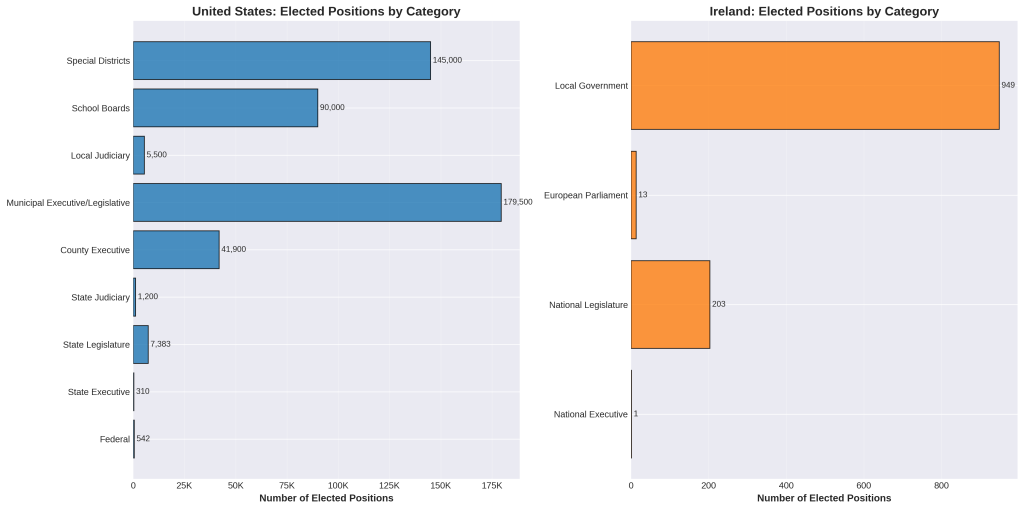
The United States has 471,335 elected positions across federal, state, county, municipal, and special district governments. Ireland has 1,166. But this isn’t just about total numbers—the per capita difference is stark:
Ratio: Texas has 5.3x more representation per capita If Ireland matched US levels of democratic participation, it would need 7,175 elected positions instead of 1,166—an increase of 515%. For a country where 17% of the population is foreign-born—among the highest in Europe—this creates a profound question: What does it mean for social mobility and integration when the democratic ladder has most of its rungs missing?
United States: 140.7 elected officials per 100,000 people
Ireland: 22.9 elected officials per 100,000 people
Ratio: The US has 6.2x more democratic representation per capita Put another way: In the US, there’s one elected official for every 711 people. In Ireland, there’s one elected official for every 4,374 people meaning each Irish elected official must represent 6.2 times more constituents. Even Texas alone, a single US state, provides more democratic access per person:
Texas: 121.7 elected officials per 100,000 people (36,508 total positions)
Ireland: 22.9 elected officials per 100,000 people (1,166 total positions)
The stark difference in the number of elected officials per capita points directly to several structural features that can be framed as a lack of democratic inclusion and accountability.
1. Extreme Centralization of Power
Ireland: As a unitary state, almost all significant political power is concentrated in the Dáil (the lower house of parliament) in Dublin. Major policy decisions—from healthcare and education to transport and planning—are primarily made at the national level.
Implication: Local communities have very limited formal power to shape the policies that affect them most directly. They must lobby national politicians (TDs) to intervene in local affairs, rather than holding local elected officials accountable for local outcomes.
2. Weak Local Government with Limited Powers
Ireland: Local authorities (county/city councils) have severely constrained functions. They are primarily responsible for local roads, housing, planning, and libraries, but their funding and policy mandates are heavily controlled by the central government. Key areas like police, justice, and education are entirely national.
Comparison: In the U.S., states, counties, and cities have significant “home rule” authority. They can levy taxes, set education standards, and create laws on a wide range of issues. This creates a need for many more elected officials to be accountable for these separate spheres of power.
Implication: Irish councillors have little power to actually govern their localities. This leads to a phenomenon where councillors often act as “caseworkers” or facilitators between their constituents and the distant central government, rather than as local legislators setting a unique local vision.
3. Lack of Direct Executive Accountability
Ireland: The executive branch at the local level is not elected. The day-to-day administration is run by a non-elected, professional Chief Executive (formerly the County Manager), who is appointed by the national Public Appointments Service.
Comparison: In the U.S., citizens directly elect a long list of executive officials—from Governors and Mayors to Sheriffs, District Attorneys, and Treasurers. This creates multiple, direct lines of accountability. If you don’t like what the Sheriff is doing, you can vote them out.
Implication: In Ireland, there is no direct democratic mechanism to hold the local administration accountable. You cannot vote out the Chief Executive. This creates a “democratic gap” where significant administrative power is insulated from the ballot box.
4. The “Nationalization” of Local Politics
Because local government is so weak, local elections in Ireland often become a referendum on the national parties in power, rather than a genuine debate about local issues and the performance of local councillors. This further undermines local accountability.
The United States: Seven Tiers of Democratic Participation
American democracy distributes power through an extensive network of elected positions across multiple governmental levels. Here’s what actually gets put to a vote:
Federal Level (542 positions) President & Vice President (2) US Senators (100) US Representatives (435) Delegates & Resident Commissioner (5)
State Executive (≈310 positions across 50 states) Governors (50) Lieutenant Governors (45 states) Attorneys General (43 states) Secretaries of State (35 states) State Treasurers (38 states) State Auditors (25 states) State Comptrollers (15 states) Agriculture Commissioners (12 states) Insurance Commissioners (11 states) Education Commissioners (14 states) Public Utility Commissioners (12 states) Labor Commissioners, Land Commissioners, and others
State Legislature (7,383 positions) State Senators (≈1,972) State Representatives (≈5,411)All 50 states have bicameral legislatures (except Nebraska)
State & Local Judiciary (≈6,700 positions) State Supreme Court Justices Appellate Court Judges Trial Court Judges Municipal Court Judges Justices of the Peace Magistrates Note: About 87% of states elect some judicial positions
County Government (≈41,900 positions across ~3,000 counties) County Commissioners/Supervisors (≈19,000) Sheriffs (≈3,000) District Attorneys/Prosecutors (≈2,300) County Clerks (≈2,500) County Treasurers (≈2,000) County Auditors (≈1,500) County Assessors (≈1,800) County Coroners (≈1,400) County Recorders (≈1,200) County Surveyors (≈800) County Engineers (≈400) Constables (≈5,000)
Municipal Government (≈179,500 positions across ~19,500 municipalities) Mayors (≈19,500) City Council Members (≈135,000) City Clerks (≈15,000) City Treasurers (≈8,000) City Attorneys (≈2,000)
School Boards (≈90,000 positions) School Board Members across ≈13,500 school districts Local control of educational policy, budgets, and administration
Special Districts (≈145,000 positions across ~38,000 districts) Water District Boards Fire District Boards Hospital District Boards Library Boards Park & Recreation Boards Sanitation District Boards Soil & Water Conservation Districts Port Authority Commissioners Transit Authority Boards Cemetery District Boards Mosquito Abatement Districts Drainage Districts And dozens of other specialized local governance bodies Total US Elected Positions: 471,335 Elected Positions per 100,000 population: 140.7
Ireland: Two Tiers and a Lot of Empty Space
Ireland’s elected positions are concentrated in just a few categories:
National Executive (1 position) President (largely ceremonial, 7-year term)
National Legislature (203 positions) TDs (Teachta Dála) in Dáil Éireann (160)Senators in Seanad Éireann (43 elected by restricted electorate, 17 appointed by Taoiseach)
European Parliament (13 positions) MEPs (Members of European Parliament)
Local Government (949 positions) County Councillors (31 councils) City Councillors (included in county councils) No separately elected mayors (mayors selected by councillors) Total Ireland Elected Positions: 1,166 Elected Positions per 100,000 population: 22.9
What Doesn’t Get Elected in Ireland?
This is where the story gets revealing. Here are the five complete tiers that are entirely absent from Irish democratic participation:
❌ No Regional/State Government Layer Ireland has no intermediate tier between national and local government. Unlike US states or German Länder, there are no regional executives or legislatures.
The Regional Assembly Illusion: Ireland does have “Regional Assemblies” (3 regions: Eastern & Midland, Southern, Northern & Western), but these are: – Not directly elected by citizens – Composed of county councillors who nominate themselves – Created primarily to meet EU requirements for regional structural fund administration – Possess minimal actual governance authority – Function more as administrative coordination bodies than democratic institutions
❌ No Elected County/Local Executives While Ireland elects county councillors, the actual executive power rests with: – County/City Managers: Appointed by the Public Appointments Service (centralised national appointment) – Managers often hold more de facto power than elected councils – Councils can make policy, but implementation is through appointed executives – No elected mayors with executive authority (unlike US mayors) This creates a peculiar democratic deficit: even the tier that is elected has limited authority over actual governance.
❌ No Elected Judiciary All Irish judges are appointed: – Appointed by the President on advice of the Government – Judicial Appointments Advisory Board recommends candidates – No direct electoral accountability to communities – Contrast with US: sheriffs, district attorneys, and judges at multiple levels are elected
❌ No Elected Law Enforcement An Garda Síochána (police): National force, all appointed No elected sheriffs or police chiefs No elected district attorneys or prosecutors All law enforcement accountability is through appointed administrators Contrast with US: ~3,000 elected sheriffs, ~2,300 elected district attorneys
❌ No Elected Education Governance School Boards of Management: Appointed, not elected Patron bodies (often Catholic Church) control many school appointments Parents have representation but not electoral control Department of Education centrally controls curriculum and policy Contrast with US: ~90,000 elected school board members with local control
❌ No Special District Democracy Ireland has no equivalent to US special districts: – No elected water boards – No elected hospital district boards – No elected library boards – No elected fire district boards – No elected parks and recreation boards – All such services are administered by appointed county managers or national agencies.
Part II: The Numbers Tell the Story
Head-to-Head Comparison
Metric
United States
Ireland
Ratio
Total Elected Positions
471,335
1,166
404:1
Population
335,000,000
5,100,000
66:1
Positions per 100K people
140.7
22.9
6.2:1
Number of Democratic Tiers
7
2
3.5:1
Entry-Level Positions
414,500
949
437:1
Positions per 100K (entry-level)
123.7
18.6
6.6:1
Breakdown by Government Level
Level
United States
Ireland
Gap
Federal/National
542
217
US +325
State/Regional
7,693
0
US +7,693
County Executive
41,900
0 (appointed)
US +41,900
Local Council
N/A (in county)
949
—
Municipal
179,500
0 (included)
US +179,500
Judiciary
6,700
0 (appointed)
US +6,700
Education
90,000
0 (appointed)
US +90,000
Special Districts
145,000
0
US +145,000
Even Texas Alone Dwarfs Ireland
Entity
Elected Positions
Population
Per 100K
Texas (one state)
36,508
30,000,000
121.7
Ireland (entire nation)
1,166
5,100,000
22.9
Ratio
31:1
6:1
5.3:1
Even accounting for population, Texas offers 5.3 times more democratic participation opportunities per capita than Ireland.
The Democratic Openness Index
To quantify these differences, I developed a Democratic Openness Index (DOI) based on six weighted factors:
Factor
Weight
US Score
Ireland Score
Gap
Entry-Level Access
25%
9.5/10
3.0/10
6.5
Pathway Diversity
20%
10.0/10
2.0/10
8.0
Financial Barriers
20%
8.0/10
4.0/10
4.0
Geographic Distribution
15%
10.0/10
5.0/10
5.0
Party Independence
10%
9.0/10
2.0/10
7.0
Representation Density
10%
9.0/10
4.0/10
5.0
TOTAL DOI
100%
9.28/10
3.30/10
5.97
What This Means: United States (9.28/10): Extremely open system with minimal barriers to entry, multiple pathways, geographic distribution, and party independence. Ireland (3.30/10): Moderately closed system with significant barriers, limited pathways, party dependence, and centralized power.
Gap (5.97 points): This enormous difference represents fundamentally different conceptions of democratic participation.
The Missing Ladder—Structural Implications
The Political Career Pathway Problem In the United States, someone interested in politics can follow a gradual, four-tier ladder:
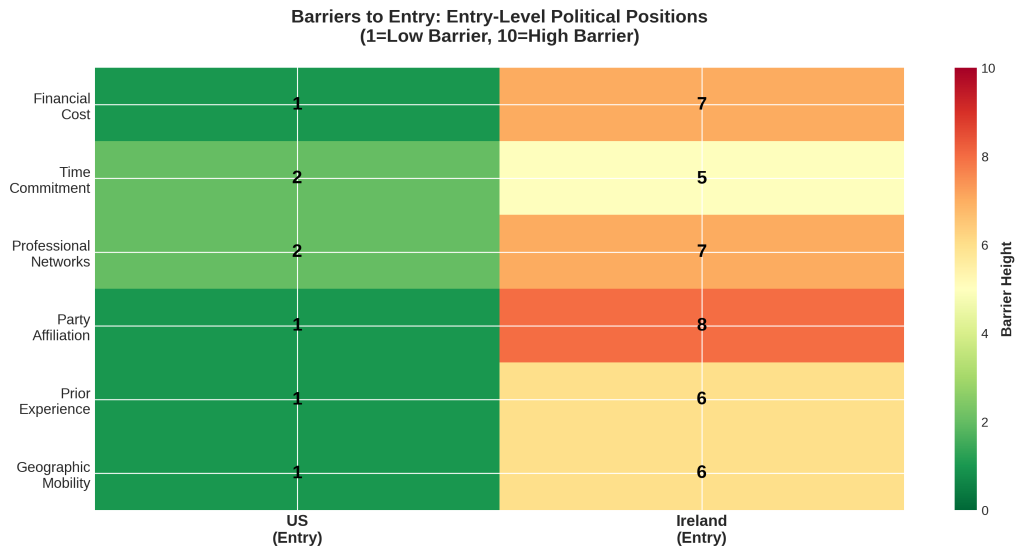
Tier 1: Entry Level (414,500 positions) – School Board Member: $500–$5,000 campaign cost, part-time, no experience required – City Council Member: $2,000–$10,000 campaign, part-time, local connections sufficient – Special District Board: Often unopposed, volunteer work
Tier 2: Local Leadership (25,700 positions) – Mayor: $5,000–$50,000 campaign – County Commissioner: $10,000–$75,000 – Sheriff/DA: $25,000 $100,000
Tier 3: State Level (7,693 positions) – State Representative: $50,000–$300,000 – State Senator: $100,000–$500,000 – State Executive: $200,000 $2,000,000
Tier 4: Federal Level (542 positions) – US Representative: $500,000–$5,000,000 – US Senator: $5,000,000–$50,000,000+ – President: $50,000,000+ At each tier, skills and networks build incrementally. An 18-year-old can run for school board while working a day job. After proving themselves, they can run for city council, then county commissioner, building credibility step by step.
Ireland’s Two-Tier System: The Steep Jump Ireland offers only two meaningful tiers:
Tier 1: Local Council (949 positions) – County/City Councillor: €5,000–€20,000+ campaign – Requires: Party backing (usually essential), significant time commitment – Power: Limited—county managers hold executive authority [MASSIVE GAP—NO MIDDLE TIER]
Tier 2: National Legislature (203 positions) – TD (Dáil): €20,000–€100,000+ campaign – Senator: Various election colleges (43 elected by restricted electorate) – Requires: Strong party machinery, national profile – Jump: From local council to national legislature is enormous
There is no middle tier. No state legislature to practice in. No regional executive to prove competence. The jump from having influence over your local area’s roads and planning to voting on national budgets, foreign policy, and constitutional matters is one massive leap.
Who Pays the Price?—Social Mobility Impact
The structural differences between these systems don’t affect everyone equally. Certain groups face disproportionate disadvantages under Ireland’s centralized, party-dominated model:
New Citizens and Immigrants (+5 mobility levels disadvantage) United States: – Immigrant arrives, gets involved in local school board meeting – Runs for school board after 1–2 years of residency – Wins election within 2–4 years of arrival – Serves community while maintaining day job – Builds political resume for higher office Ireland: – Immigrant arrives, joins political party (necessary step) – Spends years building party credentials – Seeks party backing for council nomination (5–10 years) – Runs for council seat (10–15 years post-arrival) – Limited authority even if elected (manager holds power) Impact: With 17% of Ireland’s population foreign-born (870,000 people as of 2024), this creates a massive integration bottleneck. The very communities most in need of representation face the highest barriers.
Young People (+4 mobility levels disadvantage) United States: – 18-year-old can run for school board immediately – Win local election by age 19–20 – Gain experience managing budgets, policies, public meetings – Build track record for higher office by mid-20s Ireland: – Young person joins party in late teens/early 20s – Spends years in party apprenticeship – May get council nomination in late 20s/early 30s (if connected) – First realistic elected position typically mid-30s Impact: By the time an Irish young person reaches their first elected position, their US counterpart might already have 10–15 years of governance experience.
Working Class Citizens (+3 mobility levels disadvantage) United States: – Part-time school board or city council compatible with full-time job – Can serve community without leaving employment – Campaign costs manageable ($500–$5,000) – No party machinery required Ireland: – Council positions increasingly time-intensive – Higher campaign costs (€5,000–€20,000) – Party backing often requires years of unpaid volunteer work – Manager system means less actual authority even when elected Impact: Irish politics becomes increasingly professionalized and inaccessible to those without financial cushions or party patronage.
Geographic Minorities (+3 mobility levels disadvantage) United States: – Can build entire political career in home community – No need to relocate for advancement – Local school board → County → State can all be local Ireland: – Political advancement often requires Dublin connections – National political career means Dáil in Dublin – Geographic concentration of political power – Rural and regional voices filtered through party structures Impact: Reinforces Dublin-centric power dynamics and weakens regional political autonomy.
Women with Family Commitments (+2 mobility levels disadvantage) United States: – Part-time local positions compatible with childcare – Flexible school board/council meeting schedules – Can participate without full-time political commitment – Gradual scaling of time investment Ireland: – Even council positions demand significant time – Limited entry points mean higher competition – Party networking requires extensive availability – Fewer positions = fewer opportunities Impact: Despite gender quotas at national level, the lack of flexible entry-level positions reduces overall women’s participation.
Minority and Ethnic Communities (+2 mobility levels disadvantage) United States: – Local majority communities can elect own representatives – School boards reflect neighborhood demographics – Pathway to representation without party gatekeepingIreland: – Proportional representation helps at national level – But limited entry points and party control slow integration – Smaller communities struggle to gain party nominations – No local positions to build ethnic community representation
Integration Velocity—The Timeline Problem
Perhaps the most striking difference is how fast a newcomer can meaningfully participate:
!– INTEGRATION TIMELINE TABLES –>
US Timeline: Rapid Integration
Stage
Timeline
Requirements
New Resident
Day 1
None
First Participation
1–6 months
Attend public meetings
Campaign Viable
1–2 years
Community connections
First Elected Office
2–4 years
Small campaign, local support
Mid-Level Position
4–8 years
Track record
State/National Level
8–15 years
State-level networks
Ireland Timeline: Slow Integration
Stage
Timeline
Requirements
New Resident
Day 1
None
First Participation
2–5 years
Party membership
Campaign Viable
5–10 years
Party backing secured
First Elected Office
10–15 years
Significant party support
Mid-Level Position
N/A
No such tier exists
National Level
15–25 years
National party selection
Integration Velocity Ratio: 3–5x faster in the US
Integration Timeline Comparison
Stage
US Timeline
Ireland Timeline
Difference
New Resident
Day 1
Day 1
Same
First Participation
1–6 months
2–5 years
4–10x slower
Campaign Viable
1–2 years
5–10 years
3–5x slower
First Elected Office
2–4 years
10–15 years
3–5x slower
Mid-Level Position
4–8 years
N/A (tier missing)
No equivalent
State/National Level
8–15 years
15–25 years
2x slower
Stage
US Timeline
Ireland Timeline
New Resident
Day 1
Day 1
First Participation
1–6 months (attend meetings)
2–5 years (party membership)
Campaign Viable
1–2 years (community connections)
5–10 years (party backing)
First Elected Office
2–4 years
10–15 years
Mid-Level Position
4–8 years (track record)
N/A – No tier exists
State/National Level
8–15 years
15–25 years
Integration Velocity: US vs Ireland Political Pathways
Key Takeaway: Integration Velocity
US: Immigrants can hold local office within 2–4 years
Ireland: Typically requires 10–15 years and party machinery
Impact: 3–5x faster integration in US system
Critical difference: Ireland has no middle tier between local council and national parliament
For a nation with 870,000 foreign-born residents (17% of population—higher than the US at 14%), this slow integration pathway creates significant social cohesion challenges.
The Power Question—Even What’s Elected Has Limited Authority
It’s not just about what gets elected—it’s about whether elected officials actually hold power. The County/City Manager System In Ireland, even elected councils operate under a dual executive model: Elected Council: – Makes policy decisions – Approves budgets (in theory) – Represents constituents
Appointed County/City Manager: – Appointed by Public Appointments Service (national body) – Implements policy – Often controls budget preparation – Manages all staff – Effectively holds executive authority
In practice, managers frequently have more real power than elected councillors. Councils can make recommendations, but implementation rests with unelected executives appointed from Dublin.
Compare this to US mayors (elected, with executive authority) or county commissioners (elected, with executive and legislative authority combined).
Regional Assemblies: Democracy by Delegation Ireland’s three Regional Assemblies might appear to add another democratic tier, but: Not directly elected by citizens Composed of county councillors who nominate themselves to regional positions Created primarily to satisfy EU structural fund requirements Minimal actual governance authority\
Function more as coordination bodies than democratic institutions This is “democracy by delegation”—citizens elect councillors, councillors elect themselves to regional positions, creating an indirect and diluted form of representation designed more for EU compliance than meaningful governance.
: Implications and Conclusions
The Trade-Off: Professionalization vs. Participation Ireland’s system reflects a European preference for: – Professionalized civil service over elected administrators – Centralized expertise over local variation – Party discipline over independent representation – Appointed managers over elected executives This model has advantages: – Professional administrators with technical expertise – Consistency of service across regions – Reduced corruption in local government – Protection from populist capture of specialized functions But it comes with profound costs:
Severe Bottlenecks in Political Participation With only 1,166 elected positions for 5.1 million people (22.9 per 100K), Ireland creates artificial scarcity in democratic participation. This concentrates political power among those who can navigate party structures and afford the time and money for limited positions.
Delayed Integration of New Communities For a country experiencing significant immigration (870,000 foreign-born residents), the 10–15 year timeline to first elected office means entire communities remain politically voiceless for a generation. The US timeline of 2–4 years enables much faster integration and community representation.
Class-Based Filtering of Political Aspirants When entry costs are high (€5,000–€20,000), party backing is essential, and time commitments are significant, politics becomes accessible primarily to those with: – Financial resources or party patronage – Time to volunteer extensively in party structures – Professional/social networks within party hierarchies Working-class, immigrant, and young voices are systematically filtered out.
Geographic Concentration of Political Power Without regional/state governance, all significant political decisions flow through Dublin. Combined with party-dominated nomination processes, this creates: – Dublin-centric policy priorities – Weakened regional political identities – Forced geographic mobility for political advancement – Reduced responsiveness to regional concerns
The Missing “Practice Grounds” of Democracy Perhaps most importantly, Ireland lacks the democratic practice grounds that the US provides in abundance. When an 18-year-old can run for school board, they learn: – Public speaking and debate – Budget management – Policy implementation – Constituent service – Political compromise
The fundamental question is whether democracy is primarily about:
A. Participation (US model) – Maximum citizen involvement – Multiple entry points – Local control and variation – Direct accountability through elections
B. Expertise (Ireland model) – Professional administration – Centralized consistency – Party discipline and coherence – Indirect accountability through appointments Ireland has chosen (B), but for a modern, diverse, rapidly-changing society, this choice creates increasing tension.
Questions for Ireland’s Future
As Ireland continues to evolve—with high immigration, growing diversity, urbanization, and generational change—several questions emerge: Can 949 council seats adequately represent 5.1 million people? That’s one councillor per 5,374 people. US local government averages one elected official per 700–800 people.
How does lack of democratic participation affect social cohesion? With 17% foreign-born population, does slow political integration create parallel societies rather than integrated communities?
Does party gatekeeping limit innovation in governance? When all entry requires party backing, do independent voices and new ideas get filtered out? Should Ireland create an intermediate tier of regional government? The gap between council and Dáil is enormous. Would elected regional governments help? Could directly elected mayors with executive authority increase accountability? Many European cities have moved toward elected mayors. Should Irish cities follow? Is the appointed county manager system still appropriate? In an era demanding democratic accountability, does it make sense for unelected officials to hold executive power? Should education governance be democratized? With declining church influence, is it time for elected school boards? What about special districts for specific services? Could elected water boards, library boards, or health boards increase local accountability?
: Methodology & Sources
Data Sources United States: – US Census Bureau: Government Employment & Payroll Data – National Association of Counties (NACo) – National League of Cities
National School Boards Association – US Census of Governments (2017, 2022) – State government official websites – Wikipedia: “List of state executive officials” type pages
Ireland: – Central Statistics Office (CSO) – Department of Housing, Local Government and Heritage – Houses of the Oireachtas (Parliamentary service) – Local Government Management Agency – Wikipedia: Irish government structure pages – Local authority websites
Estimation Methods US Positions: – Federal and State: Exact counts from official sources – County: Estimated based on average positions per county (×3,143 counties) – Municipal: Estimated based on average council sizes (×19,500 municipalities) – School Boards: Calculated from number of districts × average board size –
Special Districts: Based on Census of Governments count of special districts (≈38,000) × average board size (5) –
Judiciary: Based on state-by state analysis of elected judicial positions
Ireland Positions: – Exact counts from official government sources – Councillor numbers from Local Government Management Agency – National legislature from Houses of the Oireachtas
Limitations US numbers are estimates for county, municipal, and special district positions. Actual numbers vary by state and locality. “Elected” definitions vary: Some US judges are appointed then face retention elections. Some Irish positions have mixed selection methods. Not all positions have equal power: A US mosquito abatement board member and an Irish TD have vastly different authority. Part-time vs. full-time: Many US positions are part-time volunteer; most Irish positions are professionalized.This analysis focuses on structure, not outcomes: More elected positions don’t automatically mean better governance. Cultural context matters: US federalism and Irish centralization reflect different historical and cultural priorities. Scope of Analysis This analysis compares structural opportunities for democratic participation, not: – Quality of governance – Policy outcomes – Corruption levels
Citizen satisfaction – Economic performance The purpose is to understand how different democratic structures affect access to political participation and social mobility through democratic engagement. Conclusion: The Democratic Architecture Matters Democracy isn’t just about voting every few years—it’s about the architecture of participation. The structures we build determine who can participate, how easily they can rise, and whose voices are heard. The United States has built a hyper-democratic system with 471,335 entry points. Ireland has built a centralized system with 1,166. Neither is inherently “better”—they represent different values and trade-offs. But for Ireland, with its rapidly diversifying population, the question becomes urgent: Can a nation with just 949 local council seats and no intermediate government tier provide adequate democratic participation for 5.1 million people in the 21st century? The data suggests it’s worth asking.
“I know that there are many historians, or at least writers on historical subjects, who still think it necessary to apply moral judgments to history, and who distribute their praise or blame with the solemn complacency of a successful schoolmaster. This, however, is a foolish habit, and merely shows that the moral instinct can be brought to such a pitch of perfection that it will make its appearance wherever it is not required.
Nobody with the true historical sense ever dreams of blaming Nero, or scolding Tiberius, or censuring Caesar Borgia. These personages have become like the puppets of a play. They may fill us with terror, or horror, or wonder, but they do not harm us. They are not in immediate relation to us. We have nothing to fear from them. They have passed into the sphere of art and science, and neither art nor science knows anything of moral approval or disapproval.”
Oscar Wilde. 1889
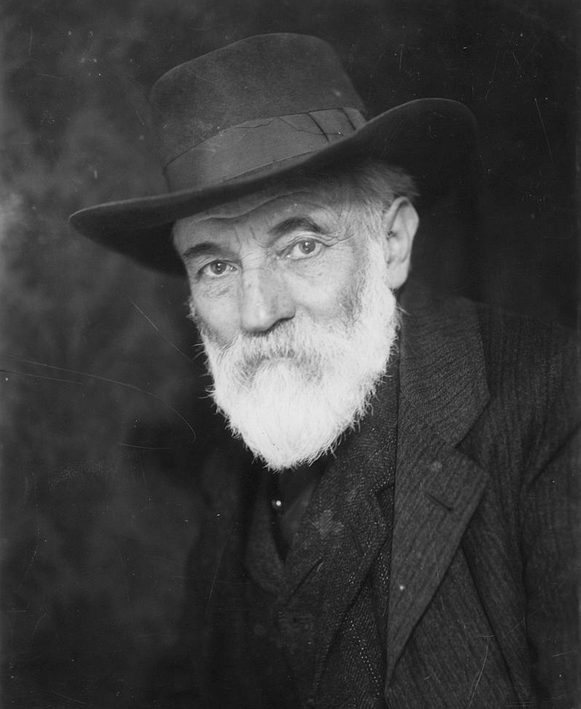
John Yeats
In 1914, a 75-year-old Irish artist living in New York wrote a letter that revealed the radical politics behind Ireland’s cultural revolution. John Butler Yeats—father of poet W.B. Yeats—described himself as a ‘radical socialist anarchist Home Ruler.’ This wasn’t empty rhetoric. It was the key to understanding how ancient Irish traditions merged with European revolutionary ideas to create modern Ireland.
This essay argues that John’s influence went far beyond his famous family. He helped create the intellectual foundation for a different kind of Irish independence—one rooted not in narrow nationalism or religious sectarianism, but in radical democracy, artistic freedom, and human dignity.
Most people know John Butler Yeats, if at all, as the father of poet W.B. Yeats. But this misses his central role in shaping the ideas that transformed Ireland from a colonial backwater into a modern nation. His unique achievement was fusing ancient Irish traditions of community and resistance with the most progressive European ideas of his time.
‘Had we married and lived together, our mutual unlikeness would have made us perfectly interesting to each other. I fancy you love Religion while I hate it, because of all its sins and wickedness. I am a radical socialist anarchist Home Ruler, everything you abhor, so I sometimes think it would be best to let this correspondence drop. If I go home this year we shall meet and have many talks and then start again to write to each other.’
John Butler Yeats, New York, 1914
There are many books and biographies written about the Yeats family, but few explore the philosophical atmosphere that John Butler Yeats cultivated around them—an atmosphere shaped not only by his idiosyncratic worldview but by the broader historical forces of 19th-century Ireland and Europe. His intellectual influence was profound, and understanding it requires looking beyond literary achievement to the radical cultural and political milieu he helped foster.
In this private letter, Yeats described himself as a “radical, socialist, anarchist Home Ruler.” Is this true? and if so what did John mean by this and what does it mean for our understanding of the Yeats family and their part in the lead-up to Irish independence. Johns self-description is consistent with the worldview he both lived and communicated to his children. As we shall see, there is ample reason to take his claim seriously.
To understand how remarkable this self-description was—and why it mattered for Ireland’s future—we must first grasp the world that shaped John Butler Yeats.
Ireland in 1839
When John Butler Yeats was born in 1839, Ireland was a country in the midst of profound transformation. With over eight million inhabitants, it was one of Europe’s most densely populated regions. The majority of these people—perhaps six million—spoke Irish as their first language, particularly in the western counties like Sligo where John’s family had deep roots. This was still a fundamentally Gaelic society, despite centuries of English rule.
But Ireland was also a country divided by religion, class, and competing visions of its future. Four distinct communities shared the island, each with different relationships to power and land—though historians typically describe only three, obscuring a crucial cultural divide within Catholic Ireland itself.
The Protestant Ascendancy—descendants of English and Scottish settlers—made up only about 10% of the population but owned most of the land. Within this minority, the Church of Ireland (the Irish branch of the Anglican Church) held the dominant position. As the official “established church,” it received state support and controlled much of the country’s wealth and political power, despite serving only a small fraction of the population. John Butler Yeats was born into this privileged but isolated world.
The Presbyterian community, concentrated in Ulster and descended from Scottish settlers, occupied a middle position. They had suffered some of the same restrictions as Catholics under the old Penal Laws, but generally enjoyed more economic freedom and social status.
Catholic Ireland, however, was deeply split between two very different worlds. Anglicised Catholics—descendants of the Old English who had settled in towns, along with others who had adopted English culture—dominated the emerging Catholic middle class. They controlled the established Catholic Church hierarchy, much of the middle level of administration, and the police force. English-speaking and culturally assimilated, they had learned to work within the colonial system.
But the majority of Catholics belonged to a very different tradition: the Gaelic Irish—millions of Irish-speaking tenant farmers, laborers, and Travellers (at this time known simply as the itinerant section of the Gaelic population) who remained culturally alienated from the state and its institutions. Concentrated especially in the west, they preserved not only the Irish language but ancient social structures, oral traditions, and a form of Catholicism quite different from the institutional religion of the towns. Their spiritual practices, rooted in centuries of clan-based community life, often resembled older pagan beliefs more than the standardized Catholicism preached from Dublin pulpits.
For centuries, the anglicised Catholic middle class had looked down on their Gaelic-speaking co-religionists as backward and primitive, viewing their cultural practices—and even their form of Catholic belief—as embarrassingly uncivilized. This internal division within Catholic Ireland would prove crucial to understanding the political and cultural struggles that lay ahead.
These religious divisions weren’t merely about theology—they reflected fundamental disagreements about Ireland’s relationship with Britain, who should control land and power, and what kind of society Ireland should become. The Church of Ireland community generally supported the Union with Britain (established in 1801) and viewed themselves as upholding English civilization against Catholic “barbarism.” Catholics increasingly sought self-government and an end to landlord dominance. Many Presbyterians, particularly in Ulster, had their own complex relationship with both British authority and Catholic nationalism.
This was the fractured world that shaped John Butler Yeats’s early life—a society where your religion determined not just your spiritual beliefs, but your political loyalties, economic opportunities, and social position. His later evolution from conventional Church of Ireland rector’s son to “radical socialist anarchist Home Ruler” represented a journey across these deep communal divides, toward a vision of Ireland that transcended sectarian boundaries entirely.
The young John Butler Yeats would witness this world’s dramatic transformation. The catastrophic Famine of the 1840s would devastate the Irish-speaking population, Catholic Emancipation would reshape politics, and new movements would emerge seeking to bridge Ireland’s divisions through shared culture and democratic ideals. His own intellectual journey—from religious orthodoxy to secular radicalism, from legal conservatism to artistic rebellion—mirrored his country’s struggle to imagine a different future.
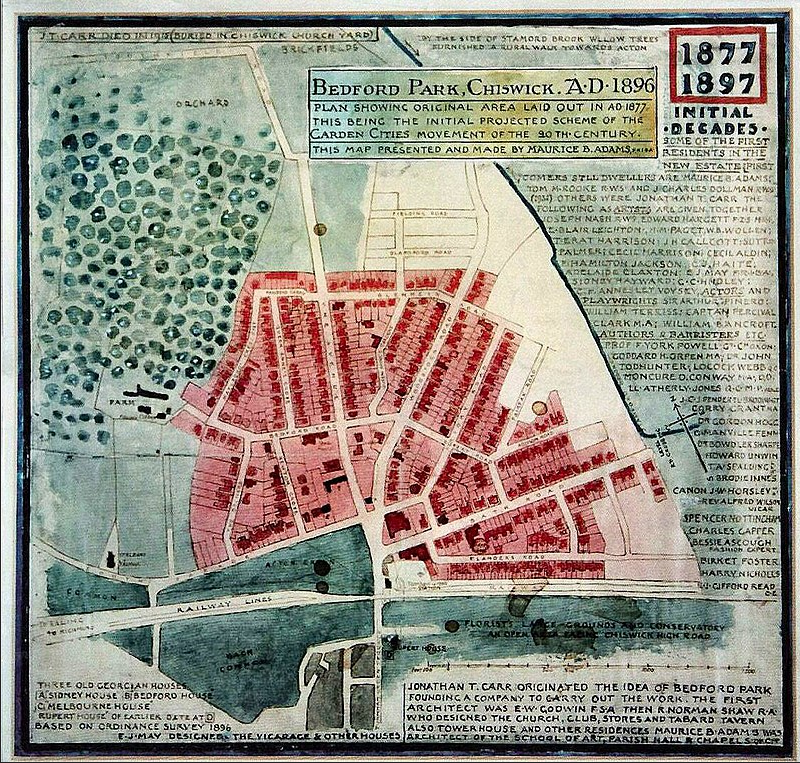
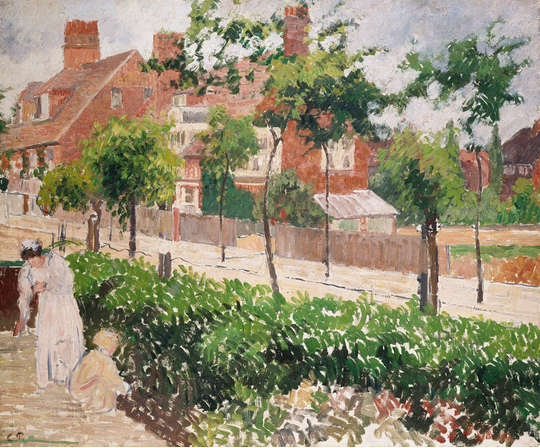
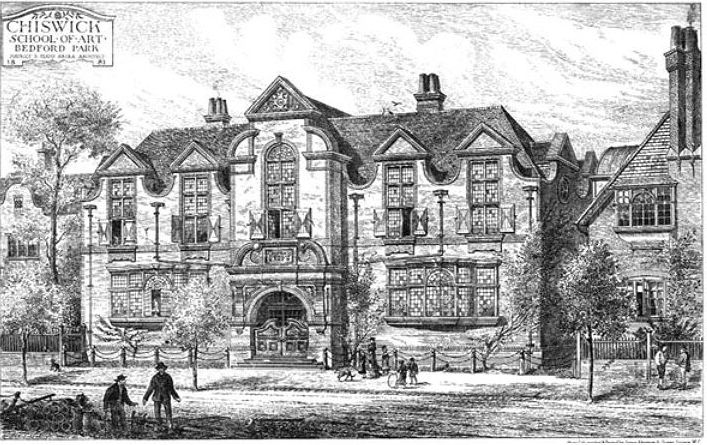
John Butler Yeats was instrumental in shaping what would become perhaps the most artistically ambitious family of Ireland’s so called “Gaelic Literary Revival”. George Bernard Shaw famously quipped that the movement had been “born in Bedford Park,“ the bohemian London suburb to which Yeats moved the family in the late 1880s.
Yet the “Gaelic Revival” was far more than a literary movement; it was a broad cultural project rooted in radical philosophy, history, and a desire for national renewal. At its heart were the most progressive intellectual currents of the 19th century—ideas that John Butler Yeats not only espoused but embodied.
This essay argues that Johns radicalism was not isolated but emerged from the fusing of two powerful currents: the ancient egalitarian ethos of Gaelic Ireland, particularly the west, and specifically Sligo in Johns case) and the libertarian-utopian socialism circulating among European intellectuals in the 19th century. The West of Ireland, in particular, preserved a form of communal, folk Catholicism, anti-clericalism, and collective social memory that contrasted sharply with the more institutional, empire-aligned Catholicism of the East of the country. These indigenous traditions, shaped by centuries of resistance and oral culture, provided fertile ground for the reception of continental radicalism.
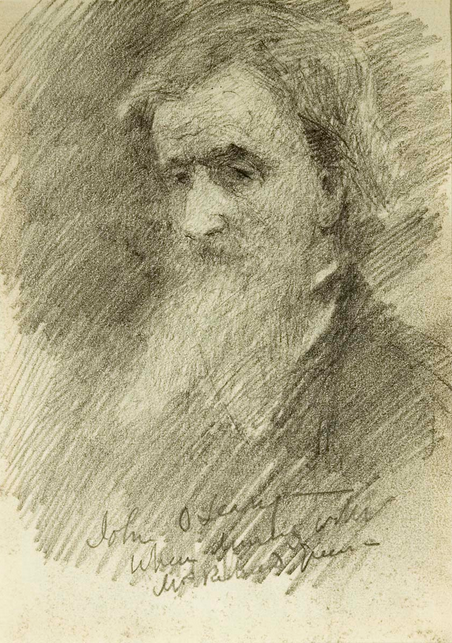
Yeats’s later friendships with figures such as the Fenian leader John O’Leary and Russian anarchists like Stepniak and Kropotkin demonstrate that his politics were not merely affectations. Though not a militant, he stood intellectually not just close, but at the centre of revolutionary movements. Art and education, in his view, were not neutral disciplines but expressions of freedom and conscience—capable of reshaping the world as radically as any political act.
Similarly, his politics were shaped less by rigid ideology than by moral conviction. Influenced by John Stuart Mill, Yeats’s socialism was rooted in individual liberty, and disdain for the smug moralism of Victorian capitalism. Anarchy, at this time, and presumably to him, meant freedom from institutional authority—not lawlessness, but self-governance. Utopia was not a literal destination but a necessary ideal: a yardstick with which to measure the poverty of the present.
To contextualise his worldview, we must understand socialism and anarchism as they were understood in his time. Decades before the rise of Soviet-style Marxist authoritarianism, socialism was libertarian in character—decentralised, democratic, voluntary, and rooted in mutual aid. Anarchism, the most refined argument against traditional authority and the state, laid out a principled rejection of unjust hierarchy. It envisioned a society where freedom, cooperation, and art could flourish.
These ideas circulated widely in the radical cultural circles of London and Paris and other cities, where artists, poets, and political thinkers often mingled. In an era marked by vast inequality, industrial squalor, and disenfranchisement (even amongst men very few had the right to vote, and women not at all), millions supported these ideals as the promise of a fairer world.
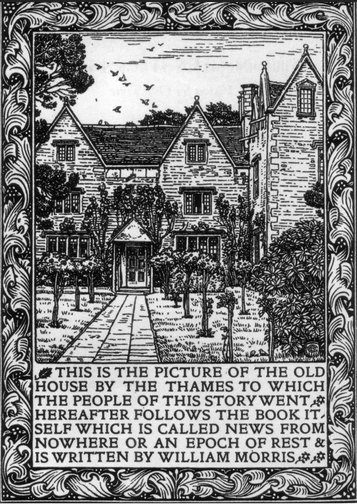
Key figures like William Morris—artist, poet, manufacturer and socialist—who befriended Yeats in Dublin. Morris became a lasting intellectual influence, introducing William to the London avant-garde and helping shape the ethos of the Yeats household.
In Bedford Park, the progressive London suburb where Yeats settled in the late 1880s,he was surrounded by figures who personified the utopian and anarchist ideals of the age. For Yeats, these ideas were not abstract: they were to be lived, discussed, drawn, and written about.
John was famously talkative, and as his son William recounted in The Trembling of the Veil in 1915…
‘he spoke with sound good sense and delightful humour about art and poetry and people, and the influence that radiated out from him touched a whole generation.
But the utopian moment was not to last. The Bolshevik triumph in Russia of 1917 shifted the leftward imagination from decentralised, libertarian socialism to centralised, statist Marxism, polarising politics in general between left and the rising fascism of the right. . The earlier, more imaginative versions of socialism—particularly anarchist and utopian strains—were gradually eclipsed. Later generations would struggle to recall how dominant these traditions had once been among cultural and intellectual elites.
And yet it was precisely in this former world that the Yeats family came of age. The period in which John Yeats lived and his children grew up—referred to as La Belle Époque—was marked by astonishing technological and artistic progress, but also by crushing inequality and imperial expansion. The contradictions of this era shaped Yeats’s generation and gave rise to the radical philosophies he embraced. The words used then—socialism, anarchism, utopia—often meant something quite different from their modern associations. This drift in meaning risks obscuring the world Yeats inhabited and the ideals he embraced.
To understand the intellectual and cultural legacy of the Yeats family, and their impact on later Irish history, we must begin with this atmosphere of radical possibility—a worldview at once grounded in Ireland’s Gaelic past and connected to the most hopeful international visions of the 19th century, the intertwined threads of anarchism and republicanism.
John Butler Yeats stood rebelliously at the crossroads of both.
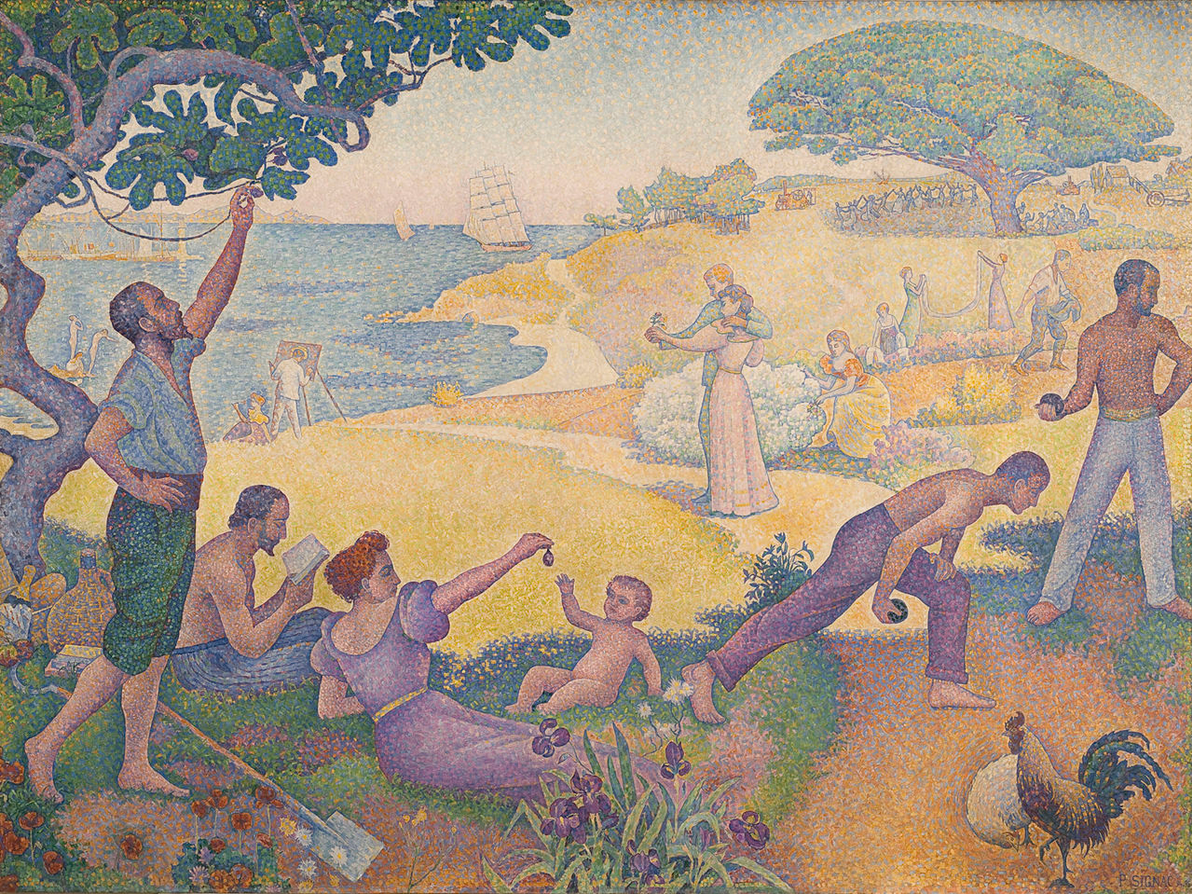
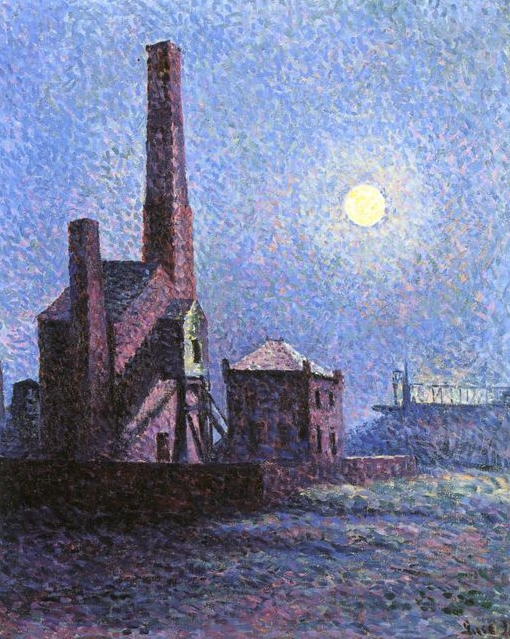
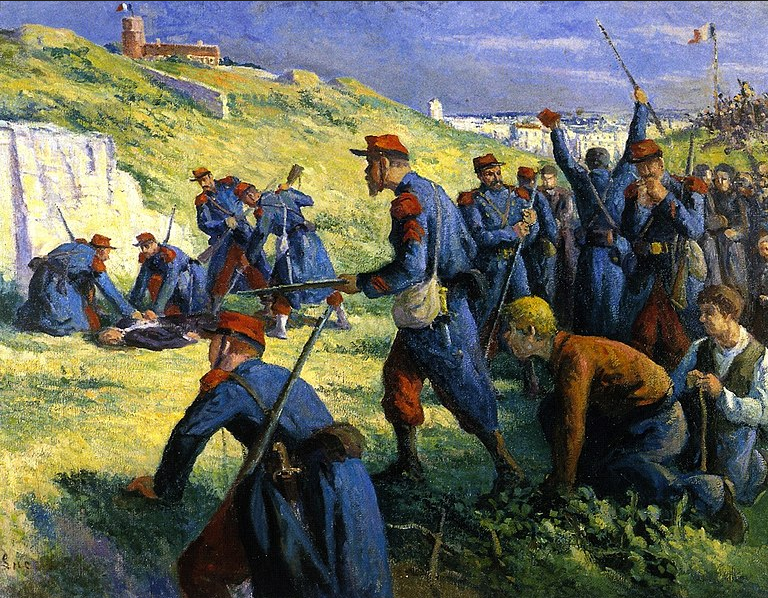
Signac renamed this painting “In Time of Harmony” from “In Time of Anarchy” to avoid political persecution. At the time, “harmony” was widely understood as a synonym for “anarchy”—a vision of social balance through mutual cooperation rather than coercive authority.
PART I: THE MAKING OF A RADICAL
“This above all: to thine own self be true“
Hamlet – Act 1 Scene 3 Polonius
John Butler Yeats was born on 16 March 1839 in County Down, the son of a Church of Ireland rector. His family lineage was clerical—his grandfather had been rector of Drumcliff in County Sligo, on the site of a 6th-century monastery founded by Columcille. His father grew up in this part of north Sligo, then on the estate of the Gore-Booth family, from whom Constance Markiwicz was to emerge. His father was kindly and easy-going, saying “if a man spoke harshly to you it was always your own fault”He provided ample paper for Johns drawing practice as a child, never complaining despite its cost.
While his father later moved to the parish in County Down where John grew up, John had numerous aunts and uncles around Sligo. That sacred landscape around Drumcliff would later become symbolically fused with his poet sons name: it was in the shadow of Ben Bulben at Drumcliff that William would choose to be buried.
Despite his religious upbringing, John grew up in a household that encouraged free conversation and critical thinking. His grandfather was remembered in Sligo for his lack of bigotry and respect for the Catholic majority in his parish—an unusual and admirable trait in an Anglican clergyman of the period. That spirit of tolerance and openness filtered down to the young John.
His early schooling at Atholl Academy on the Isle of Man was a brutal affair, presided over by a tyrannical Scottish headmaster. There, alongside Charles and George Pollexfen, John developed a lifelong hatred of compulsion in education and a deep interest in more progressive, child-centred methods of learning. These convictions would reappear throughout his life in his disdain for rote instruction and his championing of imagination and freedom in education.
Trinity and the Law: First Rebellions
He entered Trinity College Dublin in 1857, lodging with his grandmother, great-aunts, and Uncle Robert Corbet at Sandymount Castle. He described his grandmother and aunt as excellent conversationalists, and he regretted not having asked about the 1798 rebellion that they had lived through, describing them as “saturated through and through with the spirit of the eighteenth century”.
He studied under the progressive economist and poet John Kells Ingram—himself “well to the left” of most of his peers—John disliked Trinity intensely, viewing it as a colonial institution complicit in the oppression of Ireland. His thinking had already begun to move along radical, anti-authoritarian lines, though he remained, at least at this stage orthodox religiously.
His philosophy of life, even at this young age, was strikingly integrative—capable of holding in tension threads that others might see as contradictory: a passion for art and a hunger for justice, loyalty to Irish soil and immersion in European ideas, idealism and scepticism in equal measure. One contemporary remarked that he had “an extremely well-rounded philosophy of life“.
At the age of 23 he visited the Pollexfens in Sligo and became engaged to Susan Mary Pollexfen on 2 September 1862. Following his father’s death and his inheritance of the small Kildare estate, the couple married on 10 September 1863 at St. John’s Church, Sligo.
He studied law at King’s Inns in Dublin, entered the Irish Bar in 1866, and devilled (period of training under a senior barrister) for Isaac Butt, the Home Rule advocate. It was under Butt’s mentorship that John developed further his political sympathies for Irish self-government, though his legal career was short-lived—cut off in part by the revelation that he had been sketching a Queen’s Counsel “a little too effectively” in court. His cartoons were popular and funny it seems.
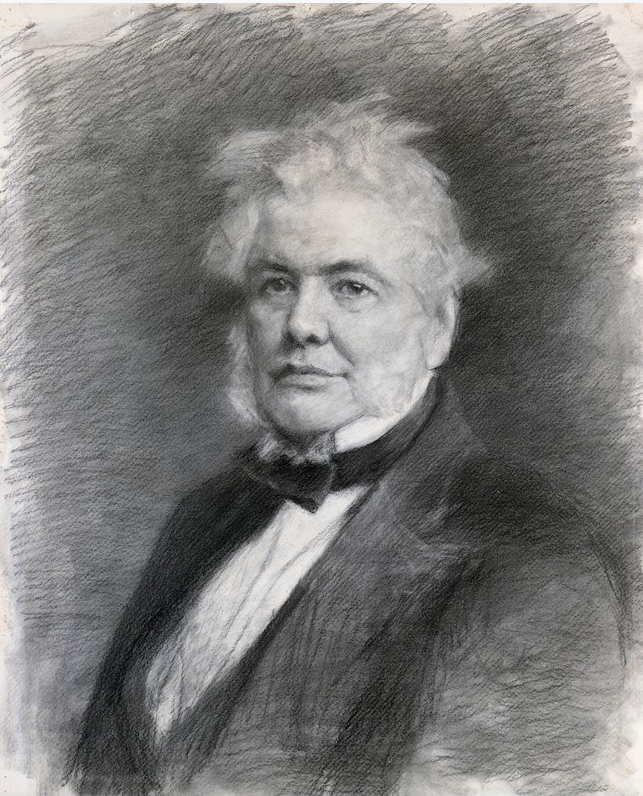
Isaac Butt drawn by John Yeats.
It was in this period that he gave one of his most revealing public addresses—The True Purpose of a Debating Society—delivered as Auditor of the Law Student’s Debating Society on 21 November 1865.
Rejecting outright the professional dogma that the role of a lawyer is to argue a client’s position, Yeats boldly declared that the Society’s aim must be nothing less than the pursuit of truth itself “truth for its own sake”. . A “restless craving for truth,” he argued, would eventually lead its members to “to desert their mimic debates and devote their faculties and energies, in real debate, to the attainment and promotion of truth”. Telling lawyers that their central concern must be only the truth is radical indeed!
This insistence on the centrality of truth—often inconvenient, sometimes impractical—would remain a defining characteristic of John Butler Yeats’s long life. He left the profession over this issue with the tension between the truth and working for a clients interests. From his refusal to practice law, to his uncompromising artistic ideals, to his late-life camaraderie with the realist painters of New York’s Ashcan School, he never strayed far from this early moral centre.
“Poetry and the imaginative life,” he would later write, “can only flourish where truth is of supreme moment; an education which contents itself with half-knowledge and half-thought will inevitably produce a crowd of sentimentalists and false poets and rhetoricians..”
A closer look at his Philosophy
John Butler Yeats’s belief in truth was rooted in a complex philosophical synthesis, shaped by his deep reading of John Stuart Mill and the influence of the Pre-Raphaelites. From Mill, Yeats absorbed a refined version of Utilitarianism — not Bentham’s strict pleasure calculus, but Mill’s emphasis on higher pleasures, individual liberty, and the moral importance of self-cultivation. This strain of Utilitarianism, grounded in the humanism of Epicurean ethics, held that the good life was one of rational moderation and emotional well-being — ideals that resonated with Yeats’s broader worldview.
Yet Yeats was acutely aware of the dark side of Utilitarian thinking when applied without imagination. He saw how the principle of “the greatest happiness for the greatest number” could be twisted to justify the sacrifice of minorities, or to impose order through authoritarian designs — as in Jeremy Bentham’s Panopticon, a model of surveillance architecture implemented in Sligo’s 19th-century prison. Though rational and seemingly humane, the Panopticon revealed a cold, bureaucratic logic that reduced people to units of behaviour — a danger Yeats would come to resist in both education and art.
In contrast, the Romantic idealism of the Pre-Raphaelites offered him a vision of human flourishing grounded in imagination, emotional truth, and aesthetic freedom. He admired their rejection of industrial uniformity and their return to sincerity, craft, and beauty. For Yeats, education was not the production of compliant citizens but the liberation of the soul. “False education,” he wrote, “is like the pressure which the Chinese mother applies to the feet of her infant… True education would liberate him so that he could sing in the open sky of knowledge and power and desire.”
“False education is like the pressure which the Chinese mother applies to the feet of her infant. True education liberates. The industrial movement would turn these peasants into smug artisans, without a thought that consoles or a hope that elevates… And yet man is naturally a singing bird… True education would liberate him so that he could sing in the open sky of knowledge and power and desire.”
Nevertheless John was aligned with the broader Pre-Socratic tradition underlying the Enlightenment—scientific and atheistic, concerned with moderation, clarity, and emotional well-being whilst elevating pleasure and eschewing pain—was evident in his belief that education should liberate, not constrain. His rejection of coercive schooling, and his ideal of nurturing imaginative freedom, marked a resistance to the reduction of human beings in an industrial system.
He blended this rational and materialist cosmology with an Aesthetic philosophy of art, a position summed up in “Art, for Arts sake”. They rejected outright the idea that art needed to be educational or say something. This movement was an influential counter to Victorian moral ideas that art was only good if it was educational or useful in some “improving” way. With roots in the German Romanticism of the late 18th and early 19th century, it was a key part of the Pre-Raphaelite school of painters that John was to fall in with during his first stay in London.
Yeats, like many in his time grappled with the seeming contradictions, elevating feeling and spontaneity above cool rational calculation. But, the common thread perhaps to the philosophical position that John built is that it was forward thinking, progressive, imaginitive and, remarkably, effective.
In this he resembled Oscar Wilde, another self described anarchist, aesthete and Irish revolutionary. Both Yeats and Wilde advanced a theory of aesthetics that viewed art not as a means to a mundane end (moral improvement, commercial gain, or social utility) but as an end in itself. They shared a deep conviction that emotion, beauty, and imagination were essential truths—not mere ornament.
Oscar was to have a profound effect on his son William who stayed with him over the Christmas of 1888. His advice to William on the importance of image had no small part in his success in later years.
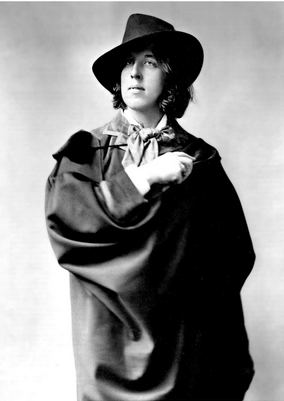
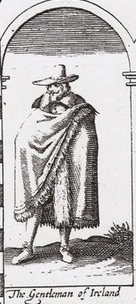
Oscar Wilde, with comparison of the dress of a Gaelic Gentleman. From Speedes map of 1610.
Yeats’s notion of education as “a stirring up of the emotions” aligns with Wilde’s idea that feeling is more trustworthy than reason, and that truth reveals itself through aesthetic experience. For both, art was the supreme mode of ethical and philosophical inquiry.
Wilde, in The Soul of Man under Socialism, wrote that “the new individualism is the new Hellenism,” calling for a society that nurtures artistic and emotional freedom. Yeats’s idea that the fully emotional man achieves inner harmony echoes this—an artistic-ethical ideal of integrated selfhood, liberated from both economic constraint and ideological rigidity.
Both saw aesthetic feeling as the path to a deeper truth—neither hedonistic nor ascetic, but formative of character. Johns writings on portrait painting show this attitude in his desire to paint the essence of a person and not to be concerned only with the technicalities .
Interestingly the families had known each other a long time, and both shared an interest in Irish history and beleived in thefull development of Irelands cultural and political independence.
“Slowly I have come to feel,” he once reflected, “that affection for human nature which is at the root of all poetry and art, whether the poet be pessimist or optimist.” This affection, rather than a rigid ideology, appears to have been his compass in navigating politics, aesthetics, and personal life alike.
Letters to W. B. Yeats: ‘Now a most powerful and complex part of the personality is affection and affection springs straight out of the memory. For that reason what is new whether in the world of ideas or of fact cannot be subject for poetry, tho’ you can be as rhetorical about it as you please – rhetoric expresses other people’s feelings, poetry one’s own.’
His philosophy mixed Enlightenment scientific materialism. with a sophisticated philosophy of the importance of subjective experience and elevated truth and love to the highest place instead of god and saw change as the universal constant. this allowed him to integrate evolutionary theory with a philosophy of perception that was to become extremely important in the work of his children, but especially William.
‘I have no belief in what is called a personal God, but do believe in a shaping providence – and that this providence is what maybe called goodness or love, and that death is only a change in a world where change is the law of existence’ (Quoted in McGahern, op. cit., 1992.)
PART II: IRELAND IN CRISIS
Not So Revolutionary Ireland
The ideals John Yeats held—of truth, liberty, and human dignity—would eventually shape his views on Ireland and influence the course of his family’s life. He lived through a century of upheaval: from the collapse of the Gaelic world with the catastrophe of the Great Famine (1847–1850), through the Land War, the long struggle for Irish independence from the British Empire.
When John was born in 1839, Ireland was a very different place to what it was whern he died. In a country of at least 8 million people, the majority spoke Irish as a first language.
The Gaelic social order, based on clan structures, communal landholding, and a rich oral culture, had withstood centuries of colonisation. Its structures and values persisted, particularly in the West of Ireland, well into the 19th century. Despite official efforts to eradicate the Irish language and dismantle traditional modes of life, these communities retained a coherent worldview rooted in mutual obligation, spiritual continuity, and an ethic of collective dignity.
The Famine marked a final rupture. With mass death, eviction, and emigration, the last vestiges of autonomous Gaelic life were shattered. What survived did so in fragments—song, memory, folk practice—but the social and economic base was irreparably broken.
Born only a decade after Catholicism had been legalised, Yeats entered a society already transforming. Catholic Emancipation had been secured in 1829 through a mass campaign led by Daniel O’Connell, which brought Catholics into civic life and redefined the Irish political landscape. But the Ascendancy, still clinging to power and privilege, regarded this shift with deep suspicion. The Catholic Church, newly empowered and increasingly aligned with British administration, quickly established itself as a dominant force in Irish public life. Its influence reached far beyond the sacristy—shaping education, gender roles, social morality, and national politics.
Daniel O’Connell in 1834
O’Connell had demonstrated the power of mass democratic mobilisation—but at a cost. To build a broad national movement, he stitched together the Irish-speaking west and the English-speaking east under the banner of Catholic nationalism. This alliance brought momentum, but also contradiction. The interests of rural Irish-speaking peasants diverged sharply from those of urban Catholics and the Old English gentry. In practice, many were excluded: Gaelic speakers, Protestant liberals, and secular republicans found themselves pushed to the margins.
Though O’Connell spoke Irish, he dismissed its role in the modern world. “The superior utility of the English tongue,” he claimed, outweighed any sentiment over the “gradual abandonment” of Irish. His vision was parliamentary, moderate, and loyalist: an Irish parliament under the Crown, within the Empire, and morally governed by the Catholic hierarchy. He had little sympathy for revolution. Catholic rights, once achieved, chiefly benefitted the Catholic middle class and aristocracy—leaving the Gaelic poor as impoverished as ever.
During the 1830s, O’Connell turned his attention to repealing the Act of Union, which had abolished the Irish Parliament in 1801 and imposed direct rule from Westminster. But neither the Protestant Ascendancy nor the Catholic middle class embraced the prospect of an Irish parliament, each fearing domination by the other.
These same blocs, decades later, would advocate for partition to protect their sectarian interests—revealing how shallow their commitment was to representative democracy.
This was the fractured political landscape inherited by Thomas Davis and the Young Ireland movement, which sought to imagine a very different kind of Ireland—non-sectarian, historically grounded, and radically democratic.
Thomas Davis
Thomas Davis (1814–1845) was a foundational figure in Irish nationalism and cultural revival, whose short life left a lasting impact. A Protestant and a romantic idealist, he was a leading voice in the Young Ireland movement and co-founder of The Nation newspaper.
Davis championed the idea of an inclusive Irish identity rooted in shared history, culture, and language rather than sectarian lines. He saw poetry, music, and historical memory as essential tools for nation-building, believing that Ireland’s future independence depended on reclaiming its past. Through his writings, Davis fused political activism with cultural renaissance, laying the intellectual groundwork for later movements that sought not only freedom from empire but a renewal of Irish civilisation itself.
Young Ireland’s Alternative Vision
Initially, the men, including Davis, who were to become the Young Irelanders were supportive of O’Connell’s movement, but the cracks in this coalition began to show as early as the 1840s. One major flashpoint was the proposed Irish University Act of 1845, which aimed to provide secular, mixed-faith higher education. O’Connell opposed it; his more radical allies supported it.
These rebels, whom he derisively dubbed “Young Irelanders,” broke with him entirely. They began publishing The Nation in 1842, championing a republican and secular nationalism that echoed the ideals of Wolfe Tone and the United Irishmen. Their vision was of a non-sectarian Ireland, where Catholic and Protestant alike could unite under the banner of liberty and equality. Thomas Davis excoriated O’Connells pious bigoted Catholicism in The Nation, warning where it would inevitably lead:
‘The objections to separate education are immense; the reasons for it are reasons for separate life, for mutual animosity, for penal laws, for religious wars. ‘tis said that communication between the students of different creeds will taint their faith and endanger their souls.
They who say so should prohibit the students from associating out of the college even more than in them … let them prohibit Catholic and Protestant boys from playing, talking, or walking together … let them establish a theological police – let them rail off each sect … into a separate quarter; or rather, to save preliminaries, let each of them proclaim war in the name of his creed on the men of all other creeds, and fight till death, triumph, or disgust shall leave him leisure to revise his principles.’
Thomas Davis
But O’Connell vehemently opposed the bill, along with the Catholic hierarchy, calling the proposed colleges “godless.” and accusing Davis maliciously of wanting to declare it a “crime to be a Catholic”.
In the ensuing debate, Davis was reportedly reduced to tears. He knew what was at stake. O’Connell and the bishops feared losing control of education, and O’Connell claimed he was making a stand for “Old Ireland”—an ironic claim from a man willing to discard the Irish language and accommodate British rule. O”Connells decisions were to lead to centuries of strife in Ireland, but there had been another path.
Davis had laid out a radically different vision. He admired French historians that had emerged since the French Revolution, particularly Jules Michelet—the passionate romantic historian who portrayed the common people as the true heroes of France’s past. Michelet’s histories celebrated popular movements and democratic uprisings, showing how ordinary citizens had shaped their nation’s destiny.
But he most revered Augustin Thierry, whom Davis exalted above “any other historian that ever lived.“ Thierry was a former secretary to the utopian socialist Claude Henri de Saint-Simon who had revolutionized historical writing by focusing on social conflict rather than political chronology. His groundbreaking works—Letters on the History of France and History of the Conquest of England by the Normans—analyzed the past as a struggle between different peoples, classes, and social systems. Rather than celebrating kings and battles,
Thierry studied how medieval French communes had fought feudal lords for self-governance, creating islands of democratic freedom centuries before the modern age. For Thierry, history was not the story of great men imposing their will, but of ordinary communities organizing to defend their liberty and human dignity against oppressive hierarchies.
Saint-Simon envisioned future social harmony, while Thierry applied those ideals to the past—writing history as the clash of classes, cultures, and ideals. Thomas Davis now absorbed this framework and mapped it onto Ireland. Where others saw a contest of nations or religions, Davis saw the historical struggle of peoples and systems.
Saint-Simon, now regarded as a founder of utopian socialism, was a major influence on John Stuart Mill and on foundational anarchist thinkers such as Pierre-Joseph Proudhon.
His vision of non-authoritarian, cooperative society informed Thierry’s historiography, which Davis in turn adopted as the philosophical basis for Irish republicanism. In this way, the early libertarian threads of European anarchist and socialist thought entered directly into the Irish radical tradition, underpinning the intellectual foundation of the later republican movement.
Davis imagined a republic in which all creeds and classes would be equal. He railed against the inhumanity of laissez-faire capitalism and the devastation it had wrought on England’s industrial cities. In Dublin, Davis addressed Protestants directly, saying: “Gentlemen, you have a nation.”
Through The Nation, Davis promoted the Irish language, called for a national museum, advocated for the protection of antiquities, and protested the desecration of sacred sites like Newgrange. He fused romantic and heroic nationalism with secular republicanism and a deep respect for Gaelic culture. His programme laid the groundwork for a cultural revival intertwined with progressive political ideals.
The republican movement now picked up a cultural programme.
In the Nation he urged,
‘the language of a nation’s youth is the only easy and full speech for its manhood and for its age. And when the language of the cradle goes, itself craves a tomb. A people without a language is only half a nation. A nation should guard its language more than its territories – ‘tis a surer barrier and more important frontier than fortress and river“
Thomas Davis
His fusing of a romantic and heroic nationalism, secular republican principles as well as promotion of the Irish language and the Gaelic past of the country were to create a current counter to the socially conservative forces of both Protestant and Catholic Ireland. These, and not strict religious divides were to draw the real lines of battle for the next chapters of Irelands history.
Where O’Connell saw Ireland’s future as clerical, moderate, and tied to Britain, Davis saw it as secular, heroic, and rooted in the Gaelic past. He sought a cultural revival alongside political independence—a republic of reason, memory, and inclusion. He also insisted that any future Irish history must be free of sectarianism:
“The greatest vice in such a work would be bigotry—bigotry of race or creed. We know a descendant of a great Milesian family who supports the Union, because he thinks the descendants of the Anglo-Irish—his ancestors’ foes—would mainly rule Ireland, were she independent.
The opposite rage against the older races is still more usual. A religious bigot is altogether unfit, incurably unfit, for such a task; and the writer of such an Irish history must feel a love for all sects, a philosophical eye to the merits and demerits of all, and a solemn and haughty impartiality in speaking of all.”
Though Davis’s public life lasted only three years before his death from scarlet fever at age 30, his influence was immense. His funeral galvanised a generation, including Jane Wilde (Oscar Wilde’s mother), who became a leading voice of the 1848 rebellion under the pen name “Speranza.” Her husband, Sir William Wilde, began collecting Irish antiquities, laying the foundation for what would become the National Museum of Ireland.
The Third Way
Davis’s vision was excellent. practical and inclusive, but it was also perceived as a threat to the established powers rooted in sectarian, military, financial and landed power structures. Neither the Protestant Unionist elite, nor the conservative Catholic middle classes rooted in the anglicised, hierarchical world of the Pale would subscribe to something that threatened their position.
Davis had created a third way—a fusion of progressive, radical republicanism, and Enlightenment secularism. He brought together Enlightenment rationalism, Gaelic romanticism, and an inclusive civic nationalism that defined the broadest possible Irish identity.
Outside of the more educated and left leaning Protestants, nowhere was this vision more potent than in the Gaelic-speaking west—the majority population of Ireland in the 1840s. Here, Davis’s fusion of cultural revivalism and secular republicanism offered the hope of a radically inclusive Irish modernity, where their culture would achieve equality before the law for the first time in centuries…
The Empire Strikes Back
Before this awakening could take flight, disaster struck. Davis died suddenly of scarlet fever in September 1845, at just 31 years old, just as his vision of an inclusive, secular Irish republic was gaining momentum among both Gaelic Ireland and progressive Protestants.
His funeral became a defining moment for a generation of Irish intellectuals. Thousands followed his coffin through Dublin’s streets, including Jane Wilde—Oscar Wilde’s mother—who would become a leading voice of the 1848 rebellion under the pen name “Speranza.” The ceremony galvanized writers, artists, and revolutionaries who saw in Davis’s death the loss of Ireland’s democratic future. Many would spend the rest of their lives trying to fulfill the promise of his brief but transformative career.
That same year, the potato blight arrived—a fungal disease that destroyed the crop upon which millions of Irish people depended for survival. The potato had become the staple food of the Gaelic poor, particularly in the west, where tiny plots of land could barely sustain families even in good times.
What might have been a crisis became a catastrophe, exacerbated by the British government’s economic dogma and latent racial prejudice. The Great Hunger killed over a million and drove a million more to emigration within just a few years.
The catastrophe devastated the Gaelic-speaking west. Though Westminster bore ultimate responsibility, Dublin’s role was not innocent. At the height of starvation, new Vagrancy Acts were passed in 1847, making movement out of one’s home district illegal. While no famine existed in the more monetised east, mass displacement from the west was criminalised. For many, the only escape lay westward to the coffin ships.
The response of the authorities discredited not only the government but O’Connell and the Catholic hierarchy. The scale of the disaster radicalised survivors across Ireland and in the diaspora, especially in America. Among them, a lingering suspicion grew: that the famine was not merely a failure of policy, but a form of calculated clearance. The Gaelic poor were viewed by many in power as an impediment to prosperity—an expendable underclass in a colonial economy.
The famine wiped out the subsistence economy of the west. It freed land for exploitation by capital, integrating the west into the east’s monetised economy and completing a project of enclosure and clearance that had been attempted before but had been impossible to achieve.
The failure to intervene effectively in the Famine, many believed, was no accident—it aligned with the interests of landlords, administrators, and industrialists. It was not only London that benefited; Dublin and the east did too by the destruction of the population with whom Davis had hoped to carry through the programme of a new Ireland.
In other words, capitalist driven land clearance allied to entrenched middle class interests , both Protestant and Catholic drove much of the failure to intervene in any meaningful way to prevent the disaster. Certainly, the survivors who reached America thought so, and rapidly militant societies sprung up to hit back at the Empire.
“… The Celt, like the Red Man, melts away from the land which he has occupied and reclaimed for a long time anterior to the dawn of history. […] The rushing advance of western civilization drives the Indian from his forests and prairies… Something of the same character, but more cold-blooded and cruel, is operating on the fortunes of the Celtic race both in Ireland and Scotland.”
Freeman’s Journal (1851) 5 August
Ironically, the famine also hastened the decline of the old Protestant landlord class. Their estates, gutted of tenants, became unviable. The social system imposed since Cromwell began to collapse under its own weight.
But culturally, the Gaelic west no longer posed an immediate threat. It could now be romanticised safely—like the Native Americans after the Indian Wars—its rough edges shaved off, its spiritual and collective ethos appropriated.
A new nationalist identity was forged in Dublin, equated with middle class Catholicism. Anglicised Catholics who had historically defined themselves as English could now embrace Irishness on terms they controlled.
The progressive vision of Davis—secular, non-sectarian, rooted in historical consciousness—was pushed to the margins. Those who held to it were now painted as extremists. Irelands Catholic middle classes in conjunction with the rising power of the church, rebranded the national story, obscuring the differences between east and west, between collaborator and resister, and between survivor and beneficiary. The Gaelic world could be mourned, mythologised, even mined for heritage—but never fully acknowledged as a living challenge to the new order.
PART III: JOHN BUTLER YEATS AND THE RADICAL TRADITION
John O’Leary and the Revolutionary Legacy
In Tipperary in 1846 , a young John O’Leary was convalescing from illness as the Famine gathered pace around him. It was during this period that he discovered the writings of Thomas Davis—and was immediately converted. While studying law in Dublin, he joined the radical wing of the Young Irelanders, and when they launched a failed rebellion in 1848, he returned to Tipperary to join it.
John O’Learys portrait by John Butler Yeats. Widely regarded as his masterpiece, though not by John himself.
The rising collapsed, as did another attempt in 1849. Disillusioned, he abandoned his legal career after discovering it required an oath of allegiance to the Crown. ibid (to this day the Kings Inns of Dublin and London are linked(
Like many other disillusioned republicans, O’Leary came to believe that Wolfe Tone’s approach—an oath-bound secret society—was the best model for revolution. In 1858, he was recruited by James Stephens to the newly formed Irish Republican Brotherhood (IRB), a clandestine movement dedicated to armed insurrection. O’Leary later admitted rather amusingly, he was never entirely sure if it was originally called the Irish Republican Brotherhood, or the Irish Revolutionary Brotherhood; as before 1867, it was always simply referred to as “The Organisation.”
Driven underground, the radical avant-garde became the torchbearers of both Gaelic cultural memory and the republican tradition of the United Irishmen. O’Leary became editor of The Irish People and treasurer of the IRB. For this, he was arrested and sentenced to twenty years’ exile for treason.
In exile, mostly in Paris, O’Leary maintained his belief that Davis’s cultural programme was as vital as military action. He returned to Ireland in 1885, an elder statesman of the republican cause. Cautious but committed, he joined the Constitutional Club in Dublin and sought to avoid the strategic missteps of the past.
His impact on the Yeats family was immense. His friendship with John Butler Yeats would lead to a striking portrait—widely considered Yeats’s masterpiece—and left a lasting impression on the younger Yeats children. As John later wrote to O Leary:
: ‘…If you will allow me to say so, when I met you – your friends – I for the first time met people in Dublin who were not entirely absorbed in the temporal and eternal welfare of themselves … It was meeting you all that has left an impression on my young people that will never be quite lost.’
There is some evidence, mentioned in connection with the later president of the IRB council Bulmer Hobson, that John Butler Yeats during his time in London was a senior IRB contact for revolutionaries arriving in the city—possibly assisting with communications or introductions. His good friend John O Leary was the president of the IRB throughout this period from 1891 to 1907.
O’Leary’s role as mentor and bridge between generations is often understated, he remained the president of the IRB until 1907. During his tenure, the armed force element had atrophied its true, but the project that the generation who had witnessed the failure of half baked rebellions in the pasdt had been to create the conditions, socially and intellectually that would enable any such asttempt at rebellion successful.
This legacy would resonate deeply with John Butler Yeats and his circle, preparing the ground for his engagement with other radicals in the London avant-garde, including Stepniak, Morris, and Kropotkin.
Exiles inGarden City
In the late 1880s, John Butler Yeats made a decision that would shape his family’s future. He moved them to Bedford Park in London—a radical experiment disguised as a quiet suburb.
From Law to Art
This wasn’t John’s first time in London. Back in 1863, he had shocked his wife’s wealthy Sligo family by abandoning his legal career to become an artist. He enrolled at Heatherley’s Art School, where he met other young rebels who admired the Pre-Raphaelite Brotherhood—artists who mixed poetry with medieval romance and a love of nature.
In London, John discovered Charles Darwin’s On the Origin of Species. He borrowed it from his friend Samuel Butler, the writer who penned Erewhon and an early essay about machine intelligence called “Darwin Among the Machines.” For John, Darwin’s ideas meant more than just science. They freed him from religious dogma.
“I came to recognise natural law,” he later wrote, “and then lost all interest in a personal god, which seemed merely a myth of the frightened imagination.”
Family Struggles
The years that followed were difficult. The family moved constantly between Dublin, Sligo, and London. Money was tight. John’s marriage suffered. Sometimes the children had to stay with relatives in Sligo—an experience that deeply shaped their love of Irish culture.
Two children died young. But four survived: William (who would become the famous poet), Susan (nicknamed Lily), Elizabeth (called Lolly), and Jack.
The Garden Suburb Experiment
In 1887, the family finally settled at 3 Blenheim Road in Bedford Park, Chiswick. This was no ordinary suburb. Bedford Park was the world’s first purpose-built “garden suburb”—a revolutionary attempt to solve the problems of industrial city life.
Developer Jonathan Carr had created something new: a community that combined urban convenience with rural beauty. The suburb featured twenty houses with built-in artists’ studios as well as a community club and church that welcomed different faiths.
The underlying philosophy was radical for its time: that beautiful, well-designed environments could create better people and a better society.
Its tree-lined streets, Arts and Crafts architecture, and integration of green spaces with residential areas embodied a philosophical commitment to reconciling urban convenience with rural tranquility.
This “garden suburb” concept represented a middle path between the overcrowded industrial city and isolated country living, promoting the idea that thoughtfully designed communities could foster both individual flourishing and social harmony.
Bedford Park’s emphasis on aesthetic unity, community facilities like the club and church, and its appeal to artistic and intellectual residents demonstrated the movement’s underlying belief that physical environment profoundly shapes social and moral development—a conviction that would become central to progressive urban planning throughout the twentieth century.
Bedford Park
Its red-brick houses and leafy lanes hid a community that embraced many of the values John held dear: environmental awareness, gender equality, world religions, and anti-imperialism. Twenty of the houses featured in-built studios for artists. Here, he lived from 1888 to 1902.
The French Impressionist Camille Pissarro captured its atmosphere in Bath Road, London (1897), a luminous depiction of the suburb’s tranquil modernity. Pissarro, whose son moved to Bedford Park, was himself a committed anarchist and a subscriber to Le Révolté. He corresponded with Jean Grave and counted Paul Signac and Henri-Edmond Cross among his comrades in aesthetic rebellion. Paintings like Meadow with Cows, Mist and Setting Sun at Eragny (1891), expressed a quiet radicalism—a belief in everyday beauty, peasant life, and communal values.
Meadow with Cows, Mist and Setting Sun at Eragny, 1891. Camille Pissarro
Pissarro was a committed anarchist who subscribed to the radical publication Le Révolté. He corresponded with leading anarchist thinkers and counted revolutionary artists Paul Signac and Henri-Edmond Cross as close friends. His paintings expressed what he called “quiet radicalism”—a belief in everyday beauty, the dignity of peasant life, and communal values.
As William Butler Yeats later wrote of his first experiences of Bedford Park::
“We were to see DeMorgan tiles, peacock-blue doors and the pomegranate pattern and the tulip pattern of Morris, and to discover that we had always hated doors painted with imitation grain, the roses of mid-Victoria, and tiles covered with geometrical patterns that seemed to have been shaken out of a muddy kaleidoscope. We went to live in a house like those we had seen in pictures and even met people dressed like people in the story-books.”
The political radicalism of Bedford Park was real. It was home to Russian exiles like Stepniak and Peter Kropotkin, who envisioned cooperative society and artistic freedom. At the same time, Morris’s Socialist League brought together artists, revolutionaries, and utopians under a banner of ethical socialism. John had taken William to hear Morris speak in Dublin, and even sketched him during his 1886 lecture The Aims of Art at the Contemporary Club.
Bedford Park was home to creative networks that embraced traditional crafts, environmentalism, healthy housing, egalitarianism, spiritual pluralism, and anti-colonialism. Its residents included artists, vegetarians, feminists, abolitionists, and anarchists. This was where John Butler Yeats encountered the intellectual milieu that would influence him and his children profoundly.
John Butler Yeats shared the Utopian dream that science and applied knowledge might one day free humanity from brutal toil. As he wrote in 1917, he looked to a millennium when “Science and Applied Science release us from the burthen of industry and necessity,” even while warning that without moral vision, such liberation might reduce people to mere brutes.”
John’s daughters Susan and Elizabeth attended the Chiswick School of Art and later trained in embroidery and printing under May Morris, William Morris’s daughter. John’s son Jack absorbed the aesthetic vision of Walter Crane, the cartoonist of the Socialist League, while William made early connections with Oscar Wilde and other literary figures through their Bedford Park neighbors, including the printer Elkin Mathews.
Chiswick School of Art the school taught “Freehand drawing in all its branches, practical Geometry and perspective, pottery and tile painting, design for decorative purposes – as in Wall-papers, Furniture, Metalwork, Stained Glass”.
Bedford Park was a crucible for a new way of life. As John put it, it was a place where “intellect and emotion shake hands in eternal friendship.” The utopian community of Bedford Park gave shape to a lifelong aspiration: that art, liberty, and radical ethics might form the foundation of a better society. It was in fact the origin of the modern small house and suburban blueprint of living which was to be replicated across the world in the 20th century.
Bedford Park wasn’t just John’s home from 1888 to 1902. It was a laboratory where he and his children could explore how art, politics, and daily life might be transformed. The ideas they encountered here—about beauty, community, and human dignity—would later inspire their efforts to create a new kind of Ireland.
An oil painting, a half length portrait of a seated young woman wearing a white dress and a necklace. Hands folded in her lap.PotrPortraits of the Yeats siblings by John Yeats.
The effect on Johns children was profound, as it provided both the education and the opportunities through contacts to express themselves—William, Lily, Lolly, and Jack—who would try to reimagine Ireland in the same spirit. Their next chapter would take up the promise of Bedford Park and attempt to plant its ideals in Irish soil.
The revolution, it turned out, could begin in suburbia.
The Arts And Crafts Movement
William Morris, president of the Socialist League brought together artists and revolutionaries. John sketched Morris during his 1886 lecture on utopian socialism at Dublin’s Contemporary Club—an event that made a powerful impression on young William Butler Yeats, who attended with his father. Morris’s News from Nowhere, a utopian novel envisioning a decentralized, craft-based society, became a blueprint for the Yeats household.
William Morris as sketched by John B Yeats at the Constitutional Club, Dublin.
These strands fused in a practical way in the firm Morris Faulkner & co a interior decoration a furnishings and decorative arts manufacturer and retailer founded by the artist and designer William Morris the firm’s medieval-inspired aesthetic and respect for hand-craftsmanship and traditional textile arts had a profound influence on the decoration of churches and houses into the early 20th century.firm founded that became influential in mural decoration, furniture, metal and glass wares, cloth and paper wall-hangings, embroideries, jewellery, woven and knotted carpets, silkdamasks, and tapestries.
News From Nowhere, William Morris Utopian science fiction novel
Bedford Park was also home to a transatlantic artistic network that fed into the rising Arts and Crafts movement. Figures such as Edward William Godwin (he had designed some of the houses in Bedford Park)—deeply influenced by Japanese design—and his son, the theatrical innovator Edward Gordon Craig, helped shape a fusion of medieval, modern, and Asian aesthetics. Frederick York Powell, a historian, socialist, also a member of Stepniaks circle and an “Ardent champion of Irish learning’, John had hoped to have WB work with him, and lamented when William took up with Lady Gregory instead.
William Godwins almost futuristic Japanese inspired furniture design. He also was designer of Oscar Wildes house at Tite street.
Years later in 1916 WB Yeats was to replicate the ambition of these visions wwith his purchase of the tower house at Coole Park and the engaging of an Arts and Crafts architect to design a new form of Gaelic inpired interiior decoration. Furniture and metalwork and textiles were all commissioned for this project, which Yeats perhaps intended to be as inspirational in Ireland as Morriss Red House had been in England.
William Morris workshops where Johns daughter Susan was to work in the embroidery section for several years were nearby.
Morris held here his meetings with a wide range of free thinkers and avant garde social reformers
Here Pyotr Kropotkin was a regular guest. quickly became part of Morris’s Sunday “Socialist League” gatherings, in the coach house to the left of the main house.
There he joined a political circle that included Bedford Park’s Ukrainian exile Sergius Stepniak,, Eleanor Marx, daughter of Karl, and two Irish socialists, the playwright George Bernard Shaw, and Annie Besant who would become the first woman President of the Indian National Congress. WB Yeats quickly joined the circle a;so.
Many of the same activists also attended Bedford Park Club debates, including those on Indian Independence and Irish Home Rule, as did occasional visitors such as Roger Casement and John O’Leary.
In one of his letters written from Bedford Park, he reports on a visit by the old Fenian, John O’Leary to the Calumets, a club in Bedford Park. John was disappointed that O’Leary had avoided ‘dangerous subjects’, and so he had tried to ‘roll in the apple of discord’, but to no avail.
A description of Morris philosophy at the time goes thus
All who knew him knew he was profoundly convinced that so long as private ownership in the means of life obtained a true material, intellectual, and moral human life for the mass of the people was impossible.
Yet he could not conceive William Morris sitting down satisfied with the mere alteration of material and physical conditions. He grasped that the main thing to be done was to give opportunities for character to grow.
It was the building up of character. The true worth and value of human life lay in the fact that every man, woman, and child was an improvable being; that there existed in the world certain artificial conditions that hindered, crushed, and degraded human life; that it was the duty of society to change those conditions, in order that the highest possibilities of human life might have free play and develop—that made Morris’s Socialism that of the true Social Democrat, and the Hammersmith Socialist Society would best perpetuate his memory by carrying on its work on those lines.
Herbert Burrows
Stepniak (Sergey Kravchinsky) and Peter Kropotkin, Russian anarchist exiles who joined the Bedford Park salon culture. Most notoriously, he had assassinated General Nikolai Mezentsov, chief of Russia’s secret police, with a dagger in St. Petersburg in 1878.
Stepniak—whose house backed on to the Yeats garden was a Russian revolutionary, writer, and theorist.
He was found dead in 1895 after being struck by a train at a level crossing. Officially deemed an accident, some suspected Russian secret police involvement. John Yeats had been at Stepniak’s home the night before.
The official version was that Stepniak was struck by a train at a level crossing in Bedford Park, London, on December 23, 1895. He was reportedly deep in thought or reading while walking, failed to hear the approaching train, and was killed instantly. Some suggested suicide, which John denied.
Some of his fellow revolutionaries and supporters suspected that Russian secret police (the Okhrana) had arranged his death. The Tsarist regime had a documented history of hunting down political exiles abroad, and Stepniak was a high-profile revolutionary who had assassinated a top Russian official. The suspicious timing and circumstances led some to believe it was a carefully orchestrated assassination made to look like an accident.
The Arts and Crafts Republic
For the Yeats family, the ideals of the Arts and Crafts movement—its fusion of artistic expression, ethical design, and social reform—were not confined to England. They provided the blueprint for cultural renewal in Ireland. Inspired by William Morris’s utopian vision of a decentralised, cooperative society grounded in craftsmanship, the Yeats children sought to give material form to an Irish modernity rooted in its Gaelic past.
William Butler Yeats embraced these values in his poetic vision and personal life. The design of his Tower House in Ballylee reflected a conscious revival of medieval Irish architecture, combining national symbolism with the aesthetics of the Arts and Crafts movement. Furniture, textiles, and interior details echoed the simplicity and integrity of hand-crafted work, reinforcing his dream of a self-defined Irish culture independent of British models.
Wnen he had begun to write his first sucesses came with his turn to Irish folklore rather than the imitations o0f Englands lake poets. Under the strong influence of John O Leary. And his mothers longing to be back in Sligo.
“I would remember Sligo with tears, and when I began to write, it was there I hoped to find my audience”
His sisters, Susan (Lily) and Elizabeth (Lolly), gave practical embodiment to this vision. With training from May Morris and the Chiswick School of Art, they returned to Ireland and established the Dun Emer Guild and later the Cuala Press. These workshops specialised in embroidery, book design, and printing. Their work drew on Irish myths, folktales, and native ornament.
at the Froebel College in Bedford,publication of four popular painting manuals: Brushwork (1896), Brushwork studies of flowers, fruits and animals (1898), Brushwork copy book (1899), and Elementary brushwork studies (1900)
Jack B. Yeats, meanwhile, dedicated his art to depicting the West of Ireland—its people, landscapes, and customs. His impressionistic paintings and drawings gave visual life to the same rural world celebrated in his brother’s poetry. Unlike romanticised visions of the West, Jack’s work was informed by direct observation, empathy, and a democratic eye, illustrating scenes of ordinaryu life, from the dock workers in Sligo to the horse races on the beaches, his art documented a living tradition rather than a vanished one.
Together, the Yeats siblings imagined an Irish future built on the foundation of its own traditions—transformed, not abandoned, by modernity. The Arts and Crafts Republic they dreamed of was not nostalgic or backward-looking. Its roots were cosmopolitan, intellectually ambitious, and egalitarian. It aspired to give Ireland its own voice in the modern world—through art, through literature and through design.
By rooting Irish cultural identity in shared craftsmanship and creative independence, the Yeats family advanced a vision of national self-hood that was as political as it was artistic. In their work, the legacy of John Butler Yeats—the fusion of the Gaelic tradition and European radicalism lived on.
PART IV: THEORY INTO PRACTICE
Anarchist-Nationalism and “Irish Freedom“
How did these ideas manifest in Ireland?
The American anarchist Benjamin Tucker, in his 1897 work Instead of a Book, wrote admiringly of Ireland’s Land League:
“Ireland’s true order: the wonderful Land League, the nearest approach on a large scale, to perfect Anarchistic organization that the world has yet seen. An immense number of local groups scattered over large sections of two continents…each group autonomous; each composed of varying numbers of individuals…”
This fusion of anarchist radicalism with Ireland’s national struggle found further expression through successors of John O’Leary in the IRB, such as Bulmer Hobson and figures in the broader Gaelic revival. Standish O’Grady and George Russell (Æ), a close friend of W.B. Yeats, were instrumental in popularising the ideas ofPeter Kropotkin in Ireland. While editing The Irish Homestead, Russell published essays by Kropotkin that advocated for voluntary association, decentralised communes, and mutual aid.
George Russell who was a close friend of WB Yeats, was publishing essays of Kroptkin while he was editor of The Irish Homestead.
O’Grady openly acknowledged the influence of Kropotkin, proposing an anarchistic programme of rural development and communal self-reliance. His writings appeared in The Peasant, Irish Ireland, The Irish Nation, The Irish Review, and The New Age—progressive periodicals that echoed the cooperative ethos of the Land League. The ideas circulating in these journals offered a vision of national regeneration grounded not in the state, but in community.
This was a conscious attempt to carry forward the fusion originally attempted by the Young Irelanders, who had combined Proudhon’s anarchism with Mazzini’s nationalist vision of self-determination. Now in a new generation, this tradition was updated through Kropotkin’s humane and practical philosophy and was developed in real-world terms through cooperative movements.
The Yeats sisters’ enterprises—Dun Emer Industries and Cuala Press—were organised as co-operatives. Countess Markievicz, in alliance with Hobson, attempted to establish cooperative businesses on her Sligo estates, though with limited success.
Alice Stopford Green (1847–1929) answered Thomas Davis’s call for a history of Ireland that was neither sectarian nor imperial but rooted in the dignity of its native civilisation. Not one focused solely on defeats and dispossession, but one that portrayed Gaelic civilisation as a dynamic and original culture.
She argued for this in works such as The Making of Ireland and its Undoing (1908), Irish Nationality (1911), and The Old Irish World (1912).
She wrote:
“No real history of Ireland has yet been written. When the true story is finally worked out… it will give us a noble and reconciling vision of Irish nationality.”
Alice Stopford Green
Stopford Green sought to document the material, social, and intellectual life of Ireland before conquest, aiming to inspire dignity and future independence. Sherejected the colonial narrative of decline and barbarism, instead portraying early Irish society as sophisticated, literate, and communally organised. Green bridged divides and offered a scholarly foundation for a pluralist, Gaelic-informed vision of Irish nationhood. Her histories aimed to restore pride, coherence, and cultural legitimacy to a people whose past had long been distorted or erased.
Her turn to the Irish cause had happened around the turn of the century, and it is perhaps not surprising that we find both O’Leary and Yeats as visitors to her house at theis time. John O’Leary, again sketched by John Butler Yeats in Alice Stopford Green’s London home around 1900, provides a tantalising link—from Young Ireland to the revolutionary intellectual circles of the early 20th century.
John O Leary sketched by John Yeats in London around 1900, the inscription notes the portrait was done in the house of Alice Stopford Green.
Her influence extended to James Connolly, who adopted her image of early Irish society as egalitarian and proto-socialist: “a socialist revolution in Ireland would be in certain respects a return to the early Gaelic system.”
“All valuable education,” John once wrote, “was but a stirring up of the emotions,” adding that true feeling was not excitability, but harmony: “In the completely emotional man, the least awakening of feeling is a harmony in which every chord of every feeling vibrates.”
This idea of deep emotional resonance as a guide to truth shaped his own life and that of his children. For John, genuine feeling was not sentimental outburst but the achievement of inner integration—a state where intellect, emotion, and moral conviction worked together seamlessly, creating what he called a “vibrating beingness.”
This conception of emotional harmony perfectly aligned with the revolutionary art theory emerging in 1880s Paris, where Georges Seurat was pioneering pointillism—a technique that would profoundly influence Pissarro and Signac. Seurat, trained at the École des Beaux-Arts but fascinated by the chemistry of vision, had discovered the work of Michel Eugène Chevreul, director of the historic Gobelins tapestry factory. Chevreul’s studies of “simultaneous contrast” showed that separate colors, when placed side by side, would blend optically in the viewer’s eye to create a third color—an effect he called “harmony.”
Seurat copied paragraphs from Chevreul’s treatises into his own notebooks, but he was most interested in how this optical harmony evoked emotion. His pointillist paintings—composed of thousands of separate colored dots—created what contemporary viewers described as “blurred vibration,” a shimmering atmosphere that seemed to reveal “all forms as a swarm of atoms, electric.” For Seurat, this visual manifestation of emotion as vibrating energy was the key to authentic artistic expression.
Portrait of Paul Signac by Maximilien Luce, shows the typical anarchist school of pointillist colour use to create “harmony”.
Just as Seurat’s paintings required active participation from viewers whose eyes completed the optical blending, John’s education required students to integrate their own emotional and intellectual capacities. Neither sought to dominate or manipulate, but rather to create conditions where natural harmony could emerge.
If separate colors could cooperate to create beauty, and separate emotional faculties could vibrate together to produce wisdom, then perhaps separate individuals could work together without coercive authority to create a just society. The “vibrating beingness” that John saw in fully developed humans was the same shimmering energy that Seurat captured in paint—both expressions of what happened when natural forces were allowed to find their own organic harmony.
John Yeats, self portrait.
He had no illusions about its material rewards. “It is impossible for a rich man’s son to enter the heaven of poetry,” he wrote. “Yet a poor man’s son should avoid poetry, because it is impossible to make money by the writing of poetry.” And still, he raised his eldest son to be a poet. “It was a secret between us,” he admitted, “I was not anxious to proclaim to the world that I, a poor man, was bringing up my eldest son to be a poet.”
It was in York Street, before he went to his regular studies, his father used to read poetry to the youth who was to become the greatest poet of our time. “ He never read me a passage because of its speculative interest, and indeed did not care at all for poetry where there was generalization or abstraction however impassioned.” Once he read from Coriolanus. “That scene is more vivid than the rest, and it is my father’s voice that I hear and not Irving’s or Benson’s.” The first poetry W.B. shows himself to us as writing is in the form of a play — “ a fable suggested by one of my father’s early designs. ”
This nurturing of poetry in the face of hardship illustrates a principle central to John Butler Yeats’s worldview: the pursuit of inner truth over material success. It echoed the ethos he recalled from his youth, when “the definition of a gentleman was a man not wholly occupied in getting on.”
Despite this, William Yeats eventually drifted into conservative and even authoritarian circles—something his father had tried hard to prevent. “He is naturally conservative,” John warned, “and I don’t want to see that side of his character developed. I would rather keep him in the ranks down among the poor soldiers fighting for sincerity and truth.”
In another letter, John dismissed the Nietzschean ideal of the Übermensch: “The men whom Nietzsche’s theory fits are only a sort of Yahoo great men. The struggle is how to get rid of them—they belong to the clumsy and brutal side of things.”
And so it was that William came to realise later in life that for all the effort he had made to move away from his fathers old fashioned ideas, startled himself “with some surprise how fully my philosophy of life has been inherited from you.”
This flow of energy and vision set the stage for the eventual Rising in 1916, an event that many of the IRB and others disagreed with (mainly because of its limited chance of military success). John himself referred to them as “mad fools”.
But the cultural thread of those who took part in the Rising was precisely that which we have outlined here. The IRB, now with Tom Clarke and MacDiarmada were a faction that had been brought in by Bulmer Hobson during his time as President. He was instrumental also in the founding of the Volunteers. Hobson, as we have seen was an eclectic socialist who was well versed in anarchist philosophy and political organisation.
The other main actor of the rebels was James Connolly, who of course history remembers as the great socialist thinker of the rebellion. His Citizen Army was organised by the anarchist Jack White. He himself had been an organiser for the syndicalist IWW in the US. The syndicalists were the union arm of the anarchist movement, and represented the most modern strain of anarchist thinking at the time, one in which the federated syndicates would replace the stste using the general strike to effect change. Connolly was co-opted into the IRB and forced to align his plans with theirs, but as weve seen , they represented merely older and newer forms of the same threads of radical traditions.
So these events are well studied and documented, but our concern here is how did the life and work of John Yeats, his family and his social circle feed into these events. Away from the military marches and the gunpowder and cordite of the militants, what was the other side of the revolution aiming at. And did they think they could effect change without resort to violence? And if so, how?
The Philosophy of Dreams
John, in a letter to his son, says,
“My dear Willie,” he once wrote, “I am afraid you must sometimes think me very conceited—the fact is not only am I an old man in a hurry, but all my life I have fancied myself just on the verge of discovering the primum mobile.”
‘My theory is that we are always dreaming – chairs, tables, women and children, our wives and sweethearts, the people in the streets, all in various ways and with various powers are the starting points of dreams … Sleep is the dreaming away from the facts and wakefulness is dreaming in close contact with the facts, and since facts excite our dreams and feed them we get as close as possible to the facts if we have the cunning and the genius of poignant feeling“
John Yeats, Private Letter to WB Yeats. Quoted in John McGahern, Trinity Quattrocentenial essay, in The Irish Times, 9 May 1992, “Weekend”, q.p.)
We could take this whimsically or mystically perhaps, but given what we know of Johns philosophy, we can assume he had a materialist basis for his theory.
The primum mobile (prime mover) was the outermost sphere in medieval cosmology that set all other celestial spheres in motion, but here Yeats uses it metaphorically to suggest he’s seeking the fundamental principle that animates all existence. This reveals his philosophical ambition: he’s not just developing an artistic theory but attempting to articulate nothing less than the basic mechanism of consciousness and reality.
“We are always dreaming” opens up profound implications for understanding how utopian idealism functions as a form of constructed reality. If consciousness fundamentally operates through dream-like processes of interpretation and projection, then utopian visions—whether anarchist, socialist, or otherwise—are not mere fantasies but alternative constructions of reality that possess both validity and transformative power.
This perspective anticipates modern neuroscientific understanding of the brain and its rol;e in constructing the reality we perceive. Making Yeats’s insight remarkably prescient. This isnt a relativist position either. The objective facts are always there. But humans access to them is always indirect, and the state of reality we perceive when waking is only somewhat closer to these facts than that when asleep.
William Butler Yeats grasped this principle and applied it to Irish culture. “I have desired, like every artist, to create a little world out of the beautiful, pleasant, and significant things of this marred and clumsy world, and to show in a vision something of the face of Ireland to any of my own people who would look where I bid them,” he wrote in The Celtic Twilight. This wasn’t literary romanticism but the practical application of his father’s theory.
His poetry demonstrated exactly what John meant by “dreaming in close contact with the facts.” When William wrote “Come away, O human child! / To the waters and the wild / With a faery, hand in hand, / For the world’s more full of weeping than you can understand,” he wasn’t describing an existing Ireland but constructing one. He gathered the “facts”—Irish folklore, landscape, language patterns—and used them as “starting points of dreams” for an alternative national future.
If all human experience is dreamlike, then what what prevents us organising things in a better way? It would mean that nothing is fixed as so many say “this is just how it is”. It would also mean that by changing the dream, we would change the reality.
This philosophy would have provided a profound foundation for believing that a better world could be actualized through artistic and political imagination. If consciousness is fundamentally “dreaming in close contact with the facts,” then the act of imagining alternative realities becomes not escapist fantasy but a legitimate mode of engaging with and reshaping the world.
This led to a very practical focus on the physical surroundings in which people lived. William Morris’s “craft socialism” represents a close parallel. Morris’s belief that transforming the conditions of labour and daily life could reshape human consciousness directly echoes Yeats’s emphasis on how “facts excite our dreams and feed them.”
Morris’s vision of beautiful, meaningful work wasn’t utopian fantasy but an attempt to materialize an alternative reality through immediate practice—and in this they created literally chairs and tables to create “the starting point of dreams”.
Susan and Elizabeth Yeats followed through on this philosophy by creating the Dun Emer Industries and the Cuala Press in Dublin. Here making manifest things dreamed by their poet brother, by printing editions of his books. These operated as co-operative enterprises, following the philosophy of the worker owned collective enterprises that the socialist philosophy sought to replace capitalist owned workplaces with. This also was in line with anarchist thinking that worked from the bottom up.
As William Yeats was to do years later in his tower house at Coole Park, where the objects brought forth the poetry, The Tower and The Winding Stair being written after W.B. had created the material objects.
The context of the letter suggests this was part of an ongoing intellectual dialogue between father and son during a crucial period in W.B. Yeats’s development.
Here we have the starting point that William translated to a magician’s incantation, where the word not only creates the reality, but reality creates the word. For W.B. Yeats, this philosophical inheritance is evident in his belief that poetry could literally bring a nation into being. His lines “We have fallen in the dreams the ever-living / Breathe on the tarnished mirror of the world” suggested that ancient Irish consciousness wasn’t dead history but living force that could reshape contemporary reality.
His Celtic Revival wasn’t just cultural nostalgia but an attempt to “dream” Ireland into existence through myth, symbol, and verse—to use “poignant feeling” to perceive the essential Ireland beneath colonial oppression and then manifest that vision through artistic expression. When he wrote “Let us go forth, the tellers of tales, and seize whatever prey the heart long for, and have no fear. Everything exists, everything is true, and the earth is only a little dust under our feet,” he was articulating his father’s philosophy as practical methodology.
Johns philosophy was not fantastical though as his concern for using sensation or feeling to get close as possible to the facts shows.
This represents a sophisticated synthesis of Romantic idealism with practical activism—the notion that changing consciousness is the first step toward changing the world, but that such change requires both imaginative vision and rigorous engagement with existing conditions.
Jack Yeats followed also in his fathers footsteps, in his case by painting and drawing the people marhinilised by Victorian and Imperial colonial society, Tramps and clowns, paupers and itinerant outsiders, continuously appear in Yeats’s repertoire, their fate and resilience through time assuming an almost metaphysical force in many of his late paintings.
As an American critic noted, the “people Mr Yeats is interested in are a rough, hard-bitten, unshaven, and [a] generally disreputable lot.”
He drew James Larkin – the militant Syndicalist union leader and co-founder, with James Connolly and the anarchist Jack White, of the Irish Citizen Army leaning out of a window in Liberty Hall, to deliver a speech to the strikers below.
We can imagine also that Jack B. Yeats’s painting sought to capture the emotional essence of Irish life in ways that could shape national consciousness. Even their father’s portrait work aimed to reveal the inner character of his subjects—to see through to their essential selves via “poignant feeling” and make that vision visible to others.
Jack Yeats Leaving the Far Point, 1946. Oil on canvas/
William himself recognized this inheritance late in life, writing with some surprise when he realised “how fully my philosophy of life has been inherited from you.” The poet had spent decades trying to move beyond his father’s “old fashioned ideas,” only to discover he had been implementing them all along—proving that John’s theory of consciousness as creative dreaming wasn’t abstract philosophy but practical methodology for reshaping the world.
It is Darkest before Dawn
Dark Clouds
But the Ireland John Butler Yeats and so many with him dreamed into being—a place where his children could develop and express that vision—was not to emerge at this time. When he died in 1922, just as Ireland descended into civil war over the Anglo-Irish Treaty. The ensuing counter-revolution enabled the rise of authoritarian and clerical forces that dominated 20th-century Ireland.
The democratic republic envisioned by Wolfe Tone, Thomas Davis, and James Connolly gave way to two sectarian states. By 1928, the Committee for Evil Literature was banning works such as Plato’s Republic, its title alone seen as subversive.
The new state turned against the very forces that had fought for its creation. Women were forced out of public life, divorce and abortion were outlawed, Irish speakers were marginalised by an artificial bureaucratic standard, and native speakers often failed exams in the very language they had grown up speaking. Travellers were targeted for assimilation, and socialists exiled or silenced. Though Protestants were tolerated, the laws paid them little regard. The Catholic Church reached unprecedented dominance, personified by figures like Bishop John Charles McQuaid.
Tragically, the expansive vision of the Arts and Crafts Republic—embodied in textile and furniture design, book printing, cooperative workshops, and a revival of Gaelic material culture—was abandoned. Within two decades of the Free State’s founding, much of this cultural infrastructure had been dismantled or neglected. The new ruling elite saw the rest of the country as a threat rather than a foundation.
Yet not everything was lost.
Epilogue: We Are Always Dreaming
Though eclipsed by his children in public memory, and indeed written out or dismissed as a mere failed artist by several modern revisionists, Yeats played a central role in the revolution of the Irish mind. He and John O’Leary helped give shape to its most subtle and enduring feature: not merely the creation of a new world, but the capacity to understand that world and why it was worth fighting for.
The systematic diminishing of John Butler Yeats’s reputation during the 20th century was perhaps no accident. The conservative and theocratic state that emerged after independence was threatened by everything he represented. His vision of secular republicanism, gender equality, religious tolerance, and international solidarity directly challenged the narrow nationalism that the new establishment sought to impose.
His philosophy of “dreaming in close contact with the facts”—the belief that consciousness could reshape reality through artistic and political imagination—was precisely what the authorities feared most. A population capable of imagining alternative futures might question why Ireland had to be organised around clerical authority, sexual repression, and economic conservatism. His anarchist sympathies, his celebration of individual creativity, and his international perspective marked him as dangerous to a state intent on controlling both minds and bodies.
Even his educational philosophy posed a threat. His belief that “all valuable education was but a stirring up of the emotions” contradicted the rote learning and moral conformity that the new system demanded. The Free State, and indeed Northern Ireland, were to be examples of everything Thomas Davis had warned against all those years ago, the religious domination of a sectarian system did indeed lead to conflict and war, bigotry and discrimination, and abuse of the vulnerable.
But the idea that people should think for themselves, feel deeply, and pursue truth wherever it led was incompatible with a society built on unquestioning obedience to religious and political authority.
The Enduring Legacy
Yet in the tradition of the greatest Irish revolutionaries, John’s influence proved more durable than the forces that sought to suppress it. He spent his last years in Greenwich Village, New York, content in a boarding house on West 29th Street run by three Breton sisters. In the United States he gained recognition that, except amongst a few, had eluded him in Ireland.
He found kindred spirits among the Ashcan School painters—artists who, like him, believed in depicting life honestly and celebrating the common humanity of ordinary people.
He exchanged letters with Padraic Colum and other Irish writers in exile, maintaining the international network of cultural exchange that had always defined his vision. One American poet, as Colum later remembered, described him as “the greatest father in literature”—a recognition that his true achievement lay not in his own art but in the intellectual and moral environment he had created for the next generation.
As one of his admirers wrote to his daughter Lily after John’s death in New York in 1922: “A few score men such as your father in the world at any one time would cure its sickness.”
His final self-portrait, worked on for over a decade in New York he believed was his masterpiece. It was commissioned by Quinn in New York in 1911 and worked on between then and the artist’s death in 1922. ‘It is like watching a blessed ghost of a long lost beloved slowly materialising,’‘’ Mary Colum, wife of Padraic Colum described the iron bed and cheap worn rug, and the easel with the same painting permanently set up.
Johns final self portrait worked on for over a decade in New York. This he declared to be his masterpiece. “I think of nothing else and I dream of it.” he declared.
W.B. Yeats wrote that in his letters his father ‘constantly spoke about this picture as his masterpiece, insisted again and again … that he had found what he had been seeking all his life’.
January 1917 John Butler Yeats wrote: ‘Now I mean as soon as possible to finish my portrait, on which I have been working for many years … I want it to be “great” – an immortal work – that’s why I put off finishing it.’
By Christmas 1918 he was writing “My portrait looks well. One day since my illness (the day before yesterday) I almost finished the hands and put a life and authority in it such as I have never reached any time before.“
John died 1922, with the painting still on the easel, unfinished. As his sons star rose, it appeared to some observers that John had somehow failed. But the narrow judgement of biographers and critics seems all to keen to throw out the wider sense in which his life was a triumph. His belief in the truth as highest ideal had come to define, through his children, the awakwning of an entire nation. That was to come into existence just as John died.
His ideas lived on in ways the Irish establishment could not control. The international influence of his children—William’s Nobel Prize, the global reach of Irish modernist literature, the Arts and Crafts movement’s evolution, were eclipsed by the sectarian oppression of both the Free State and Northern Ireland. William, without his father, became rudderless to an extent, vulnerable to political manipulation. But, what was done was done, and could not be erased. The Yeats families reputation and importance if anything increased throughout this periad.
John had demonstrated that committed people, working with integrity and imagination, could indeed change the world. The Bedford Park circle, the Irish literary revival, the Arts and Crafts workshops—all proved that his father’s anarchist vision of voluntary cooperation and mutual aid was not utopian fantasy but practical possibility.
That insight captures something essential about John Butler Yeats’s legacy. He belonged to no political party, built no institution, founded no movement. Instead, he cultivated a way of being in the world—curious, compassionate, uncompromising in the pursuit of truth—that transformed everyone who encountered it.
His revolution was quiet but profound: the belief that ordinary people, given the chance to think and feel and create freely, would naturally build a more just and beautiful world. A belief that epitomised the libertarian socialist anarchist philosophy of the 19th century, the source of much of the impetus towards modern life.
In an age of ideological extremes and authoritarian solutions, his approach seems remarkably contemporary. His synthesis of individual liberation and social responsibility, his integration of aesthetic beauty and political justice, his faith in human creativity over institutional control—these remain as relevant today.
The Ireland he dreamed of—secular, democratic, internationally engaged, respectful of both tradition and innovation—eventually did begin to emerge, though tragically not for almost a century after his death. The conservative revolution that followed independence, though gruelling, proved temporary; the deeper currents he had helped set in motion proved more enduring.
Perhaps most significantly, he demonstrated that revolution need not be violent to be effective. The transformation of consciousness he advocated—the patient work of education, art, and moral example—ultimately proved more lasting than the political settlements achieved through force. His legacy lives on wherever people gather to imagine better ways of living together, wherever art serves truth rather than power.
Perhaps he was right, we are indeed always dreaming—and John Butler Yeats did achieve what he intended, the “immortal work”, if not existing as an individual painting, but his life itself.
Note on John Yeats philosophy of consciousness and modern neuroscience. In a fascinating scientific parallel in 2025, modern cognitive neuroscience describes the brain as a “prediction machine” creating reality by prediction and correcting this cognitive “hallucination” from sensory input, This is so remarkably close to John Yeats contention the ” Sleep is the dreaming away from the facts and wakefulness is dreaming in close contact with the facts…” that, we must say, he was far, far ahead of his time.
From the frontispiece of Essays Irish & American by John Yeats published 1918.
‘In the first place he is naturally conservative & very conservative & and I dont want to see that side of his character developed – I would rather keep him in the ranks down among the poor soldiers fighting for sincerity and truth.’
[I]f so your demi-god is after all but a doctrinaire demi-godship. Your words are idle – and you are far more human than you think. You would be a philosopher and are really a poet […] the men whom Neitszche’s theory fits are only a sort of Yahoo great men. The struggle is how to get rid of them, they belong to the clumsy and brutal side of things.’
Matchgirls strike of 1888
john yeats and the science fair tickets incident .
How Sligo is losing its built heritage, residential, commercial and industrial.The Council is forcing the demolition of 5,6,7,8,9 High Street, but with no mention of the loss of street frontages in the Old Town area of Sligo.
The council and the preservation laws are facilitating, albeit inadvertently, the steady loss of the old town urban fabric. Many iconic shop fronts, residential and industrial buildings, cobbled streets, mills and weirs, have been lost over the years, a legacy that does not seem to be changing.
Because of a lack of funding, infrastructure and expertise for councils heritage operations, the same laws intended to protect heritage are ironically leading to its loss,
— Here is a real case study of how it happens.
Introduction
In 2019 a building was demolished at 39 High Street Sligo and the site cleared. The building had been declared dangerous, and the council, using the Local Government (Sanitary Services) Act 1964, prosecuted the owners to demolish the site. The councils executive arm moved in to demolish the site in 2018.
There were some issues with this though, as it was in 2016 that this building was listed as a cndidate for inclusion on the Record of Protected Structures (RPS), a list that the elected council can vote buildings on or off, and one of the few powers still in the hands of elected councils. Shortly after the recommendation members of the council moved to have it declared unsafe.
Secondly, the facade at least of most of the buildings in the old part of town are supposed to be kept where possible because of their unique and irreplacable character. This is set out in the councils own planning and heritage guidelines. There is no evidence in public information that any attempt to preserve the facade was made.
Lastly, and perhaps most importantly, 39 High Street was not just one building. Two buildings stood on the site. The one that fronted to the street which was the subject of the demolition order, and a second old stone building to the rear, that had been accessible from the Market Yard and Walkers Row, (now Dominic Street). The two were joined by a long ground floor extension that made the site appear as one structure. The second building was cleared without a proper understanding of its history.
This article highlights these issues, and looks at the use of the Sanitary Services laws by the council and building owners in order to clear sites for development.
The question is not whether buildings should ever be demolished, as clearly they sometimes should be. But, the councils own guidelines are very clear on the importance of the preservation of the old street-scapes, recommending that every effort be made to preserve the facades at least. This is so even in cases where the rest of the building cannot be saved.
No effort to retain the facade at 39 High Street, despite recommendation from architectural conservation report to do so was made. The sequence of events leading to the demolition demonstrates precisely how heritage is lost in Sligo, and the large gap that exists in heritage services that should provide an integrated view of heritage protection in the town.
39 High street, the street front building, with the old original shop front.
Where Was It?
Number 39 was within the Market Cross Architectural Conservation Area (ACA) as set out in the Sligo and Environs Development Plan. As it says in the The Sligo City Centre Action Plan in which it is stated it is the councils aim to “Protect and enhance Sligo’s character and heritage”.
The site was beside the Dominican Friary to the north. This building was erected in 1971. This site was not an ancient church site as the earlier 18th century Friary is several hundred metres to the south at Burton Street.
The building was proposed for protection by inclusion on the Record of Protected Structures (RPS) in 2016. But, before it could be placed on this protected list the building was demolished. In fact, its placement on the recommendation list for preservation of the facade appeared to hasten the intent to demolish it, Be that as it may, an historical architectural survey was carried out which recommended the retention of the facade. This report is not publicly available.
An aim which is in the councils own heritage guidelines.In a similar manner with the present demolition of No.s 5,6,7,8,9 High street on the opposite west side of the road from 39, there has been, again, no public mention from councillors, county heritage officers or anybody else, of any attempts to preserve the facades at a minimum.
High Street in the Nineteenth Century
High St. was a busy commercial district of the town from the late 17th century until its decline after the mid 20th century. The focus of commercial activity has gradually moved to the lower ground to the north on O Connell street, but from the 17th to 19th century this was the main route into town from the southern roads at Gallows hill and Old Pound street.
High St. and its lower section Market Street are at the centre of what can be termed the Old Towndistrict, an area running from the medieval friary at the east edge of the town along the higher ground near the courthouse and towards the cathedral of St John the Baptist on John Street. The quarters of the town (there was no “Italian Quarter a recent commercial invention) are the Abbey Quarter, the Castle Quarter and the Rath Quarter to the north.
A new market place was laid out to the west of High Street in the early 1720s, which became known as the Market Yard. The gated yard received heavy cart traffic from Sligos hinterland and further afield, which was directed into the weighbridges and customs pounds in the area. When goods were released after duty being paid, they were sold on the stalls or to merchants for onward shipping. Around the yard there developed small industries based on manufacturing products from these materials. Workshops and factories gradually surrounded the yard.
Several of these warehouses and factories were connected to shop premises that fronted onto the street, so that goods made in the rear were sold at the front. In this way we see the Victorian supply chain in action from the arrival of goods carts with materials and food etc to the processing and manufacture of objects from these materials and the selling of goods from the retail premises that fronted onto the streets, in particular the busy High Street.
The front building served for a long time as a retail business, A list of some of the proprieters is below.
Number 40 had served as a post office in the 19th century.
1839 the site operated as a tinsmith at this time run by a William White.
1881 Elizabeth Cahill ran a general store offering seed & guano merchant, a bookseller and stationer, leather seller and ironmonger.
In 1889 the premises was occupied by a William Ormsby Hunt who had moved from Bridge street and replaced a James Cahill
1894 William O. Hunt still ran an Ironmongers, selling paint, roompaper, glass and leather.
1902 A P J McCarrick operated a bakery from this premises
Thomas Mostyn followed by Greene & McNiece, both businesses sold horse drawn agricultural machinery, such as hay mowers.
The site operated as Roches furniture store until the 1970s
The old Friary church in the 1890s, number 40 is still standing at this time on the left of the picture.
The old Friary (pictured above) on this location was built in 1848 and demolished in 1971 and the property at number 40 was also demolished at this time. An ornate section of the old friary church still exists to the rear of the modern friary.
Interior of the old Friary Chapel, High Street, demolished 1971. The west gable survives on the site,
Below the building to the rear of No. 39 is marked by a black square
2012 satellite image on left, 1889 25 inch survey on the right, Pull the slider to compare.
Judging by the old maps, it seems quite possible that the building at the rear was already in existence as far back as the 1837 OS surveys.
1837 map on the left, 1889 map on the right.
The Second Building
Photo looking towards the rear of the front building, in the centre the low joining section, and top right in shadow the second building.
The rear building was a strange mixture of stone and red brick and concrete block patching, a lot of which was in poor condition. The first floor shows features of a late 19th / early 20th century store or workshop. Dual pitched roof contained to larhe roof-lights illuminating a first floor space.
The ceiling consists of tongue and groove boards fixed to the rafters with rows of nails. The date of these is uncertain but are unlikely to be earlier than 1890, based on the fact these were machine cut from this time. There was the remains of a red brick arched doorway at the rear of this building, which either represented a loading dock or led to a since demolished building attached. There was a hoist evident to the south side of the building for raising loads to this floor. The floor was in poor condition which precluded walking on it.
It is possible the two large roof-lights may be a feature of the old roof. These roof-lights are a feature of mid to late Victorian workshops and it is likely they date to this time. Just visible on the right hand roof-light is a glazing bar, dividing the glass in two, this is an authentic feature of Victorian roof-lights.
The roof shows extensive evidence of repair with doubling of ceiling joists and purlins. The battens holding the slates appear also to have been replaced in a patchy manner.
A Lost Technology: Passive Solar Lighting
The main historic interest resides in the two large cast iron roof-lights, These are a feature of workshops and factories prior to the widespread adoption of electricity to light such spaces in the early 20th century.
Once electricity came in around the turn of the 19th/20th century after Joseph Swan in Britain and Edison in the USA found the solution in 1879. They found that passing current through a fine carbon filament could produce light. After this it was much cheaper to install a light-bulb and switch in stores and workshops, rather than the expense of overhead passive solar lighting.
Such lighting was usually north/south facing to maximise the indirect solar illumination throughout the day, preventing harsh shadows and direct sunlight.
It is likely these are installed sometime between 1880 and the early 1900s.
This form of natural lighting for buildings has been resurrected in the early 21st century after falling out of use for almost a hundred years with the introduction of electricity.
Offer more opportunities for natural light. Since vaulted ceilings create extra surface area on opposing walls, they offer additional space for large windows
Many vaulted ceilings follow the roof pitch, as this one does which means skylights can fit directly into the ceiling, in other words this room was designed from the start to be lit by the skylights.
On overcast days top-lighting is 3 to 10 times more effective than side lights.
Victorian mass produced cast iron sky-lights and dead-lights from the latter half of the 19th century.
The Factory and The Sligo Manufacturing Society
To get an idea of the type of manufacturing businesses working in the Market Yard, I have looked a sample in the records. The area functioned at the time in a similar way to how we would imagine an industrial estate. With supply vehicles coming into the yard from the main roads, raw materials distributed to the factories and workshops surrounding the yard, and then moving to the retail sections of buildings fronting the main streets. In 1889 the Sligo Tweed Factory was opened in the “Market Square, High St.” by Cornelius McPake and Glendinning.
It was suggested by a merchant Michael Milmoe that a woollen industry be set up in the town as there was a lack of indigenous business. He suggested it be set up as a co-operative after the example of Scotch Tweed Manufacturing Society.
Letter to the Champion from Michael Milmoe in 1889, suggesting the opening of a Co-operative tweed manufacturing company.
In 1902 a co-operative shirt factory was set up in the Market Yard, a new building being purpose built for the task. Where this building was exactly is unknown. The Co-operative was a non profit business with shareholders created along the lines of the agricultural co-ops or the credit unions.
Several local gentlemen were early shareholders including Sir Josslyn Gore Booth of Lissadell, brother of Countess Markiewicz. The aim was to provide employment, training in skills and ultimately prevent emigration by building indigenous industry in Sligo.
As the advertisement on the left shows by 1904 the Factory was producing finished products, including suits, boots, shirts and pants.
In 1907, the Factory, as it was called, was wound up as a co-operative as it was not making a profit. Bought out by Josslyn Gore Booth it became the Connacht Manufacturing Company. The company employed mainly women and appears by 1912 to have had a hundred employees.
This factory became involved in the 1913 Dock Strike in Sligo when it was closed either in sympathy with the strikers or it was shutdown by Sir Josslyn Gore Booth in an attempt to pressure the workers to come to a deal, its not clear exactly which.
Its not possible right now to tie down exactly which business was in which premises at the time of writing, but this is exactly why the records of buildings such as these are important, even those that now might not look like much, may have an important part to play in reconstructing our story of the past.
What is certain is that the history of Sligos early industrial enterprises is an important one. Firstly, any urban industrial history is unusual in Connacht and the west, which was almost totally rural at this time. Secondly, the founding of urban co-operative factories is a social history of great importance, especially as it is the socialist and syndicalist movements that lead to the unions, strikes and eventual revolution in Ireland at the start of the 20th century.
The Sligo Manufacturing Society s brief flourishing is part of understanding this social history, a history that continues to echo today with the continued importance of socialist politics in the town,
Logo of the Sligo Manufacturing Co-operative.
Events Leading to Demolition
September 2016 the building was recommended for inclusion in the RPS (Register of Protected Structures). a listing that seemed to ensure its destruction rather than preservation.
This author recommended retention of the building facade in a submission in 2016, and the further investigation of the rear building, which was flagged in the submission. The council executive at this point rejected facade only protection without a full architectural conservation report. But no mention was made of the second building.
At a council meeting that on 11th December 2017, Sligo County Council served a notice on those with responsibility for the property informing them that the building was considered to be a dangerous structure as per Section 1 of the Local Government (Sanitary Services) Act 1964
Two days later on the 13th December 2017, the Council received an engineer’s report in respect of the property which concurred with the Council in that the building was found to be “unsafe” and “structurally unsound”.
The report suggested that “repair is not an option” and recommends “early stage demolition” of the structure, also recommending that the building be made fully secure in order to prevent any unauthorised access.
On 10th May 2018 a conservation report was received recommending the “careful dismantling of the front facade” only and reconstructing it.” However, the headline on the same article contradicted this, declaring ” Report recommends knocking of facade of High Street building.” With one councillor claiming that “Demolition was the only plausible reality“. This despite the fact the report also contained a detailed strategy for the future reconstruction of the building’s facade.
Peculiar Sligo Champion headline that contradicted the article body which actually recommended “careful dismantling and reconstruction” of the facade.
It is unclear whether the author of the architectural heritage report ever gained access to the buildings, as they were declared unsafe before the heritage survey was done. Without access, the second building would not have been flagged and this would explain its absence from discussions.
It is also unclear whether the building was ever actually voted on to the RPS. If not, and if indeed it remained a candidate only for inclusion, it was in fact not protected, which left it open to clear the entire site and to ignore the recommendations in the heritage report and demolish the facade also, with no intention to reconstruct it.
The council issued proceedings and it was heard on the 4 September 2018. The buildings were demolished shortly after and the site cleared. There has been no further mentions of the site or reports or information on the history of the site.
There is a clear sequence here, that while it may be strictly legal, it is also clear that there is no real inclusion of heritage in the process. It highlights the missing integration of archaeological, historical and architectural information into the decision process. The final result is the loss of essential parts of Sligos unique history.
The Other Side of the Road
The events described above also leave it open to developers who may want sites cleared, as it is considerably cheaper to work from a cleared site than to have to retain and integrate historical features or facades,
It therefore becomes convenient to use the Sanitary Services Act as a loophole to get sites cleared completely, simply by neglecting buildings and allowing them to fall into disrepair. They can be destabilised by the removal of adjacent buildings and let become dangerous. The act is used to demolish the buildings, and this is sold to the public as a service.
Furthermore, the preservation order itself, because its not backed up ny the wherewithal of either money (to help owners and developers pay for works that are in the public interest) or technical expertise, is operating in reverse to its intentions. It is effectively comdemning buildings to be abandoned while the owners wait for them to become dangerous and then the demolition order can be activated.
As of June 2024, numbers 5, 6, 7 ,8, 9 High Street are now being demolished. And we worrtingly see precisely the same sequence of events. Calls from councillors to expedite the demolition. The declaration by the county executive of them being unsafe. There has been no mention of the retention of the street frontage, or of the building features , fittings or materials, if the recovery or re-use if features, or of architectural heritage surveys having been completed on the buildings.
The already designed (2006) and planned infill development to replace the buildings on High Street.
None of these buildings are on the RPS and so are not protected. In fact, only three buildings on High Street are on the protected list. A quick look at other buildings on High street and Market street shows that even buildings with known historic features, such as wooden masts and timbers from 18th century sailing ships are not protected. A 17th or 18th century wall was located under no. 5 High Street, one of the buildings being demolished.
A possible late medieval wall was inspected c. 125m to the south at 5 High Street (Licence 02E1164, Bennett 2002:1664). The foundation trench of the wall was revealed beneath floor flags, its contents suggest a 17th/18th century date for the wall.
27 Market Street is on the NIAH architectural survey but not the council RPS.
Number 11,12 and 13 Market street all contain ships timbers from the 18th century as well as medieval pottery. For example,
A small sherd of possible medieval pottery was found towards the rear of the plot in disturbed ground. There were two purlins from a ship’s mast; Nos 12 and 13 are known to have similar timbers. Squared ship’s timbers, 1.18m by 0.25m by 0.15m and 1.5m by 0.25m by 0.15m, were found in the make-up of the back and front walls. The intact narrow wall between Nos 11 and 12, and presumably also between Nos 12 and 13, is of timber beam construction infilled with brick.
Conclusion : TheAccountability and Oversight Deficit
Examining the role of oversight bodies or agencies responsible for heritage preservation, there seems to be no oversight or role within the council tasked with dealing with this important area.
Looking at the history of public interventions of councillors its clear theres a pattern, with repeated calls from the councillors to knock the buildings, facades and all, and with no mention of the heritage implications. They repeat the “urgency” and are disappointed when its not happening fast enough. While they no doubt have the best of intentions to provide facilities and amenitie for the public, the lack of joined up thinking on the historical issues risks undermining much of what makes Sligo unique, and ultimately destroying its prosperity in the process.
There are clearly serious gaps in the methodology used by the various arms of Sligo County Council and its Executive when it comes to implementing its own stated policy of either preserving the old town heritage or recovering it for museums, education and historical research purposes. If this is continued it will lead to the inevitable loss of more and more of the historical fabric, and with it the stories of past generations who lived and worked in the town.
The case illustrates the mechanism by which Sligo continues to lose heritage as it remains unrecognised. Heritage that has real monetary value that is being lost with the steady loss of unique heritage of the town
It is very important the various aspects of historical research, archaeology and development are balanced and integrated in the planning and development process. Currently, the heritage element is effectively missing, which results in the steady loss of both tangible and intangible history.
The council claims to support the idea of “heritage-led regeneration” and in the councils own words
“The character of historic town and village centres has been eroded in recent years, due in part to the following: lack of awareness regarding the value of historic buildings, leading to demolition or neglect“
It further mentions that the policy to be adopted is to
“Require the retention and refurbishment of historic buildings in traditional town and village street-scapes. Demolition will be considered only in exceptional circumstances.“
There is no evidence in the cases mentioned above that the Council is capable of achieving these goals under its current operating procedures. In the councils own aims and objectives it says…
Sligo Section 2.05
The Planning and Development Act, 2000 (Part II, Section 10 and Part IV, Section 81) places an obligation on local authorities to include an objective for the preservation of the character of architectural conservation areas (ACA). The same Planning and Development Act places an obligation on all local authorities to include in its development plan objectives for the protection of structures, or parts of structures, which are of special architectural, historic, archaeological, artistic, cultural, scientific, social or technical interest.
These buildings and structures are to be compiled on a register known as the Record of Protected Structures (RPS) Generally, encourage the re-use of older buildings through renovation.
Issues that can be addressed
Loss of Independent Urban Government
Loss of the Sligo Borough Council in 2013 has resulted in the loss of self government for the urban area of Sligo. A 400 year old borough vanished overnight, with a loss of institutional knowledge and an urban focus with different priorities and concerns to the large rural hinterlands of the west of Ireland.
Weakness of Irish Local Government
The weakness of Irish local government has a large part to play. Compared to Denmark, a similar sized European country, where 61 % of spending is through local government, in Ireland its 3%. Or put the other way arounf 97% of all money spent in the Irish state is spent by central government, an astonishing centralisation of decision making. The lack of discretionary spending power by the council greatly limits the effectiveness of interventions.
Ireland is the most centralised government system in Europe. This affects all areas of life in the regions, and it affects local authorities ability to implement there own heritage policies in a detrimental way.
Missing Public Archaeological Services
The lack of a dedicated archaeological and heritage arm of the council is hindering the integration of knowledge into the planning process. This has costs, both in lost opportunities to enhance the quality and tourist potential of heritage and in costs by outsourcing to expensive private consultants, most of whom are based a long way from Sligo.
Over-reliance on private contractors
The use of commercial contractors only in the provision of surveys and reports does not serve the public interest, but rather the interest of those paying for the service, in most cases the developer.
Lack of Museum facilities
The lack of a museum is a huge and ongoing issue in the loss of moveable artefacts in the county. Without a repository and conservation facilities there is a continual draining of historical artefacts and consequently the knowledge surrounding them to Dublin.
Failure of academic integration.
The loss of the archaeological department in the ATU has consequences on the ability to guide research into the different areas of Sligos history. Norman Sligo, Gaelic era Sligo, the imperial age, and the industrial and port history of the town are all avenues that are not the focus of coherent research programmes.
Even Yeats, the one historical figure remembered it seems, is often looked at in a sort of splendid isolation, as if the background that produced him and and his family was not important. As long as this narrow vision continues, Sligo will continue to lose more and more of its history.
The 1913 lockout and strike in the port of Sligo in northwest Ireland was a labour dispute lasting 56 days from 8 March to 6 May 1913. During the strike, there were numerous clashes on the docks, riots in the town and extensive damage to property. In battles between strikers and strikebreaking labour gunshots were fired and one man was killed. Hundreds of soldiers and RIC were drafted in to deal with the unrest.
The repercussions of this and the other major incident of that year, the Dublin Lockout, were to have a lasting effect on the future trajectory of Irish history.
Strike!
It began the year before in 1912, when after a short strike, the workers had succeeded in organising labour on the docks under the new ITGWU union. Walter Carpenter had come to Sligo to organise the ITGWU in 1911 and the local Union representative, John Lynch was a member of both the sailors union, the NUASF and the ITGWU.
This union, the Irish Transport and General Workers Union (ITGWU) had been founded by James Larkin in 1909, this new type of union was successful in organising the “unskilled” and casual labourers that had not before this been represented by the craft unions. They made up the vast majority of the towns workers, and lived and worked in appalling conditions. Sligo had rates of TB double the national average, the worst in the country, which was saying something in those days. Housing was without sanitation or clean water and was in many cases exposed to run off from slaughter houses, graveyards, manure piles and tanneries.
The main employer on the docks, Arthur Jackson, of the Sligo Steam Navigation Company, a company founded by W B Yeats grandfather William Pollexfen, was determined to break the newly organised workers.
Jackson was a veteran union breaker, and had successfully prevented them organising since the 1880s and was determined to win this time also, so when on March 8th 1913 the seamen of the SS Sligo demanded more wages he saw his opportunity to break the new union and so, refusing their demands, proceeded to “lock them out”. Basically they were fired while the owners tried to source alternative labour.
The Bay Pilot, The River Pilot, The Stevedore, The Ganger And The Gang” —The full cast of Sligo port workers as painted by Jack B. Yeats circa 1900, Model Niland Gallery, Sligo
The sailors were joined by deckhands and firemen. Several of the sailors were imprisoned for abandoning their posts. Now we see what Jackson was so afraid of, the sympathetic, or general strike, in which workers across industry struck in sympathy with those in other trades, this was the technique of the ITGWU.
Hence the strike now spread to the docks as the dockers joined them also. Jackson “locked out” all the unionised workers and sent his stevedores to recruit strikebreaking labour from Liverpool, but the arrival of this “scab” labour only heightened the tensions. As they tried to break the picket line, fighting erupted and a man Patrick Dunbar was struck and killed in the fracas.
Sligo Champion, March 1913
The Sligo Champion reported that “things have now assumed an aspect which grossly threatens the commercial prosperity of the port and the town generally“. Quite whos prosperity was threatened it didnt say.
By the 22nd the firms carters ceased work also, and Jackson had to send his office clerks to man the horses. More police and army were brought into the town and now rioting erupted and shops and property of several firms attacked. Shops were boycotted and all non union labour was picketted. Countess Markiewicz`s brother Jocelyn Gore Booth shut his factory in the Market Yard. That goods could not be moved to and from it, was the official story, but its likely he locked out the 80 women workers also as the employers tried to maximise the pressure on the “union-men”.
The workers across the whole town now had to face down the hostility of the church, the police, the army, the GAA and Sinn Fein as the strike and lock-out continued into May. Perhaps surprisingly, and for reasons that will hopefully become clear later, they also had to go against the established unions which opposed the methods of the ITGWU and advocated a less radical approach.
The stand off rumbled on, with talks seemingly getting nowhere, until quite suddenly, on May 5th, Jackson and the other employers came to terms, the most important being that the ITGWU was recognised as legitimate representation for the workers. “The Irish Transport Union has won a complete victory”, the RIC County Inspector reported to Dublin Castle.
By January 1914
“The majority of newly elected members were put forward by the Trades Council and the local branch of the Transport Union so that the Council is now principally composed of Labour representatives”,
Sligo Champion.
After much bitterness, fighting and even the death of a striker, they had won. But more importantly, they had implanted socialist ideas and action into Sligo culture, something the town was to pay a heavy price for in later years when the Free State came into being, but, for now, the workers, though with a long way to go, had achieved something quite remarkable.
This victory was regarded as a very important achievement of the ITGWU by Jim Larkin. Here was vindication that the approach of the ITGWU was correct.
Even as the Sligo strikes were ending in favour of the workers, the biggest battle in Irish labour history was already beginning in Dublin. Connolly and Larkin and the whole union movement felt encouraged, and hoped to replicate this success in the bigger arena of Dublin.
The Great Unrest
Sligo`s story was part of a wave of strikes, lockouts and agitation that spread throughout the industrial societies of the world between 1910 and 1914. The era was named the Great Unrestin Britain, great because of the ferocity of the confrontation and the violence used by the state and strikers as the conflict unfolded.
This was a different form of organised resistance than people like Arthur Jackson had encountered before in the previous century, consisting as it did in the general strike.
In Ireland it became disparagingly known to its enemies as Larkinism, after the founder of the ITGWU, Jim Larkin. As conservative nationalists like Sinn Féin president Arthur Griffith said
“The consequences of Larkinism are workless fathers, mourning mothers, hungry children and broken homes. Not the capitalist but the policy of Larkin has raised the price of food until the poorest in Dublin are in a state of semi-famine. The curses of women are being poured on this man’s head.”
Arthur Griffith
But Larkinism was merely a euphemism to mask a worldwide movement called Syndicalism.
ITGWU Red Hand Symbol
ITGWU The Revolutionary Irish Syndicate
The ITGWU was a Syndicalist inspired union (Syndicale just means union in French). Jim Larkin founded it in 1909 and James Connolly, returning from the US, was appointed as Belfast organiser in 1911. Sligo`s Branch No.5 was organised the following year.
He set about organising the workers with mixed success during 1909. Eventually organising a sudden strike on Belfast Docks over pay. The story recounted by Connolly, and his description gives a vivid picture of the conditions in which people worked at the time.
“All day long in the suffering heat of a ship’s hold the men toil barefooted and half naked, choked with dust; while the tubs rushed up and down over their heads with such rapidity as to strain every muscle to the breaking point in the endeavour to keep them going, and with such insane recklessness as to be a perpetual menace to life and limb. Add to this inferno of industrial slavery that the men could not even retire to attend to the wants of nature unless they paid a substitute to take their place, that a visit to a WC or a drinking fountain often entailed dismissal, and that every slave-driving foreman or lick-spittle “master’s man” had a free hand to apply the spur, and the reader will have some conception of the depths of degradation to which our unfortunate Belfast brothers were reduced.“
The Port of Rouen, 1913 Maximilien Luce, Neo-Impressionist, a group associated directly with anarchist philosophy.
Syndicalism sought to organise all workers into federated unions or into “one big union”. Often referred to also as Industrial Unionism, the term Connolly preferred, and which accurately describes its organisation based on industry as a whole.
Unlike the earlier craft and trade unions it included so called “unskilled” workers, general labourers and those on piece and day work, and used the method of the general strike to achieve its aims. Connolly said that the Industrial and craft union are mutually exclusive terms, emphasising this as a new development in the social movements of the time.
The ITGWU rapidly won 20-25% increases in the wages of its workers, a success that caused consternation amongst the employers. But these improvements were to be stepping stones on a radical program reorganising society itself from top to bottom, or bottom to top, more accurately.
“The Irish Transport and General Workers’ Union is in the vanguard of that Irish branch of the Army of Labour, and we are honoured when we carry its banner. “
His strike in Belfast resulted in better pay and conditions for the workers. The organisation, knowledge and small victories spread.
But it was not to last, within a few short years of its greatest successes Syndicalism was to be eclipsed by other forces and the countervailing philosophies of nationalism, authoritarian Marxism, the conservative crackdowns of the state and the convulsions unleashed by the outbreak of World War One.
Many since have criticised the actions of these times. That either the approach was wrong, that they were not political enough, too idealistic, or too naive, and many other judgements.
Our point of view more than a century after these events cannot help but be coloured by our knowledge of what happened since.
But we must strip away this knowledge of the future to get a glimpse of the “climate of ideas” within which people lived at that time. The difficulty, in any age, is that action in the present moment is always uncertain, and people must make their best guess of the right course in the moment, and always with imperfect information.
We can have some appreciation of the odds that were against them in these battles, the bravery that it took to fight for rights that seemed unattainable. We also see that despite the obvious setbacks, they often achieved more than they realised at the time.
To understand the intentions and beliefs of Connolly, Larkin and Mann and the thousands of people who believed in their vision, joined them and fought with them, often putting their lives on the line for the vision of a new society, we need to understand the background to Syndicalist unionism, and why it was regarded as such a threat to the establishment.
A 1912 Irish Independent cartoon of a worker so blinded by Syndicalism he ignores work and food.
Utopia to Anarchy
Syndicalism was born out of the socialist movements, but socialism means different things at different times, so we must ask what was its dominant currents at this time? The period roughly leading up to the First World War.
Mention socialism now in 2022, and the image is generally that of Classical Marxism and Communism. familiar from the regimes of Russia, China and Cuba and many others in the 20th century. The source of the “Red Scares” and other fears of the “commies” so prevalent during the Cold War. This has come to define socialism, certainly in the American mind, and popularly elsewhere. But Marxism is not the source of Syndicalist beliefs.
Instead, Syndicalism had developed from Libertarian Socialism, a branch of thought that predated Marx, and while accepting of Marxs titanic economic analysis of capitalism, was most fervently opposed to the political ideas of Karl Marx, Syndicalism had in fact grown out of the ideas of the other great stream of socialist philosophy, the Libertarian, or Utopian Socialists.
The Utopian Socialists
Socialism took its modern form as a doctrine in the 19th century as one of a number of responses to the rapid rise of industrial societies and the huge problems of excess poverty and wealth this created in human societies.
The great immiseration of huge numbers of people and the enormous wealth of a few, as well as slavery, the desperate working conditions of the new heavy industries, the lack of rights of women and cruelty to animals all provided graphic demonstration of increasing injustice despite the supposed “progress” of mankind during the 18th century.
Increasingly it became obvious that the often ancient institutions of the state itself stood in the way of progress and protected the privileges of the few against the many, often with vicious force and lethal consequences.
The rediscovery in the 17th century of the Ancient Greek atomic theory of Epicurus and Democritus had sparked a revolution in science by stopping the fruitless attempts to transform base metals to gold. With the adoption of the atomic theory of nature, a physics, the leaps forward were astonishing. Surely, some thought, the same method could be applied to human social systems? After all, werent humans also the product of nature? Well, the Church of course disagreed, and here we have the first split between the new scientific rationalism and the older social systems inherited from the Middle Ages, the Age of Kings and feudal lords.
Rationalism gave rise to economics as the attempt to make a science of wealth and money, and to strip away the feudal privileges that enforced inequality on the masses. From Adam Smith to Marx the natural laws underlying markets, money and the generation of wealth were studied.
But what of the moral implications of this new knowledge? Why pursue it if only the few were to benefit? And if only the few benefitted, surely at some point inequality would become so great the many would overthrow the few, and what would come after that?. Nobody knew.
Well, as with Atomism, perhaps the Greeks had an answer also for this? Epicurus, writing in the 4th century BC, in his ethics laid out a scientific approach to judging human behaviour, motivation and the criteria for what is moral. This surely could be a starting point for a science of human society.
He taught that as living beings, we can judge right and wrong only by our senses. What is pleasurable is the greatest good and what is painful is evil. The subtlety was he defined “pleasure” as simply the absence of suffering. and taught that all humans should seek to attain ataraxia, meaning “untroubledness”, a state in which the person is completely free from all pain or suffering. This approach was called Hedonism. But they called it Utilitarianism at the time to mask its pagan origins.
Here was something they could work with, Using Epicurus` Hedonism (Utilitarianism) as a measure of morality, philosophers such as William Godwin and Jeremy Bentham began to measure the utility of laws and actions based on whether they increased pleasure or pain.
Bentham applied the idea to society rather than the individual, and came up with his “fundamental axiom”, the principle that “it is the greatest happiness of the greatest number that is the measure of right and wrong.“ Here then was a moral motive, a target to aim for, and a way to measure the rights and wrongs of all questions of social and political policy and law. Now laws could be questioned, do they increase the happiness of the greatest number of people? Or only the few? Well, clearly, much of the law inherited from the medieval state was not exactly sympathetic to the majority, to put it mildly, and so they set to work to design a better, more rational, more scientific, and more just society.
William Godwin (he was father of Mary Shelley of Frankensteins fame incidentally) provided a critique of government in what is regarded as the first anarchist text in 1793 with his “Enquiry Concerning Political Justice and its Influence on Morals and Happiness” in this he laid out his 8 principles, three of which for example are
“The object of moral and political discourse is how to maximize the amount and variety of pleasure and happiness.“
“Reason’s clarity and strength depend on the cultivation of knowledge. The cultivation of knowledge is unlimited. Therefore, our social condition is capable of perpetual improvement; however, institutions calculated to give perpetuity to any particular mode of thinking, or condition of existence, are harmful.“
“The cultivation of happiness requires that we avoid prejudice and protect freedom of enquiry. It also requires leisure for intellectual cultivation, therefore extreme inequality is to be avoided.“
William Godwin, 1793
Here is clearly the Utilitarian method of analysing society in full view, measuring everything against happiness. The idea of more equal distribution of wealth and power as necessary to increase happiness became a corner stone of the developing movement and led to the first co-operatives and unions.
By the 1820s wealthy mill owners such as the Welshman Robert Owen were supporting “co-operative villages”. HIs practical implementation of the Utilitarains concepts was to be a turning point, bringing the ideas from the few philosophers to becoming a true mass movement. The three elements that emerged were the co-operative enterprise, the trade union, and the labour exchange. Many experiments were tried at this time, including at Ralahine Commune in County Clare, but the earliest and most famous was at New Lanark near Glasgow.
He and Bentham funded the New Lanark co-operative. This community of 2500 lived and worked around a mill, and Owen set out to apply the Utilitarian ideas to these peoples lives. Here the first infant school in Britain was opened in 1817, He limited the hours people worked and ensured a clean environment, and as he improved the conditions the mill became famous with dignitaries from all over Europe visiting to see this experiment. Not so impressed were his business partners who complained of the extra expenses his improvements cost. He bought them out.
Owen proved, much to the astonishment of his visitors, that a business could be profitable and treat its workers well. A novel concept indeed. Owens approach was referred to as Owenism, his followers as Owenites. But soon, there was another word used that better explained their aim of a better society, socialists.
However, Owen was no theorist, and there were indeed several issues with his approach. His appeal was to the rich who he felt could be persuaded to accept less profits. He did not think that the poor themselves could organise or that they should challenge the systems that kept them oppressed. He advocated that the ruling class would be the ones to change society, from the top down. Naturally, he was popular with this part of society, and was lauded by them on a speaking tour of Ireland during the Famine, something that was noted by his critics.
The flaws in Owens approach were pointed out by a member of Irelands Protestant Ascendancy, a landlord himself, but a most unusual philosopher of Utilitarianism. William Thompson of Cork was influential in his analysis of economics and an early advocate of full rights for women, something that not all socialists, not least Marx, could get to grips with in the 19th century.
William Thompson 1830
But Thompson went much further than this. He recognised that it wasn`t in the interests of the capitalist owners to truly bring about a new society.
“As long as the accumulated capital of society remains in one set of hands, and the productive power of creating wealth remains in another, the accumulated capital will, while the nature of man continues as at present, be made use of to counter-act the natural laws of distribution, and to deprive the producers of the use of what their labour has produced.” he said. Further, he said that As long as a class of mere capitalists exists, society must remain in a diseased state. Whatever plunder is saved from the hand of political power will be levied in another way, under the name of profit, by capitalists who, while capitalists, must be always law- makers.”
He laid out the corrupting influence of excessive wealth as reason enough in itself to distribute wealth more evenly throughout society.
He therefore said that the capitalist society should be replaced by a co-operative socialism, but that this could only be brought about by the workers themselves.
Thompson introduced from France the idea of industrial organisation as necessary to this project, and he recognised the trade unions as “by far the most important movement” of his time. In his 1827 book, Labour Rewarded, he therefore argued that the trade union movement should not restrict itself to wage negotiations and should should be at the forefront of setting up the co-operative movement. He also criticised trade unions that excluded unskilled workers.
Factory by Moonlight, 1898 Maximilen Luce
The majority of the early socialists believed that either reform or that the building of the co-operatives would lead to the new society.
But as Thompson had pointed out, those who owned the capital also made the laws, and they by and large were not interested in a more even distribution of resources in society, which would obviously reduce their profits, at least in the short term.
Faced with this resistance to change from the establishment many came to increasingly believe that a revolution was required to really change society. But how this was to be achieved is the recurring issue.
The fundamental disagreement was simple. Should change come from the top down through the already existing power structure, the state and its ruling class? Or should change come from the bottom up, from the workers and poor themselves building a new society within the shell of the old and eventually replacing it.
The disagreements between Thompson and Owen were of this nature and were to continue with the development of a more revolutionary socialism as the 19th century wore on. Here, impatient at resistance, resort to confrontation and violence if necessary was increasingly seen as legitimate ways to force social change.
Portrait of Pierre Joseph Proudhon (1809-65) 1865 (oil on canvas) by Gustave Courbet
Proudhon
Around 1829 at the same time as Thompson was writing in Cork, a man arrived in the shop of a young printer in France named Pierre Joseph Proudhon. This man, named Fourier, was looking to get his latest book printed Le Nouveau Monde Industriel et Sociétaire. Fourier was a libertarian socialist and philosopher like many of his generation that Marx would dismiss as Utopians. Fourier’s concern was to liberate every human individual, man, woman, and child, in two senses: education and the liberation of human passion.
Proudhon was influenced by Fourier to pursue philosophy. He published his first work, What is Property? in 1840. Then A Warning to Proprieters, a book for which he was put on trial, but then acquitted as the jury would not condemn someone for a philosophy it could not understand. In 1848 Proudhon wrote the System of Economic Contradictions, or the Philosophy of Poverty.
In this book Proudhon wrote of the relation of the individual to the state, and formalised what early philosophers had pointed at but not explicitly followed though on. The states monopoly on violence meant that it effectively blocked any attempts to create a fairer society.
Proudhon rejected all political action, and argued that workers could achieve a better system through economic action alone; He advocated abstention from politics, as the real aim of socialism must be the ultimate eradication of the state. Proudhon was the first of the new socialists to call himself an anarchist.
The response was immediate, and from an unlikely quarter, a young German writer who had initially sought to collaborate with Proudhon, but now launched a scathing attack on Proudhons book, releasing a response termed “The Poverty of Philosophy”.
Karl Marx, background was very differnet to Proudhon, who incidentally his doctoral thesis On the Difference between Democritean and Epicurean Philosophy of Nature.
It was Marx who first disparagingly referred to the early socialists as Utopian Socialists, to contrast their approach also with his materialist philosophy, a “scientific” socialism.
But, as we have seen, from the beginning, socialism itself was born out of the philosophy of science, and specifically out of the very Ancient Greek materialism that Marx himself studied in university. Why was he so keen to be seen as different to those who went before?
Marx was combative, falling out with Proudhon when the latter kept his distance and refused to castigate a mutual friend that Marx had fallen out with. Marx immediately began a vendetta against Proudhon, claiming he was afraid Proudhon would “mislead the masses”, although it seems more likely he was concerned Proudhon would eclipse Marx in the socialist movement that Marx desperately wanted. Marx spared nothing in his vitriol, writing an entire book not just to refute Proudhon, but to destroy his character and bury his ideas.
He claimed he was incapable of abstract thought, didn’t understand philosophy or economics, was an idealist, that altering the social system without first destroying it was impossible, that he did not comprehend the historical process and that his individualism was abhorrent.
In contrast, Proudhon never really responded publicly to Marx attacks and provocations, though privately he did refer in his diary to Marx as “the tapeworm of socialism”. Overall Marx`s attacks did not have the intended effect until many decades later.
Proudhon did not believe in the necessity of revolution for social change and thought change could be accomplished without resorting to force. Proudhon, thinking of historical revolutions within his lifetime in France of 1789-99 and 1830, and in 1848, was very wary of promoting it as a method of change, believing revolution often became perverted into a travesty of its intended form.
A truly successful revolution, he thought, would come from evolutionary transformation of the morals and philosophy of mankind.
Proudhon rejected all political action as a form of class collaboration arguing that the working class through economic action alone; abstention from politics was advocated with a view to the ultimate eradication of the existing state and its political apparatus.
Here was the basic tenets of anarchist thought and the syndicalism that developed from it. The turning away from politics and emphasis on economic action put the unions at the forefront of the strategy for change. It also amounted to a strategy of boycott of the existing system by refusing to engage in it by the organisation of political parties.
Here again, like in the previous generation, the conflict was between the advocates of top down change and those that advocated it from the bottom up.
The next stage of socialism emerged from the First International Working Mans Association, the first international gathering of mutualists, socialists, trade unionists, communists with a view to creating a mass movement in 1864. This association sought to unite the various social reform and revolutionary movements of the time, it resulted in a split between the two different main approaches to achieving progress.
While the tendency was to become more revolutionary rather than reformist. Marx and his dogmatic and deterministic philosophy had quickly come to dominate the International.
Bakunin
In 1872, a crisis erupted at a meeting of the International in the Hague which split it into two broad factions, one that coalesced around the economist Karl Marx, and that which formed around the chief anarchist theorist, the Russian Mikhail Bakunin.
The Marxists advocated the political approach, believing the way forward was through politics and the state, the so called “state socialists” or Marxists. Marx and his faction therefore did not emphasise the role of trade unions, instead aiming to take over the state politically and create a “Dictatorship of the Proletariat” in which a workers party, would re-organise society from the top down.
They advocated, in the words of Trotsky later “authoritarian leadership, centralised distribution of the labour force, the Workers State as preeminent power” and the vanguard Communist Party as sole arbiter of the revolution.
Marxism was to become the dominant form of socialism after the Russian Revolution in 1917, and therefore the most well known to us to this day. But in the time period we are looking at these events lay in the future,
Mikhail Bakunin
The Libertarian Socialists formed the largest group in the First International. They were descended from the early ideas of Bentham, Godwin and Owen and and through Proudhon and Bakunin they mutual and the collectives an co operatives and credit unions.
It was this form of socialism that was dominant reaching its zenith from the 1890s until about 1925. Its revolutionary current of Anarchism, and its practical offshoot, Syndicalism were to be the defining revolutionary movements of the first decade of the 20th century.
The militant anarchists developed the philosophy of “propaganda by the deed”. Assassinations and other acts were used to discredit the entire philosophy
Anarchism
Anarchism, from Ancient Greek Anarkhos, meaning “without a ruler” simply the “no-government form of socialism” or more formally defined in the Oxford dictionary as “belief in the abolition of all government and the organization of society on a voluntary, cooperative basis without force or compulsion.”
The Anarchists objected to political organisation of the workers as counterproductive. As Kropotkin, a major anarchist theorist put it,
“the state, having been the force to which the minorities resorted for establishing and organising their power over the masses, cannot be the force which will serve to destroy those privileges”.
The anarchists believed the state could never create a more fair society, but was the very source of the unfairness they sought to abolish.
Kropotkin, who after Bakunins death became the most influential anarchist philosopher also objected to Marx`s claims to have discovered historical “laws”, saying they were “political and social astrology“ and of no more predictive power than “the claims of those wise women who pretend to be able to read the destinies of man in teacups or in the lines of the hand.”
Liberty, Bakunin said, required “social and economic equality“, and that “the people will feel no better if the stick with which they are being beaten is labelled the “peoples stick”.
Its worth looking at Bakunins own words on why he opposed Marx`s political approach, and what the anarchists stood for. This excerpt is from his influential book Statism and Anarchy.
“In accordance with this belief, we neither intend nor desire to thrust upon our own or any other people any scheme of social organization taken from books or concocted by ourselves.
We are convinced that the masses of the people carry in themselves, in their instincts (more or less developed by history), in their daily necessities, and. in their conscious or unconscious aspirations, all the elements of the future social organization.
We seek this ideal in the people themselves. Every state power, every government, by its very nature places itself outside and over the people and inevitably subordinates them to an organization and to aims which are foreign to and opposed to the real needs and aspirations of the people.
We declare ourselves the enemies of every government and every state power, and of governmental organization in general. We think that people can be free and happy only when organized from the bottom up in completely free and independent associations, without governmental paternalism though not without the influence of a variety of free individuals and parties.
Such are our ideas as social revolutionaries, and we are therefore called anarchists. We do not protest this name, for we are indeed the enemies of any governmental power, since we know that such a power depraves those who wear its mantle equally with those who are forced to submit to it.
Under its pernicious influence the former become ambitious and greedy despots, exploiters of society in favour of their personal or class interests, while the latter become slaves.“
Bakunin
So the Marxists sought to create a new society from the top down, the anarchists from the bottom up. There was to be no meeting in the middle.
The crisis came to a head in 1871 when in a meeting in London, Marx had inserted, in response to the defeat of the revolutionary Paris Commune, a resolution on the necessity of a workers political party as the means to a socialist revolution.
“That this constitution of the working class into a political party is indispensable in order to ensure the triumph of the social revolution and its ultimate end — the abolition of classes.”
Karl Marx 1871 – Resolution No. 9
This resolution, along with the other fundamental differences, caused an immediate negative reaction amongst the majority of the International.
At the next meeting in 1872 in Holland, Bakunin, who could not make it, was expelled in absentia by Marxs faction who had gained control of the General Council. With the split now official, both sides claimed (and still claim) to be the true descendants of the First International, but from then on went their separate ways.
From then on the anarchists and Marxists, pursued fundamentally different approaches to socialist revolution. Marx`s influence was strong in Germany and England, the anarchists in Switzerland, France, Italy and Spain. But in general until WWI the libertarian socialists were the largest grouping in socialism.
Cover by Man Ray, The Two Headed Cerberus of Capitalism & Government tears humanity in its jaws. Mother Earth Anarchist Magazine 1914
The anarchists, in keeping with the “bottom up” method of organisation, inherited the idea the trade unions as instruments of change from the earliest days of the Utopian socialists and William Thompson.
So it was from the conjunction of anarchism and the unions that the next development of the means of wresting change was perfected.
Syndicalism
A member of the First International, Lois-Eugene Varlin, a Parisian bookbinder had included in the statutes of his bookbinding union he had founded in 1857 that it should be dedicated
“to the constant improvement of the conditions of existence of the workers of all professions and all countries, and to [bringing] workers into possession of the instruments of their labour”
On November 14, 1869, Varlin helped found the Parisian Federation of Workers’ Associations, a confederation of trade unions that became the nucleus of the General Confederation of Labour (CGT), the main organisation of the French syndicalist movement.
Varlin had led his union into the First International, where he had taken the side of the Proudhonists with Bakunin and ended up joining the Paris Commune insurrection for which he was shot in 1871. About 20,000 of the Communards as they were known were massacred by the state during the insurrection. This drove the nascent Syndicalist movement underground for a while, but also led to he radicalisation of socialism in general, as the argument of peaceful evolution seemed unrealistic with such levels of state violence. But his work lived on in the Confederated unions that spread throughout France in the last few decades of the 19th century.
The Execution of Varlin, 1914 Maximilien Luce
Between 1895 and 1910 Syndicalist unions, such as the CGT in France, spread rapidly throughout the industrialised world, being particularly in Spain, Italy and France.
But the aims and philosophy of the Syndicalists went much further than demands for better conditions or higher wages, although these were fought for and won at the time.
The Syndicalists envisioned a world after capitalism, a federation of democratic assemblies with the factories and workshops owned by the workers. Borders between nations would be dissolved, and democratic cooperatives would share the fruits of labour to each according to need. Utopian sounding (it would be) perhaps, but Syndicalism represented the practical plan to get there.
The federated unions were to provide the nucleus of this new way of organising an advanced industrial society. To achieve their aims the Syndicalists sought to unite all workers across society and internationally so they would strike in sympathy with each other, eventually resulting in a universal general strike which would bring about the replacement of the centralised state with a new socialist organisation of society.
In other words, Syndicalism aimed at the dissolution of the centralised state and the transference of ownership of industry to the workers, a full revolutionary socialist program. But what made it dangerous was, it knew how to go about it.
The outcome was to be achieved incrementally, step by step as workers educated themselves and became aware of what their unified strength was capable of. The first step of course, was recognition by employers of the right of workers to organise and be represented by their unions. Next, were demands for better pay and conditions, for example the 8 hour work day was campaigned for and won at this time.
in the 1880s the Eight Hour League was formed by a socialist named Tom Mann in the British Social Democratic Federation (SDF), a union that included William Morris and James Connolly amongst its members. Mann and Connolly met in the 1890s and kept in touch.
A Tom Mann leaflet published in 1910 by The Industrial Syndicalist Monthly. Vol. l no. l. that belonged to James Connolly, sold at auction.
In 1910 Mann travelled to France where the largest syndicalist union existed, the CGT (General Confederation of Labour) and returned convinced that their doctrine was the right approach. Mann founded theInternational Syndicalist Education League(ISEL) to educate people on the philosophy and methods of the movement.
He also started publishing The Industrial Syndicalist that year and reached out to other union leaders to join his new group, one of which was named James Larkin. By 1910 both men were committed Syndicalists.
Meanwhile, Connolly had been in the US since 1903, where, on a similar trajectory from party based socialism to syndicalism he had ended up as one of the founders of the Industrial Workers of the World (IWW). The major Industrial Union of the United States founded in 1905.
“There is on foot a great world Movement, aiming definitely and determinedly at the economic emancipation of the workers.”
Thomas Mann
Another Tom Mann pamphlet printed in 1910 was titled confidently “The Way to Win”. Whether in Sligo or Liverpool, or the hundreds of other workplace disputes erupting at the time, Syndicalism had started to bring success against the owners of industry and the state that supported them.
Increasingly, the future that workers had fought for seemed to be within reach, if only they could hold their nerve and apply themselves to growing the movement.
A preference for federalism over centralism.
Opposition to political parties.
Seeing the general strike as the supreme revolutionary weapon.
Favouring the replacement of the state by “a federal, economic organisation of society”.
Seeing unions as the basic building blocks of a post-capitalist society.
Syndicalism was the practical method of achieving change without putting political action at the forefront, developed out of the philosophy of the libertarian socialists and anarchists from the very beginning of socialism in the late 18th century.
It was this form of socialist philosophy that dominated the early years of the 20th century, a time later known as the Golden Age of Anarchism and Syndicalism.
In Ireland, a land in which neither the industrial revolution nor the Enlightenment had seemingly had much impact, the ancient struggle of its people to be free of subjection by the British Empire was about to be changed forever. James Connolly had returned to Ireland, this time not as a young British soldier, but as a man who had developed his own analysis of Irish history and society and most importantly, he believed he knew how to change it.
James Connolly
James Connolly, New York
James Connolly, born in Edinburgh in 1868 in an Irish emigrant slum called “Little Ireland”. Like his older brother, joined the army at 14 to escape poverty.
He served, as far as can be ascertained, in the 1st Battalion, King’s Liverpool Regiment arriving in Cork in 1882. Connolly mentions being on guard duty when Myles Joyce (Maolra Seoighe)* was hung on the 15th December 1882 in the infamous Maamtrasna murder case in which three men were sentenced to death on flimsy evidence and notoriously tried in English despite them speaking only Irish.
So from the moment he arrived the Land War was in full swing, a situation that undoubtedly had a major effect on him. The regiment was involved in evictions, in riots in Belfast and eventually was stationed in Dublin where it ( very interestingly considering Connollys later 1916 role) took part in exercises simulating an insurrection in the city.
By the 1890s Connolly was demobbed, back in Scotland, and his career as a socialist organiser had begun. He took over as secretary of the Scottish Socialist Federation after his brother John was fired after making a speech in favour of the 8 hour day. He was a prolific organiser and founder of papers and pamphlets. And because of this, he was offered and accepted the job as organiser of the Dublin Socialist Club. Now, by this stage his ideas on both socialism and the need for Ireland to separate from the empire were well developed. In order to consciously link the two, he created the IRSP ( Irish Republican Socialist Party).
Now, to stand back and see where we are, much has been written on the ideas of Connolly, and it`s impossible to do justice to the scholarship of a century in this glance at history. But it is the case that in the main, analysis of Connollys philosophy has been through the lens of either nationalism, whether republican or otherwise and/or through socialist historians. And of the socialist commentaries, they are overwhelmingly of an authoritarian Marxist point of view, this being the dominant form of socialist thought in Britain and Ireland in the later half of the 20th century. This has led to some confusion in the analysis of Connollys beliefs.
It has been claimed for example, that he was purely a revolutionary Marxist, but that his ideas were vague on how to achieve that revolution. That he wavered in beliefs, flirting briefly with syndicalism, but then taking a turn to nationalism and the Rising. Both Connolly and Larkin have been criticised for neglecting to focus on a revolutionary party, for being too focused on unions. They have been regarded as naive in not understanding the necessity of a political focus to take over the state in the vent of revolution, and so on.
What many of the criticisms have in common is a certain mapping of concepts that would in fact come later, like Bolshevism, Leninism, Trotskyism onto Connolly and his time. Marxism is the wrong lens through which to analyse Connolly, Larkin and the Ierish labour movement.
But, if we simply follow the thread as we have laid it out in this essay, I think it shows that Connolly is in fact consistent throughout his career.
The key is to understand that Connolly was fundamentally a Libertarian Socialist, who understood and accepted Marx`s economic analysis, but who was not dogmatic in his interpretation of Marx. He therefore consistently followed the line of the libertarian and anarchist socialists in advocating the primacy of building a new system from the bottom up.
He referred to himself as both a socialist, and as an Industrial Unionist (Syndicalism), and Syndicalist principles run consistently through all of Connollys writings. From the 1890s, the Syndicalists had been influenced more and more by anarchists as they abandoned the tactic of “propaganda by the deed”, violent assassinations and the like that had generally backfired.
The syndicalists were placed in direct opposition to the Marxist program of nationalization of industry, electoral activity, and the centralization of both the First International and the state. And in each case Connolly is perfectly aligned with the Syndicalists.
What we can chart is a growing sense of the need to overthrow the capitalist system directly, and a growing confidence in how to do that. If anything his thought moves along a trajectory from the political party to that of an almost out and out rejection of politics as a realistic method of change, and eventually culminating in the armed revolt of 1916.
So, as early as 1898 we see him argue on the subject of nationalisation of industries such as telephones, railways and canals he points out that
“we would, without undue desire to carp or cavil, point out that to call such demands ‘Socialistic’ is in the highest degree misleading. Socialism properly implies above all things the co-operative control by the workers of the machinery of production; without this co-operative control the public ownership by the State is not Socialism – it is only State capitalism.“
This is the position first taken by Bakunin in the First international and one of the core criticisms of Marx`s statism by the anarchists at this time.
In 1903 Connolly went to America where he was to take up a job with SLP (Socialist Labour Party) run by Daniel De Leon. De Leon had been a believer in state socialism, (Lenin later commented that the Bolsheviks had adapted De Leons idea of Marxism). De Leon had begun to be interested in the new Industrial Unionism especially pioneered by the miners of the western United States. In 1905 Connolly and De Leon were part of the foundation of the IWW.
The IWW used the slogan One Big Union to unite all industrial workers throughout sectors and across the world, and the General Strike as the weapon of choice to effect change. Although it claimed to be uniquely American, the IWW was (and is) a classic Syndicalist Union with ties to socialist and anarchist movements in particular.
It was not long before there was conflict between Connolly and De Leon, which became publicly fought out in published letters.
They differed on issues of womens rights, and on religion, but the core of the argument revolved around an argument on the “Iron law of Wages” which basically said that every wage increase won would be cancelled straightaway by a rise in prices.
This was anathema to Connolly as it threatened the basis of unions as the key to the reorganisation of society. “The theory that a rise in prices always destroys the value of a rise in wages sound very revolutionary, of course, but it is not true. And, furthermore, it is no part of our doctrine. If it .were it knocks the feet from under the S.T. & L.A” The ST & LA was a general union, and here Connollys concern is that such a position would undermine the primacy of the unions in the socialist movement.
The argument eventually split the IWW with De Leon setting up his own faction in Chicago.
Again the argument was the always repeating one that divided the Marxists and anarchists in First International. What is of note here is that Connolly, again, sided with the anarchists on the issue of union primacy in the socialist struggle.
In his pamphlet Socialism Made Easy, written in 1908 while he was in America, Connolly quoted the following from an American campaigner A M Stirton
There is not a socialist in the world today who can indicate with any degree of clearness how we can bring about the co-operative commonwealth except along the lines suggested by industrial organization of the workers. Political institutions are not adapted to the administration of industry.
Only industrial organizations are adapted to the administration of a co-operative commonwealth that we are working for. Only the industrial form of organization offers us even a theoretical constructive socialist program. There is no constructive socialism except in the industrial field.
About the above quote Connolly writes that this
“so well embodies my ideas upon this matter that I have thought well to take them as a text for an article in explanation of the structural form of Socialist Society“
Connollys years in America were formative, and from his above commentary we can see he had a clear vision of the society he was aiming for and the method for how to bring it about. This vision is that of the federated unions as forming the nucleus of the post revolution society. Indeed the anarchists referred to this future organisation as The Federation. The founders of Spanish anarchism for example claimed that the labour organisations would replace the state and that, “the Federation would rule”
They saw the industrial unions as the both the training ground and as the new system itself being built within the shell of the old, until such time as it replaced it. Connolly is clear that the old style politics cannot achieve this, and cannot be the way that the new society is organised. In this again he is in accord with the anarchist conception. In Socialism Made Easy he wrote,
“Under Socialism states, territories or provinces will exist only as geographical expressions, and have no existence as sources of governmental power, though they may be seats of administrative bodies.”
IWW poster from 1912
By marrying anarchist philosophy to the grassroots organisation of the industrial unions Syndicalism created a sophisticated social force, one with more power than either would have on its own. Connolly understood this perfectly well.
“Here we have a practical illustration of the power of Socialism when it rests upon an economic Organization, and the effectiveness and far-reaching activity of unionism when it is inspired by the Socialist ideal.”
Ireland
In Ireland, there were added problems. Connolly had to work out how to sell his vision in a country which had taken a different trajectory to most of western Europe. To do this he had to find parallels to Irish experience.
Ireland had, under the yoke of colonialism, by and large missed out on the Industrial Revolution. Most of the country had remained rural and was under absentee landlords. Except in the port towns, there was no “working class” in the industrial sense that Marx had written about.
Here his experience of the Land War enabled him to explain the General Strike as being essentially the same concept as the Boycott perfected in Mayo during the Land War. This was something the Irish could understand, and that could be applied both rurally and in the towns.
Next, in terms of the core Syndicalist idea of federated unions organised confederations of industries he linked to the re-emerging knowledge of Gaelic Irelands decentralised and democratic political organisation. Indeed, many Irish still lived naturally, albeit unrecognised officially, in this same way, in federated tribes or clans with elected leaders. After discussing the Gaelic organisation of society and common ownership of land Connolly writes,
“The Irish System was thus on a par with those conceptions of social rights and duties which we find the ruling classes today denouncing so fiercely as ‘Socialistic’.
It was apparently inspired by the democratic principle that property was intended to serve the people, and not by the principle so universally acted upon at present, viz., that the people have no other function in existing than to be the bondslaves of those who by force or by fraud have managed to possess themselves of property.“
In these instances it was the ideas of the anarchists that most closely matched the political and historical conditions in Ireland, Whether Connolly chose them because he knew this, its impossible to tell, but as he adapted them or chose those best suited to Irish history and understanding. He was nonetheless effective in welding the ancient reason for Irelands resistance to English domination to a forward looking social vision, and he did this by recognising that even the ancient conflict had revolved around fundamentally different concepts of property.
It is clear, when looked at this way, that there is really no conflict between Connollys socialism and the Gaelic revival, and the idea there is, only arises later through misunderstanding.
It is worth quoting at length Connollys outline of his vision from Labour in Irish History in 1910.
“Add to this the concept of One Big Union embracing all, and you have not only the outline of the most effective form of combination for industrial warfare to-day, but also for Social Administration of the Co-operative Commonwealth of the future.
A system of society in which the workshops, factories, docks, railways, shipyards, &c., shall be owned by the nation, but administered by the Industrial Unions of the respective industries, organised as above, seems best calculated to secure the highest form of industrial efficiency, combined with the greatest amount of individual freedom from state despotism. Such a system would, we believe, realise for Ireland the most radiant hopes of all her heroes and martyrs.”
Connolly advocated a federally organised state and recognised that the old Gaelic organisation of Ireland which had existed until the 17th century was stateless and consisted of federated territories called tuatha, organised into confederate groups. What unified them was adherence to a universal code of law.
Connolly, therefore was a Syndicalist in both belief and action, a position that put him quite firmly within the libertarian anarchist tradition of the First International. In this sense his ideas cannot be understood without reference to the thinkers of this tradition, from the early Utopians all the way to Bakunin and Kropotkin. Connolly of course was also someone who had fully imbibed and understood Marxs importance, but the anarchists had also accepted in large part Marxs economic arguments without reservation. Where they differed with Marx was in the means of achieving the socialist project, and in this Connolly was identical to them.
“This leads me to the last axiom of which I wish you to grasp the significance. It is this, that the fight for the conquest of the political state is not the battle, it is only the echo of the battle.
The real battle is the battle being fought out every day for the power to control industry and the gauge of the progress of that battle is not to be found in the number of voters making a cross beneath the symbol of a political party, but in the number of these workers who enrol themselves in an industrial organization with the definite purpose of making themselves masters of the industrial equipment of society in general.“
And understanding the idea that change came only from the bottom up, that political engagement was not the first line of the battle, but only the echo of the battle, it becomes less difficult to understand his supposed turn to armed insurrection in 1916, he was merely staying true to the same principles he had all along, and kept right up to 1916.
Contemporaries must have recognised this as in 1916 the Dublin Chamber of Commerce was to claim that the Rising was a revival of 1913 activism. They weren’t exactly wrong.
The Sligo strikers won recognition of their union in 1913, but in 2022 Under Irish law there is no obligation on employers to recognise trade unions and there are no plans to bring forward legislation to provide for mandatory trade union recognition.
The events of 1913 Sligo Dock Strike and subsequent Dublin Lockout were the high point of the Irelands Syndicalist revolt. Subsequently, the character of events was to take a different turn, with the outbreak of war in 1914 changing the character of societies permanently.
In general, the war itself and the events following were in many senses a counter-reaction to the advance of radical socialism, and the very real gains it was making for the mass of people who toiled in the awful conditions of the 19th century. With Syndicalism the program of the old Utopians had the practical tools to realise its vision, effectively without force. This made it a real threat to the traditional structure of power.
In Ireland the forces of the counter-revolution gained the ascendant with help from England, and the regimes that became the Free State and Northern Ireland were to erase from memory the aims of the 1913 strikers, Syndicalism became merely Larkinism, Connolly was just an unrealistic communist, the new narrative painted the aims of revolt as purely a nationalist movement and not internationalist as Connolly had intended. The many women who had fought, were put back in their place by an ultra conservative Catholic hierarchy.
For towns like Sligo and many others, the two new states that emerged were to have a catastrophic effect. Everything the workers had stood for in 1913, now marginilised them after 1922. The conservative forces of the new state now in power, were precisely those that had fought the workers during the strikes, The Catholic Church, the GAA, Sinn Fein, the Civil and public service. The Old English and Irish Catholic middle classes and elites that had flourished under the 19th century British empire had re-asserted control. A revolution pf sorts had occurred, but it was firmly from the top down.
Even Sligos business owners who had in 1913 compromised and recognised the ITGWU in Sligo now found themselves quietly shut out, and so for the majority of the towns people the new state led to poverty, marginalisation, abandonment and emigration.
In the words of the eccentric founder (and self professed anarchist and puncher of DH Lawrence) of the Irish Citizen Army along with Connolly, Jack White,
“[the] rising is now thought of as purely a national one, of which the aims went no further than the national independence of Ireland”. “The true nature of this revolution, was conveniently forgotten”.
Jack White
Mural of James Connolly and Jim Larkin, The Mall, Sligo town 2021Author Byline Component
James ConnollyAnarchismIrish HistorySyndicalismLabour HistoryRevolutionary History
– A Sligo Anarchist Academy Series Article –
Notes
Ralahine Commune – an unusal experiment in co operative village in County Clare Ireland. The co-operative issued its own currency as well as a having a cooperative general store.
*Maolra Seoighe was posthumously pardoned by Micheal D Higgins in 2018
anarcho-syndicalism, the now classical anarchist school of thought, Noam Chomsky stated that it remains “highly relevant to advanced industrial societies”
Sources
LABOUR v. SINN FEIN. The Dublin General Strike 1913/14 – The Lost Revolution
“Lucien van der Walt “Industrial Union is the Embryo of the Socialist Commonwealth”: The International Socialist League and Revolutionary Syndicalism in South Africa, 1915-1920
“An Inquiry into the principles of the distribution of Wealth most conducive to Human Happiness as applied to the newly-proposed System of the Voluntary Equality of Wealth.” William Thompson, 1824
‘In 1905–1914 the Marxist left had in most countries been on the fringe of the revolutionary movement, the main body of Marxists had been identified with a de facto non-revolutionary social democracy, while the bulk of the revolutionary left was anarcho-syndicalist, or at least much closer to the ideas and the mood of anarcho-syndicalism than to that of classical Marxism.’ Eric Hobsbawm, ‘Bolshevism and the Anarchists’, Revolutionaries, New York 1973, p. 61. (Taken from Graeber, David, The New Anarchists, 2002)
James Connolly – Socialism Made Easy – 1906
James Connolly- Labour in Irish History – 1910
Pat O`Sullivan – William Thompson: The First Irish Socialist 2012
Robert Hoffman (1967). Marx and Proudhon: A Reappraisal of Their Relationship. 29(3), 409–430
From the Norman invasion in 1169, until the late 15th century, Ireland remained peripheral to English state concerns. The Normans had taken the Viking towns as the only recognisable and taxable trading ports along the east and south coast. But, with the faltering of the Norman conquest and the subsequent failure to create a centralised feudal state across the island, English involvement became that of maintaining the failing colony against the resurgent Gaelic zone. But then, in 1492 a Genoese sailor set of into the western sea on his three caravels, and sailed into the sunset and history.
The European discovery of America changed everything. Relations between England and Ireland took on a new urgency. Englands prosperity had been built on the wool trade and other commodities that were traded along the central axis between northern Italy through the Rhine valley and at the trading cities along the Baitic and Netherlands coast. For this trade route England was well placed and Ireland was peripheral. But, the discovery of the new world shifted the emphasis to the west, and access to the Atlantic became a vital requirement to any trading nation wishing to get a bite of the new opportunities.
For England, access to the New World required control of the sea routes around Ireland, especially those along the south coast facing France and controlling the mouth of the English channel. Britains position was not good, as whoever controlled Ireland, controlled Britain simply by blocking their access to the Atlantic. Hence, England fought tooth and nail to acquire Ireland. For the Elizabethans it was a matter of survival. Their desperation won them an Empire.
Control of the Irish ports allowed the expansion into the American colonies, which could begin in earnest only after the Battle of Kinsale. The battles outcome meant that the southern Irish ports were in English hands. A couple of years previous, in 1599 when the war was going very much the Irish way, Aodh Mór Ó’Néill had issued a list of demands to the English Crown. Number 20 said
That all Irishmen may freely traffic with all merchandises, that shall be thought necessary by the Council of State of Ireland for the profit of their Republic, with foreigners or in foreign countries, and that no Irishman shall be troubled for the passage of priests or other religious men.
And number 22
That all Irishmen may freely build ships of what burden they will, furnishing the same with artillery and all munition at their pleasure.
This was at he height of the Nine Years War, and at the low point for the English state, which at this time had lost control of most of the country. The demands tell us what the war was really about. That while it was cloaked in the language of religion, the real tussle was a fight to the death over who was going to prosper from the access to the new trade routes opening on the Atlantic world.
And later, with English policy understanding this strategic reality, the Navigation Acts expressly forbade ships on Atlantic routes to land in Ireland, forcing them to carry on to English ports and then re-exporting to Ireland from there. British goods were imported to Ireland tariff free, but goods going the other way were subject to tariffs. This is how Britain used power to negate Irelands naturally advantageous position in relation to America. Trade was distorted through force.
So there is nothing intrinsically peripheral about Ireland, contrary to what you may have learned in school geography class. The favourable position was a fact, a fact that laws and force sought to cancel and suppress in order to allow Britain to dominate despite its poorer placement for American trade.
But geography doesn’t change, and what was true then, is still true now, it only requires political events to change for the geographic reality to re-assert itself.
Now in the present times
On the 23rd of June 2016, the referendum on membership of the EU was held in Britain. The shockwave of the vote to leave is still reverberating through the region now. And the constitutional crisis in which the UK finds itself makes it seem likely that a hard Brexit is the most likely outcome. Widely regarded as detrimental to Ireland due to its reliance on trade with Britain and use of Britain as a land bridge for trade with the continent. But is it really the disaster it seems?
Intra-continental European trade is already being rerouted as the European union shifts its strategic corridor to the west, linking Ireland to the ports of Belgium and Holland. This is not as efficient as the route through Britain, which Ireland has used up to this point.
However, it is in inter-continental trade that the potential shift is of huge importance. Irelands position west of Britain makes it a more desirable location for transiting American trade into Europe. With Cork perhaps becoming the main distribution centre for intercontinental trade in the future.
Cargo and container transport from North America may be routed to Irish ports instead of Southampton in the event of tariffs or trade deal issues. The emphasis in such a scenario would favour the south and west coast of Ireland for off loading cargo destined for the UK market. The exact opposite of the current setup.
Virtual Traffic
The same logic is also playing out in the realm of internet infrastructure. Irelands position makes it a natural one for the landing of trans-Atlantic cables.
In the far north west of Ireland, the Cable Landing Station, Killala, Co. Mayo is the Irish base for 287 communications cables that form the internet backbone providing high-capacity connectivity from New York to London and beyond to greater Europe. This infastructure supports the placement of data-centres in Ireland as the EMEA headquarters for many American internet companies is based in Ireland.
In terms of this global infrastructure it is the west of Ireland that is in the most favourable position. A new Havefrue cable linking New York, Ireland and Denmark has been announced for 2019, landing at Westport. As demand for this infrastructure continues to grow, and as the only English speaking country within the Euro-zone, it is likely that the west will continue to develop as an important location in global internet infrastructure.
End Game
The Brexiteers imagine a glorious future as a trade hub for Britain, but they may instead have relegated it to relative obscurity, they have mistaken what was artificially constructed for a natural occurence. It could be said that England hhad fought so hard in the first place because, conscious of its paucity of natural resources and location facing the Scandinavian coast on the inhospitable North sea, it knew it had to work harder to fight for an advantage that geography did not naturally provide.
But Brexit strips away the last remnants of the order that Britain so carefully constructed, and forces Ireland to create a new one in which trade routes are centred through itself instead of relying on England. Ireland will now become what it should always have been, the natural and prosperous trading hub and cultural bridge between Europe and North America, had it not been prevented by force for 5 centuries.
Brexit may just be the best thing that could happen to Ireland, and particularly, to Irelands much neglected regions.
Despite success in raising living standards in Ireland since independence, and especially since joining the EU in the early seventies, Irish governments have failed to prevent the imbalance of development in Dublin at the expense of almost every region in the country. Emigration has remained a preferred solution to economic downturns, with the forcing of young people abroad by the cutting of social welfare payments for the under 24s. One in five Irish people now live abroad, the highest percentage in any OECD country, (there are 34 of them) Poverty and decline across what is termed “rural Ireland” remains endemic. Over large parts of the country, infrastructure continues to be less than it was in the 19th century under the British Empire. In the 1990s the train to Sligo was slower than it had been in the 1890s.
All cities draw migrants from their hinterlands, but when that becomes the only choice in an entire country then there is a problem. drawing the people to Dublin is then a form of exploitation, and does not in fact do Dublin any favours either as one third of the national population now resides in the environs of the capital., putting its infrastructure, resources and quality and standards of living under severe pressure. the current housing crisis is a good example of this extreme imbalance.
History of Over Centralisation
The colonial history of Ireland has left indelible marks on the country that we are still struggling to deal with. Ireland is perhaps the most centralised state in Western Europe. Few countries have weaker regional representation, power and government, nor are any, quite as democratically insignificant as in the Irish case.
The first point to make is that Dublin has only been the independent capital of Ireland for just over 90 years since 1922. Before that it acted as the centre of power for the British administration, effectively under the supervision of Westminster and the Crown. Prior to that, it was an outpost within the Pale of English culture, a foothold that had survived since the Norman invasion of 1169. Before that again it was of course a Viking trading centre and slave market tolerated by the Irish kings as long as it paid its dues.
For most of these centuries, the lands beyond the Pale fence were regarded as hostile and barbarous. Often a tax was paid, known as the Black Rent, to Irish chieftains in exchange for peace. For a thousand years, Dublin was an outpost in a foreign land. The psychology of this long history of division is evident to this day in the divide between the “city” and “rural Ireland”. Rural Ireland is the modern euphemism for the wild lands beyond the Pale, except now it is less a geographical reality, but a psychological one, existing in the minds of Irish people. It is little wonder Dublin has little tradition of acting in this role with full confidence of how to do it effectively, evenly and with benefit to the whole country.
But the colonial mindset did not go away. No reform happened after the Free State was established. In fact, the tendency towards centralised control established under Imperial conditions was exacerbated with the weakening of even the British created local democracy after the civil war because it was feared by the insecure Free State that anti-treaty councils would be uncontrollable, therefore the centrally appointed executives (county managers) were made more powerful than the elected council. A situation that continues to this day.
On the other side, the alienation of Irelands regions stems from the same history. Disconnection from what was, after all, an alien system imposed by the British through Dublin was the norm from the late 16th century onward. This means there is little sense of ownership and rights to self determination at a regional level. Instead, people are elected in the hope that when they go to Dublin they may wrest favours from the system. This has kept clientelism alive and well, with dynasties inheriting the role of spokesman for the areas by default.
Even after engagement with the EU, which requires strong regional structures to create balanced development, Ireland has continued to resist the devolution of meaningful power to the regions. Preferring to set up unelected quangos and boards that are centrally appointed. There are no directly elected provincial or regional authorities between central government and the local authorities in Ireland. The eight regional assemblies that do exist are so weak and uninfluential that most people have never heard of them. The maze of entities and overlapping bodies means no-one has a clear idea of how anything works, or how to get anything done.
Instead of services being delivered by local councils, a multitude of executive agencies has been created, like Irish water and Transport Infrastructure Ireland, which consist of unelected professionals only and are therefore out of localised regional control. Even cases of supposed “decentralisation”, where government departments have been moved to regional centres is not true decentralisation. For that to be the case, power would have to delegated to these centres as well, but that is not the case. It remains firmly entrenched in Dublin.
So, almost all regional activities of the state are organised centrally and delivered in a “top down” model imposed on communities across the country. Direct applications for project funding to Europe from Irelands regions are not allowed, instead, they are routed through Dublin first for approval or alteration. This is not the norm across Europe, and neither has it been successful. For example, in the Border, Midland and Western (BMW) region funds earmarked were under-spent by 59 per cent and under 20 per cent in some seven measures (just 4.6 per cent of spending forecast for regional innovation and 1.2 per cent for waste management had been spent up until 2002. Vast sums of EU money has had to be sent back as projects could not be found for it. An astonishing fact considering how underdeveloped much of Ireland still is.
Furthermore, plans are changed on an ad hoc basis depending on which government gets into power, the centralised decision making leaving regions interests vulnerable to sacrifice depending on the political climate.
Underlying this is an inherited cultural belief that regional Ireland is fundamentally economically unviable, and therefore dependent on handouts from central government. It is regarded as a waste of resources to invest in regional areas infrastructure as national concerns are prioritised over regional ones. The colonial system was an efficient machine designed to efficiently remove resources to centres of British power and exert a centralised control from a base convenient to Britain, and the Irish state has not only continued that setup, it has made it worse.
This belief in the poor status of much of regional Ireland is again an inherited belief to do with the history outlined above. But is it really the case that Ireland is poor by default? Or is it merely our inherited beliefs and their consequences that make it so?
The Solution is Simple: Quid pro quo (Something for Something)
The ironic thing is that Ireland was once one of the most decentralised countries in Europe. Traditionally, local autonomy was extremely strong, and this was the norm for thousands of years, until the 17th century. Hence, traditions of local governance lie just below the surface in the Irish psyche. This is the reason for Irelands dispersed settlement pattern and adherence to place amongst its population. The destruction of this system has never been addressed.
Now, and increasingly in the future, Irelands regions will be looked to to provide resources for the east, both of this country and further afield in Europe.
The second irony of all this is that Irelands regions have of course got vast natural and cultural resources whether it be water, clean energy and forests, whether as carbon sinks or for timber. In terms of energy based on waves and wind, the west has an enormous untapped potential in non polluting energy production. The sea area off the west coast is five times the size of the entire island. Air quality and water quality is better, something increasingly valuable in todays world, with water expected to surpass the value of oil in the not too distant future. Not to mention gas and oil reserves off the coast that are increasingly being found. Archeological and cultural tourism are increasingly popular in the regions, and these have a rich heritage in these areas. However the current lack of regional autonomy means this wealth will either be taken without benefitting the regions from which it is sourced, or wealth generated in the regions are sent to Dublin to be spent on the priorities of central government only.
In order to create a fairer situation, the solution must be to create the missing tier of regional government between local councils and central government. This must be directly elected so that the concerns of those regions are implemented by these authorities as priorities. A democratic structure with real local power has the ability to receive direct taxation from activities in its area, and this means it can effectively redress the balance that has been lost over the past four centuries.
As an example, Dublin wishes to tap the Shannon to ensure its water supply into the future. Currently that will be of no benefit to the regions along the river whatsoever. However, a democratic regional authority can be paid a percentage of the price of the water in taxation, effectively allowing the transfer of money from the wealthier centres of population to those areas that provide the resources, but are underdeveloped.
The same authority can then spend the money on regional projects considered important by the prople in those areas. For example, extending the Corrib gas pipeline to the northwest, or building the western rail corridor, both projects considered “unviable” by central government at the present time. If America had thought the same way in the 19th century, nothing would have been built beyond New York. Note the railway came first, then the development. The same model of transfer of wealth in both directions applies to all resource extraction activities, and to a percentage of tax gathered in those regions that can go directly to their respective regional authorities. Hence, only the real devolution of power to Irelands regions can bring balanced development, anything else is a sham to give the impression of caring for the regions, while retaining a grip on centralised power at any cost.
The east has the people and the money, the regions have the resources, let us trade indeed, but let us demand fair trade, as it is in the interests, not only of Irelands regions, but also the increasingly overcrowded east that a model for balanced development that actually works is adopted, and hopefully sooner rather than later.
In relation to the British governments response to the Manchester suicide bomber, it is most interesting to contrast how the Tory establishment treated IRA violence during the height of their campaigns, and this “Islamic” violence now. To put it simply, they refused to put troops on the streets of Britain no matter how bad IRA violence got, but they do so now over a single attack by a lone extremist. Terrible and sickening as the attack was, does it really warrant the state security response the British government is now implementing with gusto?
Whats the difference? Well, it seems to me the IRA had a clear political agenda behind their violence, re-unification of their country, an aim that the British establishment was afraid might seem understandable and reasonable to even its own people, therefore the states idea was to treat the war with the IRA as a criminal rather than political issue, to delegitimise it and its aims. Hence, they were “terrorists” not guerrillas or soldiers. The idea being that their only aim was to spread terror, for no reason other than being mad Irish, not because they wished to force Britain to withdraw from Ireland. Because they were officially just criminals then, this meant that troops and other reactions could not happen in Britain because this would mean a recognition of the military nature of the contest. So no matter how crazy it got, with constant disruptions, bombs, hoax bombs, mortar attacks, and huge truck bombs that wiped out Manchester city centre and Londons docklands and financial district, still they were merely criminals, which meant no militarisation of mainland Britain.
In stark contrast, Theresa May has ordered 5 400 troops onto the streets in aid of the civil power. She has done this by raising the threat level to ” critical” and thereby allowing herself to implement their pre-planned response “Operation Temperer”. This plan is supposed to be for when the country is under sustained multiple attacks by an organised enemy, something like 9/11 perhaps. But nothing like that has happened.
A disaffected youth in Britains immigrant community, who hails from a country that the British have interfered with recently, resulting in a bloody civil war and rising extremism, has become radicalised and committed an act of violence. There is no clear aim to this, other than revenge. (Although if any timing was involved, it may have been intended to influence the election) However, the primary motivation of the bomber must be basically that most ancient of Middle Eastern traditions “eye for an eye, tooth for a tooth”. However, without demands, organisation or targeting of military or economic sites, this act can, and probably should, be treated as merely a criminal act, by one of its own citizens.
Here we see the incredible difference in how the British state treats violence depending on what its own political aims are. The Tories have been eagerly trying to equate the two forms of ” terrorism” in an attempt to link Corbyn in the popular imagination with sympathising with these acts of “terror” . But we can see that the states opposite responses to the IRA and this latest cycle of violence give the lie to them being the same thing. The problem for the Tories is that their brand of politics relies on an external enemy to survive. Without it, they are a busted flush, irrelevant. The IRA served the purpose well for decades, as fear of the Irish situation is deeply rooted in the English psyche since the brutal wars of the Elizabethan age, and there is an argument to be made that the British states methods of wielding and staying in power by using fear of an external enemy to control its own people was partly created through its involvement in Ireland. Therefore, to escape the cycle, a new relationship to Ireland must be negotiated. Corbyn represents that enlightened response,
Even when mortars were landing on Downing street, still there were no troops, and no “critical” warnings to ramp up the tensions were to be seen. No, because when there is a real threat to the system, then it is all about calming the populace, but when there is no threat to the system, merely sporadic violence by people frustrated at the hypocrisy and riddled with helplessness and anger, then these incidents can be used cynically by being treated as a political issue and used to justify extensions of the power of the state. The dishonesty of this is breathtaking.
Election campaign going badly? Nothing like a bit of terror and fear to distract everyone from any real issues and drive voters to the right, thinking that an aggresive response is wise. But respond to what? Another urban drop out who is borderline mentally ill? Is a military response correct to this! Of course not, it more likely will create more of what it purports to prevent. We could just as easily approach these incidents as pathological social phenomena of 21st century western societies, alienation, ghettoisation, disadvantage, structural racism, narcissism, the list goes on. There are many reasons for mass shootings and suicide bombings. Fact is, the establishment has shown by its behaviour that it doesn’t care about the people, those most exposed to these terrible events, like a virus inhabiting a cell, its priority is only that it remains the establishment, and no price is too high in the struggle for power. Democracy, truth, the very lives of the public, are all merely expendable means to an end, and that really is the ideology of extremism.
“Besides, they were informed that he was even intriguing with the helots; and such indeed was the fact, for he promised them freedom and citizenship if they would join him in insurrection, and would help him to carry out his plans to the end.”
Thucydides, on the Spartan general Pausanius attempted revolt in league with the oppressed helots, 5th Century BC
March 2017
Ah yes, the truth! The sordid, amoral, entitled nature of Britains ruling class is laid bare for the world to see thanks to Brexit and the wonder of instant communication. Travelling the globe to shamelessly pander to all the worst dictators and regimes on the planet. Of course, as historians, and particularly historians in Ireland, we know they have been like this for centuries, but have carefully controlled their image to maintain an aura of respectability, to bluff the world and, most importantly, their own people. But now the mask has slipped. Social media casts a light onto events and characters impossible to achieve before, and with this claruty, the narrative is not theirs alone to control anymore. .
Recent avents suggest that Brexit represents perhaps a unique opportunity for the British people to think about how to remove or curtail their parasitical ruling clasd once and for all. Perhaps a chance to reform the archaic system of first past the post voting, that has created virtual perpetual rule by the Tories. Surely the alternative is not to be countenanced? With the Tories consorting with the Saudis, Trump and the murderous Duterte (a person who boasts about personally throwing criminals out of helicopters) they have certainly found their own ilk to hang around with. Their Britain entails an economy based on money laundering & arms dealing for the idle rich, supported by the labour of a helot class who toil in zero hour contracts and uncertainty designed to keep them too desperate, insecure and distracted to effectively resist their exploitation.
In a world of plenty, they have nothing…and thats on purpose. Helots must always be kept in fear, and so they are bombarded daily with enemies, immigrants, Spain, the EU. Anything to create fear, to distract, to divide, because this prevents any concerted action against the real enemy of the British people, the ruling class. So much for the historical analysis.
But now with the Brexit vote, the logical consequences of how they have retained internal power, and what is rational action in the outside world, are at odds with each other. This is an opportunity to expose what they are doing, and when we understand a mechanism, we can redesign it. The British state as it developed in the 16th century relied on external enemies to maintain the small elites control of a dangerously fragmented nation. The technique was successful, it led to Empire. However there are costs. National identity is defined in relation to the “other” . The system becomes unstable in the absence of an external enemy.
So, in the absence of a more traditional enemy, the EU served as a convenient enemy in the time honoured tradition. This was meant to be routine use of an enemy to create fear and distract the people, it was not meant to be acted on, but Cameron miscalculated and the people, fed a steady diet of hysterical anti-EU rhetoric, called his bluff, and now Brexit must be gone through with. This misstep may ultimately lead to their demise, as their willingness to sacrifice their peoples long term interest just to keep themselves in power has now been exposed. The British ruling class have been hoist by their own petard.
Brexit is said to be a disaster for Britain, and perhaps in an analysis devoid of historical context this is correct. However, reading it as a disaster assumes that all is well and functioning in British society, that historical tensions are not under the surface, ready to emerge as change progresses, And we know that for large parts of the country, they have been abandoned to their fate. Does it really make any difference to modern helots what is happening in the outside world? Shorn of rights and opportunities surely their first priority is to free themselves from the criminal gang who have held them hostage, in one guise or another, for roughly 9 centuries….and when the opportunity came, they took it.. the peasants (as the Tories would see it) revolted.
And in this analysis Brexit may not make much sense from the outside, either socially or economically, but if you are inside it does, because it is not a thought out action of the ruling class, or a democratic, or rational and progressive movement, it is a revolt, a revolt of the dispossessed in the tradition of the great peasant revolts of the Middle Ages, such as the Wat Tyler revolt of 1381. A revolt explains the total disarray of the British establishment, whether left or right, both equally horrified at the seemingly mindless destruction of Brexit, they do not know how to respond. Only the extremists are happy, and their agenda is being followed, no matter the cost to the economy, to social cohesion, to the existence of the UK itself. So, as the establishment implodes, the next step is to lay out a way forward for the democratic reform of Britain in the long run, and there is much that we, on the outside, can do to help that.
Viva la Revolucion!
Note on helots..https://en.m.wikipedia.org/wiki/Helots