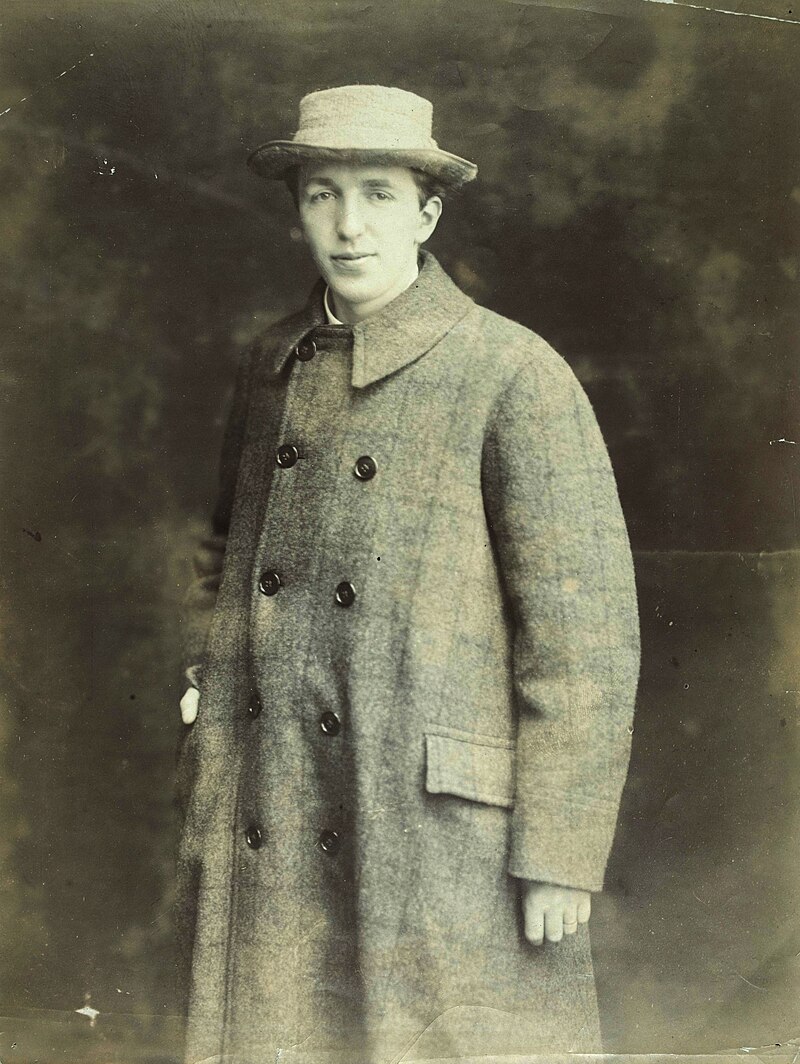
Tag: Irish History

  • Bulmer Hobson: The Revolutionary Who Survived to Imagine a Different Ireland

    Bulmer Hobson: The Revolutionary Who Survived to Imagine a Different Ireland

    Dylan Foley

    Words:19054

    Time to read:50 minutes

    Introduction

    On Good Friday 1916, Bulmer Hobson found himself in an absurd and bitter predicament. His own comrades in the Irish Republican Brotherhood—men he had recruited, trained, and worked alongside for over a decade—kidnapped him and held him captive in a house in the Dublin suburbs. They weren’t acting on behalf of the British Crown. They were acting to prevent Hobson from stopping the Easter Rising, an insurrection he believed would end in military disaster and political catastrophe.

    The irony was cruel. Hobson had spent fifteen years building the IRB into an effective revolutionary organisation. He had co-founded Na Fianna Éireann, the nationalist youth movement. He had been instrumental in establishing the Irish Volunteers. He had coordinated the Howth gunrunning that armed the independence movement. He had brought Patrick Pearse into the inner circles of revolutionary activity. Yet when the moment came, Hobson hesitated, and they removed him.

    His captors needn’t have worried about what to do with him afterward. When Hobson finally emerged from hiding after the June 1917 amnesty, he discovered that his political life was over. To the general public it was as if he had been executed along with the rebel leaders, but without the posthumous benefit of their spin-doctors. His former comrades, misunderstanding his motives for opposing the Rising, denounced him as a coward and a traitor. He was subjected to a peculiar form of living death—ostracism without martyrdom, survival without resurrection.

    Yet this political death sentence carries within it a profound historical irony. Because Bulmer Hobson survived, because he lived on for another fifty-three years, dying only in 1969, he became the only major figure of the revolutionary generation who could articulate in detail what the Irish independence movement had originally intended for the new Ireland. And what he articulated, particularly in the 1930s when he tried desperately to get the Irish government to listen, was a vision so radically different from what emerged that it reads now like a message from an alternative timeline.


    Hobson’s vision wasn’t simply nationalist. It was anarcho-nationalist—a synthesis of revolutionary separatism with the libertarian socialist thought that dominated progressive circles before the First World War. More remarkably, his economic proposals, dismissed and ridiculed in his own time, anticipated by decades the monetary theories that economists now call Modern Monetary Theory or Chartalism.

    He understood that money was a creation of the state, that banks manufactured credit through accounting entries, and that a sovereign government could invest in its people without begging permission from financial markets. He published these ideas in 1933, three years before Keynes’ General Theory, at a time when the Irish government was pursuing precisely the kind of austerity policies that would condemn generations to poverty and emigration.

    This is the story of what Ireland’s revolutionaries actually believed before the gunfire of Easter Week drowned out everything but the rhetoric of blood sacrifice and Catholic Nationalism. It’s the story of a comprehensive social and economic program that was buried along with Hobson’s reputation, and the story of what might have been if the Irish Free State had listened to the one revolutionary leader who survived to tell them.

    Part One: The Quaker Revolutionary

    Bulmer Hobson was never supposed to be a revolutionary. Born in 1883 in Holywood, County Down, he came from a liberal Belfast Quaker family. His father, Benjamin Hobson Jr., was a commercial traveller who identified as a Gladstonian Home Ruler—respectable, moderate, constitutional. His mother, Mary Ann Bulmer, was a suffragist and amateur archaeologist from Darlington in England. The Hobsons believed in gradual reform, rational persuasion, and the peaceful resolution of political conflicts.

    Yet by his late teens, Hobson had moved far beyond his family’s moderate nationalism. He joined the Gaelic League and immersed himself in the cultural nationalist movement sweeping through turn-of-the-century Ireland. More significantly, he began reading widely in revolutionary and radical literature. He discovered Theobald Wolfe Tone and the United Irishmen, whose combination of non-sectarianism and separatism would shape his political thinking for life. He read the Young Irelander James Fintan Lalor, whose writings on land and economics provided him with a physiocratic framework that would later inform his economic thought. And crucially, he encountered the works of the European anarchists and libertarian socialists who dominated progressive thought in the decades before the First World War transformed the landscape of the left.

    In 1901, Hobson and his friend Denis McCullough joined Robert Johnston’s Pioneer Branch of Cumann na nGaedheal in Belfast. Johnston was a lieutenant of Fred Allan, a remarkable figure who embodied the intersection of Irish nationalism with the libertarian socialist currents of the era. Allan had delivered lectures on “Socialism” and the “Russian Revolutionary Movement” to the Dublin Young Ireland Society in the early 1880s. In 1894 he met with various English anarchists. Allan represented a strain of Irish nationalism that sought to fuse Fenianism with labor politics and drew freely on English radicalism and continental anarchist thought.

    Through these connections, Hobson entered a revolutionary milieu that was far more ideologically sophisticated than the romantic nationalism often associated with the Irish independence movement. This was a world where activists read Kropotkin alongside Tone, where the Russian revolutionary tradition was studied as closely as the 1798 rebellion, and where questions of economic organization and social revolution were considered as important as national independence.

    In December 1905, Hobson and McCullough founded the Dungannon Clubs in Belfast, naming them after the 1782 Volunteer convention that had forced Britain to grant legislative independence to the Irish Parliament. The Dungannon Clubs were ostensibly part of Arthur Griffith’s Sinn Féin movement, which advocated a “Hungarian Policy”—independence modeled on the 1867 compromise between imperial Austria and Hungary. But Hobson and his colleagues had more radical aims. They were using Sinn Féin as a public face while working to rebuild the Irish Republican Brotherhood into an effective revolutionary organization.

    The IRB had fallen into decline by the turn of the century. It was riddled with informers, lacking in purpose, and largely disconnected from the vibrant cultural nationalism of the Gaelic revival (exceptions were IRB president John O’Leary and John Butler Yeats who kept up a sophisticated “shaping” of opinion in the cultural sphere, but who certainly werent militant). Hobson set about transforming it. He brought energy, organization, and most importantly, a comprehensive ideological program that went far beyond simple political separation. The manifesto of the Dungannon Clubs declared that “Irish Trades Unionism, now a mean tail to an English Democracy, must be recognised and nationalised, and made to play its great and proper part in the upbuilding of the country.” This wasn’t mere nationalist rhetoric. It reflected Hobson’s emerging synthesis of separatist politics with social and economic revolution.

    In 1907, Hobson launched a newspaper called the Republic to articulate the Dungannon Clubs’ program. Though it lasted only from December 1906 to May 1907, it provided the template for what would become his most important platform: Irish Freedom, the IRB newspaper that ran from 1910 to 1914. In the Republic, Hobson wrote under the pen name Curoi MacDare, “Our work must be constructive as well as destructive; we must rebuild as well as destroy. And, though our first need is for a national political organisation to wrest this country from the grip of England, that is not our only need, nor must that organisation be purely political and neglect the many sided life of the nation.”

    This formulation—constructive as well as destructive—came directly from the French anarchist Pierre-Joseph Proudhon, who had used the maxim “Destruam ut Adificabo” (“I destroy in order to build up”) to emphasize the need to create new libertarian institutions to replace existing ones. Whether Hobson knew he was echoing Proudhon directly or had absorbed the idea through the wider radical culture of the period, he was clearly operating within an anarchist framework. The goal wasn’t simply to transfer state power from British to Irish hands. It was to fundamentally reconstruct Irish society on different principles.

    Part Two: The Anarchist Moment

    To understand Hobson’s vision, we must understand what “socialism” meant in the decade before the First World War. This is crucial because the Bolshevik Revolution of 1917 and the subsequent Cold War have so thoroughly reshaped our understanding of left-wing politics that we’ve largely forgotten the ideological landscape that Hobson and his generation inhabited.

    Before 1914, the dominant strain of socialist thought among revolutionaries wasn’t Marxism—it was anarchism and libertarian socialism. The distinction matters profoundly. Marxism, particularly as it evolved in the hands of Lenin and the Bolsheviks, emphasized centralized state power, vanguard parties, and the “dictatorship of the proletariat.” Anarchists and libertarian socialists rejected all of this. They saw the state itself as the fundamental problem, whether ruled by capitalists or by a revolutionary party claiming to represent the workers. They advocated instead for decentralized, self-governing communities, voluntary cooperation, and the abolition of all imposed hierarchies.

    The Russian anarchist Peter Kropotkin was the most influential theorist of this tradition, and his ideas circulated widely in Irish revolutionary circles. Kropotkin’s newspaper, Freedom, reported approvingly in 1908 on a meeting where the writer Standish O’Grady recommended that Irishmen read Kropotkin’s Mutual Aid as a recipe for developing Irish civilization. O’Grady, whom Hobson worked alongside on the Peasant newspaper, was deeply influenced by Kropotkin’s vision of decentralized communes based on mutual aid rather than state power or market competition.

    Kropotkin’s 1898 book Fields, Factories and Workshops provided a detailed blueprint for economic decentralization. He argued that modern technology made it possible for communities to combine agriculture with small-scale industry, achieving economic self-sufficiency without the massive centralized factories and urban concentration that characterized industrial capitalism. This vision had obvious appeal to Irish nationalists who wanted to reverse the economic devastation wrought by British rule without simply replicating British industrial models.

    By 1913, Hobson was thoroughly familiar with Kropotkin’s work. Writing in the Gaelic American, he referenced Fields, Factories and Workshops directly, noting the Russian anarchist’s “alluring vision of the countryside where agriculture is interspersed with industries.” The Peasant had reviewed the book favorably in 1908, recommending it to its readers and outlining how Ireland should develop full home markets along the lines Kropotkin prescribed.

    But Kropotkin wasn’t the only anarchist influence on Hobson’s thinking. Proudhon’s concept of the “social economy” as distinct from the “political economy” provided a framework for bypassing state machinery entirely. Proudhon argued that economic life organized through voluntary cooperation and mutual banks could function independently of government control. This idea resonated deeply with Hobson’s strategy of reducing “the social economy to its first elements”—breaking up the existing system to place Irish people beyond the control of the British state.

    Herbert Spencer, the individualist philosopher, also shaped Hobson’s worldview. Spencer was much admired in Irish anarchist circles, and Hobson read his Data of Ethics, quoting it approvingly in Irish Freedom. Spencer’s evolutionary theory of social cooperation—the idea that voluntary mutual aid represented a higher stage of human development than competition or coercion—fit perfectly with both Kropotkin’s anarchism and Hobson’s nationalism. Interestingly, Michael Davitt, the founder of the Land League, had also cited Spencer’s views in Land League publications. The American anarchist Benjamin Tucker had praised the Land League as “the nearest approach on a large scale, to perfect Anarchistic organization that the world has yet seen.”

    These weren’t abstract theoretical influences. They shaped Hobson’s practical program in concrete ways. In 1908, writing in the Irish Homestead—the journal of the cooperative movement edited by George Russell (Ӕ), who was himself enthusiastically taking up Kropotkin’s anarchism—Hobson called for the establishment of an Irish School of Economics. This wasn’t simply about technical training. It was about developing an entirely different approach to economic organization, one based on cooperation rather than competition, on local self-sufficiency rather than dependence on global markets, and on social needs rather than profit.

    The same year, Hobson worked with Constance Markievicz, a socialist and feminist who would later fight in the Easter Rising, to establish a cooperative commune in Dublin based on the Ralahine model. Ralahine had been a short-lived cooperative colony established in County Clare in the 1830s by a landlord inspired by Robert Owen’s cooperative socialism. Though Hobson’s commune also failed, the attempt revealed his commitment to actually constructing the alternative institutions that would form the basis of a liberated Ireland, not simply fighting to transfer political power.

    This practical orientation characterized all of Hobson’s work. In 1909 he published Defensive Warfare, a handbook for Irish nationalists that outlined a strategy of passive resistance and guerrilla tactics. But Defensive Warfare wasn’t only about military tactics. It articulated a comprehensive social and economic strategy based on the anarchist principle that “the modern state’s complex administrative machinery relies on the habit of acquiescence. If that habit were broken, the machinery would immediately be paralysed.”

    Hobson proposed using Ireland’s local government boards—created under the 1898 Local Government Act, which had given the vote to every occupier irrespective of wealth, religion, or sex—as weapons against British rule. These elected boards were supposed to administer decrees from Dublin Castle, but Hobson argued they could refuse to cooperate, effectively blocking the Castle boards and making British administration impossible. This was pure Kropotkin, who had written in “Local Action” that “the abolition of monopolies will not be done by acts of national Parliaments: it will be done, first, by the people of each locality.”

    At the same time, Hobson advocated constructing an alternative social economy that would bypass British control entirely. He argued for cooperative societies that would provide credit, organize production, and create the infrastructure for economic self-sufficiency. Writing in the Peasant in 1907, he outlined a detailed plan for cooperative tillage societies that would provide low-interest loans and technical education to farmers, enabling them to increase production and achieve independence from British-controlled markets and financial institutions.

    This cooperative approach drew on Proudhon’s advocacy of People’s Banks—mutual credit institutions that would provide financing without the extraction of profit by capitalist financiers. In August 1908, George Russell chaired the newly founded Sinn Féin Co-operative People’s Bank, which attempted to put these principles into practice. Hobson recognized that economic independence required not just political separation but the creation of alternative institutions that could function independently of—and eventually replace—the structures of British rule.

    The synthesis Hobson was developing had a name: anarcho-nationalism. The historian Sean Worgan, who has studied Hobson’s relationship to anarchist thought more thoroughly than anyone, defines it precisely: “Anarcho-nationalism drew on anarchism and placed it in the nationalist framework of seeking independence from the British.” All anarchists rejected the legitimacy of external government and condemned imposed political authority and domination. They sought to establish decentralized, self-regulating societies consisting of federations of voluntary associations. Hobson simply applied this program to Ireland, arguing that escaping British rule required not just political independence but a fundamental reconstruction of Irish society along cooperative, decentralized lines.

    This was the ideology that Hobson brought into the heart of the IRB. And it was the ideology that Irish Freedom, the newspaper he edited from 1910 to 1914, would disseminate throughout the revolutionary movement.

    Part Three: Irish Freedom and the Revolutionary Program

    In November 1910, the first issue of Irish Freedom appeared on the streets of Dublin. Ostensibly published by the Dublin Central Wolfe Tone Clubs Committee, it was in reality the organ of the Irish Republican Brotherhood. Patrick McCartan was listed as editor, but as Hobson himself later admitted, he did most of the actual editorial work. Along with P.S. O’Hegarty, another former Dungannon Club colleague, Hobson “wrote all the editorials and a good many of the articles.” The paper’s manager was Sean McDermott, who would be executed after the Easter Rising. Among its contributors were Patrick Pearse, Ernest Blythe, and a mysterious figure who signed himself “Northman.”

    Irish Freedom was, in Hobson’s own words, “the most dangerous paper published in Ireland since the Fenian days.” But its danger lay not simply in its advocacy of armed rebellion against British rule. What made it truly subversive was its comprehensive program for social and economic transformation. As Hobson put it, “Irish Freedom represented the militant left wing of the Irish national movement, and advocated the independence of Ireland by every practicable means, including the use of physical force.” That left-wing character wasn’t incidental—it was fundamental to what Hobson and his colleagues were trying to achieve.

    The paper’s very appearance signaled its ideological commitments. Side by side, Irish Freedom and Kropotkin’s anarchist newspaper Freedom looked remarkably similar, from the title treatment to the general layout. This wasn’t coincidence. Irish Freedom deliberately modeled itself on Kropotkin’s paper, and there was substantial crossover between the two publications. A number of articles in Irish Freedom shared titles—and occasionally themes—with pieces that had appeared in Freedom. “Today and To-Morrow,” “The Work Before Us,” “Under Which Flag,” “The Coming Storm,” “Rocks Ahead”—all of these titles appeared in both papers, part of a shared vocabulary that linked Irish nationalism to the broader anarchist movement.

    Most tellingly, Freedom reported in its April 1912 edition that the Daily Chronicle had noted “suspicious Irish and German names in Freedom’s membership.” The June 1908 issue of Freedom contained an article titled “The Failure and Farce of Parliamentarianism” by “An Irish Rebel,” who rejected parliamentary methods and discussed the potential use of general strikes as political weapons in Ireland. This rejection of parliamentarianism aligned perfectly with Sinn Féin and the IRB’s abstentionist policy, but it was grounded in anarchist principle rather than mere tactical consideration.

    The figure of “Northman” embodied this connection between Irish nationalism and international anarchism. Northman wrote for Freedom at the end of 1901 and then for Irish Freedom in 1912 and 1913. Years later, one of his articles in Irish Freedom was double-signed as both “Northman” and “Seaghan Mac An Learlah”—a Gaelicized version of John Lawlor. Lawlor was a former handball player from Pennsylvania who became Vice President of the Dublin Trades Council and Labour League. He was one of three Dublin Trades Council members on the funeral committee for the veteran Fenian O’Donovan Rossa in 1915, and it was Northman who wrote the tribute article “Rossa in the Dock” for the funeral’s souvenir booklet. Since Hobson was Honorary Secretary of that funeral committee, the two men worked closely together.

    Through Northman and other contributors, Irish Freedom articulated a vision that went far beyond political nationalism. In February 1913, Ernest Blythe published an article titled “The Co-operative Commonwealth” that laid out the economic alternative to both capitalism and state socialism. Blythe described how cooperation could be achieved in workshops, manufacturing, shopkeeping, and especially agriculture. Agricultural cooperation was key because “The agricultural co-operator, assisted and advised by Nationalists who consider the whole community, will as time goes on lengthen his arm and multiply his activities until all industry is federated with him in a harmonious, symmetrical co-operative commonwealth.”

    The language is significant. Blythe spoke of industry federating itself, not being organized by the state. This was an explicitly anarchist solution, a federation of voluntary associations rather than state ownership. Blythe contrasted this cooperative commonwealth with “the present system of competitive profiteering” on one hand and “Social Reform” on the other. Social Reform, he warned, would lead to “the servile State, when the masses, in name and in fact, will be slaves, with every detail of their lives carefully and hygienically regulated by their owners, the capitalists, who by virtue of their wealth will in reality be the state.”

    This critique of the “servile state” came directly from anarchist theory. Anarchists had long argued that state socialism, whatever its proponents intended, would inevitably produce a new form of slavery. Blythe made this explicit: “Whatever the State Socialists may aim at (and all honest men will admit that their intentions are good) they have so far only brought us social reform, the prelude to the servile state.” What Ireland needed instead was social revolution, not social reform. This required preserving and developing the working class’s “responsibility, initiative and dependence”—qualities essential for driving genuine social transformation.

    This position explains what otherwise appears as a contradiction in Hobson’s relationship to the labor movement. Sean O’Casey, in his history of the Irish Citizen Army, accused Hobson of being anti-socialist and doing his best to prevent understanding between labor and nationalism. During the 1913 Dublin Lockout, at a general meeting of the IRB, Hobson convinced the audience that as a democratic organization supportive of all Irish citizens regardless of class, the IRB should not intervene on the side of the workers. O’Casey saw this as evidence of Hobson’s hostility toward labor and socialism.

    But this reading misunderstands Hobson’s position entirely. He wasn’t anti-worker or anti-socialist. He was anti-state-socialist, and his anarcho-nationalist approach required bringing workers and employers together in cooperative relationships rather than sharpening class conflict. This was consistent with his earlier cooperative projects and his belief that social revolution required constructing alternative institutions, not capturing state power. James Connolly, the Marxist who would command the Citizen Army in the Easter Rising, had once urged Hobson to “give up Sinn Féin propaganda and devote himself to a left wing Labour movement”—hardly something he would have suggested to someone he viewed as an enemy of labour.

    Hobson’s wariness of state socialism manifested clearly in Irish Freedom’s response to the British government’s National Health Insurance Act of 1911. This act compulsorily insured all workers earning less than £160 a year against sickness and provided minimal unemployment insurance, funded through contributions from the state, employers, and workers themselves. Hobson objected strenuously, not because he opposed workers having insurance, but because he saw the state scheme as imposing unnecessary costs on Irish businesses while undermining voluntary alternatives.

    Hobson had established An Cumann Coranta, a mutual insurance scheme “started in order to protect Irish Nationalists against loss of their employment on account of their activity in the national cause.” This was precisely the kind of voluntary, cooperative institution that anarchists like Proudhon had advocated—workers organizing their own mutual aid societies independent of both capitalist insurance companies and state programs. The British government’s compulsory scheme threatened to crowd out these voluntary alternatives while extending state control over yet another aspect of Irish life.

    Through Irish Freedom, Hobson pursued a consistent program: destroy the mechanisms of British control while constructing the institutions of an alternative social economy. In September 1911, when railway workers struck in a dispute that paralyzed transport throughout Ireland, Irish Freedom called urgently for “a coherent and well thought out social policy if nation building in Ireland was to mean anything more than a high-sounding phrase.” The railway strike, Irish Freedom argued, had “shaken the country to its foundations” and revealed that political independence alone would be meaningless without addressing fundamental questions of economic power.

    Northman developed this argument in a lengthy article titled “The Economic Basis of a Revolutionary Movement: An Address to Nationalists,” published in January 1913. Surveying the history of revolutionary movements from the French Revolution through Parnell’s Land League, Northman argued that “the hopes of the people to secure a better and happier way of life have been one of the chief factors in every revolution.” A general survey of the previous century convinced him “that a social policy would add greatly to the strength of the separatist movement.”

    He went further: “If we take a definite step in propounding our social ideal, in stating quite clearly that the establishment of an Irish Republic will be followed by an equable social re-organisation, then we shall give impetus and strength to the movement which will hasten the day when English domination will be overthrown.” This wasn’t opportunism—adding social promises to attract working-class support. It was the core of the program. National independence and social revolution were inseparable because British rule wasn’t simply political domination. It was an entire economic system designed to extract wealth from Ireland while preventing the development of Irish industry.

    Hobson had made this clear in his 1907 American speaking tour. Viewing the Anglo-Irish relationship through a social-Darwinian lens, he declared: “The modern fight for existence is a fight for markets, whether it be waged with the sword or by using your stronger economic position and the economic conditions existing, against more poorly equipped opponents. England’s war with Ireland is for the markets of Ireland—and in order to keep Ireland supplying her with raw materials and foodstuffs and taking manufactured goods in turn.”

    This analysis led to a crucial strategic conclusion. As Northman wrote, “In our work we should not now shirk the choice that will eventually be thrust upon us. We must not leave a powerful garrison of our enemy in our country.” Political independence that left British economic structures in place would be a hollow victory. The garrison to be expelled wasn’t just British soldiers and administrators. It was the entire apparatus of financial and commercial control that kept Ireland subordinate.

    The solution, articulated across dozens of articles in Irish Freedom, involved several interconnected elements. First, develop Irish industries and agriculture through cooperative organization, bypassing both British capital and the profit-extracting mechanisms of capitalism. Second, establish People’s Banks and cooperative credit institutions to provide financing independent of British-controlled financial markets. Third, use local government boards to block British administration while providing the framework for alternative governance. Fourth, create mutual aid societies for insurance, education, and other social needs. Fifth, refuse to participate in British political institutions while constructing parallel Irish ones.

    This was anarcho-nationalism in practice—a comprehensive program for achieving independence not merely as a transfer of state power but as a fundamental reorganization of society. And it was this program that Hobson brought into the heart of the IRB, the secret society that would ultimately launch the Easter Rising.

    Hobson’s influence on the IRB during this period was immense. He served on its Supreme Council from 1912 to 1914. He recruited key figures into the organization, bringing them into contact with these ideas. Patrick Pearse, who would lead the Easter Rising and whose proclamation of the Irish Republic promised to cherish all the children of the nation equally, wrote for Irish Freedom. Tom Clarke, the old Fenian who had spent fifteen years in British prisons and who became the spiritual leader of the Rising’s planners, worked closely with Hobson on multiple projects. Sean McDermott, executed alongside Pearse and Clarke, managed Irish Freedom’s operations.

    These men were exposed to and influenced by the anarcho-nationalist vision that Irish Freedom articulated. The Easter Proclamation’s promises of religious and civil liberty, equal rights and opportunities for all citizens, and care for all the nation’s children didn’t emerge from nowhere. They reflected the social revolutionary tradition that Hobson had worked to instill in the IRB.

    But there was a fatal contradiction developing. Hobson’s anarcho-nationalism was fundamentally opposed to what he called “insurrection with no hope of military success.” His entire strategic framework, outlined in Defensive Warfare, aimed at social revolution through the construction of alternative institutions and the withdrawal of consent from British rule. Armed resistance had its place, but as guerrilla warfare supporting a broader social movement, not as a dramatic blood sacrifice designed to shock the Irish people into consciousness.

    By 1913 and 1914, another faction within the IRB was moving in a different direction. They had absorbed the rhetoric of social transformation but not the anarchist commitment to building alternative institutions. What they wanted was a spectacular rising that would, through the sacrifice of martyrs’ blood, awaken nationalist sentiment and provoke the Irish people to revolution. This was closer to the romantic nationalism of Young Ireland than to the systematic anarchism that Hobson advocated.

    The conflict came to a head over the Irish Volunteers. Hobson had been instrumental in establishing the Volunteers in 1913 as a nationalist counterweight to the Ulster Volunteer Force. He coordinated the Howth gunrunning in July 1914 that armed the organization. But when John Redmond, leader of the Irish Parliamentary Party, demanded that twenty-five of his nominees be added to the Volunteers’ Provisional Committee in June 1914, Hobson accepted this compromise to prevent a split in the organization.

    The IRB’s Supreme Council never forgave him. From their perspective, Hobson had betrayed the revolutionary cause by allowing constitutionalist politicians to gain influence over the Volunteers. They fired him from the Gaelic American, where he had been Irish correspondent. They excluded him from Irish Freedom. Most importantly, they excluded him from the planning for what would become the Easter Rising.

    In his 1968 memoir Ireland Yesterday and Tomorrow, Hobson reflected bitterly on this period. The IRB leadership, he wrote, had begun meeting secretly without informing him, making plans he knew nothing about. At a meeting of Volunteer headquarters staff on April 5, 1916, Patrick Pearse denied that any insurrection was planned. Hobson believed him. Less than three weeks later, on Good Friday, his comrades came to arrest him.

    Part Four: The Kidnapping and Its Aftermath

    The men who came for Hobson on Good Friday 1916 were acting on orders from the IRB’s Military Council, the secret inner group that had planned the Rising without informing the organization’s Supreme Council. They brought Hobson to a house in the Dublin suburbs and held him there for the duration of Easter Week. They treated him civilly enough—he wasn’t physically harmed—but the message was unmistakable. The revolution Hobson had worked toward for fifteen years would proceed without him, and indeed against him.

    From his captivity, Hobson could hear the distant sounds of gunfire as his former comrades launched their doomed insurrection. Everything he had argued against—the timing, the tactics, the fundamental strategy of blood sacrifice over systematic resistance—was being enacted while he sat helpless. The Rising lasted six days before the rebels surrendered. The British executed fifteen of the leaders, including Pearse, Clarke, and MacDermott. Connolly, wounded in the fighting, was shot while strapped to a chair because he couldn’t stand.

    Hobson was released after the Rising was crushed, but he had to go into hiding to avoid arrest. He married Claire Gregan in June 1916 while still on the run. Claire was a member of Sinn Féin and Cumann na mBan who had been his secretary at the Irish Volunteer office. They emerged from hiding after the general amnesty of June 1917, but Hobson’s political life was over.

    The transformation of the executed leaders into martyrs proceeded exactly as they had planned. The British, by executing them, turned military defeat into moral victory. The Irish public, which had been largely hostile to the Rising in its immediate aftermath, began to view the rebels as heroes. Sinn Féin, which had actually opposed the Rising, was inaccurately credited with it and rode the wave of public sympathy to electoral dominance. The War of Independence followed, then the Treaty, then the Civil War, and finally the establishment of the Irish Free State in 1922.

    Through all of this, Hobson was absent. Or worse than absent—he was present but silent, a ghost at the feast. Those who knew his role in building the IRB and the Volunteers but didn’t understand why he had opposed the Rising viewed him with suspicion or contempt. Sean O’Casey captured the mood when he described Hobson’s “warmest appreciation of all things appertaining to labour” as “a sneer,” and accused him of doing his best to prevent understanding between labor and nationalism. This was grotesquely unfair, but it reflected how completely Hobson had been written out of the revolutionary narrative.

    rom 1918 to 1923, Hobson worked in book publishing as co-director of the Candle Press and Martin Lester Ltd in Dublin. He and Claire set up home in the Mill House on Whitechurch Road in Rathfarnham. Their son Declan Bulmer was born in 1921, their daughter Camilla Claire in 1928. They were known for hosting literary and theatrical gatherings where, as an Irish Times columnist later recalled, “the most diffident artists” were encouraged “to express themselves.” The Hobsons helped support the establishment of the Gate Theatre in the late 1920s. Claire was described as “strikingly handsome,” with “humour, tolerance, and an insatiable, but always kindly curiosity.”

    But book publishing didn’t provide reliable enough income to support a young family in the difficult economic conditions of the new Irish state. In August 1923, Hobson took a position as Temporary Technical Clerk in the Stationery Office at a salary of £250 per annum. A year later, in October 1924, he successfully interviewed for a permanent, pensionable position as Deputy Director of Stamping in the Office of the Revenue Commissioners, with a salary scale of £350-£500 plus bonus.

    The irony was rich. Bulmer Hobson, who had spent his youth working to destroy British administration in Ireland, now worked in Dublin Castle, the former bastion of that administration. He managed the printing section of the Stamping Department, responsible for all the government’s “secure” printing needs—postage stamps, pension books, licenses, government forms. By the late 1940s he supervised about sixty people. He held this position until his retirement in January 1948, twenty-four years of bureaucratic service to the state he had helped create.

    It was not the position anyone would have predicted for Hobson based on his revolutionary career. But opportunities for advancement were limited. He had been hired at the highest level within the technical grades of the civil service, and snobbish distinctions between technical and non-technical grades prevented transfers. A former member of his department later noted that perhaps due to snobbery, the technical grades were deemed inferior, and transfers between technical and non-technical grades weren’t permitted until the Stamping Department was restructured in the late 1970s, long after Hobson’s retirement.

    Yet Hobson couldn’t entirely abandon his revolutionary purpose. He had been silenced politically, but he couldn’t watch silently as the Irish Free State betrayed everything he had fought for. The new government was pursuing precisely the kind of policies he had warned against—adopting British economic orthodoxy, failing to develop Irish industry, allowing poverty and unemployment to devastate the country. So in the 1930s, as his eyesight began to fail but his intellect remained sharp, Hobson staged a quiet resurrection. He turned his pen to economic propaganda, articulating with increasing desperation the vision of what Ireland might have become.

    Part Five: The Economics of Freedom

    When the Irish Free State was founded in 1922, Hobson had anticipated what he called “a period of economic reconstruction” that would undo the effects of the Union between Britain and Ireland. Instead, he witnessed what were in his opinion “protracted and barren conflicts over verbal differences of politics which only the contestants, and not many of them, could understand, and these conflicts developed a fanatical bitterness which found its outlet in civil war.” He saw “the high hopes, born of a national victory” get sucked into a quagmire of “violence and folly.”

    The new Irish state did precisely what Hobson had warned against. It maintained the economic structures of British rule while changing only the political framework. The banks remained in private hands, controlled by the same interests that had served British imperialism. The currency remained tied to sterling. Economic policy was dictated by the Department of Finance, which operated on rigidly orthodox principles inherited directly from the British Treasury. The poor remained poor. Unemployment remained endemic. Emigration continued to drain the country of its young people.

    This wasn’t accidental. The men who controlled the Free State’s economic policy believed sincerely in the principles they were applying. They believed that budgets must be balanced, that currency must be backed by gold or sterling reserves, that government spending must be limited to what could be raised through taxation, that interfering with market mechanisms would cause economic disaster. These beliefs weren’t unique to Ireland—they represented the economic orthodoxy of the time. But they were precisely the beliefs that Hobson’s anarcho-nationalism had been designed to overcome.

    Part Five: The Economics of Freedom

    When the Irish Free State was founded in 1922, Hobson had anticipated what he called “a period of economic reconstruction” that would undo the effects of the Union between Britain and Ireland. Instead, he witnessed what were in his opinion “protracted and barren conflicts over verbal differences of politics which only the contestants, and not many of them, could understand, and these conflicts developed a fanatical bitterness which found its outlet in civil war.” He saw “the high hopes, born of a national victory” get sucked into a quagmire of “violence and folly.”

    The new Irish state did precisely what Hobson had warned against. It maintained the economic structures of British rule while changing only the political framework. The banks remained in private hands, controlled by the same interests that had served British imperialism. The currency remained tied to sterling. Economic policy was dictated by the Department of Finance, which operated on rigidly orthodox principles inherited directly from the British Treasury. The poor remained poor. Unemployment remained endemic. Emigration continued to drain the country of its young people.

    This wasn’t accidental. The men who controlled the Free State’s economic policy believed sincerely in the principles they were applying. They believed that budgets must be balanced, that currency must be backed by gold or sterling reserves, that government spending must be limited to what could be raised through taxation, that interfering with market mechanisms would cause economic disaster. These beliefs weren’t unique to Ireland—they represented the economic orthodoxy of the time. But they were precisely the beliefs that Hobson’s anarcho-nationalism had been designed to overcome.

    By the late 1920s, Hobson was using what limited platforms remained to him to argue for a different path. In 1929, Dublin Corporation commissioned him to edit A Book of Dublin, an official handbook presenting the city as historically significant and economically thriving. The book was designed to attract tourists and investors, but Hobson used it as an opportunity to advocate for economic development. Father Timothy Corcoran, editor of the Catholic Bulletin, lambasted the book as a “manual for the Ascendancy mind” that “exuded in every page the drippings of deliquescent Protestantism,” but such sectarian attacks missed the point. Hobson was trying to articulate a vision of Irish economic possibility.

    More significantly, in 1931 Hobson privately published a twenty-three-page pamphlet entitled A National Forestry Policy. This might seem like an obscure technical topic, but for Hobson it was central to his entire economic program. Forestry represented exactly the kind of long-term public investment that could simultaneously provide employment, develop Irish industry, preserve rural communities, and build the infrastructure for economic independence.

    The pamphlet proposed “the establishment of 525,000 acres of plantations within fifteen years.” The government’s aim to plant 200,000 acres was, in Hobson’s view, too modest because it would not benefit the current generation socially and industrially. He recommended the creation of a forestry authority, the development of a program of land acquisition and planting on an adequate scale for a definite and extended period, and a financial policy that would enable the work to proceed as planned and without interruption.

    A critic in the Dublin Magazine praised Hobson’s “far-reaching suggestions” as “worthy of earnest consideration,” though he criticized Hobson for ignoring the forestry expertise that existed within the Department of Agriculture. But Hobson wasn’t primarily concerned with technical forestry questions. He was advocating forestry as part of a broader program of economic reconstruction that would employ people, develop resources, and break Ireland’s dependence on imported materials.

    Hobson was particularly concerned about the Gaeltacht, the Irish-speaking regions of the west that were economically devastated. In 1936 he declared that “the failure of successive Governments to attempt the economic reconstruction of the Gaeltacht” was “the most profoundly disappointing feature of the first fourteen years of Irish self-government.” All the “enthusiastic city Gaels” had insisted that the Gaeltacht was essential for the survival of Irish language and culture, yet the government had done nothing to make it economically viable. Economic renewal through reforestation and other development projects would enable “the people of the western counties” to “enjoy a good and an improving standard of life as the result of their own labours in the places where they live,” instead of having to migrate as casual laborers or draw the dole “to save them from destitution.”

    By 1937, Hobson’s tone was becoming increasingly sarcastic. In a review of a book on developing highland areas, he wrote:

    “Perhaps when the last inhabitant of the Gaeltacht has departed for an English slum or a Scottish ‘bothy’ the Government will appoint a commission to report on the wealth which would be produced from the Irish Highlands. The report will be very interesting, but by then the absence of any available labour in the western desert will prevent its recommendations being carried out.”

    he bitterness in this passage reflects Hobson’s growing frustration. He had a comprehensive plan for economic development. He understood how to create employment, develop resources, and build prosperity. But no one in government would listen.

    In the autumn of 1932, shortly after Éamon de Valera’s Fianna Fáil government came to power, Hobson presented de Valera with a draft plan “to break the economic depression in Saorstát Éireann and to relieve the government of the cost of maintaining the unemployed.” The plan involved establishing an Economic Recovery Commission that would supervise two sub-commissions, one on Land Reclamation, Drainage and Forestry, and the other on Housing and Town Planning.

    According to Hobson, de Valera said “he entirely agreed with it and that it was just what he wanted to do—but he did nothing.” This became a recurring pattern. De Valera would express enthusiasm for Hobson’s ideas in private conversation, then fail to act on them. In September 1933, Hobson wrote to de Valera again, asserting without any trace of modesty that “after another years’ close study I am still more completely satisfied that they are the best, if not the only real solution of the problem of unemployment here.” He offered to meet with de Valera to answer any objections. He noted that he had been asked to publish the memorandum but wanted de Valera’s permission first. He concluded: “I hope you will believe that I only return to the subject from a desire to help in the solution of the most urgent problem which confronts the country.”

    De Valera apparently gave permission, because Hobson published a revised version entitled National Economic Recovery: An Outline Plan privately in 1934. The Talbot Press reprinted it the following year. This pamphlet laid out Hobson’s comprehensive economic program in detail, and it revealed the extraordinary sophistication of his monetary thinking.

    But before publishing that outline plan, Hobson had released in 1933 what would become his most intellectually provocative work: The New Querist. The title deliberately evoked George Berkeley, the eighteenth-century Church of Ireland bishop and philosopher who had written The Querist in 1735-37. Berkeley’s original had posed a series of questions about Irish economic development, arguing for self-sufficiency as one way of tackling Ireland’s economic problems. Berkeley was an advocate of what we might now call import substitution—developing Irish industries to produce goods that were currently imported, thereby keeping money circulating within Ireland rather than flowing out to pay for foreign goods.

    Hobson adopted Berkeley’s format, posing nearly two hundred economic queries “for the consideration of the public.” But while he used Berkeley’s “structure and reputation,” as the historian William Murphy has noted, Hobson was actually conveying his own ideas, which went far beyond Berkeley’s eighteenth-century prescriptions. The New Querist reflected Hobson’s engagement with what was then a radical fringe economic movement: Social Credit.

    Social Credit had been developed by Major C.H. Douglas, a British engineer who published his theories in the years immediately following the First World War. Douglas had what one historian describes as “a unique interpretation of the role of banks in issuing credit and creating money.” He believed “that banks [could] create money for their own use or for loan simply by forming an account and crediting it with whatever amount they desire.” Douglas himself wrote that “deposits are created, to a major extent, by purely book-keeping transactions on the part of the banking institutions.”

    This insight—that banks create money through accounting entries rather than lending out pre-existing deposits—was considered heterodox and even crankish by mainstream economists in the 1930s. It contradicted the standard textbook story that banks were intermediaries between savers and borrowers. But Douglas was correct. Banks do create money when they make loans, simply by crediting the borrower’s account while simultaneously creating an asset on their own balance sheet. This is how the money supply expands and contracts based on bank lending activity.

    Douglas’s crucial further step was to argue that if banks could create money by increasing the money supply through accounting entries, then governments could tap into this money-creating capacity for the public good. There was no need for governments to be constrained by tax revenue or their ability to borrow from existing pools of savings. A sovereign government could create money and spend it into existence through public investment.

    This is precisely what Hobson argued in The New Querist. He asked: “whether anything is scarce in this country except money?” The question was rhetorical. Ireland wasn’t lacking in resources, labor, or productive capacity. What it lacked was money—or more precisely, what it lacked was the understanding that money could be created to mobilize those resources and that labor toward productive ends.

    Hobson suggested that the state should create money and spend it on wages to employ people to build houses, schools, roads, and to work on land drainage and reforestation projects. This would provide people with an income that they could spend on goods, thus creating demand for various commodities produced in Ireland. Following such a plan would enable the Irish government to increase both consumption and production in the home market, the only market over which it had any control.

    This was revolutionary thinking for 1933. It anticipated by three years the publication of John Maynard Keynes’s General Theory of Employment, Interest and Money, which would make similar arguments about the role of government spending in maintaining employment and stimulating economic activity. But Hobson was working from different theoretical foundations than Keynes. Where Keynes was primarily concerned with managing aggregate demand within a capitalist economy, Hobson was pursuing the anarchist goal of creating an alternative social economy that could function independently of capitalist financial structures.

    The distinction matters because it reveals something crucial about Hobson’s economic thought. He wasn’t simply advocating Keynesian demand management or modern welfare state policies. He was advocating what we might now call monetary sovereignty in service of a decentralized, cooperative economy. The money creation he proposed wasn’t meant to prop up existing capitalist structures. It was meant to finance the construction of alternative institutions—cooperatives, public enterprises, mutual aid societies—that would eventually replace capitalist relations altogether.

    This becomes clear when we look at how Hobson connected his monetary proposals to his broader social program. Writing in the Gaelic American in 1913, Hobson had already articulated his vision: “Co-operation is a policy of freedom and of free voluntary association, the antithesis of State Socialism—the remedy proposed by economists of the Imperial Races.” The full significance of the connection between nationalism as a social theory and cooperation as an economic theory was not widely understood, but “the future of Ireland is in no small measure dependent upon the growth side by side and the application together of these cognate principles.”

    What Hobson understood was that money creation by itself wasn’t enough. Social Credit and monetary sovereignty were tools, but they had to be employed in service of a particular kind of social organization. The goal wasn’t to create a powerful centralized state that would manage the economy from above. The goal was to create the financial means for communities to organize cooperative enterprises, for workers to establish mutual insurance schemes, for local governments to fund public works—all the decentralized, voluntary institutions that characterized anarchist economics.

    This is why Hobson drew on Proudhon’s distinction between the “social economy” and the “political economy.” Proudhon had used the term l’economie sociale to describe “a new science of the economy of society that would be other than laissez-faire capitalism and based on justice and the rights of the individual.” Hobson was attempting something similar—articulating an economic system that was neither free-market capitalism nor state socialism, but rather a third way based on voluntary cooperation enabled by monetary sovereignty.

    His critics dismissed his economic writings as “merely an adaptation” of Keynes’s ideas. But as Hobson pointed out in 1937, “the new trend in English economic thinking which has recently appeared is tremendously important. I am very pleased that I had published my proposals before Keynes’ recantation.” By “recantation” Hobson meant Keynes’s rejection of the then-dominant economic belief in non-interference with the free market. Hobson had arrived at similar policy conclusions as Keynes but from a completely different theoretical foundation—not liberal reformism but anarchist revolution.

    The theoretical sophistication of Hobson’s monetary thought becomes even clearer when we examine his role in producing the Third Minority Report to the Commission on Banking, Currency and Credit. This commission had been appointed by Minister for Finance Seán MacEntee in 1934 to “examine and report on the system in Saorstát Éireann of currency, banking, credit, public borrowing and lending” and to “consider and report what changes, if any, are necessary or desirable to promote the social and economic welfare of the community and the interests of agriculture and industry.”

    Hobson dismissed the commission as “heavily loaded with partisans of the existing order.” He recognized that matters “of such vital importance to the whole community” were in danger of being “settled behind closed doors” by people committed to maintaining the economic status quo. Between July 1936 and October 1938, Hobson worked with two allies—Mrs. B. Berthon Waters, a writer on economic affairs, and the Rev. Edward Cahill, SJ, a founder of the Catholic Action movement and Professor of Church History at the Jesuit College in Milltown Park—to try to change the direction of the commission’s recommendations.

    It might seem odd that Hobson, a former Quaker and committed anarchist, would team up with two Catholic social activists. But there were significant overlaps in their views. Catholic social thought, particularly as articulated in papal encyclicals like Quadragesimo Anno (1931), promoted the solidarity of community as an alternative to class struggle and advocated for subsidiarity—the principle that matters should be handled by the smallest, lowest, or least centralized competent authority. This aligned well with Hobson’s anarchist commitment to decentralization and his rejection of class-based politics in favor of national unity.

    In December 1936, Hobson, Cahill, and Waters prepared a sixteen-page memorandum on behalf of the League for Social Justice, which they submitted to the commission on January 14, 1937. Unfortunately, it arrived too late to be officially considered. Hobson then sent the memorandum to two economists in England for feedback. John G. Smith, Professor of Finance at the University of Birmingham, and James E. Meade, a Fellow and Lecturer in Economics at Hertford College, Oxford (and future Nobel Laureate in Economics in 1977), criticized certain parts of the document but were generally positive. Cahill forwarded the economists’ opinions to de Valera.

    De Valera, through his friend Eoin O’Keefe, had been encouraging members of the commission who favored more progressive economic policies to submit a minority report. The job of writing this report fell to Hobson, Cahill, and Waters. They produced a draft in September 1937, working with access to parts of the draft majority report, which recommended maintaining the economic status quo.

    The document they produced was presented as the Third Minority Report in March 1938 by Peadar O’Loghlen, a Fianna Fáil politician from County Clare who had been appointed to the commission ostensibly to represent rural interests but was actually, as it later emerged, serving as de Valera’s watchdog. O’Loghlen had attended meetings diligently but remained silent throughout the proceedings. The Third Minority Report that he suddenly presented enraged MacEntee and the Secretary of the Department of Finance, J.J. McElligott. They recognized that O’Loghlen couldn’t possibly have written it and noticed that excerpts were similar to passages in the anonymously published National Economic Recovery and in documents produced by the League for Social Justice.

    The Third Minority Report disputed “the validity of the link with sterling,” the perceived need for a central bank, and the ability of “the private sector to remedy unemployment or to provide any meaningful economic growth.” It recommended “comprehensive government intervention in the provision of capital, capital development, and the provision of full employment,” possibly through a state forestation policy.

    This was Hobson’s economic program in its most complete and official form. The report argued that Ireland’s monetary policy should not be dictated by the need to maintain sterling parity. The government should create money for public investment independent of the constraints of the gold standard or foreign exchange reserves. Banks should not be permitted to control the money supply in the interests of private profit. The state should take responsibility for ensuring full employment through direct investment in productive enterprise.

    What makes this remarkable is not just that it was heterodox for its time—though it certainly was—but that it anticipated by decades what economists now call Modern Monetary Theory or Chartalism. Modern Monetary Theory argues that a government that issues its own currency is not financially constrained in the way that households or businesses are. It cannot “run out” of money because it creates money when it spends. The constraints on government spending are not financial but real—the availability of labor and resources, the risk of inflation if spending exceeds productive capacity, the need to maintain public confidence in the currency.

    Hobson understood all of this in the 1930s. His question “whether anything is scarce in this country except money?” captured the essential insight that unemployment wasn’t caused by a lack of resources or productive capacity, but by a lack of money to mobilize those resources and that capacity. His proposal that the state should create money and spend it on public works reflected his understanding that monetary sovereignty meant the government could always afford to employ people to do useful work.

    The Third Minority Report made no impact on actual policy. De Valera praised it but didn’t implement its recommendations. MacEntee and the Department of Finance continued to pursue orthodox policies based on balanced budgets and sterling parity. But the ideas didn’t entirely disappear. Years later, the economic thought of Seán MacBride, who founded Clann na Poblachta in 1946 and served in the Inter-Party government from 1948 to 1951, was influenced by the Third Minority Report. In September 1949, when the British government devalued sterling, the cabinet established a committee on devaluation. Hobson, by then retired from the civil service, was appointed to the committee, though it doesn’t appear to have functioned.

    More recently, Hobson’s economic writings have been occasionally quoted by the Irish Green Party and recognized by historians as anticipating “current environmental ‘green’ politics.” His criticisms of bank dominance of the Irish economy and his advocacy for reforestation and sustainable development resonate with contemporary concerns in ways that the mainstream economists of his own time could never have imagined.

    Part Six: The Rogue Civil Servant

    Throughout the 1930s, as Hobson was developing and promoting his economic ideas, he was also working as a civil servant in the Office of the Revenue Commissioners. This created an increasingly impossible situation. Civil servants were prohibited from making political remarks in the public arena. Yet Hobson couldn’t remain silent while the government pursued policies he believed were devastating the country.

    In 1935, he established a small monthly paper called Prosperity to raise awareness about economic issues. The paper was published by the League against Poverty, which aimed to unite “people of all parties, or of none, who wished to see the standards of economic life raised in Saorstát Éireann.” Free copies were sent to prominent clerics. Hobson served as editor, while Fred Johnson, son of Tom Johnson, the former leader of the Labour party in the Dáil, worked as manager. Funding came from Lord Monteagle, Frank Hugh O’Donnell, and Dr. Patrick McCartan—Hobson’s old Dungannon Club colleague who had been nominal editor of Irish Freedom.

    The paper had an initial circulation of only three hundred. Hobson wrote most of the articles under various pseudonyms—Rigel, Aldebaran, X, Altair, and Corvus. It published schemes for economic reconstruction and provided interpretations of papal encyclicals on social issues, tapping into the Catholic social action movement. In August 1936, the League against Poverty became the League for Social Justice, and in September the paper changed its name from Prosperity to Social Justice.

    Minister for Finance Seán MacEntee was so “perturbed by the criticisms that were being levelled against his party’s financial policy by the League against Poverty” that he requested the Department of Justice to identify the group behind it. Garda Special Branch, which maintained dossiers on numerous organizations in the 1930s, delivered its report on April 23, 1936. Remarkably, Hobson wasn’t mentioned in the report, suggesting that the investigation found no evidence to link him with the League—or that Hobson, who had spent years dodging police detectives during his IRB days, had successfully concealed his involvement.

    The paper struggled. As Hobson later noted, “less than 100 people were sufficiently interested in the ideas it stood for to purchase it at the modest price of 2d. a copy.” After only twenty monthly issues, Social Justice folded in June 1937. But Hobson’s propagandist career wasn’t over yet. He and Mrs. Waters continued writing pamphlets for the Towards a New Ireland series, published by the Irish People Co-operative Society Ltd. This series supported “a broadly-based policy of social and economic re-construction in Ireland appealing to all sections and interests in the life of the nation.” Unlike Hobson’s own papers, the pamphlet series claimed to have “a wide circulation.”

    Hobson’s public advocacy finally caught up with him in March 1938. At a meeting of An Ríoghacht on March 9, Hobson commented on the issue of slum housing, proposing that “The government acting as a central bank should issue the money to local authorities for housing, and the money would be repaid out of the sale of the houses or rents from them. The number of houses built should depend on the natural limit imposed by materials and labour available, and not by the artificial limit of how local authorities could float loans.”

    Press coverage of the meeting quoted Hobson’s suggestions, and this provoked MacEntee to demand an explanation and apology from the rogue civil servant. The confrontation between them reveals much about the political and ideological chasm that separated the vision Hobson represented from the reality of the Irish Free State.

    Like Hobson, MacEntee was born and raised in Belfast and had participated in the culturally nationalist Gaelic League and Ulster Literary Theatre. His father also supported Home Rule. But MacEntee, who was younger than Hobson and Catholic, hadn’t joined the advanced nationalist organizations—Cumann na nGaedheal, the IRB, Na Fianna Éireann, the Dungannon Clubs—in which Hobson had played a leading role in Belfast in the first decade of the century. MacEntee had joined the Dundalk corps of the Irish Volunteers in January 1914, an organization Hobson was instrumental in setting up. The Easter Rising was a turning point for both men, but in opposite directions. Hobson’s decision not to participate and his evasion of arrest effectively killed his rising political career. MacEntee’s participation, for which he received a death sentence that was later commuted, helped launch a political career that would last until his retirement in 1969—the year of Hobson’s death.

    Hobson defended his conduct at the An Ríoghacht meeting. He explained that “In saying what I did I was endeavouring to make a contribution to the problem of slum clearance, on the necessity for which I thought there was complete unanimity of opinion among all classes and parties… I thought the subject lay in a field of social effort which was completely outside politics, which civil servants could legitimately enter. I did not think I was contravening any regulation and did not intend to do so.”

    MacEntee was not satisfied. In his view, “it should have been perfectly clear to an officer of Mr Hobson’s rank and responsibilities that his comments on what he conceives to be the government’s duty in the matter of slum clearance and housing were distinctly of a political nature and that their public expression was a serious impropriety.” At MacEntee’s insistence, Hobson gave “an unqualified undertaking” that he would not publicly comment on politics in future.

    Shortly afterward, Michael Deegan of the Land Commission complained that the League for Social Justice, which he had been told was founded by Hobson, had made comments regarding the forestry service. He requested that the Revenue take steps to ensure “that the rules which should guide civil servants in their public relations are observed.” In light of Hobson’s recent “undertaking” and an inability to attribute the offending comments directly to him, no action was taken.

    Despite this conflict, MacEntee didn’t hold a grudge. He approved a raise in Hobson’s salary scale in December 1938. Correspondence regarding the proposed revision provides insight into how Hobson was viewed as a civil servant. One assessment noted: “When he came to the Stamping Branch he was 41 years of age so that his first acquaintance with revenue principles and methods was made at an age when his mental outlook had already been formed. It is, therefore, only to be expected that he should be slow in adjusting himself to the ideas underlying revenue administration, and it is doubtful whether in fact this adjustment has ever fully taken place.”

    This was perceptive. Hobson’s “mental outlook” had indeed been formed long before he joined the civil service, and that outlook was fundamentally incompatible with orthodox revenue administration. He had spent his formative years reading Kropotkin and Proudhon, organizing cooperative societies, and advocating for the abolition of the existing economic order. His propensity for making public comments about economic matters was an example of his failure to adjust completely to the constraints of a civil service career.

    In 1944, in light of new work undertaken since 1939 and Hobson having “carried out his duties in a highly efficient manner,” his salary was again raised to £640 with the possibility of further increments. His supervisors, recognizing that he was due to retire in four years with only twenty-three years of pensionable service, recommended placing him on a new higher pay scale personal to him to ensure a better pension. Such generosity may have been designed to provide recognition of his contributions to the struggle for Irish independence in the period 1900 to 1916, as well as his work for the Revenue since 1924.

    By the late 1930s, however, Hobson’s ability to continue his propagandist work was diminishing. In September 1937 he revealed that “every time I agree to review a book fate intervenes and either I cannot see to read it or cannot get time to write about it.” His failing eyesight eventually forced him to abandon writing economic propaganda and book reviews altogether. The revolutionary who had survived was being silenced not by political enemies but by the simple facts of aging and illness.

    Hobson spent most of his retirement living alone in Roundstone, Connemara, where he had a house built overlooking the sea. His marriage to Claire had ended in separation around 1940-41, another casualty of a life that had never quite recovered from Good Friday 1916. He lived in Roundstone until about 1963-64, when ill health forced him to move in with his daughter Camilla Mitchell and her family in Castleconnell, County Limerick. In January 1969 he quipped to his son Declan that “I have laughed at life and am ready to laugh at death.” He died in August of that year, the same month in which rioting broke out on the streets of Derry and his native Belfast.

    By the time of his death, the Ireland that Hobson had fought to create had long since disappeared, if it had ever truly existed outside the pages of Irish Freedom and his own pamphlets and memoranda. The Irish Free State, and later the Republic of Ireland, had pursued exactly the kind of economic policies he had warned against. They had maintained sterling parity until 1979, subordinating Irish monetary policy to British interests for over fifty years after independence. They had balanced budgets while unemployment ravaged the country. They had allowed the banks to control credit in the interests of private profit. They had permitted poverty to drive generation after generation into emigration.

    The scale of the failure was staggering. In the 1950s, more than four hundred thousand people emigrated from Ireland, approximately one-seventh of the population. Unemployment remained chronically high. Rural communities were devastated. The Gaeltacht, which Hobson had pleaded with successive governments to save, continued its slow death. Young people left in such numbers that serious commentators wondered whether Ireland would survive as an independent nation or simply wither away through depopulation.

    This wasn’t inevitable. Hobson had provided a detailed alternative program. His proposals for reforestation would have created employment in rural areas while building up Irish timber resources and preserving communities. His advocacy for housing construction through government money creation would have addressed both the unemployment crisis and the chronic housing shortage. His vision of cooperative enterprises and People’s Banks would have provided alternatives to emigration and dependency. His understanding of monetary sovereignty would have freed Ireland from subordination to British financial policy.

    Instead, the Department of Finance, under the long leadership of J.J. McElligott, pursued what the historian Ronan Fanning has called “a theology of balanced budgets.” McElligott and his officials believed with religious fervor that government spending must not exceed revenue, that the currency must be backed by reserves, that interfering with market mechanisms would cause catastrophe. They believed these things not because they were vindictive or cruel, but because they genuinely thought orthodox financial policy was the path to prosperity. They were wrong, but they were sincere in their error.

    The irony that Hobson captured in his 1968 memoir was devastating: “Irish political separatists had turned out to be economic unionists.” They had fought for political independence while accepting completely the economic framework of British rule. They had expelled the British administrators from Dublin Castle only to fill their positions with Irish administrators who implemented British policies more faithfully than the British themselves might have done. As Hobson wrote:

    “The economic concepts and practices which had grown up in Britain to suit British conditions had proved ruinous for Ireland. I expected that they would be reviewed and changed to suit our own conditions and meet our urgent needs. I had wanted to end the British government of Ireland and get an Irish government established precisely with this object in view… Instead we had protracted and barren conflicts over verbal differences… the problems remained.”

    The question “whether anything is scarce in this country except money?” hung unanswered over decades of Irish economic failure. The answer should have been obvious: nothing was scarce except money, and money need not have been scarce because a sovereign government can create it. But the men who controlled Irish economic policy couldn’t or wouldn’t understand this. They insisted on treating money as if it were a commodity, scarce by nature, to be hoarded and carefully rationed. They confused the financial constraints that bind households and businesses with the very different situation of a currency-issuing government.

    The tragedy deepened because Hobson had explained all of this in the 1930s, years before Keynesian economics became orthodoxy, decades before Modern Monetary Theory would rediscover and systematize these insights. He had written:

    “The State should create money and spend it on wages to employ people to build much-needed houses, schools and roads, and to work on land drainage and reforestation projects. This in turn would provide people with an income that they could spend on goods, thus creating a demand for various commodities produced in Ireland.”

    This was precisely the prescription that Ireland needed. The country wasn’t lacking in labor—it had abundant unemployment. It wasn’t lacking in resources—it had vast tracts of suitable land. It wasn’t lacking in needs—housing was desperately inadequate, infrastructure was underdeveloped, education facilities were insufficient. What it lacked was the understanding that the government could create money to mobilize labor and resources to meet those needs.

    Instead, Ireland pursued austerity. Government spending was constrained by the theology of balanced budgets. Public investment was limited by what could be raised through taxation or borrowed from existing pools of savings. The result was entirely predictable: chronic unemployment, continued poverty, persistent emigration, and slow economic growth that left Ireland as one of the poorest countries in Western Europe for decades after independence.

    The Department of Finance officials who enforced this orthodoxy weren’t stupid or malevolent. They were products of their intellectual training and the dominant economic ideas of their time. But the tragedy is that an alternative existed, articulated by a man who had helped create the state they were now administering, and they wouldn’t listen to him. Worse, they actively censured him for speaking up. MacEntee’s 1938 reprimand of Hobson for suggesting that “the government acting as a central bank should issue the money to local authorities for housing” captured the establishment’s attitude perfectly. The suggestion wasn’t engaged with on its merits. It was simply deemed inappropriate for a civil servant to express publicly.

    This attitude—that economic policy was a technical matter best left to experts, that suggesting alternatives to orthodoxy was improper, that anyone advocating government money creation for public investment was a crank—persisted for decades. It wasn’t until the 1960s, when T.K. Whitaker’s famous report on economic development finally shifted Irish economic policy toward public investment and planning, that Ireland began to escape the stagnation that had characterized the first four decades of independence. Even then, the shift was toward Keynesian demand management within a capitalist framework, not toward the anarchist-influenced cooperative economy that Hobson had envisioned.

    Yet Hobson’s vision had never been simply about economic policy in a narrow sense. It was about what kind of society Ireland would become. The anarcho-nationalist program he had articulated through Irish Freedom and in his later economic writings aimed at creating a decentralized, cooperative Ireland organized around principles of mutual aid and voluntary association. It was meant to be an alternative not just to British rule but to the entire structure of capitalist modernity—the centralised state, the profit-driven economy, the hierarchical organisation of society.

    In this larger sense, the failure was even more complete. The Irish Free State and later the Republic became precisely what Hobson had warned against: a centralized state operating on capitalist principles, differing from Britain primarily in the nationality of the people running it. The local government boards that Hobson had hoped to turn into instruments of anarchist resistance became bureaucratic appendages of central administration. The cooperative movement that had shown such promise in the early twentieth century was marginalized. The vision of Ireland as a federation of self-governing communities gave way to the reality of Dublin-centered politics and bureaucracy.

    The sectarian division that Hobson had worked so hard to overcome—bringing Protestants into the nationalist movement through the Dungannon Clubs, advocating the non-sectarian republicanism of Wolfe Tone and the United Irishmen—not only persisted but deepened. Partition left Ulster’s Protestants outside the Free State, where they formed a permanent majority in Northern Ireland, while the Catholic Church gained enormous influence over the institutions of the southern state. Hobson’s vision of an inclusive, non-sectarian Irish nation had given way to what became, in practice if not in theory, a confessional state in the south and a Protestant-dominated statelet in the north.

    The economic consequences of partition compounded these problems. Hobson had understood that Ulster’s industrial development and the south’s agricultural economy were complementary, and that a united Ireland could have achieved economic balance and self-sufficiency. Partition made this impossible. The south was left dependent on agricultural exports to Britain while lacking the industrial base to develop fully. The north was integrated into the British economy while cut off from its natural hinterland. Hobson had believed that “the best way to bring unity” was “to make an Ireland so prosperous that Ulster cannot afford to stay out of it.” Instead, partition ensured that both parts of Ireland remained economically subordinate and politically divided.

    Part Eight: The Survivor’s Testimony

    But perhaps the greatest tragedy of Hobson’s life was precisely that he survived. Had he been executed in 1916 alongside Pearse, Clarke, and MacDermott, his ideas might have been preserved along with theirs in the amber of martyrdom. His anarcho-nationalist vision might have been remembered as part of what the revolutionary generation had fought for. His economic proposals might have been taken seriously as the legacy of a patriot who had died for Ireland.

    Instead, he lived. He lived to see his ideas rejected and himself marginalised. He lived to watch the Irish state adopt the very policies he had warned against. He lived to experience the peculiar humiliation of working as a civil servant in Dublin Castle, managing stamp production for the government he had helped create but which had no use for his vision. He lived to be censured by Seán MacEntee for suggesting that the government should act as a central bank and issue money for housing. He lived to see his newspaper fold for lack of readers, his pamphlets ignored, his comprehensive plans gathering dust.

    Yet this survival, painful as it was, makes Hobson uniquely valuable to historians. Because he lived, because he kept writing, because he articulated his vision again and again throughout the 1930s and then summarized it all in his 1968 memoir Ireland Yesterday and Tomorrow, we can know in detail what the revolutionary generation actually believed before the Easter Rising transformed everything.

    Most accounts of the Irish revolution focus on the executed leaders. We have Pearse’s writings, suffused with blood sacrifice and mystical nationalism. We have Connolly’s Syndicalist analysis. We have Clarke’s grim determination. But these men all died in 1916, and their ideas have been endlessly interpreted and reinterpreted by subsequent generations, each finding in them what it wished to find. The Easter Proclamation’s promises of cherishing all the children of the nation equally and guaranteeing religious and civil liberty have been claimed by nearly every faction in Irish politics.

    Hobson is different. He survived to explain, in exhaustive detail, what he and his colleagues had actually meant, what they had actually been trying to achieve, what kind of Ireland they had actually envisioned. And what he reveals is startling: the Irish revolutionary movement of 1910-1914 was far more radical, far more sophisticated in its economic thinking, and far more influenced by anarchist and libertarian socialist ideas than the standard narrative acknowledges.

    The program articulated in Irish Freedom and in Hobson’s later economic writings wasn’t simply about political independence. It was about fundamental social and economic transformation. It drew on Kropotkin’s vision of decentralized communes combining agriculture and industry. It incorporated Proudhon’s concept of the social economy and People’s Banks. It adapted Herbert Spencer’s evolutionary cooperation. It synthesized all of this with Irish nationalist tradition going back to Wolfe Tone and the United Irishmen.

    Most remarkably, it developed a sophisticated understanding of money and banking that anticipated Modern Monetary Theory by eight decades. Hobson understood that money was a creation of the state, that banks manufactured credit through accounting entries, that a sovereign government could invest in its people without being constrained by tax revenue or access to existing pools of savings. He understood that unemployment was fundamentally a monetary phenomenon—a failure to create sufficient money to mobilize available labor and resources—rather than a natural feature of the economy.

    These weren’t idle theoretical speculations. Hobson provided detailed proposals: 525,000 acres of reforestation over fifteen years, comprehensive housing programs, land drainage and reclamation, technical education combined with cooperative organization. He specified how these programs would be financed: through government money creation rather than taxation or borrowing. He explained how they would generate employment, develop Irish industry, preserve rural communities, and build economic self-sufficiency.

    Had these proposals been implemented, Irish history would have been dramatically different. The chronic unemployment that plagued the country for decades might have been avoided. The waves of emigration that drained Ireland of its young people might not have occurred. The Gaeltacht might have been preserved as a living culture rather than becoming a museum piece. Most importantly, Ireland might have developed as a genuinely alternative society—neither capitalist nor state socialist, but something different: a decentralized, cooperative commonwealth based on mutual aid and voluntary association.

    This is speculation, of course. We cannot know with certainty what would have happened if Hobson’s proposals had been adopted. Economic development is complex, and many factors beyond government policy shape outcomes. Perhaps his programs would have failed for reasons he hadn’t anticipated. Perhaps the cooperative commonwealth would have proven unworkable in practice. Perhaps the international economic pressures of the twentieth century would have overwhelmed any attempt at Irish self-sufficiency.

    But we do know what actually happened. We know that the policies Ireland did pursue led to decades of economic stagnation, unemployment, emigration, and poverty. We know that the theology of balanced budgets and sterling parity subordinated Irish interests to British finance capital. We know that the centralized state that emerged bore little resemblance to the decentralized federation of communities that Hobson had envisioned. And we know that Hobson, watching all this unfold, grew increasingly bitter and sarcastic as he realized that Irish independence had become, in his words, merely “the Sinn Féin policy made safe for Arthur Griffith.”

    Part Nine: Modern Resonances

    In recent years, economists have rediscovered and systematized many of the insights that Hobson articulated in the 1930s. Modern Monetary Theory, or MMT, has developed a comprehensive framework for understanding money, banking, and government finance that validates Hobson’s core claims. MMT argues that a government that issues its own currency is not financially constrained in the way that households or businesses are. Such a government cannot “run out” of money because it creates money when it spends. The real constraints on government spending are not financial but real: the availability of labor and resources, the risk of inflation if spending exceeds productive capacity, the need to maintain public confidence in the currency.

    This is precisely what Hobson understood in 1933 when he asked “whether anything is scarce in this country except money?” He recognized that Ireland’s unemployment wasn’t caused by a genuine scarcity of resources or lack of things that needed doing. It was caused by a failure to create sufficient money to mobilize available labor toward meeting genuine needs. The government could create that money simply by spending it into existence through public investment.

    MMT also emphasizes the distinction between monetary sovereignty and monetary subordination. A government that issues its own currency and denominates its debt in that currency has policy options that aren’t available to governments that have abandoned monetary sovereignty by adopting a foreign currency or by pegging their currency to gold or foreign exchange. This was the crucial point that Hobson made in the Third Minority Report: Ireland’s sterling parity subordinated Irish economic policy to British interests and deprived the Irish government of the monetary sovereignty necessary for pursuing full employment and economic development.

    The parallels between Hobson’s arguments in the 1930s and MMT’s arguments today are striking. Both emphasize that money is a creation of the state rather than a commodity. Both argue that government spending should be constrained by real resource availability rather than by artificial financial limits. Both advocate for the use of government spending to achieve full employment. Both critique the role of private banks in controlling the money supply. Both recognize that a sovereign government’s ability to create money can and should be used for public purpose.

    The difference is that MMT has the benefit of eighty additional years of economic experience and theoretical development. MMT economists can point to the success of wartime mobilization in demonstrating governments’ ability to create money for public investment. They can analyze Japan’s experience with high government debt and low inflation. They can study the eurozone’s problems to show the dangers of monetary subordination. They have developed sophisticated frameworks for understanding inflation, unemployment, and the relationship between government deficits and private sector surpluses.

    Hobson had none of this. He was working in the early 1930s, before Keynes had published the General Theory, before wartime mobilization had demonstrated what governments could achieve with monetary sovereignty, before the Bretton Woods system had shown both the possibilities and limitations of managed exchange rates, before the floating exchange rate era had revealed how fiat currencies actually work. He developed his understanding through engagement with Social Credit theory, through reading Berkeley and Lalor, through practical experience with cooperative organizing, and through his anarchist commitment to finding alternatives to both capitalism and state socialism.

    That he arrived at insights so similar to those of modern MMT is remarkable. It suggests that his understanding wasn’t merely lucky guesswork but reflected genuine insight into how money and banking actually work. It also suggests that the Irish government’s rejection of his proposals wasn’t simply bad luck or bad timing—it was a fundamental failure to understand economic possibilities that were available even then.

    Beyond monetary theory, Hobson’s broader vision resonates with contemporary concerns in other ways. His advocacy for reforestation and sustainable land use anticipates modern environmental economics and “green” politics. His emphasis on local self-sufficiency and cooperative organization echoes current discussions about relocalization and alternative economics. His critique of centralization and his vision of a federation of autonomous communities align with contemporary debates about subsidiarity and decentralization. His warnings about the “servile state” and his insistence on preserving individual initiative and responsibility resonate with critiques of both state bureaucracy and corporate power.

    The Irish Green Party has occasionally quoted Hobson’s criticisms of bank dominance of the Irish economy. Historians have recognized his work as anticipating environmental concerns. Economists interested in alternative approaches have noted his sophisticated understanding of money and credit. But these are scattered acknowledgments. Hobson remains largely forgotten, his comprehensive vision fragmented into disconnected pieces that are occasionally cited but never fully engaged with.

    This forgetting is itself historically significant. It reveals how completely the statist, centralized model of social organization won out over the anarchist alternative in the twentieth century. The Bolshevik Revolution of 1917 didn’t just establish Soviet communism—it redefined what “socialism” meant for generations. The choices came to seem binary: capitalism or state socialism, free markets or central planning, individual or collective. The anarchist third way—decentralized, voluntary, cooperative—was written out of the story.

    Hobson represented that third way. His anarcho-nationalism synthesized the nationalist commitment to independence with the anarchist vision of a society without imposed hierarchies. His economic proposals combined monetary sovereignty with decentralization, government money creation with cooperative organization, public investment with local autonomy. This synthesis was possible in 1910-1914 because the ideological landscape hadn’t yet been reshaped by Bolshevism and the Cold War.

    But after 1917, such synthesis became almost impossible to articulate. Anarchists were marginalized as utopian dreamers or crypto-fascists. Socialists who emphasized decentralization and voluntary cooperation were dismissed as insufficiently committed to the revolution. The space that Hobson had occupied—between capitalism and state socialism, between individualism and collectivism—collapsed. His survival past 1916 meant he was still trying to articulate a position that had become literally unthinkable for most people.

    Conclusion: The Revolutionary as Ghost

    In the end, Bulmer Hobson’s greatest contribution may be simply that he survived to tell us what was lost. The kidnapping on Good Friday 1916 was meant to remove him from the revolutionary scene temporarily, to prevent him from stopping the Rising. It ended up removing him permanently from Irish political life. But in doing so, it preserved him as a witness to an alternative possibility that would otherwise have been buried beneath the rubble of the GPO and the mythology of blood sacrifice.

    The Ireland that Hobson and his colleagues envisioned through Irish Freedom—decentralized, cooperative, economically sovereign, socially revolutionary—never came into being. The Irish Free State and later Republic that actually emerged was a pale shadow of that vision, “a tepid replica of English institutions,” as Hobson might have said. Political independence was achieved, but economic independence was abandoned. The centralized state replaced British administration with Irish administration but maintained the same structures of power. The cooperative commonwealth gave way to a confessional state and a conservative, financially orthodox government.

    Yet the vision itself wasn’t inherently impossible. The economic policies Hobson advocated—government money creation for public investment, full employment through direct job programs, development of home markets, cooperative organization—have been successfully implemented elsewhere in various forms. The Scandinavian countries achieved full employment and comprehensive welfare states through active fiscal policy. Japan has demonstrated that a sovereign government can sustain high levels of public debt without crisis. Cooperative enterprises have succeeded in numerous contexts, from Mondragón in Spain to agricultural cooperatives throughout the world.

    What Ireland lacked wasn’t the technical capacity to implement Hobson’s program. It was the political will and intellectual imagination to understand that alternatives to orthodoxy existed. The men who controlled Irish economic policy after independence couldn’t or wouldn’t see beyond the conventional wisdom they had inherited from British administration. They treated economic policy as a technical matter of sound finance rather than as a political choice about what kind of society to build.

    Hobson’s tragedy—being buried alive, politically executed without the dignity of actual martyrdom—meant that he could articulate the alternative clearly and repeatedly throughout the 1930s. But it also meant that his articulation carried no political weight. His pamphlets and memoranda piled up unread or dismissed. His newspapers folded for lack of subscribers. His comprehensive plans were praised politely by de Valera and then ignored.

    In his 1968 memoir, published just a year before his death, Hobson reflected on what had been lost. He reprinted some of his economic writings from the 1930s alongside his memoirs of his nationalist career, suggesting that he considered both periods of his life equally important. Perhaps he hoped that one day his economic ideas would gain mass appeal in the same way that the policy of passive resistance combined with guerrilla warfare, which he had advocated for years before 1916, had finally garnered mass support after the Easter Rising shocked the Irish people into action.

    But it was not to be. Hobson died in August 1969, the same month that rioting broke out in Derry and Belfast, marking the beginning of the Troubles that would convulse Northern Ireland for three decades. The non-sectarian republicanism he had advocated, the inclusive nationalism that would bring Protestant and Catholic together in common cause, seemed as distant as ever. The economic prosperity that would make Ulster unable to afford staying out of a united Ireland had not materialized. The cooperative commonwealth based on mutual aid and voluntary association remained unrealized.

    Yet perhaps there is value in preserving the memory of roads not taken, in understanding what alternatives were available even if they weren’t chosen. The conventional narrative of the Irish revolution focuses on the Easter Rising and its aftermath—the executions, the transformation of public opinion, the War of Independence, the Treaty, the Civil War. It’s a story of heroic sacrifice and tragic division, of martyrs and traitors, of the nation born in blood.

    Hobson’s story offers a different narrative. It’s a story of systematic organizing, of ideological sophistication, of comprehensive social and economic planning. It’s a story not of blood sacrifice but of institution building, not of romantic gestures but of practical programs, not of martyrdom but of the hard work of social transformation. It’s the story of a revolution that didn’t happen, of a society that wasn’t built, of an Ireland that might have been.

    The revolutionaries who were executed in 1916 left us their proclamations and their martyrdom. Hobson, who survived, left us something different: a detailed blueprint of what the revolution was supposed to achieve. He left us Irish Freedom’s articles on the cooperative commonwealth and the social economy. He left us Defensive Warfare’s strategy of systematic resistance. He left us The New Querist’s monetary theory. He left us National Economic Recovery’s comprehensive program. He left us the Third Minority Report’s challenge to financial orthodoxy. He left us his bitter reflections on how “Irish political separatists had turned out to be economic unionists.”

    Most importantly, he left us the understanding that the Irish revolution was supposed to be more than a transfer of power from British to Irish hands. It was supposed to be a fundamental transformation of society—economic, social, political. It was supposed to create not just an independent Ireland but a different kind of Ireland, one that operated on principles of cooperation rather than competition, mutual aid rather than exploitation, decentralization rather than centralization.

    That Ireland was never built. The revolution that Hobson envisioned was aborted on Good Friday 1916 when his comrades locked him in a room to prevent him from interfering with their plans. What emerged instead was the Ireland of balanced budgets and sterling parity, of unemployment and emigration, of conservative orthodoxy and economic subordination. An Ireland that achieved political independence while accepting economic dependence. An Ireland that expelled British administrators while adopting British policies.

    Hobson lived long enough to see all this, to watch his vision betrayed not through malice but through incomprehension. The men who ran the Irish Free State weren’t villains. They were sincere patriots who believed they were doing the right thing. They simply couldn’t imagine that another way was possible. They couldn’t understand that money was something a government could create, that banks manufactured credit through accounting tricks, that unemployment was a policy choice rather than an economic necessity. The intellectual framework within which they operated made Hobson’s proposals literally unthinkable.

    So they ignored him. They listened politely when de Valera arranged meetings. They investigated him when MacEntee grew suspicious. They censured him when he spoke publicly. They raised his salary and gave him a better pension. But they never, ever took his ideas seriously. And Hobson, the revolutionary who had survived, who had escaped both British execution and martyrdom’s canonization, who had lived to articulate what the revolution had actually been about, could only watch as Ireland chose a different path.

    In the end, perhaps the most fitting epitaph for Bulmer Hobson is the one he wrote himself in January 1969, just months before his death: “I have laughed at life and am ready to laugh at death.” It was the statement of a man who had seen his vision rejected, his work dismissed, his life’s purpose frustrated—and who could still find humor in the absurdity of it all. The revolutionary they buried alive, who spent his final decades as a ghost haunting the margins of Irish public life, who articulated again and again the economic and social transformation that Ireland refused to undertake— could still laugh.

    Perhaps that laughter was bitter. Perhaps it was resigned. But perhaps it also contained a measure of confidence that someday, someone would understand what he had been trying to say. That someday, the economic theories he articulated in the 1930s would be recognized as prescient. That historians would look back and realize that the Irish revolution had contained possibilities far more radical and transformative than what actually emerged. That someday, people would read Irish Freedom and The New Querist and National Economic Recovery and understand that Bulmer Hobson had seen a path toward a truly different Ireland—and that Ireland’s tragedy was not just that it didn’t take that path, but that it couldn’t even see that the path existed.

    Modern Monetary Theory has vindicated Hobson’s understanding of money and government finance. Contemporary environmentalism resonates with his advocacy for sustainable forestry and land use. Current debates about decentralization and localism echo his anarcho-nationalist vision. The failures of both free-market capitalism and state socialism have created new openness to the kinds of alternatives Hobson proposed—neither one nor the other, but a third way based on cooperation and mutual aid.

    The Ireland that Hobson envisioned—decentralised, cooperative, economically sovereign, socially just—remains unrealised. But the fact that it was envisioned at all, that it was articulated in detail, that a comprehensive program existed for achieving it, tells us something important. The choices that were made after Irish independence weren’t inevitable. Alternative paths existed. Different outcomes were possible. The Ireland that emerged wasn’t the only Ireland that could have been.

    Bulmer Hobson’s life and work stand as testimony to that possibility. The revolutionary they buried alive, who survived to articulate what was lost, who spent decades trying to explain what the revolution had actually meant—his legacy is the knowledge that things could have been different. That knowledge may be Hobson’s most important contribution to Irish history. Not the organisations he founded, not the risings he participated in or refused to participate in, not even the economic theories he articulated—but simply the preservation of memory. The memory that once, briefly, in the pages of Irish Freedom and in the minds of young revolutionaries, a different Ireland had been imagined. An Ireland that might have been. An Ireland that, perhaps, still might be.

    Footnotes and Bibliography


    Footnotes

    Part One: The Quaker Revolutionary

    1. Marnie Hay, “From rogue revolutionary to rogue civil servant: The resurrection of Bulmer Hobson,” in Diarmaid Ferriter and Susannah Riordan (eds), Years of Turbulence: The Irish Revolution and its Aftermath (Dublin: UCD Press, 2015), p. 209.
    2. Ibid., p. 209.
    3. Ibid., p. 209.
    4. Sean Worgan, “Anarcho-Nationalism and Irish Freedom,” Saothar 44 (2019), p. 89.
    5. Hay, “From rogue revolutionary to rogue civil servant,” p. 209.
    6. Worgan, “Anarcho-Nationalism and Irish Freedom,” p. 89.
    7. Hay, “From rogue revolutionary to rogue civil servant,” p. 209; Bulmer Hobson, Ireland Yesterday and Tomorrow (Tralee, 1968), pp. 21-22.
    8. Hay, “From rogue revolutionary to rogue civil servant,” p. 210.
    9. Worgan, “Anarcho-Nationalism and Irish Freedom,” p. 89.
    10. Ibid., p. 90.
    11. Ibid., p. 90.
    12. Ibid., p. 90.
    13. Ibid., p. 90.
    14. Bulmer Hobson, Defensive Warfare: A Handbook for Irish Nationalists (Belfast, 1909), p. 28.
    15. Worgan, “Anarcho-Nationalism and Irish Freedom,” p. 90.
    16. Ibid., p. 90.

    Part Two: The Anarchist Moment

    1. Peter Marshall, Demanding the Impossible: A History of Anarchism (London, 2008), p. 3; cited in Worgan, “Anarcho-Nationalism and Irish Freedom,” p. 89.
    2. Worgan, “Anarcho-Nationalism and Irish Freedom,” p. 90.
    3. Ibid., p. 90.
    4. Ibid., p. 91.
    5. Edward A. Hagan (ed.), Standish James O’Grady, To the Leaders of Our Working People (Dublin, 2003), p. ix; quoted in Worgan, “Anarcho-Nationalism and Irish Freedom,” p. 90.
    6. Worgan, “Anarcho-Nationalism and Irish Freedom,” p. 91.
    7. Ibid., p. 91.
    8. Ibid., p. 91.
    9. Ibid., p. 90.
    10. Stuart Edwards (ed.), Selected Writings of Pierre-Joseph Proudhon (London, 1970), p. 54; cited in Worgan, “Anarcho-Nationalism and Irish Freedom,” p. 90.
    11. Worgan, “Anarcho-Nationalism and Irish Freedom,” p. 90.
    12. Ibid., p. 90.
    13. Peter Kropotkin, The State: Its Historical Role (London, 1997), p. 9.
    14. Hobson, Defensive Warfare, pp. 11-12.
    15. Peter Kropotkin, “Parliamentary Rule,” Freedom 5 (February 1887).
    16. Peter Kropotkin, “Local Action,” Freedom 8 (May 1887); quoted in Nicholas Walter and Heiner Becker (eds), Peter Kropotkin, Act for Yourselves: Articles From Freedom 1886-1907 (London, 1998), p. 42.
    17. Andrew Gailey, Ireland and the Death of Kindness: The Experience of Constructive Unionism 1890-1905 (Cork, 1987), p. 41.
    18. “Bulmer Hobson’s Speech: Aims, Methods and Workings of the Sinn Féin Movement,” The Gaelic American, 23 February 1907.
    19. Kropotkin, “Local Action,” p. 46.
    20. “Bulmer Hobson’s Speech,” The Gaelic American, 23 February 1907.
    21. Hobson, Defensive Warfare, p. 37.
    22. Ibid., p. 37.
    23. Peter Kropotkin, Mutual Aid: A Factor of Evolution (London, 1902); Peter Kropotkin, Fields, Factories and Workshops: Or Industry Combined With Agriculture and Brain Work With Manual Work (London, 1898).
    24. “A Lesson from Ireland: Old Irish Socialism” (taken from The Peasant, 7 March), Freedom (March 1908).
    25. Fear o’notuait, “National Home Markets,” The Peasant, 18 January 1908.
    26. “The Industrial Future of Ireland,” The Gaelic American, 23 August 1913.
    27. Herbert Spencer, The Data of Ethics (London, 1879), p. 19.
    28. Worgan, “Anarcho-Nationalism and Irish Freedom,” p. 93.
    29. Benjamin R. Tucker, Instead of a Book: By a Man Too Busy to Write One, A Fragmentary Exposition of Philosophical Anarchism (New York, 1897), p. 414.
    30. Fintan Lane, The Origins of Modern Irish Socialism, 1881-1896 (Cork, 1997), p. 123; quoted in Worgan, “Anarcho-Nationalism and Irish Freedom,” p. 93.
    31. Bulmer Hobson, “On Tillage Societies,” The Peasant, 15 June 1907.
    32. Ibid.

    Part Three: Irish Freedom and the Revolutionary Program

    1. Hobson, Ireland Yesterday and Tomorrow, p. 38.
    2. Ibid., p. 38.
    3. Ibid., p. 39.
    4. Statement by Bulmer Hobson on I.R.B. and Irish Freedom, Witness Statement 30, Bureau of Military History, Dublin, 17 October 1947, p. 6.
    5. Worgan, “Anarcho-Nationalism and Irish Freedom,” p. 97.
    6. Ibid., p. 97.
    7. “Freedom Reports,” Freedom (April 1912); The Irish Rebel, “The Failure and Farce of Parliamentarianism,” Freedom (June 1908).
    8. Worgan, “Anarcho-Nationalism and Irish Freedom,” pp. 97-98.
    9. Ibid., p. 98.
    10. Earnán de Blagd (Ernest Blythe), “The Co-operative Commonwealth,” Irish Freedom (February 1913).
    11. Ibid.
    12. Ibid.
    13. Sean O’Casey, The Story of the Irish Citizen Army (London, 1919; reprinted 1980), pp. 25, 31.
    14. Léon Ó Broin, Revolutionary Underground: The Story of the IRB, 1884-1924 (Dublin, 1984), p. 157.
    15. Desmond Ryan, The Rising (Dublin, 1949), p. 26.
    16. Hobson, Defensive Warfare, p. 59.
    17. “Notes,” Irish Freedom (October 1911).
    18. Northman, “The Economic Basis of a Revolutionary Movement: An Address to Nationalists,” Irish Freedom (January 1913).
    19. Ibid.
    20. Bulmer Hobson, “On the National Necessity of the Study of Economics,” The Peasant, 23 November 1907.
    21. Ibid.
    22. Northman, “The Economic Basis of a Revolutionary Movement.”
    23. Roy Foster, Vivid Faces: The Revolutionary Generation in Ireland 1890-1923 (London, 2015), p. 223; Hay, “From rogue revolutionary to rogue civil servant,” pp. 138-139.

    Part Four: The Kidnapping and Its Aftermath

    1. Hay, “From rogue revolutionary to rogue civil servant,” p. 209.
    2. Charles Townshend, Easter 1916: The Irish Rebellion (London, 2005), p. 134.
    3. Hay, “From rogue revolutionary to rogue civil servant,” p. 209.
    4. Ibid., p. 209.
    5. Ibid., p. 210.
    6. Foster, Vivid Faces, p. 223.
    7. Hay, “From rogue revolutionary to rogue civil servant,” p. 210.
    8. “Quidnunc, ‘An Irishman’s Diary,’” Irish Times, 26 February 1958.
    9. Hay, “From rogue revolutionary to rogue civil servant,” p. 210.
    10. Ibid., p. 210.
    11. Telephone conversation with Cormac O’Callaghan (20 September 2006); cited in Hay, “From rogue revolutionary to rogue civil servant,” p. 210.
    12. Ibid., p. 210.
    13. Hay, “From rogue revolutionary to rogue civil servant,” p. 210.

    Part Five: The Economics of Freedom

    1. Hobson, Ireland Yesterday and Tomorrow, p. 111.
    2. Ibid., p. 111.
    3. Hay, “From rogue revolutionary to rogue civil servant,” p. 211.
    4. Molua (Fr Timothy Corcoran, SJ), “The last pose of Bulmer,” Catholic Bulletin (April 1932), p. 273.
    5. Bulmer Hobson, A National Forestry Policy (Dublin, 1931), pp. 1-23.
    6. Ibid., p. 15.
    7. Review of A National Forestry Policy, Dublin Magazine (April-June 1933), p. 91.
    8. Bulmer Hobson, “Forestry and the Gaeltacht,” Ireland To-day (August 1936), p. 33.
    9. Ibid., p. 34.
    10. Bulmer Hobson, review of R.G. Stapledon, The Hill Lands of Britain, Ireland To-day (October 1937), p. 84.
    11. Bulmer Hobson’s draft economic recovery plan, NLI, Hobson papers, MS 13,172.
    12. Comment written on Hobson’s draft economic recovery plan, NLI, Hobson papers, MS 13,172.
    13. Hobson to de Valera, 23 September 1933, NLI, Hobson papers, MS 13,172.
    14. Bulmer Hobson, National Economic Recovery: An Outline Plan (Dublin, 1935); reprinted in Hobson, Ireland Yesterday and Tomorrow, pp. 128-170.
    15. The New Querist, reprinted in Hobson, Ireland Yesterday and Tomorrow, pp. 115-127.
    16. Edward Bell, Social Classes and Social Credit in Alberta (Montreal, 1993), pp. 37, 42-44.
    17. Ibid., pp. 42-44.
    18. Hobson, The New Querist, p. 116.
    19. Ibid., p. 123.
    20. Hobson, Ireland Yesterday and Tomorrow, p. 128.
    21. Hobson to William Glynn, 4 June 1937, NAI, Dept. of the Taoiseach, S12293.
    22. Ronan Fanning, The Irish Department of Finance 1922-58 (Dublin, 1978), p. 357.
    23. Bulmer Hobson, “The League against Poverty,” Prosperity (November 1935), p. 1.
    24. Garda Special Branch report, NAI, Dept of Justice, JUS/8/436.
    25. Finín O’Driscoll, “Social Catholicism and the social question in independent Ireland: the challenge to the fiscal system,” in Mike Cronin and John M. Regan (eds), Ireland: The Politics of Independence, 1922-49 (London, 2000), p. 134.
    26. Note in Hobson’s handwriting written on a bound copy of Prosperity/Social Justice in the Special Collections Department of the University College Dublin Library.
    27. Social Justice (November 1936), p. 104.
    28. Maurice Curtis, “Catholic action as an organised campaign in Ireland, 1921-1947” (PhD thesis, University College Dublin, 2000), p. 291.
    29. Note in Hobson’s handwriting on bound copy of Prosperity/Social Justice.
    30. Commission of Inquiry into Banking, Currency and Credit – Reports and Minutes of Evidence (Dublin, 1938).
    31. Hobson, Ireland Yesterday and Tomorrow, p. 171.
    32. O’Driscoll, “Social Catholicism,” p. 135.
    33. Ibid., p. 135.
    34. Cahill to de Valera, 8 September 1937, NAI, Dept. of the Taoiseach, S12293.
    35. J. Anthony Gaughan, Alfred O’Rahilly, II: Public Figure (Dublin, 1989), pp. 312-13.
    36. O’Driscoll, “Social Catholicism,” p. 136.
    37. Hobson, Ireland Yesterday and Tomorrow, p. 171.
    38. Annotated copy of the Third Minority Report, NAI, Dept. of Finance, FIN/F009/0018/38.
    39. Eithne MacDermott, Clann na Poblachta (Cork, 1998), p. 61.
    40. Gaughan, Alfred O’Rahilly, pp. 387-88.
    41. Patrick Maume, “Hobson, (John) Bulmer,” in James McGuire and James Quinn (eds), Dictionary of Irish Biography (Cambridge, 2009).

    Part Six: The Rogue Civil Servant

    1. Bulmer Hobson, “The manifesto of the League for Social Justice,” Prosperity (August 1936), p. 74.
    2. O’Driscoll, “Social Catholicism,” p. 135.
    3. Garda Special Branch report, NAI, Dept. of Justice, JUS/8/436.
    4. Note in Hobson’s handwriting on bound copy of Prosperity/Social Justice.
    5. Flyer for the “Towards a New Ireland” pamphlet series, HLRSFI, William Glynn papers.
    6. Hobson, Ireland Yesterday and Tomorrow, p. 171.
    7. Irish Independent, 10 March 1938.
    8. Correspondence regarding statements made by Bulmer Hobson at a meeting of An Ríoghacht, NAI, Dept. of Finance, FIN/E109/17/38.
    9. Ibid.
    10. Deirdre McMahon, “MacEntee, Seán (John) Francis,” in McGuire and James Quinn (eds), Dictionary of Irish Biography.
    11. Correspondence regarding statements made by Bulmer Hobson, NAI, Dept. of Finance, FIN/E109/17/38.
    12. Ibid.
    13. Ibid.
    14. Seán MacEntee to William O’Brien, 17 December 1938, in Remuneration of higher posts in Stamping Branch, NAI, Dept. of Finance, FIN/E2/1/39.
    15. Note for chairman, November 1938, in Remuneration of higher posts in Stamping Branch, NAI, Dept. of Finance, FIN/E2/1/39.
    16. Office of the Revenue Commissioners to Secretary, Dept. of Finance, 24 January 1944, in Remuneration of higher posts in Stamping Branch, NAI, Dept. of Finance, FIN/E2/1/39.
    17. Hobson to Mr Sheehy, 21 September 1937, NLI, James L. O’Donovan Papers, MS 21,987/vi.
    18. Hobson, Ireland Yesterday and Tomorrow, p. 114.

    Part Seven: The Ireland They Built Instead

    1. Roger Mitchell to Marnie Hay, 9 June 2012 (email in possession of author); cited in Hay, “From rogue revolutionary to rogue civil servant,” p. 223.
    2. Bulmer Hobson to Declan Hobson, 26 January 1969.
    3. Hobson, Ireland Yesterday and Tomorrow, p. 111.
    4. Ibid., p. 111.
    5. Fanning, The Irish Department of Finance, passim.
    6. Hobson, Ireland Yesterday and Tomorrow, p. 112.
    7. Ibid., p. 112.
    8. Hobson, The New Querist, p. 116.
    9. Irish Independent, 10 March 1938.
    10. Hobson, Ireland Yesterday and Tomorrow, p. 91.

    Part Eight: The Survivor’s Testimony

    1. Hobson, Ireland Yesterday and Tomorrow, pp. 38-39.
    2. Ibid., p. 53.
    3. Hobson, The New Querist, p. 116.
    4. Hobson, National Economic Recovery, passim.
    5. Hobson, “The Economic Basis of a Revolutionary Movement.”
    6. Bulmer Hobson, “Ireland Developing Her Own Industries,” The Gaelic American, 23 August 1913.
    7. Worgan, “Anarcho-Nationalism and Irish Freedom,” p. 100.

    Part Nine: Modern Resonances

    1. L. Randall Wray, Modern Money Theory: A Primer on Macroeconomics for Sovereign Monetary Systems (London, 2012); Stephanie Kelton, The Deficit Myth: Modern Monetary Theory and the Birth of the People’s Economy (New York, 2020).
    2. Hobson, The New Querist, p. 116.
    3. Annotated copy of the Third Minority Report.
    4. Maume, “Hobson, (John) Bulmer.”
    5. Des Gunning, “Bulmer Hobson, ‘the most dangerous man in Ireland,’” History Ireland (Spring 2002), p. 5.
    6. Worgan, “Anarcho-Nationalism and Irish Freedom,” p. 89.

    Conclusion: The Revolutionary as Ghost

    Hobson, Ireland Yesterday and Tomorrow, p. 112.

    Hobson, Ireland Yesterday and Tomorrow, p. 112.

    Ibid., passim.

    Bulmer Hobson to Declan Hobson, 26 January 1969.

    Bibliography

    Primary Sources

    Archival Materials:

    • National Library of Ireland (NLI), Bulmer Hobson papers, MS 13,172
    • National Library of Ireland (NLI), Joseph McGarrity papers, MS 17,604 (2)
    • National Library of Ireland (NLI), James L. O’Donovan Papers, MS 21,987/vi
    • National Archives of Ireland (NAI), Department of Finance, FIN/E2/1/39
    • National Archives of Ireland (NAI), Department of Finance, FIN/E109/17/38
    • National Archives of Ireland (NAI), Department of Finance, FIN/F009/0018/38
    • National Archives of Ireland (NAI), Department of the Taoiseach, S12293
    • National Archives of Ireland (NAI), Department of Justice, JUS/8/436
    • Bureau of Military History, Witness Statement 30 (Bulmer Hobson)
    • Bureau of Military History, Witness Statement 685 (Claire Hobson)
    • Bureau of Military History, Witness Statement 939 (Ernest Blythe)
    • Historical Library of the Religious Society of Friends in Ireland (HLRSFI), William Glynn papers

    Published Works by Bulmer Hobson:

    • Hobson, Bulmer. Defensive Warfare: A Handbook for Irish Nationalists. Belfast, 1909.
    • Hobson, Bulmer. A National Forestry Policy. Dublin, 1931.
    • Hobson, Bulmer. The New Querist. Dublin, 1933.
    • Hobson, Bulmer. National Economic Recovery: An Outline Plan. Dublin, 1934; reprinted by Talbot Press, 1935.
    • Hobson, Bulmer (ed.). Saorstát Éireann Official Handbook. Dublin, 1932.
    • Hobson, Bulmer (ed.). A Book of Dublin. 2nd edition. Dublin, 1930.
    • Hobson, Bulmer. Ireland Yesterday and Tomorrow. Tralee: Anvil Books, 1968.

    Articles by Bulmer Hobson:

    • Hobson, Bulmer. “On Tillage Societies.” The Peasant, 15 June 1907.
    • Hobson, Bulmer. “On the National Necessity of the Study of Economics.” The Peasant, 23 November 1907.
    • Hobson, Bulmer. “Forestry and the Gaeltacht.” Ireland To-day, August 1936.
    • Hobson, Bulmer. Review of R.G. Stapledon, The Hill Lands of Britain. Ireland To-day, October 1937.
    • Hobson, Bulmer. “Ireland Developing Her Own Industries.” The Gaelic American, 23 August 1913.
    • Hobson, Bulmer. “The League against Poverty.” Prosperity, November 1935.
    • Hobson, Bulmer. “The manifesto of the League for Social Justice.” Prosperity, August 1936.
    • “Bulmer Hobson’s Speech: Aims, Methods and Workings of the Sinn Féin Movement.” The Gaelic American, 23 February 1907.
    • “The Industrial Future of Ireland.” The Gaelic American, 23 August 1913.
    • Curoi MacDare [Bulmer Hobson]. “On Organisation.” The Republic, 25 April 1907.
    • B.H. [Bulmer Hobson]. “On Co-operation.” The Republic, 9 May 1907.
    • Fergus MacLeda [Bulmer Hobson]. “The Confession of Faith of an Irish Nationalist V.” Irish Freedom, May 1911.

    Articles by Others in Irish Freedom:

    • Blagd, Earnán de (Ernest Blythe). “The Co-operative Commonwealth.” Irish Freedom, February 1913.
    • Northman. “The Economic Basis of a Revolutionary Movement: An Address to Nationalists.” Irish Freedom, January 1913.
    • Northman. “We Cannot Have Peace.” Irish Freedom, May 1912.
    • Mac An Learlah, Seaghan (Northman). “One Passionate Purpose.” Irish Freedom, June 1912.
    • Northman. “To the Young Men of Ireland.” Irish Freedom, October 1913.
    • “Notes: Labour Upheaval in Dublin.” Irish Freedom, December 1913.
    • “Notes.” Irish Freedom, October 1911.

    Other Contemporary Sources:

    • Commission of Inquiry into Banking, Currency and Credit – Reports and Minutes of Evidence. Dublin, 1938.
    • Douglas, C.H. Various works on Social Credit (referenced but not directly cited).
    • Fear o’notuait. “National Home Markets.” The Peasant, 18 January 1908.
    • Irish Rebel, The. “The Failure and Farce of Parliamentarianism.” Freedom, June 1908.
    • “A Lesson from Ireland: Old Irish Socialism” (from The Peasant, 7 March). Freedom, March 1908.
    • “Freedom Reports.” Freedom, April 1912.
    • Molua (Fr Timothy Corcoran, SJ). “The last pose of Bulmer.” Catholic Bulletin, April 1932.
    • O’Casey, Sean. The Story of the Irish Citizen Army. London, 1919; reprinted 1980.
    • O’Casey, Sean. Drums Under the Windows. London, 1945.
    • Quidnunc. “An Irishman’s Diary.” Irish Times, 26 February 1958.
    • Spencer, Herbert. The Data of Ethics. London, 1879.
    • Tucker, Benjamin R. Instead of a Book: By a Man Too Busy to Write One, A Fragmentary Exposition of Philosophical Anarchism. New York, 1897; reprinted 1969.

    Works by Anarchist Theorists:

    • Edwards, Stuart (ed.). Selected Writings of Pierre-Joseph Proudhon. London, 1970.
    • Kropotkin, Peter. Mutual Aid: A Factor of Evolution. London, 1902; reprinted 1998.
    • Kropotkin, Peter. Fields, Factories and Workshops: Or Industry Combined With Agriculture and Brain Work With Manual Work. London, 1898; reprinted 1912.
    • Kropotkin, Peter. The State: Its Historical Role. London, 1997.
    • Kropotkin, Peter. “Parliamentary Rule.” Freedom 5, February 1887.
    • Kropotkin, Peter. “Local Action.” Freedom 8, May 1887.
    • Walter, Nicholas and Heiner Becker (eds). Peter Kropotkin, Act for Yourselves: Articles From Freedom 1886-1907. London, 1998.

    Secondary Sources

    Books:

    • Bell, Edward. Social Classes and Social Credit in Alberta. Montreal: McGill-Queen’s University Press, 1993.
    • Biagini, Eugenio F. British Democracy and Irish Nationalism 1876-1906. Cambridge: Cambridge University Press, 2007.
    • Chubb, Basil. The Government and Politics of Ireland. 3rd edition. London: Longman, 1992.
    • Fanning, Ronan. The Irish Department of Finance 1922-58. Dublin: Institute of Public Administration, 1978.
    • Foster, Roy. Vivid Faces: The Revolutionary Generation in Ireland 1890-1923. London: Allen Lane, 2015.
    • Gailey, Andrew. Ireland and the Death of Kindness: The Experience of Constructive Unionism 1890-1905. Cork: Cork University Press, 1987.
    • Garvin, Tom. Nationalist Revolutionaries in Ireland, 1858-1928. Dublin: Gill & Macmillan, 2005.
    • Gaughan, J. Anthony. Alfred O’Rahilly, II: Public Figure. Dublin: Kingdom Books, 1989.
    • Hagan, Edward A. “High Nonsensical Words”: A Study of the Works of Standish James O’Grady. Troy, New York: Whitston Publishing, 1986.
    • Hagan, Edward A. (ed.). Standish James O’Grady, To the Leaders of Our Working People. Dublin: University College Dublin Press, 2003.
    • Hay, Marnie. Bulmer Hobson and the Nationalist Movement in Twentieth-Century Ireland. Manchester: Manchester University Press, 2009.
    • Hyams, Edward. Pierre-Joseph Proudhon: His Revolutionary Life, Mind and Work. London: John Murray, 1979.
    • Joll, James. Europe Since 1870. London: Penguin, 1990.
    • Kelton, Stephanie. The Deficit Myth: Modern Monetary Theory and the Birth of the People’s Economy. New York: PublicAffairs, 2020.
    • Kelly, John (ed.). James Fintan Lalor, Collected Writings. Poole: Woodfield Press, 1997.
    • Kelly, Matthew. The Fenian Ideal and Irish Nationalism, 1882-1916. Woodbridge: Boydell Press, 2006.
    • Lane, Fintan. The Origins of Modern Irish Socialism, 1881-1896. Cork: Cork University Press, 1997.
    • Levitas, Ben. The Theatre of the Nation: Irish Drama and Cultural Nationalism 1890-1916. Oxford: Oxford University Press, 2005.
    • Lyons, F.S.L. Ireland Since the Famine. London: Fontana, 1975.
    • MacDermott, Eithne. Clann na Poblachta. Cork: Cork University Press, 1998.
    • Maine, Sir Henry. Lectures on the Early History of Institutions [1875]. Cornell: Cornell University Library, 2010.
    • Maine, Sir Henry. Village-Communities in the East and West: Six Lectures Delivered at Oxford. Charleston: Nabu Press, 2013.
    • Marshall, Peter. Demanding the Impossible: A History of Anarchism. London: Harper Perennial, 2008.
    • McGee, Owen. The IRB: The Irish Republican Brotherhood From the Land League to Sinn Féin. Dublin: Four Courts Press, 2005.
    • McGuire, James and James Quinn (eds). Dictionary of Irish Biography. Cambridge: Cambridge University Press/Royal Irish Academy, 2009.
    • Ó Broin, Léon. Revolutionary Underground: The Story of the IRB, 1884-1924. Dublin: Gill & Macmillan, 1984.
    • O’Connor, Emmet. Syndicalism in Ireland 1917-1923. Cork: Cork University Press, 1998.
    • Purchase, Graham. Evolution and Revolution: An Introduction to the Life and Thought of Peter Kropotkin. Petersham, Australia: Jura Media, 1996.
    • Réamonn, Seán. History of the Revenue Commissioners. Dublin: Institute of Public Administration, 1981.
    • Rocker, Rudolf. Anarcho-Syndicalism. London: Pluto Press, 1998.
    • Ryan, Desmond. The Rising. Dublin: Golden Eagle Books, 1949.
    • Ryan, Paddy (ed.). Revenue Over the Years. Dublin: Revenue Commissioners, 1998.
    • Townshend, Charles. Easter 1916: The Irish Rebellion. London: Allen Lane, 2005.
    • Wray, L. Randall. Modern Money Theory: A Primer on Macroeconomics for Sovereign Monetary Systems. London: Palgrave Macmillan, 2012.

    Articles and Book Chapters:

    • Allen, Nicholas. “George Russell (Ӕ) and the New Ireland, 1905-30.” In George Russell (Ӕ) and the New Ireland, 1905-30. Dublin: Four Courts Press, 2003.
    • Cronin, Mike and John M. Regan (eds). “Social Catholicism and the social question in independent Ireland: the challenge to the fiscal system.” In Ireland: The Politics of Independence, 1922-49. London: Macmillan, 2000.
    • Dempsey, Pauric J. “Brady, Seán Ernest.” In James McGuire and James Quinn (eds), Dictionary of Irish Biography. Cambridge: Cambridge University Press, 2009.
    • Gunning, Des. “Bulmer Hobson, ‘the most dangerous man in Ireland.’” History Ireland, Spring 2002.
    • Hay, Marnie. “From rogue revolutionary to rogue civil servant: The resurrection of Bulmer Hobson.” In Diarmaid Ferriter and Susannah Riordan (eds), Years of Turbulence: The Irish Revolution and its Aftermath. Dublin: UCD Press, 2015, pp. 209-223.
    • Hay, Marnie. “The foundation and development of Na Fianna Éireann, 1909-16.” Irish Historical Studies XXXVI, no. 141 (May 2008), pp. 53-71.
    • Hay, Marnie. “Kidnapped: Bulmer Hobson, the IRB and the 1916 Easter Rising.” Canadian Journal of Irish Studies XXXV, no. 1 (Spring 2009), pp. 53-60.
    • Hay, Marnie. “The mysterious ‘disappearance’ of Bulmer Hobson.” Studies XCVIII, no. 390 (Summer 2009), pp. 185-195.
    • Hourican, Bridget. “Rice, Mary Ellen Spring.” In James McGuire and James Quinn (eds), Dictionary of Irish Biography. Cambridge: Cambridge University Press, 2009.
    • Maume, Patrick. “Hobson, (John) Bulmer.” In James McGuire and James Quinn (eds), Dictionary of Irish Biography. Cambridge: Cambridge University Press, 2009.
    • McCabe, Conor. “The 1911 Railway Strike.” Saothar 30 (2005), pp. 21-31.
    • McGee, Owen. “Who Were the ‘Fenian Dead’? The IRB and the Background to the 1916 Rising.” In Gabriel Doherty and Dermot Keogh (eds), 1916: The Long Revolution. Cork: Mercier Press, 2007.
    • McMahon, Deirdre. “MacEntee, Seán (John) Francis.” In James McGuire and James Quinn (eds), Dictionary of Irish Biography. Cambridge: Cambridge University Press, 2009.
    • Murphy, William. “Cogging Berkeley?: The Querist and the rhetoric of Fianna Fáil’s economic policy.” Irish Economic and Social History XXXII (2005), pp. 63-76.
    • O’Brien, Andrew and Linde Lunney. “Lawlor, John.” In James McGuire and James Quinn (eds), Dictionary of Irish Biography, Vol. 5. Cambridge: Cambridge University Press/Royal Irish Academy, 2009.
    • Ryan, Paddy. “The old stamping ground.” An Rabhchán, February 1995, pp. 10-11.
    • Shepard, Christopher. “A liberalisation of Irish social policy? Women’s organisations and the campaign for women police in Ireland, 1915-57.” Irish Historical Studies XXXVI, no. 144 (November 2009), pp. 566-582.
    • Worgan, Sean. “Anarcho-Nationalism and Irish Freedom.” Saothar 44 (2019), pp. 89-104.

    Theses:

    • Curtis, Maurice. “Catholic action as an organised campaign in Ireland, 1921-1947.” PhD thesis, University College Dublin, 2000.
    • Delaney, Enda. “Fr Denis Fahey, CSSp, and Maria Duce, 1945-1954.” MA thesis, National University of Ireland, Maynooth, 1993.
    • Hay, Marnie. “Bulmer Hobson: the rise and fall of an Irish nationalist, 1900-16.” PhD thesis, University College Dublin, 2004.
    • Worgan, Sean. “Bulmer Hobson: an Ulster Nationalist 1902-1908.” PhD thesis, Keele University, 2010.

    Newspaper Articles:

    • “Irish Ireland, The National Council: Third Annual Congress.” Sinn Féin, 7 September 1907.
    • “Nominated for the Senate – Frank Hugh O’Donnell.” Irish Press, 18 March 1938.
    • “Local and District News, ‘Funeral of O’Donovan Rossa.’” The Sligo Champion, 17 July 1915.

  • John Butler Yeats; Anarchism & Art in the Making of Modern Ireland

    ×
    Introduction
    📖 0% complete
    ⏱️ 60 min left

    “I know that there are many historians, or at least writers on historical subjects, who still think it necessary to apply moral judgments to history, and who distribute their praise or blame with the solemn complacency of a successful schoolmaster. This, however, is a foolish habit, and merely shows that the moral instinct can be brought to such a pitch of perfection that it will make its appearance wherever it is not required.

    Nobody with the true historical sense ever dreams of blaming Nero, or scolding Tiberius, or censuring Caesar Borgia. These personages have become like the puppets of a play. They may fill us with terror, or horror, or wonder, but they do not harm us. They are not in immediate relation to us. We have nothing to fear from them. They have passed into the sphere of art and science, and neither art nor science knows anything of moral approval or disapproval.”

    Oscar Wilde. 1889
    John Yeats

    In 1914, a 75-year-old Irish artist living in New York wrote a letter that revealed the radical politics behind Ireland’s cultural revolution. John Butler Yeats—father of poet W.B. Yeats—described himself as a ‘radical socialist anarchist Home Ruler.’ This wasn’t empty rhetoric. It was the key to understanding how ancient Irish traditions merged with European revolutionary ideas to create modern Ireland.

    This essay argues that John’s influence went far beyond his famous family. He helped create the intellectual foundation for a different kind of Irish independence—one rooted not in narrow nationalism or religious sectarianism, but in radical democracy, artistic freedom, and human dignity.

    Most people know John Butler Yeats, if at all, as the father of poet W.B. Yeats. But this misses his central role in shaping the ideas that transformed Ireland from a colonial backwater into a modern nation. His unique achievement was fusing ancient Irish traditions of community and resistance with the most progressive European ideas of his time.

    ‘Had we married and lived together, our mutual unlikeness would have made us perfectly interesting to each other. I fancy you love Religion while I hate it, because of all its sins and wickedness. I am a radical socialist anarchist Home Ruler, everything you abhor, so I sometimes think it would be best to let this correspondence drop. If I go home this year we shall meet and have many talks and then start again to write to each other.’

    John Butler Yeats, New York, 1914


    There are many books and biographies written about the Yeats family, but few explore the philosophical atmosphere that John Butler Yeats cultivated around them—an atmosphere shaped not only by his idiosyncratic worldview but by the broader historical forces of 19th-century Ireland and Europe. His intellectual influence was profound, and understanding it requires looking beyond literary achievement to the radical cultural and political milieu he helped foster.

    In this private letter, Yeats described himself as a “radical, socialist, anarchist Home Ruler.” Is this true? and if so what did John mean by this and what does it mean for our understanding of the Yeats family and their part in the lead-up to Irish independence. Johns self-description is consistent with the worldview he both lived and communicated to his children. As we shall see, there is ample reason to take his claim seriously.

    To understand how remarkable this self-description was—and why it mattered for Ireland’s future—we must first grasp the world that shaped John Butler Yeats.

    Ireland in 1839

    When John Butler Yeats was born in 1839, Ireland was a country in the midst of profound transformation. With over eight million inhabitants, it was one of Europe’s most densely populated regions. The majority of these people—perhaps six million—spoke Irish as their first language, particularly in the western counties like Sligo where John’s family had deep roots. This was still a fundamentally Gaelic society, despite centuries of English rule.

    But Ireland was also a country divided by religion, class, and competing visions of its future. Four distinct communities shared the island, each with different relationships to power and land—though historians typically describe only three, obscuring a crucial cultural divide within Catholic Ireland itself.

    The Protestant Ascendancy—descendants of English and Scottish settlers—made up only about 10% of the population but owned most of the land. Within this minority, the Church of Ireland (the Irish branch of the Anglican Church) held the dominant position. As the official “established church,” it received state support and controlled much of the country’s wealth and political power, despite serving only a small fraction of the population. John Butler Yeats was born into this privileged but isolated world.

    The Presbyterian community, concentrated in Ulster and descended from Scottish settlers, occupied a middle position. They had suffered some of the same restrictions as Catholics under the old Penal Laws, but generally enjoyed more economic freedom and social status.

    Catholic Ireland, however, was deeply split between two very different worlds. Anglicised Catholics—descendants of the Old English who had settled in towns, along with others who had adopted English culture—dominated the emerging Catholic middle class. They controlled the established Catholic Church hierarchy, much of the middle level of administration, and the police force. English-speaking and culturally assimilated, they had learned to work within the colonial system.

    But the majority of Catholics belonged to a very different tradition: the Gaelic Irish—millions of Irish-speaking tenant farmers, laborers, and Travellers (at this time known simply as the itinerant section of the Gaelic population) who remained culturally alienated from the state and its institutions. Concentrated especially in the west, they preserved not only the Irish language but ancient social structures, oral traditions, and a form of Catholicism quite different from the institutional religion of the towns. Their spiritual practices, rooted in centuries of clan-based community life, often resembled older pagan beliefs more than the standardized Catholicism preached from Dublin pulpits.

    For centuries, the anglicised Catholic middle class had looked down on their Gaelic-speaking co-religionists as backward and primitive, viewing their cultural practices—and even their form of Catholic belief—as embarrassingly uncivilized. This internal division within Catholic Ireland would prove crucial to understanding the political and cultural struggles that lay ahead.

    These religious divisions weren’t merely about theology—they reflected fundamental disagreements about Ireland’s relationship with Britain, who should control land and power, and what kind of society Ireland should become. The Church of Ireland community generally supported the Union with Britain (established in 1801) and viewed themselves as upholding English civilization against Catholic “barbarism.” Catholics increasingly sought self-government and an end to landlord dominance. Many Presbyterians, particularly in Ulster, had their own complex relationship with both British authority and Catholic nationalism.

    This was the fractured world that shaped John Butler Yeats’s early life—a society where your religion determined not just your spiritual beliefs, but your political loyalties, economic opportunities, and social position. His later evolution from conventional Church of Ireland rector’s son to “radical socialist anarchist Home Ruler” represented a journey across these deep communal divides, toward a vision of Ireland that transcended sectarian boundaries entirely.

    The young John Butler Yeats would witness this world’s dramatic transformation. The catastrophic Famine of the 1840s would devastate the Irish-speaking population, Catholic Emancipation would reshape politics, and new movements would emerge seeking to bridge Ireland’s divisions through shared culture and democratic ideals. His own intellectual journey—from religious orthodoxy to secular radicalism, from legal conservatism to artistic rebellion—mirrored his country’s struggle to imagine a different future.


    John Butler Yeats was instrumental in shaping what would become perhaps the most artistically ambitious family of Ireland’s so called “Gaelic Literary Revival”. George Bernard Shaw famously quipped that the movement had been “born in Bedford Park, the bohemian London suburb to which Yeats moved the family in the late 1880s.

    Yet the “Gaelic Revival” was far more than a literary movement; it was a broad cultural project rooted in radical philosophy, history, and a desire for national renewal. At its heart were the most progressive intellectual currents of the 19th century—ideas that John Butler Yeats not only espoused but embodied.

    This essay argues that Johns radicalism was not isolated but emerged from the fusing of two powerful currents: the ancient egalitarian ethos of Gaelic Ireland, particularly the west, and specifically Sligo in Johns case) and the libertarian-utopian socialism circulating among European intellectuals in the 19th century. The West of Ireland, in particular, preserved a form of communal, folk Catholicism, anti-clericalism, and collective social memory that contrasted sharply with the more institutional, empire-aligned Catholicism of the East of the country. These indigenous traditions, shaped by centuries of resistance and oral culture, provided fertile ground for the reception of continental radicalism.

    Yeats’s later friendships with figures such as the Fenian leader John O’Leary and Russian anarchists like Stepniak and Kropotkin demonstrate that his politics were not merely affectations. Though not a militant, he stood intellectually not just close, but at the centre of revolutionary movements. Art and education, in his view, were not neutral disciplines but expressions of freedom and conscience—capable of reshaping the world as radically as any political act.

    Similarly, his politics were shaped less by rigid ideology than by moral conviction. Influenced by John Stuart Mill, Yeats’s socialism was rooted in individual liberty, and disdain for the smug moralism of Victorian capitalism. Anarchy, at this time, and presumably to him, meant freedom from institutional authority—not lawlessness, but self-governance. Utopia was not a literal destination but a necessary ideal: a yardstick with which to measure the poverty of the present.

    To contextualise his worldview, we must understand socialism and anarchism as they were understood in his time. Decades before the rise of Soviet-style Marxist authoritarianism, socialism was libertarian in character—decentralised, democratic, voluntary, and rooted in mutual aid. Anarchism, the most refined argument against traditional authority and the state, laid out a principled rejection of unjust hierarchy. It envisioned a society where freedom, cooperation, and art could flourish.

    These ideas circulated widely in the radical cultural circles of London and Paris and other cities, where artists, poets, and political thinkers often mingled. In an era marked by vast inequality, industrial squalor, and disenfranchisement (even amongst men very few had the right to vote, and women not at all), millions supported these ideals as the promise of a fairer world.

    Key figures like William Morris—artist, poet, manufacturer and socialist—who befriended Yeats in Dublin. Morris became a lasting intellectual influence, introducing William to the London avant-garde and helping shape the ethos of the Yeats household.

    In Bedford Park, the progressive London suburb where Yeats settled in the late 1880s,he was surrounded by figures who personified the utopian and anarchist ideals of the age. For Yeats, these ideas were not abstract: they were to be lived, discussed, drawn, and written about.

    John was famously talkative, and as his son William recounted in The Trembling of the Veil in 1915…

    ‘he spoke with sound good sense and delightful humour about art and poetry and people, and the influence that radiated out from him touched a whole generation.


    But the utopian moment was not to last. The Bolshevik triumph in Russia of 1917 shifted the leftward imagination from decentralised, libertarian socialism to centralised, statist Marxism, polarising politics in general between left and the rising fascism of the right. . The earlier, more imaginative versions of socialism—particularly anarchist and utopian strains—were gradually eclipsed. Later generations would struggle to recall how dominant these traditions had once been among cultural and intellectual elites.

    And yet it was precisely in this former world that the Yeats family came of age. The period in which John Yeats lived and his children grew up—referred to as La Belle Époque—was marked by astonishing technological and artistic progress, but also by crushing inequality and imperial expansion. The contradictions of this era shaped Yeats’s generation and gave rise to the radical philosophies he embraced. The words used then—socialism, anarchism, utopia—often meant something quite different from their modern associations. This drift in meaning risks obscuring the world Yeats inhabited and the ideals he embraced.

    To understand the intellectual and cultural legacy of the Yeats family, and their impact on later Irish history, we must begin with this atmosphere of radical possibility—a worldview at once grounded in Ireland’s Gaelic past and connected to the most hopeful international visions of the 19th century, the intertwined threads of anarchism and republicanism.

    John Butler Yeats stood rebelliously at the crossroads of both.

    Signac renamed this painting “In Time of Harmony” from “In Time of Anarchy” to avoid political persecution. At the time, “harmony” was widely understood as a synonym for “anarchy”—a vision of social balance through mutual cooperation rather than coercive authority.

    PART I: THE MAKING OF A RADICAL

    This above all: to thine own self be true
    Hamlet – Act 1 Scene 3 Polonius

    John Butler Yeats was born on 16 March 1839 in County Down, the son of a Church of Ireland rector. His family lineage was clerical—his grandfather had been rector of Drumcliff in County Sligo, on the site of a 6th-century monastery founded by Columcille. His father grew up in this part of north Sligo, then on the estate of the Gore-Booth family, from whom Constance Markiwicz was to emerge. His father was kindly and easy-going, saying “if a man spoke harshly to you it was always your own fault” He provided ample paper for Johns drawing practice as a child, never complaining despite its cost.

    While his father later moved to the parish in County Down where John grew up, John had numerous aunts and uncles around Sligo. That sacred landscape around Drumcliff would later become symbolically fused with his poet sons name: it was in the shadow of Ben Bulben at Drumcliff that William would choose to be buried.

    Despite his religious upbringing, John grew up in a household that encouraged free conversation and critical thinking. His grandfather was remembered in Sligo for his lack of bigotry and respect for the Catholic majority in his parish—an unusual and admirable trait in an Anglican clergyman of the period. That spirit of tolerance and openness filtered down to the young John.

    His early schooling at Atholl Academy on the Isle of Man was a brutal affair, presided over by a tyrannical Scottish headmaster. There, alongside Charles and George Pollexfen, John developed a lifelong hatred of compulsion in education and a deep interest in more progressive, child-centred methods of learning. These convictions would reappear throughout his life in his disdain for rote instruction and his championing of imagination and freedom in education.

    Trinity and the Law: First Rebellions

    He entered Trinity College Dublin in 1857, lodging with his grandmother, great-aunts, and Uncle Robert Corbet at Sandymount Castle. He described his grandmother and aunt as excellent conversationalists, and he regretted not having asked about the 1798 rebellion that they had lived through, describing them as “saturated through and through with the spirit of the eighteenth century”.

    He studied under the progressive economist and poet John Kells Ingram—himself “well to the left” of most of his peers—John disliked Trinity intensely, viewing it as a colonial institution complicit in the oppression of Ireland. His thinking had already begun to move along radical, anti-authoritarian lines, though he remained, at least at this stage orthodox religiously.

    His philosophy of life, even at this young age, was strikingly integrative—capable of holding in tension threads that others might see as contradictory: a passion for art and a hunger for justice, loyalty to Irish soil and immersion in European ideas, idealism and scepticism in equal measure. One contemporary remarked that he had “an extremely well-rounded philosophy of life“.

    At the age of 23 he visited the Pollexfens in Sligo and became engaged to Susan Mary Pollexfen on 2 September 1862. Following his father’s death and his inheritance of the small Kildare estate, the couple married on 10 September 1863 at St. John’s Church, Sligo.

    He studied law at King’s Inns in Dublin, entered the Irish Bar in 1866, and devilled (period of training under a senior barrister) for Isaac Butt, the Home Rule advocate. It was under Butt’s mentorship that John developed further his political sympathies for Irish self-government, though his legal career was short-lived—cut off in part by the revelation that he had been sketching a Queen’s Counsel “a little too effectively” in court. His cartoons were popular and funny it seems.

    Isaac Butt drawn by John Yeats.

    It was in this period that he gave one of his most revealing public addresses—The True Purpose of a Debating Society—delivered as Auditor of the Law Student’s Debating Society on 21 November 1865.

    Rejecting outright the professional dogma that the role of a lawyer is to argue a client’s position, Yeats boldly declared that the Society’s aim must be nothing less than the pursuit of truth itself “truth for its own sake”. . A “restless craving for truth,” he argued, would eventually lead its members to “to desert their mimic debates and devote their faculties and energies, in real debate, to the attainment and promotion of truth”. Telling lawyers that their central concern must be only the truth is radical indeed!

    This insistence on the centrality of truth—often inconvenient, sometimes impractical—would remain a defining characteristic of John Butler Yeats’s long life. He left the profession over this issue with the tension between the truth and working for a clients interests. From his refusal to practice law, to his uncompromising artistic ideals, to his late-life camaraderie with the realist painters of New York’s Ashcan School, he never strayed far from this early moral centre.

    “Poetry and the imaginative life,” he would later write, “can only flourish where truth is of supreme moment; an education which contents itself with half-knowledge and half-thought will inevitably produce a crowd of sentimentalists and false poets and rhetoricians..”

    A closer look at his Philosophy

    John Butler Yeats’s belief in truth was rooted in a complex philosophical synthesis, shaped by his deep reading of John Stuart Mill and the influence of the Pre-Raphaelites. From Mill, Yeats absorbed a refined version of Utilitarianism — not Bentham’s strict pleasure calculus, but Mill’s emphasis on higher pleasures, individual liberty, and the moral importance of self-cultivation. This strain of Utilitarianism, grounded in the humanism of Epicurean ethics, held that the good life was one of rational moderation and emotional well-being — ideals that resonated with Yeats’s broader worldview.

    Yet Yeats was acutely aware of the dark side of Utilitarian thinking when applied without imagination. He saw how the principle of “the greatest happiness for the greatest number” could be twisted to justify the sacrifice of minorities, or to impose order through authoritarian designs — as in Jeremy Bentham’s Panopticon, a model of surveillance architecture implemented in Sligo’s 19th-century prison. Though rational and seemingly humane, the Panopticon revealed a cold, bureaucratic logic that reduced people to units of behaviour — a danger Yeats would come to resist in both education and art.

    In contrast, the Romantic idealism of the Pre-Raphaelites offered him a vision of human flourishing grounded in imagination, emotional truth, and aesthetic freedom. He admired their rejection of industrial uniformity and their return to sincerity, craft, and beauty. For Yeats, education was not the production of compliant citizens but the liberation of the soul. “False education,” he wrote, “is like the pressure which the Chinese mother applies to the feet of her infant… True education would liberate him so that he could sing in the open sky of knowledge and power and desire.”

    “False education is like the pressure which the Chinese mother applies to the feet of her infant. True education liberates. The industrial movement would turn these peasants into smug artisans, without a thought that consoles or a hope that elevates… And yet man is naturally a singing bird… True education would liberate him so that he could sing in the open sky of knowledge and power and desire.

    Nevertheless John was aligned with the broader Pre-Socratic tradition underlying the Enlightenment—scientific and atheistic, concerned with moderation, clarity, and emotional well-being whilst elevating pleasure and eschewing pain—was evident in his belief that education should liberate, not constrain. His rejection of coercive schooling, and his ideal of nurturing imaginative freedom, marked a resistance to the reduction of human beings in an industrial system.

    He blended this rational and materialist cosmology with an Aesthetic philosophy of art, a position summed up in “Art, for Arts sake”. They rejected outright the idea that art needed to be educational or say something. This movement was an influential counter to Victorian moral ideas that art was only good if it was educational or useful in some “improving” way. With roots in the German Romanticism of the late 18th and early 19th century, it was a key part of the Pre-Raphaelite school of painters that John was to fall in with during his first stay in London.

    Yeats, like many in his time grappled with the seeming contradictions, elevating feeling and spontaneity above cool rational calculation. But, the common thread perhaps to the philosophical position that John built is that it was forward thinking, progressive, imaginitive and, remarkably, effective.

    In this he resembled Oscar Wilde, another self described anarchist, aesthete and Irish revolutionary. Both Yeats and Wilde advanced a theory of aesthetics that viewed art not as a means to a mundane end (moral improvement, commercial gain, or social utility) but as an end in itself. They shared a deep conviction that emotion, beauty, and imagination were essential truths—not mere ornament.

    Oscar was to have a profound effect on his son William who stayed with him over the Christmas of 1888. His advice to William on the importance of image had no small part in his success in later years.

    Yeats’s notion of education as “a stirring up of the emotions” aligns with Wilde’s idea that feeling is more trustworthy than reason, and that truth reveals itself through aesthetic experience. For both, art was the supreme mode of ethical and philosophical inquiry.

    Wilde, in The Soul of Man under Socialism, wrote that “the new individualism is the new Hellenism,” calling for a society that nurtures artistic and emotional freedom. Yeats’s idea that the fully emotional man achieves inner harmony echoes this—an artistic-ethical ideal of integrated selfhood, liberated from both economic constraint and ideological rigidity.

    Both saw aesthetic feeling as the path to a deeper truth—neither hedonistic nor ascetic, but formative of character. Johns writings on portrait painting show this attitude in his desire to paint the essence of a person and not to be concerned only with the technicalities .

    Interestingly the families had known each other a long time, and both shared an interest in Irish history and beleived in thefull development of Irelands cultural and political independence.

    “Slowly I have come to feel,” he once reflected, “that affection for human nature which is at the root of all poetry and art, whether the poet be pessimist or optimist.” This affection, rather than a rigid ideology, appears to have been his compass in navigating politics, aesthetics, and personal life alike.

    Letters to W. B. Yeats: ‘Now a most powerful and complex part of the personality is affection and affection springs straight out of the memory. For that reason what is new whether in the world of ideas or of fact cannot be subject for poetry, tho’ you can be as rhetorical about it as you please – rhetoric expresses other people’s feelings, poetry one’s own.’

    His philosophy mixed Enlightenment scientific materialism. with a sophisticated philosophy of the importance of subjective experience and elevated truth and love to the highest place instead of god and saw change as the universal constant. this allowed him to integrate evolutionary theory with a philosophy of perception that was to become extremely important in the work of his children, but especially William.

    ‘I have no belief in what is called a personal God, but do believe in a shaping providence – and that this providence is what maybe called goodness or love, and that death is only a change in a world where change is the law of existence’ (Quoted in McGahern, op. cit., 1992.)

    PART II: IRELAND IN CRISIS

    Not So Revolutionary Ireland

    The ideals John Yeats held—of truth, liberty, and human dignity—would eventually shape his views on Ireland and influence the course of his family’s life. He lived through a century of upheaval: from the collapse of the Gaelic world with the catastrophe of the Great Famine (1847–1850), through the Land War, the long struggle for Irish independence from the British Empire.

    When John was born in 1839, Ireland was a very different place to what it was whern he died. In a country of at least 8 million people, the majority spoke Irish as a first language.

    The Gaelic social order, based on clan structures, communal landholding, and a rich oral culture, had withstood centuries of colonisation. Its structures and values persisted, particularly in the West of Ireland, well into the 19th century. Despite official efforts to eradicate the Irish language and dismantle traditional modes of life, these communities retained a coherent worldview rooted in mutual obligation, spiritual continuity, and an ethic of collective dignity.

    The Famine marked a final rupture. With mass death, eviction, and emigration, the last vestiges of autonomous Gaelic life were shattered. What survived did so in fragments—song, memory, folk practice—but the social and economic base was irreparably broken.

    Born only a decade after Catholicism had been legalised, Yeats entered a society already transforming. Catholic Emancipation had been secured in 1829 through a mass campaign led by Daniel O’Connell, which brought Catholics into civic life and redefined the Irish political landscape. But the Ascendancy, still clinging to power and privilege, regarded this shift with deep suspicion. The Catholic Church, newly empowered and increasingly aligned with British administration, quickly established itself as a dominant force in Irish public life. Its influence reached far beyond the sacristy—shaping education, gender roles, social morality, and national politics.

    Daniel O’Connell in 1834

    O’Connell had demonstrated the power of mass democratic mobilisation—but at a cost. To build a broad national movement, he stitched together the Irish-speaking west and the English-speaking east under the banner of Catholic nationalism. This alliance brought momentum, but also contradiction. The interests of rural Irish-speaking peasants diverged sharply from those of urban Catholics and the Old English gentry. In practice, many were excluded: Gaelic speakers, Protestant liberals, and secular republicans found themselves pushed to the margins.

    Though O’Connell spoke Irish, he dismissed its role in the modern world. “The superior utility of the English tongue,” he claimed, outweighed any sentiment over the “gradual abandonment” of Irish. His vision was parliamentary, moderate, and loyalist: an Irish parliament under the Crown, within the Empire, and morally governed by the Catholic hierarchy. He had little sympathy for revolution. Catholic rights, once achieved, chiefly benefitted the Catholic middle class and aristocracy—leaving the Gaelic poor as impoverished as ever.

    During the 1830s, O’Connell turned his attention to repealing the Act of Union, which had abolished the Irish Parliament in 1801 and imposed direct rule from Westminster. But neither the Protestant Ascendancy nor the Catholic middle class embraced the prospect of an Irish parliament, each fearing domination by the other.

    These same blocs, decades later, would advocate for partition to protect their sectarian interests—revealing how shallow their commitment was to representative democracy.

    This was the fractured political landscape inherited by Thomas Davis and the Young Ireland movement, which sought to imagine a very different kind of Ireland—non-sectarian, historically grounded, and radically democratic.

    Thomas Davis

    Thomas Davis (1814–1845) was a foundational figure in Irish nationalism and cultural revival, whose short life left a lasting impact. A Protestant and a romantic idealist, he was a leading voice in the Young Ireland movement and co-founder of The Nation newspaper.

    Davis championed the idea of an inclusive Irish identity rooted in shared history, culture, and language rather than sectarian lines. He saw poetry, music, and historical memory as essential tools for nation-building, believing that Ireland’s future independence depended on reclaiming its past. Through his writings, Davis fused political activism with cultural renaissance, laying the intellectual groundwork for later movements that sought not only freedom from empire but a renewal of Irish civilisation itself.

    Young Ireland’s Alternative Vision

    Initially, the men, including Davis, who were to become the Young Irelanders were supportive of O’Connell’s movement, but the cracks in this coalition began to show as early as the 1840s. One major flashpoint was the proposed Irish University Act of 1845, which aimed to provide secular, mixed-faith higher education. O’Connell opposed it; his more radical allies supported it.

    These rebels, whom he derisively dubbed “Young Irelanders,” broke with him entirely. They began publishing The Nation in 1842, championing a republican and secular nationalism that echoed the ideals of Wolfe Tone and the United Irishmen. Their vision was of a non-sectarian Ireland, where Catholic and Protestant alike could unite under the banner of liberty and equality. Thomas Davis excoriated O’Connells pious bigoted Catholicism in The Nation, warning where it would inevitably lead:

    The objections to separate education are immense; the reasons for it are reasons for separate life, for mutual animosity, for penal laws, for religious wars. ‘tis said that communication between the students of different creeds will taint their faith and endanger their souls.

    They who say so should prohibit the students from associating out of the college even more than in them … let them prohibit Catholic and Protestant boys from playing, talking, or walking together … let them establish a theological police – let them rail off each sect … into a separate quarter; or rather, to save preliminaries, let each of them proclaim war in the name of his creed on the men of all other creeds, and fight till death, triumph, or disgust shall leave him leisure to revise his principles.’

    Thomas Davis

    But O’Connell vehemently opposed the bill, along with the Catholic hierarchy, calling the proposed colleges “godless.” and accusing Davis maliciously of wanting to declare it a “crime to be a Catholic”.

    In the ensuing debate, Davis was reportedly reduced to tears. He knew what was at stake. O’Connell and the bishops feared losing control of education, and O’Connell claimed he was making a stand for “Old Ireland”—an ironic claim from a man willing to discard the Irish language and accommodate British rule. O”Connells decisions were to lead to centuries of strife in Ireland, but there had been another path.


    Davis had laid out a radically different vision. He admired French historians that had emerged since the French Revolution, particularly Jules Michelet—the passionate romantic historian who portrayed the common people as the true heroes of France’s past. Michelet’s histories celebrated popular movements and democratic uprisings, showing how ordinary citizens had shaped their nation’s destiny.


    But he most revered Augustin Thierry, whom Davis exalted above “any other historian that ever lived. Thierry was a former secretary to the utopian socialist Claude Henri de Saint-Simon who had revolutionized historical writing by focusing on social conflict rather than political chronology. His groundbreaking works—Letters on the History of France and History of the Conquest of England by the Normans—analyzed the past as a struggle between different peoples, classes, and social systems. Rather than celebrating kings and battles,

    Thierry studied how medieval French communes had fought feudal lords for self-governance, creating islands of democratic freedom centuries before the modern age. For Thierry, history was not the story of great men imposing their will, but of ordinary communities organizing to defend their liberty and human dignity against oppressive hierarchies.

    Saint-Simon envisioned future social harmony, while Thierry applied those ideals to the past—writing history as the clash of classes, cultures, and ideals. Thomas Davis now absorbed this framework and mapped it onto Ireland. Where others saw a contest of nations or religions, Davis saw the historical struggle of peoples and systems.

    Saint-Simon, now regarded as a founder of utopian socialism, was a major influence on John Stuart Mill and on foundational anarchist thinkers such as Pierre-Joseph Proudhon.

    His vision of non-authoritarian, cooperative society informed Thierry’s historiography, which Davis in turn adopted as the philosophical basis for Irish republicanism. In this way, the early libertarian threads of European anarchist and socialist thought entered directly into the Irish radical tradition, underpinning the intellectual foundation of the later republican movement.

    Davis imagined a republic in which all creeds and classes would be equal. He railed against the inhumanity of laissez-faire capitalism and the devastation it had wrought on England’s industrial cities. In Dublin, Davis addressed Protestants directly, saying: “Gentlemen, you have a nation.”

    Through The Nation, Davis promoted the Irish language, called for a national museum, advocated for the protection of antiquities, and protested the desecration of sacred sites like Newgrange. He fused romantic and heroic nationalism with secular republicanism and a deep respect for Gaelic culture. His programme laid the groundwork for a cultural revival intertwined with progressive political ideals.

    The republican movement now picked up a cultural programme.

    In the Nation he urged,

    ‘the language of a nation’s youth is the only easy and full speech for its manhood and for its age. And when the language of the cradle goes, itself craves a tomb. A people without a language is only half a nation. A nation should guard its language more than its territories – ‘tis a surer barrier and more important frontier than fortress and river

    Thomas Davis

    His fusing of a romantic and heroic nationalism, secular republican principles as well as promotion of the Irish language and the Gaelic past of the country were to create a current counter to the socially conservative forces of both Protestant and Catholic Ireland. These, and not strict religious divides were to draw the real lines of battle for the next chapters of Irelands history.

    Where O’Connell saw Ireland’s future as clerical, moderate, and tied to Britain, Davis saw it as secular, heroic, and rooted in the Gaelic past. He sought a cultural revival alongside political independence—a republic of reason, memory, and inclusion. He also insisted that any future Irish history must be free of sectarianism:

    “The greatest vice in such a work would be bigotry—bigotry of race or creed. We know a descendant of a great Milesian family who supports the Union, because he thinks the descendants of the Anglo-Irish—his ancestors’ foes—would mainly rule Ireland, were she independent.

    The opposite rage against the older races is still more usual. A religious bigot is altogether unfit, incurably unfit, for such a task; and the writer of such an Irish history must feel a love for all sects, a philosophical eye to the merits and demerits of all, and a solemn and haughty impartiality in speaking of all.”

    Though Davis’s public life lasted only three years before his death from scarlet fever at age 30, his influence was immense. His funeral galvanised a generation, including Jane Wilde (Oscar Wilde’s mother), who became a leading voice of the 1848 rebellion under the pen name “Speranza.” Her husband, Sir William Wilde, began collecting Irish antiquities, laying the foundation for what would become the National Museum of Ireland.

    The Third Way

    Davis’s vision was excellent. practical and inclusive, but it was also perceived as a threat to the established powers rooted in sectarian, military, financial and landed power structures. Neither the Protestant Unionist elite, nor the conservative Catholic middle classes rooted in the anglicised, hierarchical world of the Pale would subscribe to something that threatened their position.

    Davis had created a third way—a fusion of progressive, radical republicanism, and Enlightenment secularism. He brought together Enlightenment rationalism, Gaelic romanticism, and an inclusive civic nationalism that defined the broadest possible Irish identity.

    Outside of the more educated and left leaning Protestants, nowhere was this vision more potent than in the Gaelic-speaking west—the majority population of Ireland in the 1840s. Here, Davis’s fusion of cultural revivalism and secular republicanism offered the hope of a radically inclusive Irish modernity, where their culture would achieve equality before the law for the first time in centuries…

    The Empire Strikes Back

    Before this awakening could take flight, disaster struck. Davis died suddenly of scarlet fever in September 1845, at just 31 years old, just as his vision of an inclusive, secular Irish republic was gaining momentum among both Gaelic Ireland and progressive Protestants.

    His funeral became a defining moment for a generation of Irish intellectuals. Thousands followed his coffin through Dublin’s streets, including Jane Wilde—Oscar Wilde’s mother—who would become a leading voice of the 1848 rebellion under the pen name “Speranza.” The ceremony galvanized writers, artists, and revolutionaries who saw in Davis’s death the loss of Ireland’s democratic future. Many would spend the rest of their lives trying to fulfill the promise of his brief but transformative career.

    That same year, the potato blight arrived—a fungal disease that destroyed the crop upon which millions of Irish people depended for survival. The potato had become the staple food of the Gaelic poor, particularly in the west, where tiny plots of land could barely sustain families even in good times.

    What might have been a crisis became a catastrophe, exacerbated by the British government’s economic dogma and latent racial prejudice. The Great Hunger killed over a million and drove a million more to emigration within just a few years.

    The catastrophe devastated the Gaelic-speaking west. Though Westminster bore ultimate responsibility, Dublin’s role was not innocent. At the height of starvation, new Vagrancy Acts were passed in 1847, making movement out of one’s home district illegal. While no famine existed in the more monetised east, mass displacement from the west was criminalised. For many, the only escape lay westward to the coffin ships.

    The response of the authorities discredited not only the government but O’Connell and the Catholic hierarchy. The scale of the disaster radicalised survivors across Ireland and in the diaspora, especially in America. Among them, a lingering suspicion grew: that the famine was not merely a failure of policy, but a form of calculated clearance. The Gaelic poor were viewed by many in power as an impediment to prosperity—an expendable underclass in a colonial economy.

    The famine wiped out the subsistence economy of the west. It freed land for exploitation by capital, integrating the west into the east’s monetised economy and completing a project of enclosure and clearance that had been attempted before but had been impossible to achieve.

    The failure to intervene effectively in the Famine, many believed, was no accident—it aligned with the interests of landlords, administrators, and industrialists. It was not only London that benefited; Dublin and the east did too by the destruction of the population with whom Davis had hoped to carry through the programme of a new Ireland.

    In other words, capitalist driven land clearance allied to entrenched middle class interests , both Protestant and Catholic drove much of the failure to intervene in any meaningful way to prevent the disaster. Certainly, the survivors who reached America thought so, and rapidly militant societies sprung up to hit back at the Empire.

    “… The Celt, like the Red Man, melts away from the land which he has occupied and reclaimed for a long time anterior to the dawn of history. […] The rushing advance of western civilization drives the Indian from his forests and prairies… Something of the same character, but more cold-blooded and cruel, is operating on the fortunes of the Celtic race both in Ireland and Scotland.”

    Freeman’s Journal (1851) 5 August

    Ironically, the famine also hastened the decline of the old Protestant landlord class. Their estates, gutted of tenants, became unviable. The social system imposed since Cromwell began to collapse under its own weight.

    But culturally, the Gaelic west no longer posed an immediate threat. It could now be romanticised safely—like the Native Americans after the Indian Wars—its rough edges shaved off, its spiritual and collective ethos appropriated.

    A new nationalist identity was forged in Dublin, equated with middle class Catholicism. Anglicised Catholics who had historically defined themselves as English could now embrace Irishness on terms they controlled.

    The progressive vision of Davis—secular, non-sectarian, rooted in historical consciousness—was pushed to the margins. Those who held to it were now painted as extremists. Irelands Catholic middle classes in conjunction with the rising power of the church, rebranded the national story, obscuring the differences between east and west, between collaborator and resister, and between survivor and beneficiary. The Gaelic world could be mourned, mythologised, even mined for heritage—but never fully acknowledged as a living challenge to the new order.

    PART III: JOHN BUTLER YEATS AND THE RADICAL TRADITION

    John O’Leary and the Revolutionary Legacy

    In Tipperary in 1846 , a young John O’Leary was convalescing from illness as the Famine gathered pace around him. It was during this period that he discovered the writings of Thomas Davis—and was immediately converted. While studying law in Dublin, he joined the radical wing of the Young Irelanders, and when they launched a failed rebellion in 1848, he returned to Tipperary to join it.

    John O’Learys portrait by John Butler Yeats. Widely regarded as his masterpiece, though not by John himself.

    The rising collapsed, as did another attempt in 1849. Disillusioned, he abandoned his legal career after discovering it required an oath of allegiance to the Crown. ibid (to this day the Kings Inns of Dublin and London are linked(

    Like many other disillusioned republicans, O’Leary came to believe that Wolfe Tone’s approach—an oath-bound secret society—was the best model for revolution. In 1858, he was recruited by James Stephens to the newly formed Irish Republican Brotherhood (IRB), a clandestine movement dedicated to armed insurrection. O’Leary later admitted rather amusingly, he was never entirely sure if it was originally called the Irish Republican Brotherhood, or the Irish Revolutionary Brotherhood; as before 1867, it was always simply referred to as “The Organisation.”

    Driven underground, the radical avant-garde became the torchbearers of both Gaelic cultural memory and the republican tradition of the United Irishmen. O’Leary became editor of The Irish People and treasurer of the IRB. For this, he was arrested and sentenced to twenty years’ exile for treason.

    In exile, mostly in Paris, O’Leary maintained his belief that Davis’s cultural programme was as vital as military action. He returned to Ireland in 1885, an elder statesman of the republican cause. Cautious but committed, he joined the Constitutional Club in Dublin and sought to avoid the strategic missteps of the past.

    His impact on the Yeats family was immense. His friendship with John Butler Yeats would lead to a striking portrait—widely considered Yeats’s masterpiece—and left a lasting impression on the younger Yeats children. As John later wrote to O Leary:

    : ‘…If you will allow me to say so, when I met you – your friends – I for the first time met people in Dublin who were not entirely absorbed in the temporal and eternal welfare of themselves … It was meeting you all that has left an impression on my young people that will never be quite lost.’

    There is some evidence, mentioned in connection with the later president of the IRB council Bulmer Hobson, that John Butler Yeats during his time in London was a senior IRB contact for revolutionaries arriving in the city—possibly assisting with communications or introductions. His good friend John O Leary was the president of the IRB throughout this period from 1891 to 1907.

    O’Leary’s role as mentor and bridge between generations is often understated, he remained the president of the IRB until 1907. During his tenure, the armed force element had atrophied its true, but the project that the generation who had witnessed the failure of half baked rebellions in the pasdt had been to create the conditions, socially and intellectually that would enable any such asttempt at rebellion successful.

    This legacy would resonate deeply with John Butler Yeats and his circle, preparing the ground for his engagement with other radicals in the London avant-garde, including Stepniak, Morris, and Kropotkin.

    Exiles in Garden City

    In the late 1880s, John Butler Yeats made a decision that would shape his family’s future. He moved them to Bedford Park in London—a radical experiment disguised as a quiet suburb.

    From Law to Art

    This wasn’t John’s first time in London. Back in 1863, he had shocked his wife’s wealthy Sligo family by abandoning his legal career to become an artist. He enrolled at Heatherley’s Art School, where he met other young rebels who admired the Pre-Raphaelite Brotherhood—artists who mixed poetry with medieval romance and a love of nature.

    In London, John discovered Charles Darwin’s On the Origin of Species. He borrowed it from his friend Samuel Butler, the writer who penned Erewhon and an early essay about machine intelligence called “Darwin Among the Machines.” For John, Darwin’s ideas meant more than just science. They freed him from religious dogma.

    “I came to recognise natural law,” he later wrote, “and then lost all interest in a personal god, which seemed merely a myth of the frightened imagination.”

    Family Struggles

    The years that followed were difficult. The family moved constantly between Dublin, Sligo, and London. Money was tight. John’s marriage suffered. Sometimes the children had to stay with relatives in Sligo—an experience that deeply shaped their love of Irish culture.

    Two children died young. But four survived: William (who would become the famous poet), Susan (nicknamed Lily), Elizabeth (called Lolly), and Jack.

    The Garden Suburb Experiment

    In 1887, the family finally settled at 3 Blenheim Road in Bedford Park, Chiswick. This was no ordinary suburb. Bedford Park was the world’s first purpose-built “garden suburb”—a revolutionary attempt to solve the problems of industrial city life.

    Developer Jonathan Carr had created something new: a community that combined urban convenience with rural beauty. The suburb featured twenty houses with built-in artists’ studios as well as a community club and church that welcomed different faiths.

    The underlying philosophy was radical for its time: that beautiful, well-designed environments could create better people and a better society.

    Its tree-lined streets, Arts and Crafts architecture, and integration of green spaces with residential areas embodied a philosophical commitment to reconciling urban convenience with rural tranquility.

    This “garden suburb” concept represented a middle path between the overcrowded industrial city and isolated country living, promoting the idea that thoughtfully designed communities could foster both individual flourishing and social harmony.

    Bedford Park’s emphasis on aesthetic unity, community facilities like the club and church, and its appeal to artistic and intellectual residents demonstrated the movement’s underlying belief that physical environment profoundly shapes social and moral development—a conviction that would become central to progressive urban planning throughout the twentieth century.

    Bedford Park

    Its red-brick houses and leafy lanes hid a community that embraced many of the values John held dear: environmental awareness, gender equality, world religions, and anti-imperialism. Twenty of the houses featured in-built studios for artists. Here, he lived from 1888 to 1902.

    Bath Road, London is an 1897 Impressionist painting by the French artist Camille Pissarro with a scene of the new garden suburb of Bedford Park near Chiswick

    The French Impressionist Camille Pissarro captured its atmosphere in Bath Road, London (1897), a luminous depiction of the suburb’s tranquil modernity. Pissarro, whose son moved to Bedford Park, was himself a committed anarchist and a subscriber to Le Révolté. He corresponded with Jean Grave and counted Paul Signac and Henri-Edmond Cross among his comrades in aesthetic rebellion. Paintings like Meadow with Cows, Mist and Setting Sun at Eragny (1891), expressed a quiet radicalism—a belief in everyday beauty, peasant life, and communal values.

    Meadow with Cows, Mist and Setting Sun at Eragny, 1891. Camille Pissarro


    Pissarro was a committed anarchist who subscribed to the radical publication Le Révolté. He corresponded with leading anarchist thinkers and counted revolutionary artists Paul Signac and Henri-Edmond Cross as close friends. His paintings expressed what he called “quiet radicalism”—a belief in everyday beauty, the dignity of peasant life, and communal values.

    As William Butler Yeats later wrote of his first experiences of Bedford Park::


    “We were to see DeMorgan tiles, peacock-blue doors and the pomegranate pattern and the tulip pattern of Morris, and to discover that we had always hated doors painted with imitation grain, the roses of mid-Victoria, and tiles covered with geometrical patterns that seemed to have been shaken out of a muddy kaleidoscope. We went to live in a house like those we had seen in pictures and even met people dressed like people in the story-books.”

    The political radicalism of Bedford Park was real. It was home to Russian exiles like Stepniak and Peter Kropotkin, who envisioned cooperative society and artistic freedom. At the same time, Morris’s Socialist League brought together artists, revolutionaries, and utopians under a banner of ethical socialism. John had taken William to hear Morris speak in Dublin, and even sketched him during his 1886 lecture The Aims of Art at the Contemporary Club.

    Bedford Park was home to creative networks that embraced traditional crafts, environmentalism, healthy housing, egalitarianism, spiritual pluralism, and anti-colonialism. Its residents included artists, vegetarians, feminists, abolitionists, and anarchists. This was where John Butler Yeats encountered the intellectual milieu that would influence him and his children profoundly.

    John Butler Yeats shared the Utopian dream that science and applied knowledge might one day free humanity from brutal toil. As he wrote in 1917, he looked to a millennium when “Science and Applied Science release us from the burthen of industry and necessity,” even while warning that without moral vision, such liberation might reduce people to mere brutes.”

    John’s daughters Susan and Elizabeth attended the Chiswick School of Art and later trained in embroidery and printing under May Morris, William Morris’s daughter. John’s son Jack absorbed the aesthetic vision of Walter Crane, the cartoonist of the Socialist League, while William made early connections with Oscar Wilde and other literary figures through their Bedford Park neighbors, including the printer Elkin Mathews.

    Chiswick School of Art the school taught “Freehand drawing in all its branches, practical Geometry and perspective, pottery and tile painting, design for decorative purposes – as in Wall-papers, Furniture, Metalwork, Stained Glass”.

    Bedford Park was a crucible for a new way of life. As John put it, it was a place where “intellect and emotion shake hands in eternal friendship.” The utopian community of Bedford Park gave shape to a lifelong aspiration: that art, liberty, and radical ethics might form the foundation of a better society. It was in fact the origin of the modern small house and suburban blueprint of living which was to be replicated across the world in the 20th century.

    Bedford Park wasn’t just John’s home from 1888 to 1902. It was a laboratory where he and his children could explore how art, politics, and daily life might be transformed. The ideas they encountered here—about beauty, community, and human dignity—would later inspire their efforts to create a new kind of Ireland.

    The effect on Johns children was profound, as it provided both the education and the opportunities through contacts to express themselves—William, Lily, Lolly, and Jack—who would try to reimagine Ireland in the same spirit. Their next chapter would take up the promise of Bedford Park and attempt to plant its ideals in Irish soil.

    The revolution, it turned out, could begin in suburbia.

    The Arts And Crafts Movement

    William Morris, president of the Socialist League brought together artists and revolutionaries. John sketched Morris during his 1886 lecture on utopian socialism at Dublin’s Contemporary Club—an event that made a powerful impression on young William Butler Yeats, who attended with his father. Morris’s News from Nowhere, a utopian novel envisioning a decentralized, craft-based society, became a blueprint for the Yeats household.

    William Morris as sketched by John B Yeats at the Constitutional Club, Dublin.

    These strands fused in a practical way in the firm Morris Faulkner & co a interior decoration a furnishings and decorative arts manufacturer and retailer founded by the artist and designer William Morris the firm’s medieval-inspired aesthetic and respect for hand-craftsmanship and traditional textile arts had a profound influence on the decoration of churches and houses into the early 20th century.firm founded that became influential in mural decoration, furniture, metal and glass wares, cloth and paper wall-hangings, embroideries, jewellery, woven and knotted carpets, silk damasks, and tapestries.

    News From Nowhere, William Morris Utopian science fiction novel

    Bedford Park was also home to a transatlantic artistic network that fed into the rising Arts and Crafts movement. Figures such as Edward William Godwin (he had designed some of the houses in Bedford Park)—deeply influenced by Japanese design—and his son, the theatrical innovator Edward Gordon Craig, helped shape a fusion of medieval, modern, and Asian aesthetics. Frederick York Powell, a historian, socialist, also a member of Stepniaks circle and an “Ardent champion of Irish learning’, John had hoped to have WB work with him, and lamented when William took up with Lady Gregory instead.

    William Godwins almost futuristic Japanese inspired furniture design. He also was designer of Oscar Wildes house at Tite street.

    Years later in 1916 WB Yeats was to replicate the ambition of these visions wwith his purchase of the tower house at Coole Park and the engaging of an Arts and Crafts architect to design a new form of Gaelic inpired interiior decoration. Furniture and metalwork and textiles were all commissioned for this project, which Yeats perhaps intended to be as inspirational in Ireland as Morriss Red House had been in England.

    William Morris workshops where Johns daughter Susan was to work in the embroidery section for several years were nearby.


    Morris held here his meetings with a wide range of free thinkers and avant garde social reformers

    Here Pyotr Kropotkin was a regular guest. quickly became part of Morris’s Sunday “Socialist League” gatherings, in the coach house to the left of the main house.

    There he joined a political circle that included Bedford Park’s Ukrainian exile Sergius Stepniak,, Eleanor Marx, daughter of Karl, and two Irish socialists, the playwright George Bernard Shaw, and Annie Besant who would become the first woman President of the Indian National Congress. WB Yeats quickly joined the circle a;so.

    Many of the same activists also attended Bedford Park Club debates, including those on Indian Independence and Irish Home Rule, as did occasional visitors such as Roger Casement and John O’Leary.

    In one of his letters written from Bedford Park, he reports on a visit by the old Fenian, John O’Leary to the Calumets, a club in Bedford Park. John was disappointed that O’Leary had avoided ‘dangerous subjects’, and so he had tried to ‘roll in the apple of discord’, but to no avail.

    A description of Morris philosophy at the time goes thus

    All who knew him knew he was profoundly convinced that so long as private ownership in the means of life obtained a true material, intellectual, and moral human life for the mass of the people was impossible.

    Yet he could not conceive William Morris sitting down satisfied with the mere alteration of material and physical conditions. He grasped that the main thing to be done was to give opportunities for character to grow.

    It was the building up of character. The true worth and value of human life lay in the fact that every man, woman, and child was an improvable being; that there existed in the world certain artificial conditions that hindered, crushed, and degraded human life; that it was the duty of society to change those conditions, in order that the highest possibilities of human life might have free play and develop—that made Morris’s Socialism that of the true Social Democrat, and the Hammersmith Socialist Society would best perpetuate his memory by carrying on its work on those lines.

    Herbert Burrows

    Stepniak (Sergey Kravchinsky) and Peter Kropotkin, Russian anarchist exiles who joined the Bedford Park salon culture. Most notoriously, he had assassinated General Nikolai Mezentsov, chief of Russia’s secret police, with a dagger in St. Petersburg in 1878.

    Stepniak—whose house backed on to the Yeats garden was a Russian revolutionary, writer, and theorist.

    He was found dead in 1895 after being struck by a train at a level crossing. Officially deemed an accident, some suspected Russian secret police involvement. John Yeats had been at Stepniak’s home the night before.

    The official version was that Stepniak was struck by a train at a level crossing in Bedford Park, London, on December 23, 1895. He was reportedly deep in thought or reading while walking, failed to hear the approaching train, and was killed instantly. Some suggested suicide, which John denied.


    Some of his fellow revolutionaries and supporters suspected that Russian secret police (the Okhrana) had arranged his death. The Tsarist regime had a documented history of hunting down political exiles abroad, and Stepniak was a high-profile revolutionary who had assassinated a top Russian official. The suspicious timing and circumstances led some to believe it was a carefully orchestrated assassination made to look like an accident.


    The Arts and Crafts Republic

    For the Yeats family, the ideals of the Arts and Crafts movement—its fusion of artistic expression, ethical design, and social reform—were not confined to England. They provided the blueprint for cultural renewal in Ireland. Inspired by William Morris’s utopian vision of a decentralised, cooperative society grounded in craftsmanship, the Yeats children sought to give material form to an Irish modernity rooted in its Gaelic past.

    William Butler Yeats embraced these values in his poetic vision and personal life. The design of his Tower House in Ballylee reflected a conscious revival of medieval Irish architecture, combining national symbolism with the aesthetics of the Arts and Crafts movement. Furniture, textiles, and interior details echoed the simplicity and integrity of hand-crafted work, reinforcing his dream of a self-defined Irish culture independent of British models.

    Wnen he had begun to write his first sucesses came with his turn to Irish folklore rather than the imitations o0f Englands lake poets. Under the strong influence of John O Leary. And his mothers longing to be back in Sligo.

    “I would remember Sligo with tears, and when I began to write, it was there I hoped to find my audience”

    His sisters, Susan (Lily) and Elizabeth (Lolly), gave practical embodiment to this vision. With training from May Morris and the Chiswick School of Art, they returned to Ireland and established the Dun Emer Guild and later the Cuala Press. These workshops specialised in embroidery, book design, and printing. Their work drew on Irish myths, folktales, and native ornament.

    at the Froebel College in Bedford,publication of four popular painting manuals: Brushwork (1896), Brushwork studies of flowers, fruits and animals (1898), Brushwork copy book (1899), and Elementary brushwork studies (1900)

    Jack B. Yeats, meanwhile, dedicated his art to depicting the West of Ireland—its people, landscapes, and customs. His impressionistic paintings and drawings gave visual life to the same rural world celebrated in his brother’s poetry. Unlike romanticised visions of the West, Jack’s work was informed by direct observation, empathy, and a democratic eye, illustrating scenes of ordinaryu life, from the dock workers in Sligo to the horse races on the beaches, his art documented a living tradition rather than a vanished one.

    Together, the Yeats siblings imagined an Irish future built on the foundation of its own traditions—transformed, not abandoned, by modernity. The Arts and Crafts Republic they dreamed of was not nostalgic or backward-looking. Its roots were cosmopolitan, intellectually ambitious, and egalitarian. It aspired to give Ireland its own voice in the modern world—through art, through literature and through design.

    By rooting Irish cultural identity in shared craftsmanship and creative independence, the Yeats family advanced a vision of national self-hood that was as political as it was artistic. In their work, the legacy of John Butler Yeats—the fusion of the Gaelic tradition and European radicalism lived on.

    PART IV: THEORY INTO PRACTICE

    Anarchist-Nationalism and “Irish Freedom

    How did these ideas manifest in Ireland?

    The American anarchist Benjamin Tucker, in his 1897 work Instead of a Book, wrote admiringly of Ireland’s Land League:

    “Ireland’s true order: the wonderful Land League, the nearest approach on a large scale, to perfect Anarchistic organization that the world has yet seen. An immense number of local groups scattered over large sections of two continents…each group autonomous; each composed of varying numbers of individuals…”

    This fusion of anarchist radicalism with Ireland’s national struggle found further expression through successors of John O’Leary in the IRB, such as Bulmer Hobson and figures in the broader Gaelic revival. Standish O’Grady and George Russell (Æ), a close friend of W.B. Yeats, were instrumental in popularising the ideas of Peter Kropotkin in Ireland. While editing The Irish Homestead, Russell published essays by Kropotkin that advocated for voluntary association, decentralised communes, and mutual aid.

    George Russell who was a close friend of WB Yeats, was publishing essays of Kroptkin while he was editor of The Irish Homestead.


    O’Grady openly acknowledged the influence of Kropotkin, proposing an anarchistic programme of rural development and communal self-reliance. His writings appeared in The Peasant, Irish Ireland, The Irish Nation, The Irish Review, and The New Age—progressive periodicals that echoed the cooperative ethos of the Land League. The ideas circulating in these journals offered a vision of national regeneration grounded not in the state, but in community.


    This was a conscious attempt to carry forward the fusion originally attempted by the Young Irelanders, who had combined Proudhon’s anarchism with Mazzini’s nationalist vision of self-determination. Now in a new generation, this tradition was updated through Kropotkin’s humane and practical philosophy and was developed in real-world terms through cooperative movements.

    The Yeats sisters’ enterprises—Dun Emer Industries and Cuala Press—were organised as co-operatives. Countess Markievicz, in alliance with Hobson, attempted to establish cooperative businesses on her Sligo estates, though with limited success.

    Alice Stopford Green (1847–1929) answered Thomas Davis’s call for a history of Ireland that was neither sectarian nor imperial but rooted in the dignity of its native civilisation. Not one focused solely on defeats and dispossession, but one that portrayed Gaelic civilisation as a dynamic and original culture.

    She argued for this in works such as The Making of Ireland and its Undoing (1908), Irish Nationality (1911), and The Old Irish World (1912).

    She wrote:

    “No real history of Ireland has yet been written. When the true story is finally worked out… it will give us a noble and reconciling vision of Irish nationality.”

    Alice Stopford Green

    Stopford Green sought to document the material, social, and intellectual life of Ireland before conquest, aiming to inspire dignity and future independence. Sherejected the colonial narrative of decline and barbarism, instead portraying early Irish society as sophisticated, literate, and communally organised. Green bridged divides and offered a scholarly foundation for a pluralist, Gaelic-informed vision of Irish nationhood. Her histories aimed to restore pride, coherence, and cultural legitimacy to a people whose past had long been distorted or erased.

    Her turn to the Irish cause had happened around the turn of the century, and it is perhaps not surprising that we find both O’Leary and Yeats as visitors to her house at theis time. John O’Leary, again sketched by John Butler Yeats in Alice Stopford Green’s London home around 1900, provides a tantalising link—from Young Ireland to the revolutionary intellectual circles of the early 20th century.

    John O Leary sketched by John Yeats in London around 1900, the inscription notes the portrait was done in the house of Alice Stopford Green.

    Her influence extended to James Connolly, who adopted her image of early Irish society as egalitarian and proto-socialist: “a socialist revolution in Ireland would be in certain respects a return to the early Gaelic system.”

    All valuable education,” John once wrote, “was but a stirring up of the emotions,” adding that true feeling was not excitability, but harmony: “In the completely emotional man, the least awakening of feeling is a harmony in which every chord of every feeling vibrates.”

    This idea of deep emotional resonance as a guide to truth shaped his own life and that of his children. For John, genuine feeling was not sentimental outburst but the achievement of inner integration—a state where intellect, emotion, and moral conviction worked together seamlessly, creating what he called a “vibrating beingness.”

    This conception of emotional harmony perfectly aligned with the revolutionary art theory emerging in 1880s Paris, where Georges Seurat was pioneering pointillism—a technique that would profoundly influence Pissarro and Signac. Seurat, trained at the École des Beaux-Arts but fascinated by the chemistry of vision, had discovered the work of Michel Eugène Chevreul, director of the historic Gobelins tapestry factory. Chevreul’s studies of “simultaneous contrast” showed that separate colors, when placed side by side, would blend optically in the viewer’s eye to create a third color—an effect he called “harmony.”

    Seurat copied paragraphs from Chevreul’s treatises into his own notebooks, but he was most interested in how this optical harmony evoked emotion. His pointillist paintings—composed of thousands of separate colored dots—created what contemporary viewers described as “blurred vibration,” a shimmering atmosphere that seemed to reveal “all forms as a swarm of atoms, electric.” For Seurat, this visual manifestation of emotion as vibrating energy was the key to authentic artistic expression.

    Portrait of Paul Signac by Maximilien Luce, shows the typical anarchist school of pointillist colour use to create “harmony”.

    Just as Seurat’s paintings required active participation from viewers whose eyes completed the optical blending, John’s education required students to integrate their own emotional and intellectual capacities. Neither sought to dominate or manipulate, but rather to create conditions where natural harmony could emerge.

    If separate colors could cooperate to create beauty, and separate emotional faculties could vibrate together to produce wisdom, then perhaps separate individuals could work together without coercive authority to create a just society. The “vibrating beingness” that John saw in fully developed humans was the same shimmering energy that Seurat captured in paint—both expressions of what happened when natural forces were allowed to find their own organic harmony.

    John Yeats, self portrait.

    He had no illusions about its material rewards. “It is impossible for a rich man’s son to enter the heaven of poetry,” he wrote. “Yet a poor man’s son should avoid poetry, because it is impossible to make money by the writing of poetry.” And still, he raised his eldest son to be a poet. “It was a secret between us,” he admitted, “I was not anxious to proclaim to the world that I, a poor man, was bringing up my eldest son to be a poet.”

    It was in York Street, before he went to his regular studies, his father used to read poetry to the youth who was to become the greatest poet of our time. “ He never read me a passage because of its speculative interest, and indeed did not care at all for poetry where there was generalization or abstraction however impassioned.” Once he read from Coriolanus. “That scene is more vivid than the rest, and it is my father’s voice that I hear and not Irving’s or Benson’s.” The first poetry W.B. shows himself to us as writing is in the form of a play — “ a fable suggested by one of my father’s early designs. ”

    This nurturing of poetry in the face of hardship illustrates a principle central to John Butler Yeats’s worldview: the pursuit of inner truth over material success. It echoed the ethos he recalled from his youth, when “the definition of a gentleman was a man not wholly occupied in getting on.”

    Despite this, William Yeats eventually drifted into conservative and even authoritarian circles—something his father had tried hard to prevent. “He is naturally conservative,” John warned, “and I don’t want to see that side of his character developed. I would rather keep him in the ranks down among the poor soldiers fighting for sincerity and truth.”

    In another letter, John dismissed the Nietzschean ideal of the Übermensch: “The men whom Nietzsche’s theory fits are only a sort of Yahoo great men. The struggle is how to get rid of them—they belong to the clumsy and brutal side of things.”

    And so it was that William came to realise later in life that for all the effort he had made to move away from his fathers old fashioned ideas, startled himself “with some surprise how fully my philosophy of life has been inherited from you.”

    This flow of energy and vision set the stage for the eventual Rising in 1916, an event that many of the IRB and others disagreed with (mainly because of its limited chance of military success). John himself referred to them as “mad fools”.

    But the cultural thread of those who took part in the Rising was precisely that which we have outlined here. The IRB, now with Tom Clarke and MacDiarmada were a faction that had been brought in by Bulmer Hobson during his time as President. He was instrumental also in the founding of the Volunteers. Hobson, as we have seen was an eclectic socialist who was well versed in anarchist philosophy and political organisation.

    The other main actor of the rebels was James Connolly, who of course history remembers as the great socialist thinker of the rebellion. His Citizen Army was organised by the anarchist Jack White. He himself had been an organiser for the syndicalist IWW in the US. The syndicalists were the union arm of the anarchist movement, and represented the most modern strain of anarchist thinking at the time, one in which the federated syndicates would replace the stste using the general strike to effect change. Connolly was co-opted into the IRB and forced to align his plans with theirs, but as weve seen , they represented merely older and newer forms of the same threads of radical traditions.

    So these events are well studied and documented, but our concern here is how did the life and work of John Yeats, his family and his social circle feed into these events. Away from the military marches and the gunpowder and cordite of the militants, what was the other side of the revolution aiming at. And did they think they could effect change without resort to violence? And if so, how?


    The Philosophy of Dreams

    John, in a letter to his son, says,

    My dear Willie,” he once wrote, “I am afraid you must sometimes think me very conceited—the fact is not only am I an old man in a hurry, but all my life I have fancied myself just on the verge of discovering the primum mobile.”

    ‘My theory is that we are always dreaming – chairs, tables, women and children, our wives and sweethearts, the people in the streets, all in various ways and with various powers are the starting points of dreams … Sleep is the dreaming away from the facts and wakefulness is dreaming in close contact with the facts, and since facts excite our dreams and feed them we get as close as possible to the facts if we have the cunning and the genius of poignant feeling

    John Yeats, Private Letter to WB Yeats. Quoted in John McGahern, Trinity Quattrocentenial essay, in The Irish Times, 9 May 1992, “Weekend”, q.p.)

    We could take this whimsically or mystically perhaps, but given what we know of Johns philosophy, we can assume he had a materialist basis for his theory.

    The primum mobile (prime mover) was the outermost sphere in medieval cosmology that set all other celestial spheres in motion, but here Yeats uses it metaphorically to suggest he’s seeking the fundamental principle that animates all existence. This reveals his philosophical ambition: he’s not just developing an artistic theory but attempting to articulate nothing less than the basic mechanism of consciousness and reality.

    “We are always dreaming” opens up profound implications for understanding how utopian idealism functions as a form of constructed reality. If consciousness fundamentally operates through dream-like processes of interpretation and projection, then utopian visions—whether anarchist, socialist, or otherwise—are not mere fantasies but alternative constructions of reality that possess both validity and transformative power.

    This perspective anticipates modern neuroscientific understanding of the brain and its rol;e in constructing the reality we perceive. Making Yeats’s insight remarkably prescient. This isnt a relativist position either. The objective facts are always there. But humans access to them is always indirect, and the state of reality we perceive when waking is only somewhat closer to these facts than that when asleep.

    William Butler Yeats grasped this principle and applied it to Irish culture. “I have desired, like every artist, to create a little world out of the beautiful, pleasant, and significant things of this marred and clumsy world, and to show in a vision something of the face of Ireland to any of my own people who would look where I bid them,” he wrote in The Celtic Twilight. This wasn’t literary romanticism but the practical application of his father’s theory.

    His poetry demonstrated exactly what John meant by “dreaming in close contact with the facts.” When William wrote “Come away, O human child! / To the waters and the wild / With a faery, hand in hand, / For the world’s more full of weeping than you can understand,” he wasn’t describing an existing Ireland but constructing one. He gathered the “facts”—Irish folklore, landscape, language patterns—and used them as “starting points of dreams” for an alternative national future.

    If all human experience is dreamlike, then what what prevents us organising things in a better way? It would mean that nothing is fixed as so many say “this is just how it is”. It would also mean that by changing the dream, we would change the reality.

    This philosophy would have provided a profound foundation for believing that a better world could be actualized through artistic and political imagination. If consciousness is fundamentally “dreaming in close contact with the facts,” then the act of imagining alternative realities becomes not escapist fantasy but a legitimate mode of engaging with and reshaping the world.

    This led to a very practical focus on the physical surroundings in which people lived. William Morris’s “craft socialism” represents a close parallel. Morris’s belief that transforming the conditions of labour and daily life could reshape human consciousness directly echoes Yeats’s emphasis on how “facts excite our dreams and feed them.”

    Morris’s vision of beautiful, meaningful work wasn’t utopian fantasy but an attempt to materialize an alternative reality through immediate practice—and in this they created literally chairs and tables to create “the starting point of dreams”.

    Susan and Elizabeth Yeats followed through on this philosophy by creating the Dun Emer Industries and the Cuala Press in Dublin. Here making manifest things dreamed by their poet brother, by printing editions of his books. These operated as co-operative enterprises, following the philosophy of the worker owned collective enterprises that the socialist philosophy sought to replace capitalist owned workplaces with. This also was in line with anarchist thinking that worked from the bottom up.

    As William Yeats was to do years later in his tower house at Coole Park, where the objects brought forth the poetry, The Tower and The Winding Stair being written after W.B. had created the material objects.

    The context of the letter suggests this was part of an ongoing intellectual dialogue between father and son during a crucial period in W.B. Yeats’s development.

    Here we have the starting point that William translated to a magician’s incantation, where the word not only creates the reality, but reality creates the word. For W.B. Yeats, this philosophical inheritance is evident in his belief that poetry could literally bring a nation into being. His lines “We have fallen in the dreams the ever-living / Breathe on the tarnished mirror of the world” suggested that ancient Irish consciousness wasn’t dead history but living force that could reshape contemporary reality.

    His Celtic Revival wasn’t just cultural nostalgia but an attempt to “dream” Ireland into existence through myth, symbol, and verse—to use “poignant feeling” to perceive the essential Ireland beneath colonial oppression and then manifest that vision through artistic expression. When he wrote “Let us go forth, the tellers of tales, and seize whatever prey the heart long for, and have no fear. Everything exists, everything is true, and the earth is only a little dust under our feet,” he was articulating his father’s philosophy as practical methodology.

    Johns philosophy was not fantastical though as his concern for using sensation or feeling to get close as possible to the facts shows.

    This represents a sophisticated synthesis of Romantic idealism with practical activism—the notion that changing consciousness is the first step toward changing the world, but that such change requires both imaginative vision and rigorous engagement with existing conditions.

    Jack Yeats followed also in his fathers footsteps, in his case by painting and drawing the people marhinilised by Victorian and Imperial colonial society, Tramps and clowns, paupers and itinerant outsiders, continuously appear in Yeats’s repertoire, their fate and resilience through time assuming an almost metaphysical force in many of his late paintings.

    As an American critic noted, the “people Mr Yeats is interested in are a rough, hard-bitten, unshaven, and [a] generally disreputable lot.” 

    He drew James Larkin – the militant Syndicalist union leader and co-founder, with James Connolly and the anarchist Jack White, of the Irish Citizen Army leaning out of a window in Liberty Hall, to deliver a speech to the strikers below.

    We can imagine also that Jack B. Yeats’s painting sought to capture the emotional essence of Irish life in ways that could shape national consciousness. Even their father’s portrait work aimed to reveal the inner character of his subjects—to see through to their essential selves via “poignant feeling” and make that vision visible to others.

    Jack Yeats
    Leaving the Far Point, 1946. Oil on canvas/

    William himself recognized this inheritance late in life, writing with some surprise when he realised “how fully my philosophy of life has been inherited from you.” The poet had spent decades trying to move beyond his father’s “old fashioned ideas,” only to discover he had been implementing them all along—proving that John’s theory of consciousness as creative dreaming wasn’t abstract philosophy but practical methodology for reshaping the world.


    It is Darkest before Dawn

    Dark Clouds

    But the Ireland John Butler Yeats and so many with him dreamed into being—a place where his children could develop and express that vision—was not to emerge at this time. When he died in 1922, just as Ireland descended into civil war over the Anglo-Irish Treaty. The ensuing counter-revolution enabled the rise of authoritarian and clerical forces that dominated 20th-century Ireland.

    The democratic republic envisioned by Wolfe Tone, Thomas Davis, and James Connolly gave way to two sectarian states. By 1928, the Committee for Evil Literature was banning works such as Plato’s Republic, its title alone seen as subversive.

    The new state turned against the very forces that had fought for its creation. Women were forced out of public life, divorce and abortion were outlawed, Irish speakers were marginalised by an artificial bureaucratic standard, and native speakers often failed exams in the very language they had grown up speaking. Travellers were targeted for assimilation, and socialists exiled or silenced. Though Protestants were tolerated, the laws paid them little regard. The Catholic Church reached unprecedented dominance, personified by figures like Bishop John Charles McQuaid.

    Tragically, the expansive vision of the Arts and Crafts Republic—embodied in textile and furniture design, book printing, cooperative workshops, and a revival of Gaelic material culture—was abandoned. Within two decades of the Free State’s founding, much of this cultural infrastructure had been dismantled or neglected. The new ruling elite saw the rest of the country as a threat rather than a foundation.

    Yet not everything was lost.


    Epilogue: We Are Always Dreaming

    Though eclipsed by his children in public memory, and indeed written out or dismissed as a mere failed artist by several modern revisionists, Yeats played a central role in the revolution of the Irish mind. He and John O’Leary helped give shape to its most subtle and enduring feature: not merely the creation of a new world, but the capacity to understand that world and why it was worth fighting for.

    The systematic diminishing of John Butler Yeats’s reputation during the 20th century was perhaps no accident. The conservative and theocratic state that emerged after independence was threatened by everything he represented. His vision of secular republicanism, gender equality, religious tolerance, and international solidarity directly challenged the narrow nationalism that the new establishment sought to impose.

    His philosophy of “dreaming in close contact with the facts”—the belief that consciousness could reshape reality through artistic and political imagination—was precisely what the authorities feared most. A population capable of imagining alternative futures might question why Ireland had to be organised around clerical authority, sexual repression, and economic conservatism. His anarchist sympathies, his celebration of individual creativity, and his international perspective marked him as dangerous to a state intent on controlling both minds and bodies.

    Even his educational philosophy posed a threat. His belief that “all valuable education was but a stirring up of the emotions” contradicted the rote learning and moral conformity that the new system demanded. The Free State, and indeed Northern Ireland, were to be examples of everything Thomas Davis had warned against all those years ago, the religious domination of a sectarian system did indeed lead to conflict and war, bigotry and discrimination, and abuse of the vulnerable.

    But the idea that people should think for themselves, feel deeply, and pursue truth wherever it led was incompatible with a society built on unquestioning obedience to religious and political authority.

    The Enduring Legacy

    Yet in the tradition of the greatest Irish revolutionaries, John’s influence proved more durable than the forces that sought to suppress it. He spent his last years in Greenwich Village, New York, content in a boarding house on West 29th Street run by three Breton sisters. In the United States he gained recognition that, except amongst a few, had eluded him in Ireland.

    He found kindred spirits among the Ashcan School painters—artists who, like him, believed in depicting life honestly and celebrating the common humanity of ordinary people.

    He exchanged letters with Padraic Colum and other Irish writers in exile, maintaining the international network of cultural exchange that had always defined his vision. One American poet, as Colum later remembered, described him as “the greatest father in literature”—a recognition that his true achievement lay not in his own art but in the intellectual and moral environment he had created for the next generation.

    As one of his admirers wrote to his daughter Lily after John’s death in New York in 1922: “A few score men such as your father in the world at any one time would cure its sickness.”


    His final self-portrait, worked on for over a decade in New York he believed was his masterpiece. It was commissioned by Quinn in New York in 1911 and worked on between then and the artist’s death in 1922. ‘It is like watching a blessed ghost of a long lost beloved slowly materialising,’‘’ Mary Colum, wife of Padraic Colum described the iron bed and cheap worn rug, and the easel with the same painting permanently set up.


    Johns final self portrait worked on for over a decade in New York. This he declared to be his masterpiece. “I think of nothing else and I dream of it.” he declared.

    W.B. Yeats wrote that in his letters his father ‘constantly spoke about this picture as his masterpiece, insisted again and again … that he had found what he had been seeking all his life’.

    January 1917 John Butler Yeats wrote: ‘Now I mean as soon as possible to finish my portrait, on which I have been working for many years … I want it to be “great” – an immortal work – that’s why I put off finishing it.’

    By Christmas 1918 he was writing “My portrait looks well. One day since my illness (the day before yesterday) I almost finished the hands and put a life and authority in it such as I have never reached any time before.

    John died 1922, with the painting still on the easel, unfinished. As his sons star rose, it appeared to some observers that John had somehow failed. But the narrow judgement of biographers and critics seems all to keen to throw out the wider sense in which his life was a triumph. His belief in the truth as highest ideal had come to define, through his children, the awakwning of an entire nation. That was to come into existence just as John died.

    His ideas lived on in ways the Irish establishment could not control. The international influence of his children—William’s Nobel Prize, the global reach of Irish modernist literature, the Arts and Crafts movement’s evolution, were eclipsed by the sectarian oppression of both the Free State and Northern Ireland. William, without his father, became rudderless to an extent, vulnerable to political manipulation. But, what was done was done, and could not be erased. The Yeats families reputation and importance if anything increased throughout this periad.

    John had demonstrated that committed people, working with integrity and imagination, could indeed change the world. The Bedford Park circle, the Irish literary revival, the Arts and Crafts workshops—all proved that his father’s anarchist vision of voluntary cooperation and mutual aid was not utopian fantasy but practical possibility.

    That insight captures something essential about John Butler Yeats’s legacy. He belonged to no political party, built no institution, founded no movement. Instead, he cultivated a way of being in the world—curious, compassionate, uncompromising in the pursuit of truth—that transformed everyone who encountered it.

    His revolution was quiet but profound: the belief that ordinary people, given the chance to think and feel and create freely, would naturally build a more just and beautiful world. A belief that epitomised the libertarian socialist anarchist philosophy of the 19th century, the source of much of the impetus towards modern life.

    In an age of ideological extremes and authoritarian solutions, his approach seems remarkably contemporary. His synthesis of individual liberation and social responsibility, his integration of aesthetic beauty and political justice, his faith in human creativity over institutional control—these remain as relevant today.

    The Ireland he dreamed of—secular, democratic, internationally engaged, respectful of both tradition and innovation—eventually did begin to emerge, though tragically not for almost a century after his death. The conservative revolution that followed independence, though gruelling, proved temporary; the deeper currents he had helped set in motion proved more enduring.

    Perhaps most significantly, he demonstrated that revolution need not be violent to be effective. The transformation of consciousness he advocated—the patient work of education, art, and moral example—ultimately proved more lasting than the political settlements achieved through force. His legacy lives on wherever people gather to imagine better ways of living together, wherever art serves truth rather than power.

    Perhaps he was right, we are indeed always dreaming—and John Butler Yeats did achieve what he intended, the “immortal work”, if not existing as an individual painting, but his life itself.


    Note on John Yeats philosophy of consciousness and modern neuroscience. In a fascinating scientific parallel in 2025, modern cognitive neuroscience describes the brain as a “prediction machine” creating reality by prediction and correcting this cognitive “hallucination” from sensory input, This is so remarkably close to John Yeats contention the ” Sleep is the dreaming away from the facts and wakefulness is dreaming in close contact with the facts…” that, we must say, he was far, far ahead of his time.

    From the frontispiece of Essays Irish & American by John Yeats published 1918.

    References

    Quotes

    Further:

    ‘In the first place he is naturally conservative & very conservative & and I dont want to see that side of his character developed – I would rather keep him in the ranks down among the poor soldiers fighting for sincerity and truth.’

    [I]f so your demi-god is after all but a doctrinaire demi-godship. Your words are idle – and you are far more human than you think. You would be a philosopher and are really a poet […] the men whom Neitszche’s theory fits are only a sort of Yahoo great men. The struggle is how to get rid of them, they belong to the clumsy and brutal side of things.’

    Matchgirls strike of 1888

    john yeats and the science fair tickets incident .

    Author Byline Component

    – A Sligo Anarchist Academy Series Article –