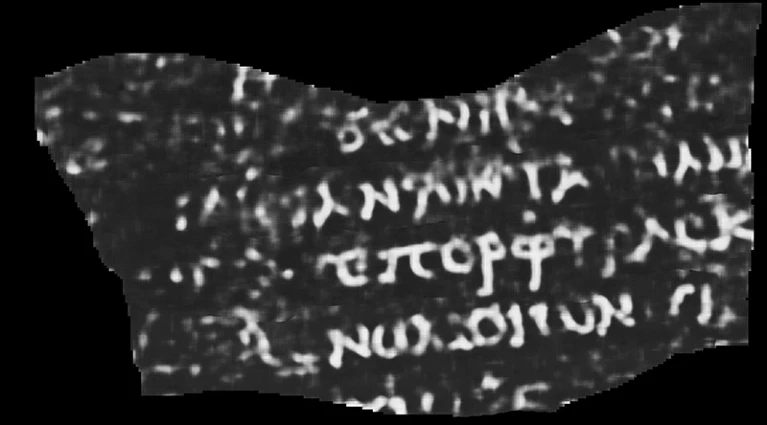
But those also who have made considerable progress in the survey of the main principles ought to bear in mind the scheme of the whole system set forth in its essentials. For we have frequent need of the general view, but not so often of the detailed exposition.
Epicurus, Letter to Herodotus
I want to start with a claim that may sound eccentric but is meant quite literally: the method behind this work is roughly 2,500 years old. For the specific task it serves — grounding a scientific framework in a domain that has not yet fully become a science — I do not think it has ever been entirely superseded.
The domain is human beings and their technology. The argument of this series is that it can support a genuinely scientific treatment — quantitative, mechanistic, and predictive in the limited sense that mature historical sciences are predictive. The obstacle, I think, has not primarily been the complexity of the subject matter, but the persistence of certain ontological assumptions inherited very early and retained for a very long time. The conceptual tools for approaching the problem differently were already present in Parmenides, Zeno, Heraclitus, and Epicurus, and in important respects they remain surprisingly usable. Versions of these foundations helped shape the development of physics, chemistry, and biology, but they were only unevenly extended into the study of humans and technology, often for reasons that were philosophical or theological rather than methodological.
Let me lay the foundation out in the order it actually goes, because it is a derivation, not a list. Each step forces the next.
First: there is what is, and you may not speak of what is not
Parmenides begins everything. In the fragments that survive — I am quoting throughout from John Burnet’s translation, the fragments numbered in the standard Diels–Kranz collection as DK 28 — he sets out the two roads with a clarity that is genuinely startling for the early fifth century BC:
Come now, I will tell thee… the only two ways of search that can be thought of. The first, namely, that It is, and that it is impossible for anything not to be, is the way of conviction, for truth is its companion. The other, namely, that It is not… that, I tell thee, is a wholly untrustworthy path. For you cannot know what is not — that is impossible — nor utter it. (DK 28 B2)
A note on what I am doing with these texts, since it will otherwise be misread. I am not offering a new scholarly interpretation of Parmenides, and I am not in competition with the people who study his Greek for its own sake. That work is valuable and largely beside my point. What I am doing instead is taking him operationally: treating the text not primarily as an object of commentary but as an attempt to establish how inquiry into what-is should proceed. Parmenides was not only making claims about reality; he was also attempting to define the conditions under which inquiry itself could proceed coherently. To run that procedure and see what it produces is to use the text as the physiologos meant it to be used. Scholarly interpretation and operational use are different activities. My concern here is with the latter: whether the procedure implied by the text still produces workable results when applied to an unsolved domain.
This can sound abstract, but operationally it has a very strong consequence: it restricts what kinds of entities and separations inquiry is permitted to posit. You may reason about what is. You may not grant reality to what is not.One recurring way this occurs is through the treatment of separations — boundaries, gaps, or divisions — as though they possessed an independent ontological status of their own.
Parmenides saw this coming and named it. A little further on he diagnoses the error directly, and it is worth seeing that he identifies it at the exact moment of its birth:
Mortals have settled in their minds to speak of two forms, one of which they should have left out, and that is where they go astray from the truth. They have assigned an opposite substance to each, and marks distinct from one another. (DK 28 B8)
Read this way, the passage becomes an early critique of dualistic ontology: the treatment of opposed domains as fundamentally separate substances with distinct properties. Two forms, one of which they should have left out. The tradition that came immediately after him did precisely what he warned against: it built ontologies of two forms — being and non-being, form and matter, soul and body, the heavens and the earth, eventually the human and the natural. It assigned opposite substances and distinct marks. And it went astray from the truth, in the specific way Parmenides predicted, at the specific point he predicted it.
I take this to identify a recurrent structural error that reappears throughout later thought. Not Platonism specifically, not Aristotelianism specifically — dualism, the granting of being to a separation. On this reading, many later difficulties in developing unified sciences of motion and nature follow from repeated reintroduction of exactly these kinds of separations.
Why a separation freezes a science
Here is the part that took me a long time to see, and that I now think is the whole game.
Dualistic separation does not merely complicate explanation. In its stronger forms, it can make lawful motion difficult to formulate, because motion is always relational: a thing moves only with respect to other things within a shared system. Natural science, at root, depends on the ability to model such relations.
Motion is relational rather than absolute: a thing moves only with respect to other things and other frames within a continuous system. This is not a modern discovery; it is implicit in the unity Parmenides describes. Now watch what a real separation does. If a domain is treated as fundamentally separate in substance or principle, its relations to the surrounding system become conceptually weakened or obscured. Once that happens, lawful interaction becomes harder to formulate. A truly separate thing has nothing to move relative to. It is, necessarily, frozen.
Something like this ontological structure may also help explain why certain cosmological systems treated the Earth as fundamentally fixed and separate from the surrounding order. Once the cosmos is split dualistically — the heavens one substance, the Earth another, special and apart — the Earth cannot move, because there is nothing in the same frame for it to move against. In this reading, the problem was not purely astronomical but ontological: the separation itself constrained what kinds of motion could be conceived coherently. Get rid of the separation, put the Earth back into one continuous system with everything else, and it moves again. That is, in effect, what the Renaissance did for matter.
The broader argument of this programme is that a comparable separation continued to shape the study of humans long after matter and life had been reintegrated into continuous physical systems. Humans were frequently treated as occupying a categorically distinct domain — partially continuous with nature in some respects, but exempt from full physical continuity in others — often for theological or metaphysical reasons rather than methodological ones. And a separate humanity, exactly like a separate Earth, cannot be in motion, cannot be coupled to an environment, cannot be subjected to a mechanics. It is frozen out of physical science by the same error, four centuries after the Earth was freed from it. The human sciences did not fail to become sciences because humans are too complex or too special. They failed because dualism had defined humans out of the relational field where motion — and therefore law, and therefore science — can exist at all.
Once that separation is relaxed, humans and technology can be reintroduced into the same continuous field of motion, constraint, and interaction studied elsewhere in the natural sciences. That reintegration is the starting condition for the work that follows.
Second: all is motion
Parmenides establishes the continuity of what-is. What remains is a single continuous reality rather than a set of fundamentally separate domains.
One path only is left for us to speak of, namely, that It is… now it is, all at once, a continuous one. (DK 28 B8)
But continuity alone does not yet yield a dynamic world. The second principle comes from Heraclitus: reality is not merely continuous but dynamic. Stable things are sustained patterns within ongoing motion rather than fixed substances beneath it. The one continuous being is not frozen; it is flux. What appears stable — a river, a body, a species, a tool tradition — can be understood as a relatively persistent organization of motion maintaining coherence across time. The important point is that continuity and motion are not opposites here. The continuity of the world is expressed through structured change rather than through immobility.
“All is motion,” the title of this site, is not intended as a slogan so much as a compressed statement of these two linked premises: continuity and structured change.
Heraclitus matters here in a precise way, not as a vague gesture at change. Heraclitean flux is not chaos. Motion possesses structure, recurrence, and constraint — what Heraclitus names logos. This is what lets motion be a subject of science rather than a synonym for chaos. Structured motion becomes the central object of analysis. Following that idea consistently leads, eventually, to the definition of technology developed in the later technical work.
Third: the lines we draw are ours
If reality is continuous and dynamic, then many of the boundaries we draw — between object and environment, organism and world, system and surroundings — are methodological cuts rather than absolute seams in nature. The continuity of the world does not eliminate boundaries, but it changes their status. Boundaries become analytical decisions made for the purpose of studying particular phenomena.
At first this may seem to undermine scientific analysis: if boundaries are constructed, what stabilizes the object of study? In practice, however, it is precisely what makes complex systems scientifically tractable. Science proceeds by selecting stable regions of interaction within the larger continuum. Here the relevant region is the interaction between humans, technology, and environment. The analytical cut is therefore placed at a specific interface: the boundary between an organism’s internally regulated activity and the wider field of environmental motion in which it operates.
Once the problem is framed this way, a familiar scientific vocabulary begins to emerge almost automatically. A boundary across which organisms extend regulation into external material immediately connects the problem to systems biology, ecological dynamics, niche construction, and theories of extended or distributed regulation. The ancient ontology delivers you directly to the modern boundary-systems frame. It is not bolted on afterward; it is where you land when you cut the continuum at the place your phenomenon actually occupies.
On this account, technology is not an external category added onto human life afterward. It is a mode of structured motion through which organisms extend regulation and constraint into the material environment around them.
Fourth: the present is all there is, and this is what saves inference
The next step closes the system and, for archaeology specifically, turns out to be decisive.
Parmenides then introduces a principle which, taken literally and operationally rather than allegorically, produces a remarkably rigorous foundation for archaeological inference:
Nor was it ever, nor will it be; for now it is, all at once, a continuous one. (DK 28 B8)
And:
there is not, and never shall be, any time other than that which is present, since fate has chained it so as to be whole and immovable. Wherefore all these things are but the names which mortals have given, believing them to be true. (DK 28 B8)
Operationally, there is no past available to investigation. There are only present material configurations carrying traces of prior motion and interaction. Archaeology never encounters “the past” itself as an observable domain. It encounters stones, deposits, wear patterns, fractures, residues, and distributions as they exist now. “The past,” in this framework, is not a stored realm awaiting retrieval but a reconstructed account inferred from present evidence.
This is not a limitation of archaeology but the condition that makes archaeological reasoning rigorous. Once the distinction is enforced clearly, the structure of the discipline changes.
- What is sensed: the present signal — the trace as it exists materially now.
- What must be inferred: the structured motions and interactions capable of producing that signal.
The archaeologist does not retrieve the past as though it remained physically available somewhere behind the evidence. They reconstruct prior processes inferentially from present signals under conditions of uncertainty. Archaeology therefore becomes an inverse problem in the strict sense: reasoning backward from present traces toward the motions and processes capable of generating them. The Eleatic restriction is what keeps the inference disciplined, because it prevents reconstructed histories from being mistaken for observations. The only observation is the present trace; everything else remains inferential and must carry its uncertainty openly.
That comparable inverse-problem structures appear in astrophysical reconstruction and the search for non-human intelligence is not accidental. In each case, present signals are used to reconstruct processes that are no longer directly observable. The point is that the cleanest available foundation for it was stated by Parmenides, and that it follows from taking “only the present is” literally.
And it is thinkable precisely because of his other principle, the bridge between mind and world:
For it is the same thing that can be thought and that can be. (DK 28 B3)
The reconstructed process is not unconstrained imagination. It is bounded both by the observed signal and by the lawful structure of the world capable of producing such a signal in the first place. Inference is possible because the thinkable and the real are not disconnected domains. The world is intelligible enough that present traces can constrain reconstructions of the motions that produced them. That is the epistemic foundation of the method.
Fifth: Zeno tells the formalism what it may not do
Zeno is usually treated as a producer of paradoxes to be resolved. I think it is more useful to read him as defending the continuity implied by Parmenides against attempts to reconstruct motion from discrete states. The paradoxes repeatedly target the same problem: if motion is decomposed into fully discrete positions or instants treated as fundamentally real, motion itself becomes impossible to reconstruct. The arrow that occupies a single position at a single instant is not moving; if time is merely a sum of such instants, nothing ever moves. Since motion plainly occurs, the discreteness must be the illusion and the continuity the reality. Zeno proves the master’s premise by reductio: being is continuous, not discrete.
This is not antiquarian, and it is not abstract. It is a hard constraint on how you are permitted to build the formalism, and it cuts directly at how archaeology represents its own evidence. Archaeological recording systems routinely treat layers, contexts, events, and time-slices as discrete stored units — as though the past were a stack of separate states filed away in sequence, each one a thing that happened and was set down and can now be retrieved. This is exactly the atomised ontology Zeno’s arguments were designed to destroy, and it is exactly the separate, retrievable past that Parmenides showed to be only a name.
The objection is not that we may not discretise. All science discretises; every measurement samples a continuous field, and a digital record has no choice but to partition what it stores. The error is to mistake the partition for the world — to let the sampled, layered, timestamped representation become the ontology rather than remaining a constrained operational model of a continuous present field. The moment the database schema is taken to describe how reality is structured, rather than how our sampling of it is structured, the Eleatic error has been reintroduced under a new name, and motion has been quietly frozen back out of the picture.
Taken together, the two Eleatic principles converge on a single methodological demand. Parmenides says there is no separate, stored past; Zeno says there are no fundamental discrete states for such a past to be made of. So the formalism must represent a continuous present field of traces, signals, and inferential relations — not a sequence of discretely stored, recoverable pasts. The stored record is a sampling of a continuous field, never a shelf of retrievable moments. Ontology, in other words, dictates schema — and an archaeology that builds its databases as shelves of frozen instants has, without noticing, chosen the ontology Parmenides and Zeno spent their lives refuting.
Sixth: Epicurus, and how you actually build it
The Eleatics and Heraclitus give the ontology. Epicurus gives the method — the procedure for turning that ontology into a working science from the phenomena up. His Letter to Herodotus is, read correctly, a construction manual: begin from what is evident to the senses; fix the meaning of your terms to those evident things so the words do not float free; admit nothing that contradicts the phenomena; and where the phenomena underdetermine the cause, permit several explanations rather than forcing one prematurely. This is the recipe. It is exactly the procedure I followed, consciously, to think through how a science of technology could be constructed where there was none.
And Epicurean atomism supplies the one structural idea without which none of it becomes quantitative. Atomism replaces the transformation of essences with the recombination of elements. This is the difference between a study that can only classify and a science that can count, combine, and predict. An essentialist asks what a thing fundamentally is and sorts it into a type. An atomist asks what the irreducible constituents are and how they are arranged, and can then recombine them, measure them, and predict new arrangements. Every quantitative science made this trade, and it is, in my view, the trade that is the birth of modern science — whatever one thinks of the historical route by which Epicurus’ atomism returned to circulation through Lucretius. The structural fact is what matters: recombination of elements is generative; transformation of essences is not.
This is the precise correction the work applies to archaeology. Typology is essentialism: it asks what type a tool is and sorts it. The procedural unit — the irreducible coded unit of structured motion — is the atom: it recombines, it can be counted across assemblages, it supports quantitative inference and prediction. Recoding the lithic record from types into procedural units is nothing other than the Epicurean move from essences to elements, applied to stone. The whole empirical apparatus of the work is atomism, two and a half thousand years late to a field that was kept out of its reach.
Why this is somehow new
Taken together, these steps amount to a coherent programme: Parmenides for ontology and the critique of separation; Heraclitus for structured motion; the systems boundary for organism-environment coupling; the present-only constraint for inference; Zeno for continuity; and Epicurus for operational method and atomistic reconstruction.
None of these components are modern in origin. Which raises an obvious question: if these conceptual tools were already available in antiquity, and if it built physics and chemistry and biology once it was applied to matter and life, why is applying it to humans and their technology a new research programme in 2026 rather than an obvious and long-completed one?
There are two parts to the answer, and the first is not about religion at all. It is about what a mature science is for.
Modern science succeeded largely through specialisation. Once disciplines become productive, they typically stop revisiting foundational ontological questions and instead operate within inherited conceptual frameworks.Once a field is established it stops doing ontology — it inherits its basic categories and gets on with the productive normal-science work conducted inside them. This is exactly why it is so powerful and exactly why it is helpless at the particular task of founding a new science from an ungrounded domain.But constructing a new science requires temporarily returning to earlier questions: what constitutes the object of study, what counts as a fundamental unit, where boundaries should be drawn, and what kind of motion or interaction is being modeled. That is the founder’s work, and it is a different act from the practitioner’s. Even philosophy of science, which might be expected to retain the capacity, has largely become a science about mature sciences — it studies how established fields work, not how to make one out of nothing. So the one tool required to ground a new domain is the tool the entire modern apparatus has, very reasonably, set down. In that narrow sense, some ancient foundational procedures remain unexpectedly useful for problems involving scientific grounding rather than normal disciplinary practice.
This also tells us how to read the moderns who did see it. Popper went “back to the Presocratics” and argued they founded the critical-rational tradition that science is. Rovelli wrote a whole book contending that physics descends directly from Anaximander and the Milesians and that their way of thinking simply is the scientific one. These are not merely historical observations. They reflect recognition that certain Presocratic questions remain structurally close to the foundations of scientific reasoning itself. What this programme adds is the step past recognition. If one takes the Presocratic programme operationally and applies it to a domain lacking a mature scientific structure — and if a coherent predictive and falsifiable framework emerges — then the significance of that programme is demonstrated practically rather than merely historically. We applied the method and got the kind of result the method is supposed to get. That is a stronger vindication than any reading of the texts could provide, and it is available only because we used them rather than glossed them. In that case, the Presocratics cease to appear merely as precursors to science and instead become participants in an unfinished scientific project whose implications were only partially developed.
The second part of the answer is the one I have been building toward, and I will now state it at the level of mechanism and leave the reader to draw the rest. The extension of these methods into the study of humans and technology remained unusually incomplete. The dualism Parmenides warned against was installed early, formulated with great precision — its sharpest early formulations were aimed, before Christianity, at countering the power of Epicureanism — and then welded to institutional authority and used to set humanity apart from nature. Once humans are treated as partially exempt from the same continuous relational field governing matter and life elsewhere, constructing a unified mechanics of human technological behavior becomes correspondingly difficult. Matter and life were progressively reintegrated into continuous physical and biological explanation during the development of modern science. Human technological behavior, however, remained comparatively resistant to full integration. I will not speculate about intentions; intentions are unknowable and beside the point. I only observe that of all the domains, the one kept exempt from science for non-scientific reasons was the one in which a powerful institution had the most to gain from the exemption, and that the exemption, uniquely, was never lifted. The reader may make of that what they will.
So, finally, to the matter of modern philosophy, now that the derivation has earned the remark: it is, ironically, poorly equipped to undo any of this, and the evidence is that it has been trying for decades to bring archaeology and the human sciences into science and has not managed it. It has not managed it because it inherited the very dualism it would need to discard, and because it treats the Presocratics as a charming prelude rather than as the people who actually laid down the first principles that science requires. I find that relegation genuinely strange. Parmenides established what a first principle must be, and forbade the error that froze the world, before the error had even been fully made. To file him under “early, superseded” is to mistake the foundation for a draft.
The argument of this programme is not that archaeology requires more scientific vocabulary layered onto existing theory. It is that the underlying ontology itself must change. A discipline built around classificatory essentialism, interpretive fragmentation, and unstable theoretical language cannot easily become cumulative, mechanistic, or predictive, because its foundations were not constructed for those purposes in the first place.
Much twentieth-century archaeological theory treated scientific grounding as naïve, reductionist, or even undesirable. The result was not liberation from outdated models but the gradual loss of any shared framework capable of connecting explanation, inference, evidence, and mechanism coherently across scales. In place of integration came proliferation: competing vocabularies, interpretive schools, and increasingly elaborate theoretical languages often detached from operational reconstruction.
The programme outlined here proceeds in the opposite direction. It treats archaeology not as an interpretive exception to science but as an unfinished scientific domain whose foundational reconstruction was historically interrupted before completion. The claim is therefore not modest. If the framework succeeds, even partially, then large parts of archaeological “theory” will come to appear less like the foundations of a mature science than like compensatory structures developed in the prolonged absence of one.
Let the debt be stated without hedging: this essay, and the work behind it, owes almost everything to Parmenides, Zeno, Heraclitus, and Epicurus, and almost nothing to the archaeological theory of the last century. And what astonishes me most is not how much they achieved but how little we needed to inherit. Their books are gone. What we have are fragments — quoted by enemies, buried under volcanic mud, recovered by the handful. Yet even these offcuts are sufficient to build a new way of seeing the world, and more than that, a new scientific way of seeing it — which is the most powerful form of understanding human beings have ever found. If fragments can do this, imagine what was lost. And imagine what is still to be found.
The Presocratics were not important because they anticipated modern conclusions. They were important because they asked, with unusual clarity, the questions required to begin a science at all. Physics and biology eventually followed those questions into matter and life. This programme is an attempt to follow them into technology and the human past with the same seriousness — and to discover whether archaeology, too, can finally become cumulative in the strong scientific sense rather than only in the archival one.
First in a series. This essay sets out the foundation underneath everything else on this site. The work — a physical theory of technology, is an attempt to make archaeology into a science in the way physics and biology are sciences — did not begin from any modern method. It began from the Presocratics and from Epicurus, and the procedure I followed is theirs, not a contemporary one. I have explained this before only in compressed, almost poetical form. Since the work now seems close to producing something real, it is time to set the background out plainly. The essays that follow take this foundation into the body, across the sciences, and finally to the stone itself.
Dylan Foley is an independent researcher based in Ireland working at the intersection of physics, archaeology, and evolutionary biology, through his company Industrial Automata. Parmenides fragments are quoted from John Burnet, Early Greek Philosophy (1892), Diels–Kranz numbering. The technical work these essays draw on is currently under peer review; details will follow on publication.
Companion conference paper: Foley & Furey, “From Geospatial Patterns to Ancient Signals: A Signal Based Framework for Archaeological Machine Learning” (IEEE Irish Signals and Systems Conference 2025, DOI: 10.1109/ISSC67739.2025.11291309).