Dylan Foley
Words:19054
Time to read:50 minutes
Introduction
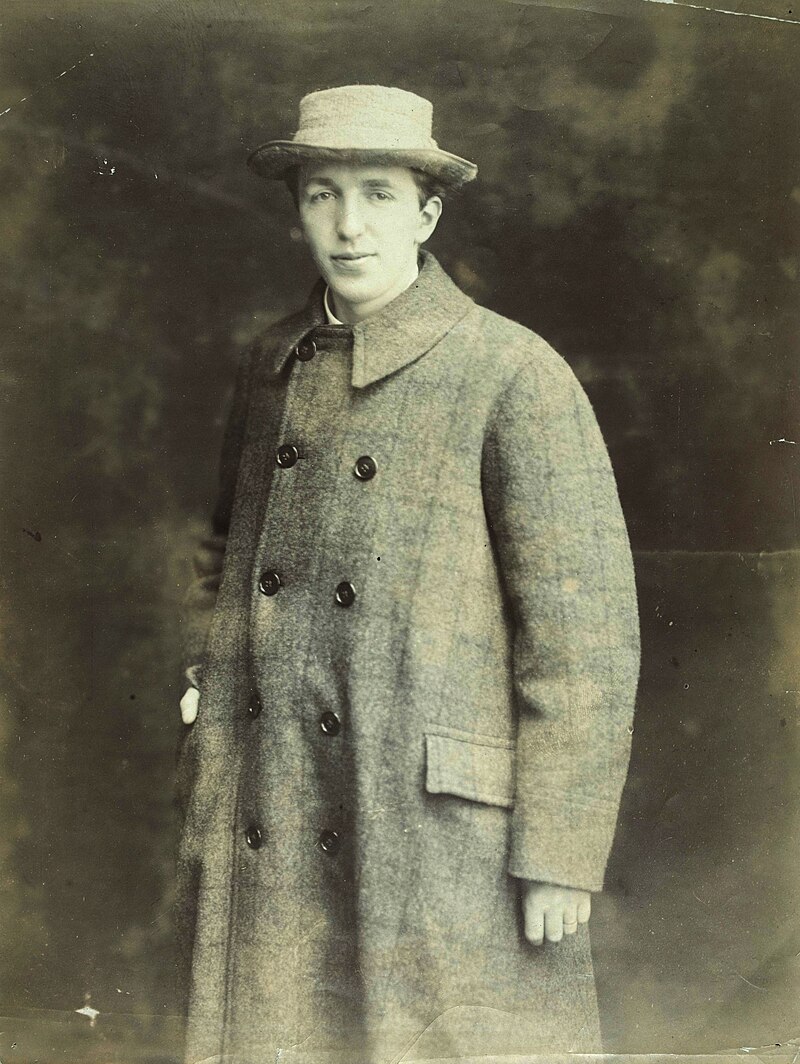
On Good Friday 1916, Bulmer Hobson found himself in an absurd and bitter predicament. His own comrades in the Irish Republican Brotherhood—men he had recruited, trained, and worked alongside for over a decade—kidnapped him and held him captive in a house in the Dublin suburbs. They weren’t acting on behalf of the British Crown. They were acting to prevent Hobson from stopping the Easter Rising, an insurrection he believed would end in military disaster and political catastrophe.
The irony was cruel. Hobson had spent fifteen years building the IRB into an effective revolutionary organisation. He had co-founded Na Fianna Éireann, the nationalist youth movement. He had been instrumental in establishing the Irish Volunteers. He had coordinated the Howth gunrunning that armed the independence movement. He had brought Patrick Pearse into the inner circles of revolutionary activity. Yet when the moment came, Hobson hesitated, and they removed him.
His captors needn’t have worried about what to do with him afterward. When Hobson finally emerged from hiding after the June 1917 amnesty, he discovered that his political life was over. To the general public it was as if he had been executed along with the rebel leaders, but without the posthumous benefit of their spin-doctors. His former comrades, misunderstanding his motives for opposing the Rising, denounced him as a coward and a traitor. He was subjected to a peculiar form of living death—ostracism without martyrdom, survival without resurrection.
Yet this political death sentence carries within it a profound historical irony. Because Bulmer Hobson survived, because he lived on for another fifty-three years, dying only in 1969, he became the only major figure of the revolutionary generation who could articulate in detail what the Irish independence movement had originally intended for the new Ireland. And what he articulated, particularly in the 1930s when he tried desperately to get the Irish government to listen, was a vision so radically different from what emerged that it reads now like a message from an alternative timeline.
Hobson’s vision wasn’t simply nationalist. It was anarcho-nationalist—a synthesis of revolutionary separatism with the libertarian socialist thought that dominated progressive circles before the First World War. More remarkably, his economic proposals, dismissed and ridiculed in his own time, anticipated by decades the monetary theories that economists now call Modern Monetary Theory or Chartalism.
He understood that money was a creation of the state, that banks manufactured credit through accounting entries, and that a sovereign government could invest in its people without begging permission from financial markets. He published these ideas in 1933, three years before Keynes’ General Theory, at a time when the Irish government was pursuing precisely the kind of austerity policies that would condemn generations to poverty and emigration.
This is the story of what Ireland’s revolutionaries actually believed before the gunfire of Easter Week drowned out everything but the rhetoric of blood sacrifice and Catholic Nationalism. It’s the story of a comprehensive social and economic program that was buried along with Hobson’s reputation, and the story of what might have been if the Irish Free State had listened to the one revolutionary leader who survived to tell them.
Part One: The Quaker Revolutionary
Bulmer Hobson was never supposed to be a revolutionary. Born in 1883 in Holywood, County Down, he came from a liberal Belfast Quaker family. His father, Benjamin Hobson Jr., was a commercial traveller who identified as a Gladstonian Home Ruler—respectable, moderate, constitutional. His mother, Mary Ann Bulmer, was a suffragist and amateur archaeologist from Darlington in England. The Hobsons believed in gradual reform, rational persuasion, and the peaceful resolution of political conflicts.
Yet by his late teens, Hobson had moved far beyond his family’s moderate nationalism. He joined the Gaelic League and immersed himself in the cultural nationalist movement sweeping through turn-of-the-century Ireland. More significantly, he began reading widely in revolutionary and radical literature. He discovered Theobald Wolfe Tone and the United Irishmen, whose combination of non-sectarianism and separatism would shape his political thinking for life. He read the Young Irelander James Fintan Lalor, whose writings on land and economics provided him with a physiocratic framework that would later inform his economic thought. And crucially, he encountered the works of the European anarchists and libertarian socialists who dominated progressive thought in the decades before the First World War transformed the landscape of the left.
In 1901, Hobson and his friend Denis McCullough joined Robert Johnston’s Pioneer Branch of Cumann na nGaedheal in Belfast. Johnston was a lieutenant of Fred Allan, a remarkable figure who embodied the intersection of Irish nationalism with the libertarian socialist currents of the era. Allan had delivered lectures on “Socialism” and the “Russian Revolutionary Movement” to the Dublin Young Ireland Society in the early 1880s. In 1894 he met with various English anarchists. Allan represented a strain of Irish nationalism that sought to fuse Fenianism with labor politics and drew freely on English radicalism and continental anarchist thought.
Through these connections, Hobson entered a revolutionary milieu that was far more ideologically sophisticated than the romantic nationalism often associated with the Irish independence movement. This was a world where activists read Kropotkin alongside Tone, where the Russian revolutionary tradition was studied as closely as the 1798 rebellion, and where questions of economic organization and social revolution were considered as important as national independence.
In December 1905, Hobson and McCullough founded the Dungannon Clubs in Belfast, naming them after the 1782 Volunteer convention that had forced Britain to grant legislative independence to the Irish Parliament. The Dungannon Clubs were ostensibly part of Arthur Griffith’s Sinn Féin movement, which advocated a “Hungarian Policy”—independence modeled on the 1867 compromise between imperial Austria and Hungary. But Hobson and his colleagues had more radical aims. They were using Sinn Féin as a public face while working to rebuild the Irish Republican Brotherhood into an effective revolutionary organization.
The IRB had fallen into decline by the turn of the century. It was riddled with informers, lacking in purpose, and largely disconnected from the vibrant cultural nationalism of the Gaelic revival (exceptions were IRB president John O’Leary and John Butler Yeats who kept up a sophisticated “shaping” of opinion in the cultural sphere, but who certainly werent militant). Hobson set about transforming it. He brought energy, organization, and most importantly, a comprehensive ideological program that went far beyond simple political separation. The manifesto of the Dungannon Clubs declared that “Irish Trades Unionism, now a mean tail to an English Democracy, must be recognised and nationalised, and made to play its great and proper part in the upbuilding of the country.” This wasn’t mere nationalist rhetoric. It reflected Hobson’s emerging synthesis of separatist politics with social and economic revolution.
In 1907, Hobson launched a newspaper called the Republic to articulate the Dungannon Clubs’ program. Though it lasted only from December 1906 to May 1907, it provided the template for what would become his most important platform: Irish Freedom, the IRB newspaper that ran from 1910 to 1914. In the Republic, Hobson wrote under the pen name Curoi MacDare, “Our work must be constructive as well as destructive; we must rebuild as well as destroy. And, though our first need is for a national political organisation to wrest this country from the grip of England, that is not our only need, nor must that organisation be purely political and neglect the many sided life of the nation.”
This formulation—constructive as well as destructive—came directly from the French anarchist Pierre-Joseph Proudhon, who had used the maxim “Destruam ut Adificabo” (“I destroy in order to build up”) to emphasize the need to create new libertarian institutions to replace existing ones. Whether Hobson knew he was echoing Proudhon directly or had absorbed the idea through the wider radical culture of the period, he was clearly operating within an anarchist framework. The goal wasn’t simply to transfer state power from British to Irish hands. It was to fundamentally reconstruct Irish society on different principles.
Part Two: The Anarchist Moment
To understand Hobson’s vision, we must understand what “socialism” meant in the decade before the First World War. This is crucial because the Bolshevik Revolution of 1917 and the subsequent Cold War have so thoroughly reshaped our understanding of left-wing politics that we’ve largely forgotten the ideological landscape that Hobson and his generation inhabited.
Before 1914, the dominant strain of socialist thought among revolutionaries wasn’t Marxism—it was anarchism and libertarian socialism. The distinction matters profoundly. Marxism, particularly as it evolved in the hands of Lenin and the Bolsheviks, emphasized centralized state power, vanguard parties, and the “dictatorship of the proletariat.” Anarchists and libertarian socialists rejected all of this. They saw the state itself as the fundamental problem, whether ruled by capitalists or by a revolutionary party claiming to represent the workers. They advocated instead for decentralized, self-governing communities, voluntary cooperation, and the abolition of all imposed hierarchies.
The Russian anarchist Peter Kropotkin was the most influential theorist of this tradition, and his ideas circulated widely in Irish revolutionary circles. Kropotkin’s newspaper, Freedom, reported approvingly in 1908 on a meeting where the writer Standish O’Grady recommended that Irishmen read Kropotkin’s Mutual Aid as a recipe for developing Irish civilization. O’Grady, whom Hobson worked alongside on the Peasant newspaper, was deeply influenced by Kropotkin’s vision of decentralized communes based on mutual aid rather than state power or market competition.
Kropotkin’s 1898 book Fields, Factories and Workshops provided a detailed blueprint for economic decentralization. He argued that modern technology made it possible for communities to combine agriculture with small-scale industry, achieving economic self-sufficiency without the massive centralized factories and urban concentration that characterized industrial capitalism. This vision had obvious appeal to Irish nationalists who wanted to reverse the economic devastation wrought by British rule without simply replicating British industrial models.
By 1913, Hobson was thoroughly familiar with Kropotkin’s work. Writing in the Gaelic American, he referenced Fields, Factories and Workshops directly, noting the Russian anarchist’s “alluring vision of the countryside where agriculture is interspersed with industries.” The Peasant had reviewed the book favorably in 1908, recommending it to its readers and outlining how Ireland should develop full home markets along the lines Kropotkin prescribed.
But Kropotkin wasn’t the only anarchist influence on Hobson’s thinking. Proudhon’s concept of the “social economy” as distinct from the “political economy” provided a framework for bypassing state machinery entirely. Proudhon argued that economic life organized through voluntary cooperation and mutual banks could function independently of government control. This idea resonated deeply with Hobson’s strategy of reducing “the social economy to its first elements”—breaking up the existing system to place Irish people beyond the control of the British state.
Herbert Spencer, the individualist philosopher, also shaped Hobson’s worldview. Spencer was much admired in Irish anarchist circles, and Hobson read his Data of Ethics, quoting it approvingly in Irish Freedom. Spencer’s evolutionary theory of social cooperation—the idea that voluntary mutual aid represented a higher stage of human development than competition or coercion—fit perfectly with both Kropotkin’s anarchism and Hobson’s nationalism. Interestingly, Michael Davitt, the founder of the Land League, had also cited Spencer’s views in Land League publications. The American anarchist Benjamin Tucker had praised the Land League as “the nearest approach on a large scale, to perfect Anarchistic organization that the world has yet seen.”
These weren’t abstract theoretical influences. They shaped Hobson’s practical program in concrete ways. In 1908, writing in the Irish Homestead—the journal of the cooperative movement edited by George Russell (Ӕ), who was himself enthusiastically taking up Kropotkin’s anarchism—Hobson called for the establishment of an Irish School of Economics. This wasn’t simply about technical training. It was about developing an entirely different approach to economic organization, one based on cooperation rather than competition, on local self-sufficiency rather than dependence on global markets, and on social needs rather than profit.
The same year, Hobson worked with Constance Markievicz, a socialist and feminist who would later fight in the Easter Rising, to establish a cooperative commune in Dublin based on the Ralahine model. Ralahine had been a short-lived cooperative colony established in County Clare in the 1830s by a landlord inspired by Robert Owen’s cooperative socialism. Though Hobson’s commune also failed, the attempt revealed his commitment to actually constructing the alternative institutions that would form the basis of a liberated Ireland, not simply fighting to transfer political power.
This practical orientation characterized all of Hobson’s work. In 1909 he published Defensive Warfare, a handbook for Irish nationalists that outlined a strategy of passive resistance and guerrilla tactics. But Defensive Warfare wasn’t only about military tactics. It articulated a comprehensive social and economic strategy based on the anarchist principle that “the modern state’s complex administrative machinery relies on the habit of acquiescence. If that habit were broken, the machinery would immediately be paralysed.”
Hobson proposed using Ireland’s local government boards—created under the 1898 Local Government Act, which had given the vote to every occupier irrespective of wealth, religion, or sex—as weapons against British rule. These elected boards were supposed to administer decrees from Dublin Castle, but Hobson argued they could refuse to cooperate, effectively blocking the Castle boards and making British administration impossible. This was pure Kropotkin, who had written in “Local Action” that “the abolition of monopolies will not be done by acts of national Parliaments: it will be done, first, by the people of each locality.”
At the same time, Hobson advocated constructing an alternative social economy that would bypass British control entirely. He argued for cooperative societies that would provide credit, organize production, and create the infrastructure for economic self-sufficiency. Writing in the Peasant in 1907, he outlined a detailed plan for cooperative tillage societies that would provide low-interest loans and technical education to farmers, enabling them to increase production and achieve independence from British-controlled markets and financial institutions.
This cooperative approach drew on Proudhon’s advocacy of People’s Banks—mutual credit institutions that would provide financing without the extraction of profit by capitalist financiers. In August 1908, George Russell chaired the newly founded Sinn Féin Co-operative People’s Bank, which attempted to put these principles into practice. Hobson recognized that economic independence required not just political separation but the creation of alternative institutions that could function independently of—and eventually replace—the structures of British rule.
The synthesis Hobson was developing had a name: anarcho-nationalism. The historian Sean Worgan, who has studied Hobson’s relationship to anarchist thought more thoroughly than anyone, defines it precisely: “Anarcho-nationalism drew on anarchism and placed it in the nationalist framework of seeking independence from the British.” All anarchists rejected the legitimacy of external government and condemned imposed political authority and domination. They sought to establish decentralized, self-regulating societies consisting of federations of voluntary associations. Hobson simply applied this program to Ireland, arguing that escaping British rule required not just political independence but a fundamental reconstruction of Irish society along cooperative, decentralized lines.
This was the ideology that Hobson brought into the heart of the IRB. And it was the ideology that Irish Freedom, the newspaper he edited from 1910 to 1914, would disseminate throughout the revolutionary movement.
Part Three: Irish Freedom and the Revolutionary Program
In November 1910, the first issue of Irish Freedom appeared on the streets of Dublin. Ostensibly published by the Dublin Central Wolfe Tone Clubs Committee, it was in reality the organ of the Irish Republican Brotherhood. Patrick McCartan was listed as editor, but as Hobson himself later admitted, he did most of the actual editorial work. Along with P.S. O’Hegarty, another former Dungannon Club colleague, Hobson “wrote all the editorials and a good many of the articles.” The paper’s manager was Sean McDermott, who would be executed after the Easter Rising. Among its contributors were Patrick Pearse, Ernest Blythe, and a mysterious figure who signed himself “Northman.”
Irish Freedom was, in Hobson’s own words, “the most dangerous paper published in Ireland since the Fenian days.” But its danger lay not simply in its advocacy of armed rebellion against British rule. What made it truly subversive was its comprehensive program for social and economic transformation. As Hobson put it, “Irish Freedom represented the militant left wing of the Irish national movement, and advocated the independence of Ireland by every practicable means, including the use of physical force.” That left-wing character wasn’t incidental—it was fundamental to what Hobson and his colleagues were trying to achieve.
The paper’s very appearance signaled its ideological commitments. Side by side, Irish Freedom and Kropotkin’s anarchist newspaper Freedom looked remarkably similar, from the title treatment to the general layout. This wasn’t coincidence. Irish Freedom deliberately modeled itself on Kropotkin’s paper, and there was substantial crossover between the two publications. A number of articles in Irish Freedom shared titles—and occasionally themes—with pieces that had appeared in Freedom. “Today and To-Morrow,” “The Work Before Us,” “Under Which Flag,” “The Coming Storm,” “Rocks Ahead”—all of these titles appeared in both papers, part of a shared vocabulary that linked Irish nationalism to the broader anarchist movement.
Most tellingly, Freedom reported in its April 1912 edition that the Daily Chronicle had noted “suspicious Irish and German names in Freedom’s membership.” The June 1908 issue of Freedom contained an article titled “The Failure and Farce of Parliamentarianism” by “An Irish Rebel,” who rejected parliamentary methods and discussed the potential use of general strikes as political weapons in Ireland. This rejection of parliamentarianism aligned perfectly with Sinn Féin and the IRB’s abstentionist policy, but it was grounded in anarchist principle rather than mere tactical consideration.
The figure of “Northman” embodied this connection between Irish nationalism and international anarchism. Northman wrote for Freedom at the end of 1901 and then for Irish Freedom in 1912 and 1913. Years later, one of his articles in Irish Freedom was double-signed as both “Northman” and “Seaghan Mac An Learlah”—a Gaelicized version of John Lawlor. Lawlor was a former handball player from Pennsylvania who became Vice President of the Dublin Trades Council and Labour League. He was one of three Dublin Trades Council members on the funeral committee for the veteran Fenian O’Donovan Rossa in 1915, and it was Northman who wrote the tribute article “Rossa in the Dock” for the funeral’s souvenir booklet. Since Hobson was Honorary Secretary of that funeral committee, the two men worked closely together.
Through Northman and other contributors, Irish Freedom articulated a vision that went far beyond political nationalism. In February 1913, Ernest Blythe published an article titled “The Co-operative Commonwealth” that laid out the economic alternative to both capitalism and state socialism. Blythe described how cooperation could be achieved in workshops, manufacturing, shopkeeping, and especially agriculture. Agricultural cooperation was key because “The agricultural co-operator, assisted and advised by Nationalists who consider the whole community, will as time goes on lengthen his arm and multiply his activities until all industry is federated with him in a harmonious, symmetrical co-operative commonwealth.”
The language is significant. Blythe spoke of industry federating itself, not being organized by the state. This was an explicitly anarchist solution, a federation of voluntary associations rather than state ownership. Blythe contrasted this cooperative commonwealth with “the present system of competitive profiteering” on one hand and “Social Reform” on the other. Social Reform, he warned, would lead to “the servile State, when the masses, in name and in fact, will be slaves, with every detail of their lives carefully and hygienically regulated by their owners, the capitalists, who by virtue of their wealth will in reality be the state.”
This critique of the “servile state” came directly from anarchist theory. Anarchists had long argued that state socialism, whatever its proponents intended, would inevitably produce a new form of slavery. Blythe made this explicit: “Whatever the State Socialists may aim at (and all honest men will admit that their intentions are good) they have so far only brought us social reform, the prelude to the servile state.” What Ireland needed instead was social revolution, not social reform. This required preserving and developing the working class’s “responsibility, initiative and dependence”—qualities essential for driving genuine social transformation.
This position explains what otherwise appears as a contradiction in Hobson’s relationship to the labor movement. Sean O’Casey, in his history of the Irish Citizen Army, accused Hobson of being anti-socialist and doing his best to prevent understanding between labor and nationalism. During the 1913 Dublin Lockout, at a general meeting of the IRB, Hobson convinced the audience that as a democratic organization supportive of all Irish citizens regardless of class, the IRB should not intervene on the side of the workers. O’Casey saw this as evidence of Hobson’s hostility toward labor and socialism.
But this reading misunderstands Hobson’s position entirely. He wasn’t anti-worker or anti-socialist. He was anti-state-socialist, and his anarcho-nationalist approach required bringing workers and employers together in cooperative relationships rather than sharpening class conflict. This was consistent with his earlier cooperative projects and his belief that social revolution required constructing alternative institutions, not capturing state power. James Connolly, the Marxist who would command the Citizen Army in the Easter Rising, had once urged Hobson to “give up Sinn Féin propaganda and devote himself to a left wing Labour movement”—hardly something he would have suggested to someone he viewed as an enemy of labour.
Hobson’s wariness of state socialism manifested clearly in Irish Freedom’s response to the British government’s National Health Insurance Act of 1911. This act compulsorily insured all workers earning less than £160 a year against sickness and provided minimal unemployment insurance, funded through contributions from the state, employers, and workers themselves. Hobson objected strenuously, not because he opposed workers having insurance, but because he saw the state scheme as imposing unnecessary costs on Irish businesses while undermining voluntary alternatives.
Hobson had established An Cumann Coranta, a mutual insurance scheme “started in order to protect Irish Nationalists against loss of their employment on account of their activity in the national cause.” This was precisely the kind of voluntary, cooperative institution that anarchists like Proudhon had advocated—workers organizing their own mutual aid societies independent of both capitalist insurance companies and state programs. The British government’s compulsory scheme threatened to crowd out these voluntary alternatives while extending state control over yet another aspect of Irish life.
Through Irish Freedom, Hobson pursued a consistent program: destroy the mechanisms of British control while constructing the institutions of an alternative social economy. In September 1911, when railway workers struck in a dispute that paralyzed transport throughout Ireland, Irish Freedom called urgently for “a coherent and well thought out social policy if nation building in Ireland was to mean anything more than a high-sounding phrase.” The railway strike, Irish Freedom argued, had “shaken the country to its foundations” and revealed that political independence alone would be meaningless without addressing fundamental questions of economic power.
Northman developed this argument in a lengthy article titled “The Economic Basis of a Revolutionary Movement: An Address to Nationalists,” published in January 1913. Surveying the history of revolutionary movements from the French Revolution through Parnell’s Land League, Northman argued that “the hopes of the people to secure a better and happier way of life have been one of the chief factors in every revolution.” A general survey of the previous century convinced him “that a social policy would add greatly to the strength of the separatist movement.”
He went further: “If we take a definite step in propounding our social ideal, in stating quite clearly that the establishment of an Irish Republic will be followed by an equable social re-organisation, then we shall give impetus and strength to the movement which will hasten the day when English domination will be overthrown.” This wasn’t opportunism—adding social promises to attract working-class support. It was the core of the program. National independence and social revolution were inseparable because British rule wasn’t simply political domination. It was an entire economic system designed to extract wealth from Ireland while preventing the development of Irish industry.
Hobson had made this clear in his 1907 American speaking tour. Viewing the Anglo-Irish relationship through a social-Darwinian lens, he declared: “The modern fight for existence is a fight for markets, whether it be waged with the sword or by using your stronger economic position and the economic conditions existing, against more poorly equipped opponents. England’s war with Ireland is for the markets of Ireland—and in order to keep Ireland supplying her with raw materials and foodstuffs and taking manufactured goods in turn.”
This analysis led to a crucial strategic conclusion. As Northman wrote, “In our work we should not now shirk the choice that will eventually be thrust upon us. We must not leave a powerful garrison of our enemy in our country.” Political independence that left British economic structures in place would be a hollow victory. The garrison to be expelled wasn’t just British soldiers and administrators. It was the entire apparatus of financial and commercial control that kept Ireland subordinate.
The solution, articulated across dozens of articles in Irish Freedom, involved several interconnected elements. First, develop Irish industries and agriculture through cooperative organization, bypassing both British capital and the profit-extracting mechanisms of capitalism. Second, establish People’s Banks and cooperative credit institutions to provide financing independent of British-controlled financial markets. Third, use local government boards to block British administration while providing the framework for alternative governance. Fourth, create mutual aid societies for insurance, education, and other social needs. Fifth, refuse to participate in British political institutions while constructing parallel Irish ones.
This was anarcho-nationalism in practice—a comprehensive program for achieving independence not merely as a transfer of state power but as a fundamental reorganization of society. And it was this program that Hobson brought into the heart of the IRB, the secret society that would ultimately launch the Easter Rising.
Hobson’s influence on the IRB during this period was immense. He served on its Supreme Council from 1912 to 1914. He recruited key figures into the organization, bringing them into contact with these ideas. Patrick Pearse, who would lead the Easter Rising and whose proclamation of the Irish Republic promised to cherish all the children of the nation equally, wrote for Irish Freedom. Tom Clarke, the old Fenian who had spent fifteen years in British prisons and who became the spiritual leader of the Rising’s planners, worked closely with Hobson on multiple projects. Sean McDermott, executed alongside Pearse and Clarke, managed Irish Freedom’s operations.
These men were exposed to and influenced by the anarcho-nationalist vision that Irish Freedom articulated. The Easter Proclamation’s promises of religious and civil liberty, equal rights and opportunities for all citizens, and care for all the nation’s children didn’t emerge from nowhere. They reflected the social revolutionary tradition that Hobson had worked to instill in the IRB.
But there was a fatal contradiction developing. Hobson’s anarcho-nationalism was fundamentally opposed to what he called “insurrection with no hope of military success.” His entire strategic framework, outlined in Defensive Warfare, aimed at social revolution through the construction of alternative institutions and the withdrawal of consent from British rule. Armed resistance had its place, but as guerrilla warfare supporting a broader social movement, not as a dramatic blood sacrifice designed to shock the Irish people into consciousness.
By 1913 and 1914, another faction within the IRB was moving in a different direction. They had absorbed the rhetoric of social transformation but not the anarchist commitment to building alternative institutions. What they wanted was a spectacular rising that would, through the sacrifice of martyrs’ blood, awaken nationalist sentiment and provoke the Irish people to revolution. This was closer to the romantic nationalism of Young Ireland than to the systematic anarchism that Hobson advocated.
The conflict came to a head over the Irish Volunteers. Hobson had been instrumental in establishing the Volunteers in 1913 as a nationalist counterweight to the Ulster Volunteer Force. He coordinated the Howth gunrunning in July 1914 that armed the organization. But when John Redmond, leader of the Irish Parliamentary Party, demanded that twenty-five of his nominees be added to the Volunteers’ Provisional Committee in June 1914, Hobson accepted this compromise to prevent a split in the organization.
The IRB’s Supreme Council never forgave him. From their perspective, Hobson had betrayed the revolutionary cause by allowing constitutionalist politicians to gain influence over the Volunteers. They fired him from the Gaelic American, where he had been Irish correspondent. They excluded him from Irish Freedom. Most importantly, they excluded him from the planning for what would become the Easter Rising.
In his 1968 memoir Ireland Yesterday and Tomorrow, Hobson reflected bitterly on this period. The IRB leadership, he wrote, had begun meeting secretly without informing him, making plans he knew nothing about. At a meeting of Volunteer headquarters staff on April 5, 1916, Patrick Pearse denied that any insurrection was planned. Hobson believed him. Less than three weeks later, on Good Friday, his comrades came to arrest him.
Part Four: The Kidnapping and Its Aftermath
The men who came for Hobson on Good Friday 1916 were acting on orders from the IRB’s Military Council, the secret inner group that had planned the Rising without informing the organization’s Supreme Council. They brought Hobson to a house in the Dublin suburbs and held him there for the duration of Easter Week. They treated him civilly enough—he wasn’t physically harmed—but the message was unmistakable. The revolution Hobson had worked toward for fifteen years would proceed without him, and indeed against him.
From his captivity, Hobson could hear the distant sounds of gunfire as his former comrades launched their doomed insurrection. Everything he had argued against—the timing, the tactics, the fundamental strategy of blood sacrifice over systematic resistance—was being enacted while he sat helpless. The Rising lasted six days before the rebels surrendered. The British executed fifteen of the leaders, including Pearse, Clarke, and MacDermott. Connolly, wounded in the fighting, was shot while strapped to a chair because he couldn’t stand.
Hobson was released after the Rising was crushed, but he had to go into hiding to avoid arrest. He married Claire Gregan in June 1916 while still on the run. Claire was a member of Sinn Féin and Cumann na mBan who had been his secretary at the Irish Volunteer office. They emerged from hiding after the general amnesty of June 1917, but Hobson’s political life was over.
The transformation of the executed leaders into martyrs proceeded exactly as they had planned. The British, by executing them, turned military defeat into moral victory. The Irish public, which had been largely hostile to the Rising in its immediate aftermath, began to view the rebels as heroes. Sinn Féin, which had actually opposed the Rising, was inaccurately credited with it and rode the wave of public sympathy to electoral dominance. The War of Independence followed, then the Treaty, then the Civil War, and finally the establishment of the Irish Free State in 1922.
Through all of this, Hobson was absent. Or worse than absent—he was present but silent, a ghost at the feast. Those who knew his role in building the IRB and the Volunteers but didn’t understand why he had opposed the Rising viewed him with suspicion or contempt. Sean O’Casey captured the mood when he described Hobson’s “warmest appreciation of all things appertaining to labour” as “a sneer,” and accused him of doing his best to prevent understanding between labor and nationalism. This was grotesquely unfair, but it reflected how completely Hobson had been written out of the revolutionary narrative.
rom 1918 to 1923, Hobson worked in book publishing as co-director of the Candle Press and Martin Lester Ltd in Dublin. He and Claire set up home in the Mill House on Whitechurch Road in Rathfarnham. Their son Declan Bulmer was born in 1921, their daughter Camilla Claire in 1928. They were known for hosting literary and theatrical gatherings where, as an Irish Times columnist later recalled, “the most diffident artists” were encouraged “to express themselves.” The Hobsons helped support the establishment of the Gate Theatre in the late 1920s. Claire was described as “strikingly handsome,” with “humour, tolerance, and an insatiable, but always kindly curiosity.”
But book publishing didn’t provide reliable enough income to support a young family in the difficult economic conditions of the new Irish state. In August 1923, Hobson took a position as Temporary Technical Clerk in the Stationery Office at a salary of £250 per annum. A year later, in October 1924, he successfully interviewed for a permanent, pensionable position as Deputy Director of Stamping in the Office of the Revenue Commissioners, with a salary scale of £350-£500 plus bonus.
The irony was rich. Bulmer Hobson, who had spent his youth working to destroy British administration in Ireland, now worked in Dublin Castle, the former bastion of that administration. He managed the printing section of the Stamping Department, responsible for all the government’s “secure” printing needs—postage stamps, pension books, licenses, government forms. By the late 1940s he supervised about sixty people. He held this position until his retirement in January 1948, twenty-four years of bureaucratic service to the state he had helped create.
It was not the position anyone would have predicted for Hobson based on his revolutionary career. But opportunities for advancement were limited. He had been hired at the highest level within the technical grades of the civil service, and snobbish distinctions between technical and non-technical grades prevented transfers. A former member of his department later noted that perhaps due to snobbery, the technical grades were deemed inferior, and transfers between technical and non-technical grades weren’t permitted until the Stamping Department was restructured in the late 1970s, long after Hobson’s retirement.
Yet Hobson couldn’t entirely abandon his revolutionary purpose. He had been silenced politically, but he couldn’t watch silently as the Irish Free State betrayed everything he had fought for. The new government was pursuing precisely the kind of policies he had warned against—adopting British economic orthodoxy, failing to develop Irish industry, allowing poverty and unemployment to devastate the country. So in the 1930s, as his eyesight began to fail but his intellect remained sharp, Hobson staged a quiet resurrection. He turned his pen to economic propaganda, articulating with increasing desperation the vision of what Ireland might have become.
Part Five: The Economics of Freedom
When the Irish Free State was founded in 1922, Hobson had anticipated what he called “a period of economic reconstruction” that would undo the effects of the Union between Britain and Ireland. Instead, he witnessed what were in his opinion “protracted and barren conflicts over verbal differences of politics which only the contestants, and not many of them, could understand, and these conflicts developed a fanatical bitterness which found its outlet in civil war.” He saw “the high hopes, born of a national victory” get sucked into a quagmire of “violence and folly.”
The new Irish state did precisely what Hobson had warned against. It maintained the economic structures of British rule while changing only the political framework. The banks remained in private hands, controlled by the same interests that had served British imperialism. The currency remained tied to sterling. Economic policy was dictated by the Department of Finance, which operated on rigidly orthodox principles inherited directly from the British Treasury. The poor remained poor. Unemployment remained endemic. Emigration continued to drain the country of its young people.
This wasn’t accidental. The men who controlled the Free State’s economic policy believed sincerely in the principles they were applying. They believed that budgets must be balanced, that currency must be backed by gold or sterling reserves, that government spending must be limited to what could be raised through taxation, that interfering with market mechanisms would cause economic disaster. These beliefs weren’t unique to Ireland—they represented the economic orthodoxy of the time. But they were precisely the beliefs that Hobson’s anarcho-nationalism had been designed to overcome.
Part Five: The Economics of Freedom
When the Irish Free State was founded in 1922, Hobson had anticipated what he called “a period of economic reconstruction” that would undo the effects of the Union between Britain and Ireland. Instead, he witnessed what were in his opinion “protracted and barren conflicts over verbal differences of politics which only the contestants, and not many of them, could understand, and these conflicts developed a fanatical bitterness which found its outlet in civil war.” He saw “the high hopes, born of a national victory” get sucked into a quagmire of “violence and folly.”
The new Irish state did precisely what Hobson had warned against. It maintained the economic structures of British rule while changing only the political framework. The banks remained in private hands, controlled by the same interests that had served British imperialism. The currency remained tied to sterling. Economic policy was dictated by the Department of Finance, which operated on rigidly orthodox principles inherited directly from the British Treasury. The poor remained poor. Unemployment remained endemic. Emigration continued to drain the country of its young people.
This wasn’t accidental. The men who controlled the Free State’s economic policy believed sincerely in the principles they were applying. They believed that budgets must be balanced, that currency must be backed by gold or sterling reserves, that government spending must be limited to what could be raised through taxation, that interfering with market mechanisms would cause economic disaster. These beliefs weren’t unique to Ireland—they represented the economic orthodoxy of the time. But they were precisely the beliefs that Hobson’s anarcho-nationalism had been designed to overcome.
By the late 1920s, Hobson was using what limited platforms remained to him to argue for a different path. In 1929, Dublin Corporation commissioned him to edit A Book of Dublin, an official handbook presenting the city as historically significant and economically thriving. The book was designed to attract tourists and investors, but Hobson used it as an opportunity to advocate for economic development. Father Timothy Corcoran, editor of the Catholic Bulletin, lambasted the book as a “manual for the Ascendancy mind” that “exuded in every page the drippings of deliquescent Protestantism,” but such sectarian attacks missed the point. Hobson was trying to articulate a vision of Irish economic possibility.
More significantly, in 1931 Hobson privately published a twenty-three-page pamphlet entitled A National Forestry Policy. This might seem like an obscure technical topic, but for Hobson it was central to his entire economic program. Forestry represented exactly the kind of long-term public investment that could simultaneously provide employment, develop Irish industry, preserve rural communities, and build the infrastructure for economic independence.
The pamphlet proposed “the establishment of 525,000 acres of plantations within fifteen years.” The government’s aim to plant 200,000 acres was, in Hobson’s view, too modest because it would not benefit the current generation socially and industrially. He recommended the creation of a forestry authority, the development of a program of land acquisition and planting on an adequate scale for a definite and extended period, and a financial policy that would enable the work to proceed as planned and without interruption.
A critic in the Dublin Magazine praised Hobson’s “far-reaching suggestions” as “worthy of earnest consideration,” though he criticized Hobson for ignoring the forestry expertise that existed within the Department of Agriculture. But Hobson wasn’t primarily concerned with technical forestry questions. He was advocating forestry as part of a broader program of economic reconstruction that would employ people, develop resources, and break Ireland’s dependence on imported materials.
Hobson was particularly concerned about the Gaeltacht, the Irish-speaking regions of the west that were economically devastated. In 1936 he declared that “the failure of successive Governments to attempt the economic reconstruction of the Gaeltacht” was “the most profoundly disappointing feature of the first fourteen years of Irish self-government.” All the “enthusiastic city Gaels” had insisted that the Gaeltacht was essential for the survival of Irish language and culture, yet the government had done nothing to make it economically viable. Economic renewal through reforestation and other development projects would enable “the people of the western counties” to “enjoy a good and an improving standard of life as the result of their own labours in the places where they live,” instead of having to migrate as casual laborers or draw the dole “to save them from destitution.”
By 1937, Hobson’s tone was becoming increasingly sarcastic. In a review of a book on developing highland areas, he wrote:
“Perhaps when the last inhabitant of the Gaeltacht has departed for an English slum or a Scottish ‘bothy’ the Government will appoint a commission to report on the wealth which would be produced from the Irish Highlands. The report will be very interesting, but by then the absence of any available labour in the western desert will prevent its recommendations being carried out.”
he bitterness in this passage reflects Hobson’s growing frustration. He had a comprehensive plan for economic development. He understood how to create employment, develop resources, and build prosperity. But no one in government would listen.
In the autumn of 1932, shortly after Éamon de Valera’s Fianna Fáil government came to power, Hobson presented de Valera with a draft plan “to break the economic depression in Saorstát Éireann and to relieve the government of the cost of maintaining the unemployed.” The plan involved establishing an Economic Recovery Commission that would supervise two sub-commissions, one on Land Reclamation, Drainage and Forestry, and the other on Housing and Town Planning.
According to Hobson, de Valera said “he entirely agreed with it and that it was just what he wanted to do—but he did nothing.” This became a recurring pattern. De Valera would express enthusiasm for Hobson’s ideas in private conversation, then fail to act on them. In September 1933, Hobson wrote to de Valera again, asserting without any trace of modesty that “after another years’ close study I am still more completely satisfied that they are the best, if not the only real solution of the problem of unemployment here.” He offered to meet with de Valera to answer any objections. He noted that he had been asked to publish the memorandum but wanted de Valera’s permission first. He concluded: “I hope you will believe that I only return to the subject from a desire to help in the solution of the most urgent problem which confronts the country.”
De Valera apparently gave permission, because Hobson published a revised version entitled National Economic Recovery: An Outline Plan privately in 1934. The Talbot Press reprinted it the following year. This pamphlet laid out Hobson’s comprehensive economic program in detail, and it revealed the extraordinary sophistication of his monetary thinking.
But before publishing that outline plan, Hobson had released in 1933 what would become his most intellectually provocative work: The New Querist. The title deliberately evoked George Berkeley, the eighteenth-century Church of Ireland bishop and philosopher who had written The Querist in 1735-37. Berkeley’s original had posed a series of questions about Irish economic development, arguing for self-sufficiency as one way of tackling Ireland’s economic problems. Berkeley was an advocate of what we might now call import substitution—developing Irish industries to produce goods that were currently imported, thereby keeping money circulating within Ireland rather than flowing out to pay for foreign goods.
Hobson adopted Berkeley’s format, posing nearly two hundred economic queries “for the consideration of the public.” But while he used Berkeley’s “structure and reputation,” as the historian William Murphy has noted, Hobson was actually conveying his own ideas, which went far beyond Berkeley’s eighteenth-century prescriptions. The New Querist reflected Hobson’s engagement with what was then a radical fringe economic movement: Social Credit.
Social Credit had been developed by Major C.H. Douglas, a British engineer who published his theories in the years immediately following the First World War. Douglas had what one historian describes as “a unique interpretation of the role of banks in issuing credit and creating money.” He believed “that banks [could] create money for their own use or for loan simply by forming an account and crediting it with whatever amount they desire.” Douglas himself wrote that “deposits are created, to a major extent, by purely book-keeping transactions on the part of the banking institutions.”
This insight—that banks create money through accounting entries rather than lending out pre-existing deposits—was considered heterodox and even crankish by mainstream economists in the 1930s. It contradicted the standard textbook story that banks were intermediaries between savers and borrowers. But Douglas was correct. Banks do create money when they make loans, simply by crediting the borrower’s account while simultaneously creating an asset on their own balance sheet. This is how the money supply expands and contracts based on bank lending activity.
Douglas’s crucial further step was to argue that if banks could create money by increasing the money supply through accounting entries, then governments could tap into this money-creating capacity for the public good. There was no need for governments to be constrained by tax revenue or their ability to borrow from existing pools of savings. A sovereign government could create money and spend it into existence through public investment.
This is precisely what Hobson argued in The New Querist. He asked: “whether anything is scarce in this country except money?” The question was rhetorical. Ireland wasn’t lacking in resources, labor, or productive capacity. What it lacked was money—or more precisely, what it lacked was the understanding that money could be created to mobilize those resources and that labor toward productive ends.
Hobson suggested that the state should create money and spend it on wages to employ people to build houses, schools, roads, and to work on land drainage and reforestation projects. This would provide people with an income that they could spend on goods, thus creating demand for various commodities produced in Ireland. Following such a plan would enable the Irish government to increase both consumption and production in the home market, the only market over which it had any control.
This was revolutionary thinking for 1933. It anticipated by three years the publication of John Maynard Keynes’s General Theory of Employment, Interest and Money, which would make similar arguments about the role of government spending in maintaining employment and stimulating economic activity. But Hobson was working from different theoretical foundations than Keynes. Where Keynes was primarily concerned with managing aggregate demand within a capitalist economy, Hobson was pursuing the anarchist goal of creating an alternative social economy that could function independently of capitalist financial structures.
The distinction matters because it reveals something crucial about Hobson’s economic thought. He wasn’t simply advocating Keynesian demand management or modern welfare state policies. He was advocating what we might now call monetary sovereignty in service of a decentralized, cooperative economy. The money creation he proposed wasn’t meant to prop up existing capitalist structures. It was meant to finance the construction of alternative institutions—cooperatives, public enterprises, mutual aid societies—that would eventually replace capitalist relations altogether.
This becomes clear when we look at how Hobson connected his monetary proposals to his broader social program. Writing in the Gaelic American in 1913, Hobson had already articulated his vision: “Co-operation is a policy of freedom and of free voluntary association, the antithesis of State Socialism—the remedy proposed by economists of the Imperial Races.” The full significance of the connection between nationalism as a social theory and cooperation as an economic theory was not widely understood, but “the future of Ireland is in no small measure dependent upon the growth side by side and the application together of these cognate principles.”
What Hobson understood was that money creation by itself wasn’t enough. Social Credit and monetary sovereignty were tools, but they had to be employed in service of a particular kind of social organization. The goal wasn’t to create a powerful centralized state that would manage the economy from above. The goal was to create the financial means for communities to organize cooperative enterprises, for workers to establish mutual insurance schemes, for local governments to fund public works—all the decentralized, voluntary institutions that characterized anarchist economics.
This is why Hobson drew on Proudhon’s distinction between the “social economy” and the “political economy.” Proudhon had used the term l’economie sociale to describe “a new science of the economy of society that would be other than laissez-faire capitalism and based on justice and the rights of the individual.” Hobson was attempting something similar—articulating an economic system that was neither free-market capitalism nor state socialism, but rather a third way based on voluntary cooperation enabled by monetary sovereignty.
His critics dismissed his economic writings as “merely an adaptation” of Keynes’s ideas. But as Hobson pointed out in 1937, “the new trend in English economic thinking which has recently appeared is tremendously important. I am very pleased that I had published my proposals before Keynes’ recantation.” By “recantation” Hobson meant Keynes’s rejection of the then-dominant economic belief in non-interference with the free market. Hobson had arrived at similar policy conclusions as Keynes but from a completely different theoretical foundation—not liberal reformism but anarchist revolution.
The theoretical sophistication of Hobson’s monetary thought becomes even clearer when we examine his role in producing the Third Minority Report to the Commission on Banking, Currency and Credit. This commission had been appointed by Minister for Finance Seán MacEntee in 1934 to “examine and report on the system in Saorstát Éireann of currency, banking, credit, public borrowing and lending” and to “consider and report what changes, if any, are necessary or desirable to promote the social and economic welfare of the community and the interests of agriculture and industry.”
Hobson dismissed the commission as “heavily loaded with partisans of the existing order.” He recognized that matters “of such vital importance to the whole community” were in danger of being “settled behind closed doors” by people committed to maintaining the economic status quo. Between July 1936 and October 1938, Hobson worked with two allies—Mrs. B. Berthon Waters, a writer on economic affairs, and the Rev. Edward Cahill, SJ, a founder of the Catholic Action movement and Professor of Church History at the Jesuit College in Milltown Park—to try to change the direction of the commission’s recommendations.
It might seem odd that Hobson, a former Quaker and committed anarchist, would team up with two Catholic social activists. But there were significant overlaps in their views. Catholic social thought, particularly as articulated in papal encyclicals like Quadragesimo Anno (1931), promoted the solidarity of community as an alternative to class struggle and advocated for subsidiarity—the principle that matters should be handled by the smallest, lowest, or least centralized competent authority. This aligned well with Hobson’s anarchist commitment to decentralization and his rejection of class-based politics in favor of national unity.
In December 1936, Hobson, Cahill, and Waters prepared a sixteen-page memorandum on behalf of the League for Social Justice, which they submitted to the commission on January 14, 1937. Unfortunately, it arrived too late to be officially considered. Hobson then sent the memorandum to two economists in England for feedback. John G. Smith, Professor of Finance at the University of Birmingham, and James E. Meade, a Fellow and Lecturer in Economics at Hertford College, Oxford (and future Nobel Laureate in Economics in 1977), criticized certain parts of the document but were generally positive. Cahill forwarded the economists’ opinions to de Valera.
De Valera, through his friend Eoin O’Keefe, had been encouraging members of the commission who favored more progressive economic policies to submit a minority report. The job of writing this report fell to Hobson, Cahill, and Waters. They produced a draft in September 1937, working with access to parts of the draft majority report, which recommended maintaining the economic status quo.
The document they produced was presented as the Third Minority Report in March 1938 by Peadar O’Loghlen, a Fianna Fáil politician from County Clare who had been appointed to the commission ostensibly to represent rural interests but was actually, as it later emerged, serving as de Valera’s watchdog. O’Loghlen had attended meetings diligently but remained silent throughout the proceedings. The Third Minority Report that he suddenly presented enraged MacEntee and the Secretary of the Department of Finance, J.J. McElligott. They recognized that O’Loghlen couldn’t possibly have written it and noticed that excerpts were similar to passages in the anonymously published National Economic Recovery and in documents produced by the League for Social Justice.
The Third Minority Report disputed “the validity of the link with sterling,” the perceived need for a central bank, and the ability of “the private sector to remedy unemployment or to provide any meaningful economic growth.” It recommended “comprehensive government intervention in the provision of capital, capital development, and the provision of full employment,” possibly through a state forestation policy.
This was Hobson’s economic program in its most complete and official form. The report argued that Ireland’s monetary policy should not be dictated by the need to maintain sterling parity. The government should create money for public investment independent of the constraints of the gold standard or foreign exchange reserves. Banks should not be permitted to control the money supply in the interests of private profit. The state should take responsibility for ensuring full employment through direct investment in productive enterprise.
What makes this remarkable is not just that it was heterodox for its time—though it certainly was—but that it anticipated by decades what economists now call Modern Monetary Theory or Chartalism. Modern Monetary Theory argues that a government that issues its own currency is not financially constrained in the way that households or businesses are. It cannot “run out” of money because it creates money when it spends. The constraints on government spending are not financial but real—the availability of labor and resources, the risk of inflation if spending exceeds productive capacity, the need to maintain public confidence in the currency.
Hobson understood all of this in the 1930s. His question “whether anything is scarce in this country except money?” captured the essential insight that unemployment wasn’t caused by a lack of resources or productive capacity, but by a lack of money to mobilize those resources and that capacity. His proposal that the state should create money and spend it on public works reflected his understanding that monetary sovereignty meant the government could always afford to employ people to do useful work.
The Third Minority Report made no impact on actual policy. De Valera praised it but didn’t implement its recommendations. MacEntee and the Department of Finance continued to pursue orthodox policies based on balanced budgets and sterling parity. But the ideas didn’t entirely disappear. Years later, the economic thought of Seán MacBride, who founded Clann na Poblachta in 1946 and served in the Inter-Party government from 1948 to 1951, was influenced by the Third Minority Report. In September 1949, when the British government devalued sterling, the cabinet established a committee on devaluation. Hobson, by then retired from the civil service, was appointed to the committee, though it doesn’t appear to have functioned.
More recently, Hobson’s economic writings have been occasionally quoted by the Irish Green Party and recognized by historians as anticipating “current environmental ‘green’ politics.” His criticisms of bank dominance of the Irish economy and his advocacy for reforestation and sustainable development resonate with contemporary concerns in ways that the mainstream economists of his own time could never have imagined.
Part Six: The Rogue Civil Servant
Throughout the 1930s, as Hobson was developing and promoting his economic ideas, he was also working as a civil servant in the Office of the Revenue Commissioners. This created an increasingly impossible situation. Civil servants were prohibited from making political remarks in the public arena. Yet Hobson couldn’t remain silent while the government pursued policies he believed were devastating the country.
In 1935, he established a small monthly paper called Prosperity to raise awareness about economic issues. The paper was published by the League against Poverty, which aimed to unite “people of all parties, or of none, who wished to see the standards of economic life raised in Saorstát Éireann.” Free copies were sent to prominent clerics. Hobson served as editor, while Fred Johnson, son of Tom Johnson, the former leader of the Labour party in the Dáil, worked as manager. Funding came from Lord Monteagle, Frank Hugh O’Donnell, and Dr. Patrick McCartan—Hobson’s old Dungannon Club colleague who had been nominal editor of Irish Freedom.
The paper had an initial circulation of only three hundred. Hobson wrote most of the articles under various pseudonyms—Rigel, Aldebaran, X, Altair, and Corvus. It published schemes for economic reconstruction and provided interpretations of papal encyclicals on social issues, tapping into the Catholic social action movement. In August 1936, the League against Poverty became the League for Social Justice, and in September the paper changed its name from Prosperity to Social Justice.
Minister for Finance Seán MacEntee was so “perturbed by the criticisms that were being levelled against his party’s financial policy by the League against Poverty” that he requested the Department of Justice to identify the group behind it. Garda Special Branch, which maintained dossiers on numerous organizations in the 1930s, delivered its report on April 23, 1936. Remarkably, Hobson wasn’t mentioned in the report, suggesting that the investigation found no evidence to link him with the League—or that Hobson, who had spent years dodging police detectives during his IRB days, had successfully concealed his involvement.
The paper struggled. As Hobson later noted, “less than 100 people were sufficiently interested in the ideas it stood for to purchase it at the modest price of 2d. a copy.” After only twenty monthly issues, Social Justice folded in June 1937. But Hobson’s propagandist career wasn’t over yet. He and Mrs. Waters continued writing pamphlets for the Towards a New Ireland series, published by the Irish People Co-operative Society Ltd. This series supported “a broadly-based policy of social and economic re-construction in Ireland appealing to all sections and interests in the life of the nation.” Unlike Hobson’s own papers, the pamphlet series claimed to have “a wide circulation.”
Hobson’s public advocacy finally caught up with him in March 1938. At a meeting of An Ríoghacht on March 9, Hobson commented on the issue of slum housing, proposing that “The government acting as a central bank should issue the money to local authorities for housing, and the money would be repaid out of the sale of the houses or rents from them. The number of houses built should depend on the natural limit imposed by materials and labour available, and not by the artificial limit of how local authorities could float loans.”
Press coverage of the meeting quoted Hobson’s suggestions, and this provoked MacEntee to demand an explanation and apology from the rogue civil servant. The confrontation between them reveals much about the political and ideological chasm that separated the vision Hobson represented from the reality of the Irish Free State.
Like Hobson, MacEntee was born and raised in Belfast and had participated in the culturally nationalist Gaelic League and Ulster Literary Theatre. His father also supported Home Rule. But MacEntee, who was younger than Hobson and Catholic, hadn’t joined the advanced nationalist organizations—Cumann na nGaedheal, the IRB, Na Fianna Éireann, the Dungannon Clubs—in which Hobson had played a leading role in Belfast in the first decade of the century. MacEntee had joined the Dundalk corps of the Irish Volunteers in January 1914, an organization Hobson was instrumental in setting up. The Easter Rising was a turning point for both men, but in opposite directions. Hobson’s decision not to participate and his evasion of arrest effectively killed his rising political career. MacEntee’s participation, for which he received a death sentence that was later commuted, helped launch a political career that would last until his retirement in 1969—the year of Hobson’s death.
Hobson defended his conduct at the An Ríoghacht meeting. He explained that “In saying what I did I was endeavouring to make a contribution to the problem of slum clearance, on the necessity for which I thought there was complete unanimity of opinion among all classes and parties… I thought the subject lay in a field of social effort which was completely outside politics, which civil servants could legitimately enter. I did not think I was contravening any regulation and did not intend to do so.”
MacEntee was not satisfied. In his view, “it should have been perfectly clear to an officer of Mr Hobson’s rank and responsibilities that his comments on what he conceives to be the government’s duty in the matter of slum clearance and housing were distinctly of a political nature and that their public expression was a serious impropriety.” At MacEntee’s insistence, Hobson gave “an unqualified undertaking” that he would not publicly comment on politics in future.
Shortly afterward, Michael Deegan of the Land Commission complained that the League for Social Justice, which he had been told was founded by Hobson, had made comments regarding the forestry service. He requested that the Revenue take steps to ensure “that the rules which should guide civil servants in their public relations are observed.” In light of Hobson’s recent “undertaking” and an inability to attribute the offending comments directly to him, no action was taken.
Despite this conflict, MacEntee didn’t hold a grudge. He approved a raise in Hobson’s salary scale in December 1938. Correspondence regarding the proposed revision provides insight into how Hobson was viewed as a civil servant. One assessment noted: “When he came to the Stamping Branch he was 41 years of age so that his first acquaintance with revenue principles and methods was made at an age when his mental outlook had already been formed. It is, therefore, only to be expected that he should be slow in adjusting himself to the ideas underlying revenue administration, and it is doubtful whether in fact this adjustment has ever fully taken place.”
This was perceptive. Hobson’s “mental outlook” had indeed been formed long before he joined the civil service, and that outlook was fundamentally incompatible with orthodox revenue administration. He had spent his formative years reading Kropotkin and Proudhon, organizing cooperative societies, and advocating for the abolition of the existing economic order. His propensity for making public comments about economic matters was an example of his failure to adjust completely to the constraints of a civil service career.
In 1944, in light of new work undertaken since 1939 and Hobson having “carried out his duties in a highly efficient manner,” his salary was again raised to £640 with the possibility of further increments. His supervisors, recognizing that he was due to retire in four years with only twenty-three years of pensionable service, recommended placing him on a new higher pay scale personal to him to ensure a better pension. Such generosity may have been designed to provide recognition of his contributions to the struggle for Irish independence in the period 1900 to 1916, as well as his work for the Revenue since 1924.
By the late 1930s, however, Hobson’s ability to continue his propagandist work was diminishing. In September 1937 he revealed that “every time I agree to review a book fate intervenes and either I cannot see to read it or cannot get time to write about it.” His failing eyesight eventually forced him to abandon writing economic propaganda and book reviews altogether. The revolutionary who had survived was being silenced not by political enemies but by the simple facts of aging and illness.
Hobson spent most of his retirement living alone in Roundstone, Connemara, where he had a house built overlooking the sea. His marriage to Claire had ended in separation around 1940-41, another casualty of a life that had never quite recovered from Good Friday 1916. He lived in Roundstone until about 1963-64, when ill health forced him to move in with his daughter Camilla Mitchell and her family in Castleconnell, County Limerick. In January 1969 he quipped to his son Declan that “I have laughed at life and am ready to laugh at death.” He died in August of that year, the same month in which rioting broke out on the streets of Derry and his native Belfast.
By the time of his death, the Ireland that Hobson had fought to create had long since disappeared, if it had ever truly existed outside the pages of Irish Freedom and his own pamphlets and memoranda. The Irish Free State, and later the Republic of Ireland, had pursued exactly the kind of economic policies he had warned against. They had maintained sterling parity until 1979, subordinating Irish monetary policy to British interests for over fifty years after independence. They had balanced budgets while unemployment ravaged the country. They had allowed the banks to control credit in the interests of private profit. They had permitted poverty to drive generation after generation into emigration.
The scale of the failure was staggering. In the 1950s, more than four hundred thousand people emigrated from Ireland, approximately one-seventh of the population. Unemployment remained chronically high. Rural communities were devastated. The Gaeltacht, which Hobson had pleaded with successive governments to save, continued its slow death. Young people left in such numbers that serious commentators wondered whether Ireland would survive as an independent nation or simply wither away through depopulation.
This wasn’t inevitable. Hobson had provided a detailed alternative program. His proposals for reforestation would have created employment in rural areas while building up Irish timber resources and preserving communities. His advocacy for housing construction through government money creation would have addressed both the unemployment crisis and the chronic housing shortage. His vision of cooperative enterprises and People’s Banks would have provided alternatives to emigration and dependency. His understanding of monetary sovereignty would have freed Ireland from subordination to British financial policy.
Instead, the Department of Finance, under the long leadership of J.J. McElligott, pursued what the historian Ronan Fanning has called “a theology of balanced budgets.” McElligott and his officials believed with religious fervor that government spending must not exceed revenue, that the currency must be backed by reserves, that interfering with market mechanisms would cause catastrophe. They believed these things not because they were vindictive or cruel, but because they genuinely thought orthodox financial policy was the path to prosperity. They were wrong, but they were sincere in their error.
The irony that Hobson captured in his 1968 memoir was devastating: “Irish political separatists had turned out to be economic unionists.” They had fought for political independence while accepting completely the economic framework of British rule. They had expelled the British administrators from Dublin Castle only to fill their positions with Irish administrators who implemented British policies more faithfully than the British themselves might have done. As Hobson wrote:
“The economic concepts and practices which had grown up in Britain to suit British conditions had proved ruinous for Ireland. I expected that they would be reviewed and changed to suit our own conditions and meet our urgent needs. I had wanted to end the British government of Ireland and get an Irish government established precisely with this object in view… Instead we had protracted and barren conflicts over verbal differences… the problems remained.”
The question “whether anything is scarce in this country except money?” hung unanswered over decades of Irish economic failure. The answer should have been obvious: nothing was scarce except money, and money need not have been scarce because a sovereign government can create it. But the men who controlled Irish economic policy couldn’t or wouldn’t understand this. They insisted on treating money as if it were a commodity, scarce by nature, to be hoarded and carefully rationed. They confused the financial constraints that bind households and businesses with the very different situation of a currency-issuing government.
The tragedy deepened because Hobson had explained all of this in the 1930s, years before Keynesian economics became orthodoxy, decades before Modern Monetary Theory would rediscover and systematize these insights. He had written:
“The State should create money and spend it on wages to employ people to build much-needed houses, schools and roads, and to work on land drainage and reforestation projects. This in turn would provide people with an income that they could spend on goods, thus creating a demand for various commodities produced in Ireland.”
This was precisely the prescription that Ireland needed. The country wasn’t lacking in labor—it had abundant unemployment. It wasn’t lacking in resources—it had vast tracts of suitable land. It wasn’t lacking in needs—housing was desperately inadequate, infrastructure was underdeveloped, education facilities were insufficient. What it lacked was the understanding that the government could create money to mobilize labor and resources to meet those needs.
Instead, Ireland pursued austerity. Government spending was constrained by the theology of balanced budgets. Public investment was limited by what could be raised through taxation or borrowed from existing pools of savings. The result was entirely predictable: chronic unemployment, continued poverty, persistent emigration, and slow economic growth that left Ireland as one of the poorest countries in Western Europe for decades after independence.
The Department of Finance officials who enforced this orthodoxy weren’t stupid or malevolent. They were products of their intellectual training and the dominant economic ideas of their time. But the tragedy is that an alternative existed, articulated by a man who had helped create the state they were now administering, and they wouldn’t listen to him. Worse, they actively censured him for speaking up. MacEntee’s 1938 reprimand of Hobson for suggesting that “the government acting as a central bank should issue the money to local authorities for housing” captured the establishment’s attitude perfectly. The suggestion wasn’t engaged with on its merits. It was simply deemed inappropriate for a civil servant to express publicly.
This attitude—that economic policy was a technical matter best left to experts, that suggesting alternatives to orthodoxy was improper, that anyone advocating government money creation for public investment was a crank—persisted for decades. It wasn’t until the 1960s, when T.K. Whitaker’s famous report on economic development finally shifted Irish economic policy toward public investment and planning, that Ireland began to escape the stagnation that had characterized the first four decades of independence. Even then, the shift was toward Keynesian demand management within a capitalist framework, not toward the anarchist-influenced cooperative economy that Hobson had envisioned.
Yet Hobson’s vision had never been simply about economic policy in a narrow sense. It was about what kind of society Ireland would become. The anarcho-nationalist program he had articulated through Irish Freedom and in his later economic writings aimed at creating a decentralized, cooperative Ireland organized around principles of mutual aid and voluntary association. It was meant to be an alternative not just to British rule but to the entire structure of capitalist modernity—the centralised state, the profit-driven economy, the hierarchical organisation of society.
In this larger sense, the failure was even more complete. The Irish Free State and later the Republic became precisely what Hobson had warned against: a centralized state operating on capitalist principles, differing from Britain primarily in the nationality of the people running it. The local government boards that Hobson had hoped to turn into instruments of anarchist resistance became bureaucratic appendages of central administration. The cooperative movement that had shown such promise in the early twentieth century was marginalized. The vision of Ireland as a federation of self-governing communities gave way to the reality of Dublin-centered politics and bureaucracy.
The sectarian division that Hobson had worked so hard to overcome—bringing Protestants into the nationalist movement through the Dungannon Clubs, advocating the non-sectarian republicanism of Wolfe Tone and the United Irishmen—not only persisted but deepened. Partition left Ulster’s Protestants outside the Free State, where they formed a permanent majority in Northern Ireland, while the Catholic Church gained enormous influence over the institutions of the southern state. Hobson’s vision of an inclusive, non-sectarian Irish nation had given way to what became, in practice if not in theory, a confessional state in the south and a Protestant-dominated statelet in the north.
The economic consequences of partition compounded these problems. Hobson had understood that Ulster’s industrial development and the south’s agricultural economy were complementary, and that a united Ireland could have achieved economic balance and self-sufficiency. Partition made this impossible. The south was left dependent on agricultural exports to Britain while lacking the industrial base to develop fully. The north was integrated into the British economy while cut off from its natural hinterland. Hobson had believed that “the best way to bring unity” was “to make an Ireland so prosperous that Ulster cannot afford to stay out of it.” Instead, partition ensured that both parts of Ireland remained economically subordinate and politically divided.
Part Eight: The Survivor’s Testimony
But perhaps the greatest tragedy of Hobson’s life was precisely that he survived. Had he been executed in 1916 alongside Pearse, Clarke, and MacDermott, his ideas might have been preserved along with theirs in the amber of martyrdom. His anarcho-nationalist vision might have been remembered as part of what the revolutionary generation had fought for. His economic proposals might have been taken seriously as the legacy of a patriot who had died for Ireland.
Instead, he lived. He lived to see his ideas rejected and himself marginalised. He lived to watch the Irish state adopt the very policies he had warned against. He lived to experience the peculiar humiliation of working as a civil servant in Dublin Castle, managing stamp production for the government he had helped create but which had no use for his vision. He lived to be censured by Seán MacEntee for suggesting that the government should act as a central bank and issue money for housing. He lived to see his newspaper fold for lack of readers, his pamphlets ignored, his comprehensive plans gathering dust.
Yet this survival, painful as it was, makes Hobson uniquely valuable to historians. Because he lived, because he kept writing, because he articulated his vision again and again throughout the 1930s and then summarized it all in his 1968 memoir Ireland Yesterday and Tomorrow, we can know in detail what the revolutionary generation actually believed before the Easter Rising transformed everything.
Most accounts of the Irish revolution focus on the executed leaders. We have Pearse’s writings, suffused with blood sacrifice and mystical nationalism. We have Connolly’s Syndicalist analysis. We have Clarke’s grim determination. But these men all died in 1916, and their ideas have been endlessly interpreted and reinterpreted by subsequent generations, each finding in them what it wished to find. The Easter Proclamation’s promises of cherishing all the children of the nation equally and guaranteeing religious and civil liberty have been claimed by nearly every faction in Irish politics.
Hobson is different. He survived to explain, in exhaustive detail, what he and his colleagues had actually meant, what they had actually been trying to achieve, what kind of Ireland they had actually envisioned. And what he reveals is startling: the Irish revolutionary movement of 1910-1914 was far more radical, far more sophisticated in its economic thinking, and far more influenced by anarchist and libertarian socialist ideas than the standard narrative acknowledges.
The program articulated in Irish Freedom and in Hobson’s later economic writings wasn’t simply about political independence. It was about fundamental social and economic transformation. It drew on Kropotkin’s vision of decentralized communes combining agriculture and industry. It incorporated Proudhon’s concept of the social economy and People’s Banks. It adapted Herbert Spencer’s evolutionary cooperation. It synthesized all of this with Irish nationalist tradition going back to Wolfe Tone and the United Irishmen.
Most remarkably, it developed a sophisticated understanding of money and banking that anticipated Modern Monetary Theory by eight decades. Hobson understood that money was a creation of the state, that banks manufactured credit through accounting entries, that a sovereign government could invest in its people without being constrained by tax revenue or access to existing pools of savings. He understood that unemployment was fundamentally a monetary phenomenon—a failure to create sufficient money to mobilize available labor and resources—rather than a natural feature of the economy.
These weren’t idle theoretical speculations. Hobson provided detailed proposals: 525,000 acres of reforestation over fifteen years, comprehensive housing programs, land drainage and reclamation, technical education combined with cooperative organization. He specified how these programs would be financed: through government money creation rather than taxation or borrowing. He explained how they would generate employment, develop Irish industry, preserve rural communities, and build economic self-sufficiency.
Had these proposals been implemented, Irish history would have been dramatically different. The chronic unemployment that plagued the country for decades might have been avoided. The waves of emigration that drained Ireland of its young people might not have occurred. The Gaeltacht might have been preserved as a living culture rather than becoming a museum piece. Most importantly, Ireland might have developed as a genuinely alternative society—neither capitalist nor state socialist, but something different: a decentralized, cooperative commonwealth based on mutual aid and voluntary association.
This is speculation, of course. We cannot know with certainty what would have happened if Hobson’s proposals had been adopted. Economic development is complex, and many factors beyond government policy shape outcomes. Perhaps his programs would have failed for reasons he hadn’t anticipated. Perhaps the cooperative commonwealth would have proven unworkable in practice. Perhaps the international economic pressures of the twentieth century would have overwhelmed any attempt at Irish self-sufficiency.
But we do know what actually happened. We know that the policies Ireland did pursue led to decades of economic stagnation, unemployment, emigration, and poverty. We know that the theology of balanced budgets and sterling parity subordinated Irish interests to British finance capital. We know that the centralized state that emerged bore little resemblance to the decentralized federation of communities that Hobson had envisioned. And we know that Hobson, watching all this unfold, grew increasingly bitter and sarcastic as he realized that Irish independence had become, in his words, merely “the Sinn Féin policy made safe for Arthur Griffith.”
Part Nine: Modern Resonances
In recent years, economists have rediscovered and systematized many of the insights that Hobson articulated in the 1930s. Modern Monetary Theory, or MMT, has developed a comprehensive framework for understanding money, banking, and government finance that validates Hobson’s core claims. MMT argues that a government that issues its own currency is not financially constrained in the way that households or businesses are. Such a government cannot “run out” of money because it creates money when it spends. The real constraints on government spending are not financial but real: the availability of labor and resources, the risk of inflation if spending exceeds productive capacity, the need to maintain public confidence in the currency.
This is precisely what Hobson understood in 1933 when he asked “whether anything is scarce in this country except money?” He recognized that Ireland’s unemployment wasn’t caused by a genuine scarcity of resources or lack of things that needed doing. It was caused by a failure to create sufficient money to mobilize available labor toward meeting genuine needs. The government could create that money simply by spending it into existence through public investment.
MMT also emphasizes the distinction between monetary sovereignty and monetary subordination. A government that issues its own currency and denominates its debt in that currency has policy options that aren’t available to governments that have abandoned monetary sovereignty by adopting a foreign currency or by pegging their currency to gold or foreign exchange. This was the crucial point that Hobson made in the Third Minority Report: Ireland’s sterling parity subordinated Irish economic policy to British interests and deprived the Irish government of the monetary sovereignty necessary for pursuing full employment and economic development.
The parallels between Hobson’s arguments in the 1930s and MMT’s arguments today are striking. Both emphasize that money is a creation of the state rather than a commodity. Both argue that government spending should be constrained by real resource availability rather than by artificial financial limits. Both advocate for the use of government spending to achieve full employment. Both critique the role of private banks in controlling the money supply. Both recognize that a sovereign government’s ability to create money can and should be used for public purpose.
The difference is that MMT has the benefit of eighty additional years of economic experience and theoretical development. MMT economists can point to the success of wartime mobilization in demonstrating governments’ ability to create money for public investment. They can analyze Japan’s experience with high government debt and low inflation. They can study the eurozone’s problems to show the dangers of monetary subordination. They have developed sophisticated frameworks for understanding inflation, unemployment, and the relationship between government deficits and private sector surpluses.
Hobson had none of this. He was working in the early 1930s, before Keynes had published the General Theory, before wartime mobilization had demonstrated what governments could achieve with monetary sovereignty, before the Bretton Woods system had shown both the possibilities and limitations of managed exchange rates, before the floating exchange rate era had revealed how fiat currencies actually work. He developed his understanding through engagement with Social Credit theory, through reading Berkeley and Lalor, through practical experience with cooperative organizing, and through his anarchist commitment to finding alternatives to both capitalism and state socialism.
That he arrived at insights so similar to those of modern MMT is remarkable. It suggests that his understanding wasn’t merely lucky guesswork but reflected genuine insight into how money and banking actually work. It also suggests that the Irish government’s rejection of his proposals wasn’t simply bad luck or bad timing—it was a fundamental failure to understand economic possibilities that were available even then.
Beyond monetary theory, Hobson’s broader vision resonates with contemporary concerns in other ways. His advocacy for reforestation and sustainable land use anticipates modern environmental economics and “green” politics. His emphasis on local self-sufficiency and cooperative organization echoes current discussions about relocalization and alternative economics. His critique of centralization and his vision of a federation of autonomous communities align with contemporary debates about subsidiarity and decentralization. His warnings about the “servile state” and his insistence on preserving individual initiative and responsibility resonate with critiques of both state bureaucracy and corporate power.
The Irish Green Party has occasionally quoted Hobson’s criticisms of bank dominance of the Irish economy. Historians have recognized his work as anticipating environmental concerns. Economists interested in alternative approaches have noted his sophisticated understanding of money and credit. But these are scattered acknowledgments. Hobson remains largely forgotten, his comprehensive vision fragmented into disconnected pieces that are occasionally cited but never fully engaged with.
This forgetting is itself historically significant. It reveals how completely the statist, centralized model of social organization won out over the anarchist alternative in the twentieth century. The Bolshevik Revolution of 1917 didn’t just establish Soviet communism—it redefined what “socialism” meant for generations. The choices came to seem binary: capitalism or state socialism, free markets or central planning, individual or collective. The anarchist third way—decentralized, voluntary, cooperative—was written out of the story.
Hobson represented that third way. His anarcho-nationalism synthesized the nationalist commitment to independence with the anarchist vision of a society without imposed hierarchies. His economic proposals combined monetary sovereignty with decentralization, government money creation with cooperative organization, public investment with local autonomy. This synthesis was possible in 1910-1914 because the ideological landscape hadn’t yet been reshaped by Bolshevism and the Cold War.
But after 1917, such synthesis became almost impossible to articulate. Anarchists were marginalized as utopian dreamers or crypto-fascists. Socialists who emphasized decentralization and voluntary cooperation were dismissed as insufficiently committed to the revolution. The space that Hobson had occupied—between capitalism and state socialism, between individualism and collectivism—collapsed. His survival past 1916 meant he was still trying to articulate a position that had become literally unthinkable for most people.
Conclusion: The Revolutionary as Ghost
In the end, Bulmer Hobson’s greatest contribution may be simply that he survived to tell us what was lost. The kidnapping on Good Friday 1916 was meant to remove him from the revolutionary scene temporarily, to prevent him from stopping the Rising. It ended up removing him permanently from Irish political life. But in doing so, it preserved him as a witness to an alternative possibility that would otherwise have been buried beneath the rubble of the GPO and the mythology of blood sacrifice.
The Ireland that Hobson and his colleagues envisioned through Irish Freedom—decentralized, cooperative, economically sovereign, socially revolutionary—never came into being. The Irish Free State and later Republic that actually emerged was a pale shadow of that vision, “a tepid replica of English institutions,” as Hobson might have said. Political independence was achieved, but economic independence was abandoned. The centralized state replaced British administration with Irish administration but maintained the same structures of power. The cooperative commonwealth gave way to a confessional state and a conservative, financially orthodox government.
Yet the vision itself wasn’t inherently impossible. The economic policies Hobson advocated—government money creation for public investment, full employment through direct job programs, development of home markets, cooperative organization—have been successfully implemented elsewhere in various forms. The Scandinavian countries achieved full employment and comprehensive welfare states through active fiscal policy. Japan has demonstrated that a sovereign government can sustain high levels of public debt without crisis. Cooperative enterprises have succeeded in numerous contexts, from Mondragón in Spain to agricultural cooperatives throughout the world.
What Ireland lacked wasn’t the technical capacity to implement Hobson’s program. It was the political will and intellectual imagination to understand that alternatives to orthodoxy existed. The men who controlled Irish economic policy after independence couldn’t or wouldn’t see beyond the conventional wisdom they had inherited from British administration. They treated economic policy as a technical matter of sound finance rather than as a political choice about what kind of society to build.
Hobson’s tragedy—being buried alive, politically executed without the dignity of actual martyrdom—meant that he could articulate the alternative clearly and repeatedly throughout the 1930s. But it also meant that his articulation carried no political weight. His pamphlets and memoranda piled up unread or dismissed. His newspapers folded for lack of subscribers. His comprehensive plans were praised politely by de Valera and then ignored.
In his 1968 memoir, published just a year before his death, Hobson reflected on what had been lost. He reprinted some of his economic writings from the 1930s alongside his memoirs of his nationalist career, suggesting that he considered both periods of his life equally important. Perhaps he hoped that one day his economic ideas would gain mass appeal in the same way that the policy of passive resistance combined with guerrilla warfare, which he had advocated for years before 1916, had finally garnered mass support after the Easter Rising shocked the Irish people into action.
But it was not to be. Hobson died in August 1969, the same month that rioting broke out in Derry and Belfast, marking the beginning of the Troubles that would convulse Northern Ireland for three decades. The non-sectarian republicanism he had advocated, the inclusive nationalism that would bring Protestant and Catholic together in common cause, seemed as distant as ever. The economic prosperity that would make Ulster unable to afford staying out of a united Ireland had not materialized. The cooperative commonwealth based on mutual aid and voluntary association remained unrealized.
Yet perhaps there is value in preserving the memory of roads not taken, in understanding what alternatives were available even if they weren’t chosen. The conventional narrative of the Irish revolution focuses on the Easter Rising and its aftermath—the executions, the transformation of public opinion, the War of Independence, the Treaty, the Civil War. It’s a story of heroic sacrifice and tragic division, of martyrs and traitors, of the nation born in blood.
Hobson’s story offers a different narrative. It’s a story of systematic organizing, of ideological sophistication, of comprehensive social and economic planning. It’s a story not of blood sacrifice but of institution building, not of romantic gestures but of practical programs, not of martyrdom but of the hard work of social transformation. It’s the story of a revolution that didn’t happen, of a society that wasn’t built, of an Ireland that might have been.
The revolutionaries who were executed in 1916 left us their proclamations and their martyrdom. Hobson, who survived, left us something different: a detailed blueprint of what the revolution was supposed to achieve. He left us Irish Freedom’s articles on the cooperative commonwealth and the social economy. He left us Defensive Warfare’s strategy of systematic resistance. He left us The New Querist’s monetary theory. He left us National Economic Recovery’s comprehensive program. He left us the Third Minority Report’s challenge to financial orthodoxy. He left us his bitter reflections on how “Irish political separatists had turned out to be economic unionists.”
Most importantly, he left us the understanding that the Irish revolution was supposed to be more than a transfer of power from British to Irish hands. It was supposed to be a fundamental transformation of society—economic, social, political. It was supposed to create not just an independent Ireland but a different kind of Ireland, one that operated on principles of cooperation rather than competition, mutual aid rather than exploitation, decentralization rather than centralization.
That Ireland was never built. The revolution that Hobson envisioned was aborted on Good Friday 1916 when his comrades locked him in a room to prevent him from interfering with their plans. What emerged instead was the Ireland of balanced budgets and sterling parity, of unemployment and emigration, of conservative orthodoxy and economic subordination. An Ireland that achieved political independence while accepting economic dependence. An Ireland that expelled British administrators while adopting British policies.
Hobson lived long enough to see all this, to watch his vision betrayed not through malice but through incomprehension. The men who ran the Irish Free State weren’t villains. They were sincere patriots who believed they were doing the right thing. They simply couldn’t imagine that another way was possible. They couldn’t understand that money was something a government could create, that banks manufactured credit through accounting tricks, that unemployment was a policy choice rather than an economic necessity. The intellectual framework within which they operated made Hobson’s proposals literally unthinkable.
So they ignored him. They listened politely when de Valera arranged meetings. They investigated him when MacEntee grew suspicious. They censured him when he spoke publicly. They raised his salary and gave him a better pension. But they never, ever took his ideas seriously. And Hobson, the revolutionary who had survived, who had escaped both British execution and martyrdom’s canonization, who had lived to articulate what the revolution had actually been about, could only watch as Ireland chose a different path.
In the end, perhaps the most fitting epitaph for Bulmer Hobson is the one he wrote himself in January 1969, just months before his death: “I have laughed at life and am ready to laugh at death.” It was the statement of a man who had seen his vision rejected, his work dismissed, his life’s purpose frustrated—and who could still find humor in the absurdity of it all. The revolutionary they buried alive, who spent his final decades as a ghost haunting the margins of Irish public life, who articulated again and again the economic and social transformation that Ireland refused to undertake— could still laugh.
Perhaps that laughter was bitter. Perhaps it was resigned. But perhaps it also contained a measure of confidence that someday, someone would understand what he had been trying to say. That someday, the economic theories he articulated in the 1930s would be recognized as prescient. That historians would look back and realize that the Irish revolution had contained possibilities far more radical and transformative than what actually emerged. That someday, people would read Irish Freedom and The New Querist and National Economic Recovery and understand that Bulmer Hobson had seen a path toward a truly different Ireland—and that Ireland’s tragedy was not just that it didn’t take that path, but that it couldn’t even see that the path existed.
Modern Monetary Theory has vindicated Hobson’s understanding of money and government finance. Contemporary environmentalism resonates with his advocacy for sustainable forestry and land use. Current debates about decentralization and localism echo his anarcho-nationalist vision. The failures of both free-market capitalism and state socialism have created new openness to the kinds of alternatives Hobson proposed—neither one nor the other, but a third way based on cooperation and mutual aid.
The Ireland that Hobson envisioned—decentralised, cooperative, economically sovereign, socially just—remains unrealised. But the fact that it was envisioned at all, that it was articulated in detail, that a comprehensive program existed for achieving it, tells us something important. The choices that were made after Irish independence weren’t inevitable. Alternative paths existed. Different outcomes were possible. The Ireland that emerged wasn’t the only Ireland that could have been.
Bulmer Hobson’s life and work stand as testimony to that possibility. The revolutionary they buried alive, who survived to articulate what was lost, who spent decades trying to explain what the revolution had actually meant—his legacy is the knowledge that things could have been different. That knowledge may be Hobson’s most important contribution to Irish history. Not the organisations he founded, not the risings he participated in or refused to participate in, not even the economic theories he articulated—but simply the preservation of memory. The memory that once, briefly, in the pages of Irish Freedom and in the minds of young revolutionaries, a different Ireland had been imagined. An Ireland that might have been. An Ireland that, perhaps, still might be.
Footnotes and Bibliography
Footnotes
Part One: The Quaker Revolutionary
- Marnie Hay, “From rogue revolutionary to rogue civil servant: The resurrection of Bulmer Hobson,” in Diarmaid Ferriter and Susannah Riordan (eds), Years of Turbulence: The Irish Revolution and its Aftermath (Dublin: UCD Press, 2015), p. 209.
- Ibid., p. 209.
- Ibid., p. 209.
- Sean Worgan, “Anarcho-Nationalism and Irish Freedom,” Saothar 44 (2019), p. 89.
- Hay, “From rogue revolutionary to rogue civil servant,” p. 209.
- Worgan, “Anarcho-Nationalism and Irish Freedom,” p. 89.
- Hay, “From rogue revolutionary to rogue civil servant,” p. 209; Bulmer Hobson, Ireland Yesterday and Tomorrow (Tralee, 1968), pp. 21-22.
- Hay, “From rogue revolutionary to rogue civil servant,” p. 210.
- Worgan, “Anarcho-Nationalism and Irish Freedom,” p. 89.
- Ibid., p. 90.
- Ibid., p. 90.
- Ibid., p. 90.
- Ibid., p. 90.
- Bulmer Hobson, Defensive Warfare: A Handbook for Irish Nationalists (Belfast, 1909), p. 28.
- Worgan, “Anarcho-Nationalism and Irish Freedom,” p. 90.
- Ibid., p. 90.
Part Two: The Anarchist Moment
- Peter Marshall, Demanding the Impossible: A History of Anarchism (London, 2008), p. 3; cited in Worgan, “Anarcho-Nationalism and Irish Freedom,” p. 89.
- Worgan, “Anarcho-Nationalism and Irish Freedom,” p. 90.
- Ibid., p. 90.
- Ibid., p. 91.
- Edward A. Hagan (ed.), Standish James O’Grady, To the Leaders of Our Working People (Dublin, 2003), p. ix; quoted in Worgan, “Anarcho-Nationalism and Irish Freedom,” p. 90.
- Worgan, “Anarcho-Nationalism and Irish Freedom,” p. 91.
- Ibid., p. 91.
- Ibid., p. 91.
- Ibid., p. 90.
- Stuart Edwards (ed.), Selected Writings of Pierre-Joseph Proudhon (London, 1970), p. 54; cited in Worgan, “Anarcho-Nationalism and Irish Freedom,” p. 90.
- Worgan, “Anarcho-Nationalism and Irish Freedom,” p. 90.
- Ibid., p. 90.
- Peter Kropotkin, The State: Its Historical Role (London, 1997), p. 9.
- Hobson, Defensive Warfare, pp. 11-12.
- Peter Kropotkin, “Parliamentary Rule,” Freedom 5 (February 1887).
- Peter Kropotkin, “Local Action,” Freedom 8 (May 1887); quoted in Nicholas Walter and Heiner Becker (eds), Peter Kropotkin, Act for Yourselves: Articles From Freedom 1886-1907 (London, 1998), p. 42.
- Andrew Gailey, Ireland and the Death of Kindness: The Experience of Constructive Unionism 1890-1905 (Cork, 1987), p. 41.
- “Bulmer Hobson’s Speech: Aims, Methods and Workings of the Sinn Féin Movement,” The Gaelic American, 23 February 1907.
- Kropotkin, “Local Action,” p. 46.
- “Bulmer Hobson’s Speech,” The Gaelic American, 23 February 1907.
- Hobson, Defensive Warfare, p. 37.
- Ibid., p. 37.
- Peter Kropotkin, Mutual Aid: A Factor of Evolution (London, 1902); Peter Kropotkin, Fields, Factories and Workshops: Or Industry Combined With Agriculture and Brain Work With Manual Work (London, 1898).
- “A Lesson from Ireland: Old Irish Socialism” (taken from The Peasant, 7 March), Freedom (March 1908).
- Fear o’notuait, “National Home Markets,” The Peasant, 18 January 1908.
- “The Industrial Future of Ireland,” The Gaelic American, 23 August 1913.
- Herbert Spencer, The Data of Ethics (London, 1879), p. 19.
- Worgan, “Anarcho-Nationalism and Irish Freedom,” p. 93.
- Benjamin R. Tucker, Instead of a Book: By a Man Too Busy to Write One, A Fragmentary Exposition of Philosophical Anarchism (New York, 1897), p. 414.
- Fintan Lane, The Origins of Modern Irish Socialism, 1881-1896 (Cork, 1997), p. 123; quoted in Worgan, “Anarcho-Nationalism and Irish Freedom,” p. 93.
- Bulmer Hobson, “On Tillage Societies,” The Peasant, 15 June 1907.
- Ibid.
Part Three: Irish Freedom and the Revolutionary Program
- Hobson, Ireland Yesterday and Tomorrow, p. 38.
- Ibid., p. 38.
- Ibid., p. 39.
- Statement by Bulmer Hobson on I.R.B. and Irish Freedom, Witness Statement 30, Bureau of Military History, Dublin, 17 October 1947, p. 6.
- Worgan, “Anarcho-Nationalism and Irish Freedom,” p. 97.
- Ibid., p. 97.
- “Freedom Reports,” Freedom (April 1912); The Irish Rebel, “The Failure and Farce of Parliamentarianism,” Freedom (June 1908).
- Worgan, “Anarcho-Nationalism and Irish Freedom,” pp. 97-98.
- Ibid., p. 98.
- Earnán de Blagd (Ernest Blythe), “The Co-operative Commonwealth,” Irish Freedom (February 1913).
- Ibid.
- Ibid.
- Sean O’Casey, The Story of the Irish Citizen Army (London, 1919; reprinted 1980), pp. 25, 31.
- Léon Ó Broin, Revolutionary Underground: The Story of the IRB, 1884-1924 (Dublin, 1984), p. 157.
- Desmond Ryan, The Rising (Dublin, 1949), p. 26.
- Hobson, Defensive Warfare, p. 59.
- “Notes,” Irish Freedom (October 1911).
- Northman, “The Economic Basis of a Revolutionary Movement: An Address to Nationalists,” Irish Freedom (January 1913).
- Ibid.
- Bulmer Hobson, “On the National Necessity of the Study of Economics,” The Peasant, 23 November 1907.
- Ibid.
- Northman, “The Economic Basis of a Revolutionary Movement.”
- Roy Foster, Vivid Faces: The Revolutionary Generation in Ireland 1890-1923 (London, 2015), p. 223; Hay, “From rogue revolutionary to rogue civil servant,” pp. 138-139.
Part Four: The Kidnapping and Its Aftermath
- Hay, “From rogue revolutionary to rogue civil servant,” p. 209.
- Charles Townshend, Easter 1916: The Irish Rebellion (London, 2005), p. 134.
- Hay, “From rogue revolutionary to rogue civil servant,” p. 209.
- Ibid., p. 209.
- Ibid., p. 210.
- Foster, Vivid Faces, p. 223.
- Hay, “From rogue revolutionary to rogue civil servant,” p. 210.
- “Quidnunc, ‘An Irishman’s Diary,’” Irish Times, 26 February 1958.
- Hay, “From rogue revolutionary to rogue civil servant,” p. 210.
- Ibid., p. 210.
- Telephone conversation with Cormac O’Callaghan (20 September 2006); cited in Hay, “From rogue revolutionary to rogue civil servant,” p. 210.
- Ibid., p. 210.
- Hay, “From rogue revolutionary to rogue civil servant,” p. 210.
Part Five: The Economics of Freedom
- Hobson, Ireland Yesterday and Tomorrow, p. 111.
- Ibid., p. 111.
- Hay, “From rogue revolutionary to rogue civil servant,” p. 211.
- Molua (Fr Timothy Corcoran, SJ), “The last pose of Bulmer,” Catholic Bulletin (April 1932), p. 273.
- Bulmer Hobson, A National Forestry Policy (Dublin, 1931), pp. 1-23.
- Ibid., p. 15.
- Review of A National Forestry Policy, Dublin Magazine (April-June 1933), p. 91.
- Bulmer Hobson, “Forestry and the Gaeltacht,” Ireland To-day (August 1936), p. 33.
- Ibid., p. 34.
- Bulmer Hobson, review of R.G. Stapledon, The Hill Lands of Britain, Ireland To-day (October 1937), p. 84.
- Bulmer Hobson’s draft economic recovery plan, NLI, Hobson papers, MS 13,172.
- Comment written on Hobson’s draft economic recovery plan, NLI, Hobson papers, MS 13,172.
- Hobson to de Valera, 23 September 1933, NLI, Hobson papers, MS 13,172.
- Bulmer Hobson, National Economic Recovery: An Outline Plan (Dublin, 1935); reprinted in Hobson, Ireland Yesterday and Tomorrow, pp. 128-170.
- The New Querist, reprinted in Hobson, Ireland Yesterday and Tomorrow, pp. 115-127.
- Edward Bell, Social Classes and Social Credit in Alberta (Montreal, 1993), pp. 37, 42-44.
- Ibid., pp. 42-44.
- Hobson, The New Querist, p. 116.
- Ibid., p. 123.
- Hobson, Ireland Yesterday and Tomorrow, p. 128.
- Hobson to William Glynn, 4 June 1937, NAI, Dept. of the Taoiseach, S12293.
- Ronan Fanning, The Irish Department of Finance 1922-58 (Dublin, 1978), p. 357.
- Bulmer Hobson, “The League against Poverty,” Prosperity (November 1935), p. 1.
- Garda Special Branch report, NAI, Dept of Justice, JUS/8/436.
- Finín O’Driscoll, “Social Catholicism and the social question in independent Ireland: the challenge to the fiscal system,” in Mike Cronin and John M. Regan (eds), Ireland: The Politics of Independence, 1922-49 (London, 2000), p. 134.
- Note in Hobson’s handwriting written on a bound copy of Prosperity/Social Justice in the Special Collections Department of the University College Dublin Library.
- Social Justice (November 1936), p. 104.
- Maurice Curtis, “Catholic action as an organised campaign in Ireland, 1921-1947” (PhD thesis, University College Dublin, 2000), p. 291.
- Note in Hobson’s handwriting on bound copy of Prosperity/Social Justice.
- Commission of Inquiry into Banking, Currency and Credit – Reports and Minutes of Evidence (Dublin, 1938).
- Hobson, Ireland Yesterday and Tomorrow, p. 171.
- O’Driscoll, “Social Catholicism,” p. 135.
- Ibid., p. 135.
- Cahill to de Valera, 8 September 1937, NAI, Dept. of the Taoiseach, S12293.
- J. Anthony Gaughan, Alfred O’Rahilly, II: Public Figure (Dublin, 1989), pp. 312-13.
- O’Driscoll, “Social Catholicism,” p. 136.
- Hobson, Ireland Yesterday and Tomorrow, p. 171.
- Annotated copy of the Third Minority Report, NAI, Dept. of Finance, FIN/F009/0018/38.
- Eithne MacDermott, Clann na Poblachta (Cork, 1998), p. 61.
- Gaughan, Alfred O’Rahilly, pp. 387-88.
- Patrick Maume, “Hobson, (John) Bulmer,” in James McGuire and James Quinn (eds), Dictionary of Irish Biography (Cambridge, 2009).
Part Six: The Rogue Civil Servant
- Bulmer Hobson, “The manifesto of the League for Social Justice,” Prosperity (August 1936), p. 74.
- O’Driscoll, “Social Catholicism,” p. 135.
- Garda Special Branch report, NAI, Dept. of Justice, JUS/8/436.
- Note in Hobson’s handwriting on bound copy of Prosperity/Social Justice.
- Flyer for the “Towards a New Ireland” pamphlet series, HLRSFI, William Glynn papers.
- Hobson, Ireland Yesterday and Tomorrow, p. 171.
- Irish Independent, 10 March 1938.
- Correspondence regarding statements made by Bulmer Hobson at a meeting of An Ríoghacht, NAI, Dept. of Finance, FIN/E109/17/38.
- Ibid.
- Deirdre McMahon, “MacEntee, Seán (John) Francis,” in McGuire and James Quinn (eds), Dictionary of Irish Biography.
- Correspondence regarding statements made by Bulmer Hobson, NAI, Dept. of Finance, FIN/E109/17/38.
- Ibid.
- Ibid.
- Seán MacEntee to William O’Brien, 17 December 1938, in Remuneration of higher posts in Stamping Branch, NAI, Dept. of Finance, FIN/E2/1/39.
- Note for chairman, November 1938, in Remuneration of higher posts in Stamping Branch, NAI, Dept. of Finance, FIN/E2/1/39.
- Office of the Revenue Commissioners to Secretary, Dept. of Finance, 24 January 1944, in Remuneration of higher posts in Stamping Branch, NAI, Dept. of Finance, FIN/E2/1/39.
- Hobson to Mr Sheehy, 21 September 1937, NLI, James L. O’Donovan Papers, MS 21,987/vi.
- Hobson, Ireland Yesterday and Tomorrow, p. 114.
Part Seven: The Ireland They Built Instead
- Roger Mitchell to Marnie Hay, 9 June 2012 (email in possession of author); cited in Hay, “From rogue revolutionary to rogue civil servant,” p. 223.
- Bulmer Hobson to Declan Hobson, 26 January 1969.
- Hobson, Ireland Yesterday and Tomorrow, p. 111.
- Ibid., p. 111.
- Fanning, The Irish Department of Finance, passim.
- Hobson, Ireland Yesterday and Tomorrow, p. 112.
- Ibid., p. 112.
- Hobson, The New Querist, p. 116.
- Irish Independent, 10 March 1938.
- Hobson, Ireland Yesterday and Tomorrow, p. 91.
Part Eight: The Survivor’s Testimony
- Hobson, Ireland Yesterday and Tomorrow, pp. 38-39.
- Ibid., p. 53.
- Hobson, The New Querist, p. 116.
- Hobson, National Economic Recovery, passim.
- Hobson, “The Economic Basis of a Revolutionary Movement.”
- Bulmer Hobson, “Ireland Developing Her Own Industries,” The Gaelic American, 23 August 1913.
- Worgan, “Anarcho-Nationalism and Irish Freedom,” p. 100.
Part Nine: Modern Resonances
- L. Randall Wray, Modern Money Theory: A Primer on Macroeconomics for Sovereign Monetary Systems (London, 2012); Stephanie Kelton, The Deficit Myth: Modern Monetary Theory and the Birth of the People’s Economy (New York, 2020).
- Hobson, The New Querist, p. 116.
- Annotated copy of the Third Minority Report.
- Maume, “Hobson, (John) Bulmer.”
- Des Gunning, “Bulmer Hobson, ‘the most dangerous man in Ireland,’” History Ireland (Spring 2002), p. 5.
- Worgan, “Anarcho-Nationalism and Irish Freedom,” p. 89.
Conclusion: The Revolutionary as Ghost
Hobson, Ireland Yesterday and Tomorrow, p. 112.
Hobson, Ireland Yesterday and Tomorrow, p. 112.
Ibid., passim.
Bulmer Hobson to Declan Hobson, 26 January 1969.
Bibliography
Primary Sources
Archival Materials:
- National Library of Ireland (NLI), Bulmer Hobson papers, MS 13,172
- National Library of Ireland (NLI), Joseph McGarrity papers, MS 17,604 (2)
- National Library of Ireland (NLI), James L. O’Donovan Papers, MS 21,987/vi
- National Archives of Ireland (NAI), Department of Finance, FIN/E2/1/39
- National Archives of Ireland (NAI), Department of Finance, FIN/E109/17/38
- National Archives of Ireland (NAI), Department of Finance, FIN/F009/0018/38
- National Archives of Ireland (NAI), Department of the Taoiseach, S12293
- National Archives of Ireland (NAI), Department of Justice, JUS/8/436
- Bureau of Military History, Witness Statement 30 (Bulmer Hobson)
- Bureau of Military History, Witness Statement 685 (Claire Hobson)
- Bureau of Military History, Witness Statement 939 (Ernest Blythe)
- Historical Library of the Religious Society of Friends in Ireland (HLRSFI), William Glynn papers
Published Works by Bulmer Hobson:
- Hobson, Bulmer. Defensive Warfare: A Handbook for Irish Nationalists. Belfast, 1909.
- Hobson, Bulmer. A National Forestry Policy. Dublin, 1931.
- Hobson, Bulmer. The New Querist. Dublin, 1933.
- Hobson, Bulmer. National Economic Recovery: An Outline Plan. Dublin, 1934; reprinted by Talbot Press, 1935.
- Hobson, Bulmer (ed.). Saorstát Éireann Official Handbook. Dublin, 1932.
- Hobson, Bulmer (ed.). A Book of Dublin. 2nd edition. Dublin, 1930.
- Hobson, Bulmer. Ireland Yesterday and Tomorrow. Tralee: Anvil Books, 1968.
Articles by Bulmer Hobson:
- Hobson, Bulmer. “On Tillage Societies.” The Peasant, 15 June 1907.
- Hobson, Bulmer. “On the National Necessity of the Study of Economics.” The Peasant, 23 November 1907.
- Hobson, Bulmer. “Forestry and the Gaeltacht.” Ireland To-day, August 1936.
- Hobson, Bulmer. Review of R.G. Stapledon, The Hill Lands of Britain. Ireland To-day, October 1937.
- Hobson, Bulmer. “Ireland Developing Her Own Industries.” The Gaelic American, 23 August 1913.
- Hobson, Bulmer. “The League against Poverty.” Prosperity, November 1935.
- Hobson, Bulmer. “The manifesto of the League for Social Justice.” Prosperity, August 1936.
- “Bulmer Hobson’s Speech: Aims, Methods and Workings of the Sinn Féin Movement.” The Gaelic American, 23 February 1907.
- “The Industrial Future of Ireland.” The Gaelic American, 23 August 1913.
- Curoi MacDare [Bulmer Hobson]. “On Organisation.” The Republic, 25 April 1907.
- B.H. [Bulmer Hobson]. “On Co-operation.” The Republic, 9 May 1907.
- Fergus MacLeda [Bulmer Hobson]. “The Confession of Faith of an Irish Nationalist V.” Irish Freedom, May 1911.
Articles by Others in Irish Freedom:
- Blagd, Earnán de (Ernest Blythe). “The Co-operative Commonwealth.” Irish Freedom, February 1913.
- Northman. “The Economic Basis of a Revolutionary Movement: An Address to Nationalists.” Irish Freedom, January 1913.
- Northman. “We Cannot Have Peace.” Irish Freedom, May 1912.
- Mac An Learlah, Seaghan (Northman). “One Passionate Purpose.” Irish Freedom, June 1912.
- Northman. “To the Young Men of Ireland.” Irish Freedom, October 1913.
- “Notes: Labour Upheaval in Dublin.” Irish Freedom, December 1913.
- “Notes.” Irish Freedom, October 1911.
Other Contemporary Sources:
- Commission of Inquiry into Banking, Currency and Credit – Reports and Minutes of Evidence. Dublin, 1938.
- Douglas, C.H. Various works on Social Credit (referenced but not directly cited).
- Fear o’notuait. “National Home Markets.” The Peasant, 18 January 1908.
- Irish Rebel, The. “The Failure and Farce of Parliamentarianism.” Freedom, June 1908.
- “A Lesson from Ireland: Old Irish Socialism” (from The Peasant, 7 March). Freedom, March 1908.
- “Freedom Reports.” Freedom, April 1912.
- Molua (Fr Timothy Corcoran, SJ). “The last pose of Bulmer.” Catholic Bulletin, April 1932.
- O’Casey, Sean. The Story of the Irish Citizen Army. London, 1919; reprinted 1980.
- O’Casey, Sean. Drums Under the Windows. London, 1945.
- Quidnunc. “An Irishman’s Diary.” Irish Times, 26 February 1958.
- Spencer, Herbert. The Data of Ethics. London, 1879.
- Tucker, Benjamin R. Instead of a Book: By a Man Too Busy to Write One, A Fragmentary Exposition of Philosophical Anarchism. New York, 1897; reprinted 1969.
Works by Anarchist Theorists:
- Edwards, Stuart (ed.). Selected Writings of Pierre-Joseph Proudhon. London, 1970.
- Kropotkin, Peter. Mutual Aid: A Factor of Evolution. London, 1902; reprinted 1998.
- Kropotkin, Peter. Fields, Factories and Workshops: Or Industry Combined With Agriculture and Brain Work With Manual Work. London, 1898; reprinted 1912.
- Kropotkin, Peter. The State: Its Historical Role. London, 1997.
- Kropotkin, Peter. “Parliamentary Rule.” Freedom 5, February 1887.
- Kropotkin, Peter. “Local Action.” Freedom 8, May 1887.
- Walter, Nicholas and Heiner Becker (eds). Peter Kropotkin, Act for Yourselves: Articles From Freedom 1886-1907. London, 1998.
Secondary Sources
Books:
- Bell, Edward. Social Classes and Social Credit in Alberta. Montreal: McGill-Queen’s University Press, 1993.
- Biagini, Eugenio F. British Democracy and Irish Nationalism 1876-1906. Cambridge: Cambridge University Press, 2007.
- Chubb, Basil. The Government and Politics of Ireland. 3rd edition. London: Longman, 1992.
- Fanning, Ronan. The Irish Department of Finance 1922-58. Dublin: Institute of Public Administration, 1978.
- Foster, Roy. Vivid Faces: The Revolutionary Generation in Ireland 1890-1923. London: Allen Lane, 2015.
- Gailey, Andrew. Ireland and the Death of Kindness: The Experience of Constructive Unionism 1890-1905. Cork: Cork University Press, 1987.
- Garvin, Tom. Nationalist Revolutionaries in Ireland, 1858-1928. Dublin: Gill & Macmillan, 2005.
- Gaughan, J. Anthony. Alfred O’Rahilly, II: Public Figure. Dublin: Kingdom Books, 1989.
- Hagan, Edward A. “High Nonsensical Words”: A Study of the Works of Standish James O’Grady. Troy, New York: Whitston Publishing, 1986.
- Hagan, Edward A. (ed.). Standish James O’Grady, To the Leaders of Our Working People. Dublin: University College Dublin Press, 2003.
- Hay, Marnie. Bulmer Hobson and the Nationalist Movement in Twentieth-Century Ireland. Manchester: Manchester University Press, 2009.
- Hyams, Edward. Pierre-Joseph Proudhon: His Revolutionary Life, Mind and Work. London: John Murray, 1979.
- Joll, James. Europe Since 1870. London: Penguin, 1990.
- Kelton, Stephanie. The Deficit Myth: Modern Monetary Theory and the Birth of the People’s Economy. New York: PublicAffairs, 2020.
- Kelly, John (ed.). James Fintan Lalor, Collected Writings. Poole: Woodfield Press, 1997.
- Kelly, Matthew. The Fenian Ideal and Irish Nationalism, 1882-1916. Woodbridge: Boydell Press, 2006.
- Lane, Fintan. The Origins of Modern Irish Socialism, 1881-1896. Cork: Cork University Press, 1997.
- Levitas, Ben. The Theatre of the Nation: Irish Drama and Cultural Nationalism 1890-1916. Oxford: Oxford University Press, 2005.
- Lyons, F.S.L. Ireland Since the Famine. London: Fontana, 1975.
- MacDermott, Eithne. Clann na Poblachta. Cork: Cork University Press, 1998.
- Maine, Sir Henry. Lectures on the Early History of Institutions [1875]. Cornell: Cornell University Library, 2010.
- Maine, Sir Henry. Village-Communities in the East and West: Six Lectures Delivered at Oxford. Charleston: Nabu Press, 2013.
- Marshall, Peter. Demanding the Impossible: A History of Anarchism. London: Harper Perennial, 2008.
- McGee, Owen. The IRB: The Irish Republican Brotherhood From the Land League to Sinn Féin. Dublin: Four Courts Press, 2005.
- McGuire, James and James Quinn (eds). Dictionary of Irish Biography. Cambridge: Cambridge University Press/Royal Irish Academy, 2009.
- Ó Broin, Léon. Revolutionary Underground: The Story of the IRB, 1884-1924. Dublin: Gill & Macmillan, 1984.
- O’Connor, Emmet. Syndicalism in Ireland 1917-1923. Cork: Cork University Press, 1998.
- Purchase, Graham. Evolution and Revolution: An Introduction to the Life and Thought of Peter Kropotkin. Petersham, Australia: Jura Media, 1996.
- Réamonn, Seán. History of the Revenue Commissioners. Dublin: Institute of Public Administration, 1981.
- Rocker, Rudolf. Anarcho-Syndicalism. London: Pluto Press, 1998.
- Ryan, Desmond. The Rising. Dublin: Golden Eagle Books, 1949.
- Ryan, Paddy (ed.). Revenue Over the Years. Dublin: Revenue Commissioners, 1998.
- Townshend, Charles. Easter 1916: The Irish Rebellion. London: Allen Lane, 2005.
- Wray, L. Randall. Modern Money Theory: A Primer on Macroeconomics for Sovereign Monetary Systems. London: Palgrave Macmillan, 2012.
Articles and Book Chapters:
- Allen, Nicholas. “George Russell (Ӕ) and the New Ireland, 1905-30.” In George Russell (Ӕ) and the New Ireland, 1905-30. Dublin: Four Courts Press, 2003.
- Cronin, Mike and John M. Regan (eds). “Social Catholicism and the social question in independent Ireland: the challenge to the fiscal system.” In Ireland: The Politics of Independence, 1922-49. London: Macmillan, 2000.
- Dempsey, Pauric J. “Brady, Seán Ernest.” In James McGuire and James Quinn (eds), Dictionary of Irish Biography. Cambridge: Cambridge University Press, 2009.
- Gunning, Des. “Bulmer Hobson, ‘the most dangerous man in Ireland.’” History Ireland, Spring 2002.
- Hay, Marnie. “From rogue revolutionary to rogue civil servant: The resurrection of Bulmer Hobson.” In Diarmaid Ferriter and Susannah Riordan (eds), Years of Turbulence: The Irish Revolution and its Aftermath. Dublin: UCD Press, 2015, pp. 209-223.
- Hay, Marnie. “The foundation and development of Na Fianna Éireann, 1909-16.” Irish Historical Studies XXXVI, no. 141 (May 2008), pp. 53-71.
- Hay, Marnie. “Kidnapped: Bulmer Hobson, the IRB and the 1916 Easter Rising.” Canadian Journal of Irish Studies XXXV, no. 1 (Spring 2009), pp. 53-60.
- Hay, Marnie. “The mysterious ‘disappearance’ of Bulmer Hobson.” Studies XCVIII, no. 390 (Summer 2009), pp. 185-195.
- Hourican, Bridget. “Rice, Mary Ellen Spring.” In James McGuire and James Quinn (eds), Dictionary of Irish Biography. Cambridge: Cambridge University Press, 2009.
- Maume, Patrick. “Hobson, (John) Bulmer.” In James McGuire and James Quinn (eds), Dictionary of Irish Biography. Cambridge: Cambridge University Press, 2009.
- McCabe, Conor. “The 1911 Railway Strike.” Saothar 30 (2005), pp. 21-31.
- McGee, Owen. “Who Were the ‘Fenian Dead’? The IRB and the Background to the 1916 Rising.” In Gabriel Doherty and Dermot Keogh (eds), 1916: The Long Revolution. Cork: Mercier Press, 2007.
- McMahon, Deirdre. “MacEntee, Seán (John) Francis.” In James McGuire and James Quinn (eds), Dictionary of Irish Biography. Cambridge: Cambridge University Press, 2009.
- Murphy, William. “Cogging Berkeley?: The Querist and the rhetoric of Fianna Fáil’s economic policy.” Irish Economic and Social History XXXII (2005), pp. 63-76.
- O’Brien, Andrew and Linde Lunney. “Lawlor, John.” In James McGuire and James Quinn (eds), Dictionary of Irish Biography, Vol. 5. Cambridge: Cambridge University Press/Royal Irish Academy, 2009.
- Ryan, Paddy. “The old stamping ground.” An Rabhchán, February 1995, pp. 10-11.
- Shepard, Christopher. “A liberalisation of Irish social policy? Women’s organisations and the campaign for women police in Ireland, 1915-57.” Irish Historical Studies XXXVI, no. 144 (November 2009), pp. 566-582.
- Worgan, Sean. “Anarcho-Nationalism and Irish Freedom.” Saothar 44 (2019), pp. 89-104.
Theses:
- Curtis, Maurice. “Catholic action as an organised campaign in Ireland, 1921-1947.” PhD thesis, University College Dublin, 2000.
- Delaney, Enda. “Fr Denis Fahey, CSSp, and Maria Duce, 1945-1954.” MA thesis, National University of Ireland, Maynooth, 1993.
- Hay, Marnie. “Bulmer Hobson: the rise and fall of an Irish nationalist, 1900-16.” PhD thesis, University College Dublin, 2004.
- Worgan, Sean. “Bulmer Hobson: an Ulster Nationalist 1902-1908.” PhD thesis, Keele University, 2010.
Newspaper Articles:
- “Irish Ireland, The National Council: Third Annual Congress.” Sinn Féin, 7 September 1907.
- “Nominated for the Senate – Frank Hugh O’Donnell.” Irish Press, 18 March 1938.
- “Local and District News, ‘Funeral of O’Donovan Rossa.’” The Sligo Champion, 17 July 1915.