Category: Uncategorized

  • The body has a moving edge


    Second in a series. The first essay set out the ancient programme this work descends from — the ontology from Parmenides and Heraclitus, the method from Epicurus, and the argument that dualism is what froze the human sciences. This essay takes those foundations as given and follows the single most important consequence: that a living body is not the bounded thing we take it for, that its real edge moves, and that technology is the name for what happens when it moves outward into the world.


    The first essay did the hard foundational work: one continuous being, in motion, with the dualisms dissolved because there is nowhere left for a real separation to stand. I want now to take the most familiar object there is — your own body — and show what those two axioms do to it. Because the place the whole programme turns from metaphysics into a science of human beings is here, at the boundary of the body, and it turns on noticing that the boundary is not where you think it is and does not stay still.

    A body is a motion, not a thing

    You think of yourself as a thing: a body, bounded by skin, that moves around inside an environment. The environment is outside, you are inside, and the skin is the line between. This is so obvious it is hard to see as a claim at all. But it is a claim, and on the view set out in the first essay it is the wrong one.

    A living body is not a thing that happens to be moving. It is a motion that happens to hold a shape. Heartbeat, breath, the transport of molecules across membranes, the firing of neurons, the constant muscular work of holding posture against gravity — a body is a continuously regulated system of motion, sustained against a background of ambient motion that would otherwise dissipate it. This is not poetic licence. Stop the regulation and the shape goes: the structure that was a body becomes, within minutes, just matter subject to the ambient motion like any other, and then it disperses. What we call a body is precisely the regulation — the holding of a pattern of motion against the tendency of everything to even out. The “thing” is the verb, not the noun.

    If that is what a body is, then its boundary is not the skin. The boundary is the edge of the motion the system can govern. Where the organism’s regulated motion ends and ungoverned ambient motion begins — that is the real edge of the organism, and most of the time it sits at roughly the skin, which is why we never notice that skin was never the point.

    Watch the edge move

    Now pick something up.

    Grip a stone. For as long as you hold it, the stone’s possible motions are constrained by yours. It cannot fall, cannot roll, cannot move except as your regulated motion permits; it has entered your force-transmission system and become, for the duration, part of the governed pattern. The edge of the organism is now at the surface of the stone, not at the skin of the hand. Raise the stone and strike with it, and the governed motion now reaches through the stone into whatever you strike. Throw it, and for the duration of the flight your governed motion extends across the whole arc — you have flung the edge of yourself thirty feet downrange.

    This is not a metaphor about feeling attached to your tools. It is a literal claim about where the regulated-motion system ends, and the answer is: not at the skin, and not at any fixed place. The boundary is wherever the governance currently reaches, and it moves in and out as the organism takes material under control and releases it again. The skin was just where the edge usually sits when the hands are empty.

    And this is the whole definition of technology, arrived at from inside the organism rather than imposed from outside. Technology is structured motion that extends the organism’s governed boundary into external material — that brings the stone, the spear, the anvil under the same regulation that governs the heartbeat and the stride, and so reaches the edge of the self outward into the world. A stone tool, on this account, is not itself the technology. The technology is the motion; the stone is the trace it leaves and the medium through which the boundary momentarily extends. This is the reorientation the whole research programme rests on: away from the object and its type, toward the motion and its boundary.

    The coupling, and why biology already has the language for it

    There is an established way of talking about this in systems biology, and it is not borrowed loosely — it is the right frame, and the ontology delivers you straight to it.

    An organism that brings external material under its own regulation, incorporating it into its governed dynamics, is engaged in what the systems-biology literature calls self-extending symbiosis: a system that maintains itself by recruiting parts of its environment into its own self-maintaining process. The recruited element is not metabolised, not made of the organism’s own tissue; it is coupled — brought into the regulatory loop while remaining external. The hand and the stone, while the knapping lasts, are one self-maintaining motion system with two materials in it, one of them flesh and one of them rock.

    This matters because it tells you what kind of thing the organism–environment boundary is. It is not a wall and not a fixed membrane; it is the active surface where governed motion meets ambient motion and can reach across to pull some of the ambient into the governed. The boundary is where the organism does its homeostatic work — where it buffers itself against the environment’s departures from what it can tolerate. An organism with empty hands buffers itself only with its anatomy. An organism that can extend its boundary into material buffers itself with the material too, and the range of environmental departures it can survive grows accordingly. That is the seed of the entire evolutionary story the technical work tells — but the point for now is conceptual: the boundary is a place where work is done, the work is homeostatic, and extending the boundary outward is a way of doing more of it. The body’s moving edge is the organism’s primary tool for staying alive in a world that keeps changing.

    The relations are the reality

    Here is the part that I think is the conceptual core of the whole way of seeing, and the part I have been least willing, until now, to state without hedging. I have tended to write of technology producing “effective” changes in the organism’s world — as though the real situation were fixed and the technology only altered some experienced or measured overlay on top of it. That hedging is a mistake, and dropping it is what makes the idea land.

    Start with something everyone knows in their body. Stand on a station platform as a train slides out. For a moment you cannot tell whether your train is moving or the one beside it is; the only fact available to you is the relative motion between them. This is not a quirk of perception. It is how motion is. Motion is only ever the motion of one body relative to another; there is no measurement you can make of your own motion except against something else. Classical mechanics has known this since Galileo: in an inertial frame, you measure motion only in relation to other bodies, and absent any such relation a body “may as well be at rest.” And here the programme’s first axiom finishes the thought that even Galileo left half-stated — there is no “at rest,” because all is motion. The absolute, motionless background against which things would “really” be moving or still is a fiction. It is, in the exact sense of the first essay, a what-is-not that we have wrongly granted being.

    Hold onto that, because it is what licenses the strong claim. We habitually narrate a hunt from an imagined god’s-eye view: “really” the hominin stands here, the prey stands there, the spear flies between. From that imagined absolute frame, the relative-motion description looks like mere bookkeeping — a way of talking. But the absolute frame does not exist. The only frames that exist are the frames of the bodies actually in the interaction. And in those frames, the changes technology makes are not effective, not apparent, not as-if. They are the changes, full stop.

    Take the cast spear. The instant it leaves the hand, the organism’s governed edge is travelling downrange at spear-velocity. Consider the moment in the frame of the prey — which is the only frame in which the prey’s life is decided. The prey had established a safe distance: thirty feet, say, judged against how fast a hominin can close on foot. The spear collapses that distance almost instantly. In the prey’s own frame, a lethal surface that should have taken seconds to arrive has crossed thirty feet in a fraction of one. The margin it had relied on is simply gone — not metaphorically, not in some analyst’s measure, but in the only frame that governs whether the prey lives. To be as safe as it was, it must now keep sixty feet, and then the next cast collapses that, and so the pressure ratchets. This is exactly the selective force that shapes prey into swervers and sprinters, and it is invisible if you insist on the god’s-eye frame and visible — calculable, real — the moment you stand where the prey stands. The distance really did collapse. There is no higher court in which it merely seemed to.

    Now the cutting edge. A blade is primarily a transformation of force, and what it changes is the resistance of the material worked. With the right edge and the right motion, a hide that was too tough to part, a tendon that would not sever, parts and severs. In the user’s frame the material has become soft — and there is no other frame in which to ask whether it “really” did, because hardness is not a property a material has by itself. Hardness lives in the interaction between a material and the force brought to bear on it through a particular geometry. Change the geometry — bring an edge into the force-transmission chain — and you change the interaction, and hardness, which exists nowhere but in the interaction, changes with it. The result is not an effective softening laid over a real hardness. It is a real deformation of the environment: the flesh opens, the bone breaks, matter that would have held its shape yields and is reshaped. The organism’s structured motion has physically altered the world at its boundary.

    So the three axes of the definition — force, distance, speed — are not effective modifications of the organism’s world. They are real changes in the relations between the organism and its environment, and relations are what is physically real; the absolute background in which they would be “merely apparent” is the thing that is not real. The prey really is nearer. The material really is softer. The reach really is longer. Each is true in the frame of the party it acts on, and there is no frame above those frames in which it is false. We think these changes are not “really” happening only because we are in the habit of believing in an absolute, independent reference frame — and that belief is precisely the dualist error the first essay diagnosed, smuggled back in as a picture of space.

    I want to mark one boundary so the claim cannot be misread. This is classical, low-speed, Galilean relativity of motion — bodies on the surface of a planet, nothing approaching the speed of light, none of the spacetime contraction of Einstein’s relativity, with which the word “relative” is now unfortunately most associated. The effects here are not small relativistic corrections; they are large, everyday, and classical. The point is not exotic physics. The point is that ordinary motion is relative motion, that relative motion is the only motion there is, and that taking this seriously turns technology from a thing an organism has into a real reshaping of the relations that constitute the organism’s world.

    The proof is in our language

    There is a quiet piece of evidence that this is how human beings actually meet the world, and it is sitting in the structure of language.

    We do not speak of distance, force, and speed as abstractions laid over experience. We speak of them as the substance of experience, and we use them to structure nearly everything else. A deadline approaches. A threat closes in. A solution comes within reach. A danger looms. Hardship is heavy; relief is light; we push through difficulty and move past grief; an argument gains momentum or runs out of steam. The work of Lakoff and Johnson on conceptual metaphor showed that this is not ornament — that the human mind natively builds its abstractions out of exactly these bodily experiences of relative distance, force, speed, and weight.

    On the view set out here, that is not a curiosity. It is what you would predict. A creature whose entire evolutionary history was the manipulation of relative motion at its boundary — that spent three million years contracting the distances between itself and what it needed, softening the materials that resisted it, extending the reach of its governed edge — would be expected to encode that history in the deep structure of its thought and speech. The metaphors are fossil traces of the process this work describes. The reason the idea feels intuitive the moment it is stated plainly is that you are not learning something foreign; you are being shown the scaffolding you already think with, named for the first time. There is no rest. There is only motion, and how near, how fast, and how yielding the world is depends entirely on where you stand within it — which is exactly what every human language already knew.

    Forward, to the stone

    All of this has been the body’s moving edge described from inside, in the present, as experience and as physics. But the edge moved in the deep past too, and it left traces, and those traces are readable.

    Around 2.6 million years ago there is a moment in the stone record where you can watch the boundary move. Earlier toolmakers stabilised the stone they were working on an external anvil — a separate object, on the ground, engaged only at the instant of the strike: the stabilising function sat outside the body. Later, the anvil is gone, replaced by the other hand: the stone is held continuously in the grip, oriented by the wrist, struck by a percussor in the opposite hand, and the stabilising function has moved into the body. The same mechanical job — hold the core still, deliver the blow — but reorganised from two loosely associated objects into one tightly coupled system with the material held inside the organism’s governed motion. The boundary moved inward to take up a function the world had been doing, and in doing so it committed the lineage to a path that selection would push on for the next two and a half million years.

    That moment — the first time you can see the governed edge reorganise itself in the archaeological record — is where the empirical work finally touches the stone, and it is the subject of a later essay in this series. Before we get there, the next essay steps back to ask a question that the whole programme depends on: how we read any vanished motion from the trace it leaves, whether that trace is a stone, a star, or a burned scroll. The body’s edge moves; it has always moved; and once, long ago, it moved in a way that we can still read in the rock, because the motion left its mark and the mark is the only thing we ever have.


    Dylan Foley is an independent researcher based in Ireland working at the intersection of physics, archaeology, and evolutionary biology, through his company Industrial Automata. The technical work these essays draw on is currently under peer review; details will follow on publication.

    On conceptual metaphor and the bodily grounding of thought, see Lakoff & Johnson, Metaphors We Live By (1980). Companion conference paper: Foley & Furey, “From Geospatial Patterns to Ancient Signals” (IEEE Irish Signals and Systems Conference 2025, DOI: 10.1109/ISSC67739.2025.11291309).

  • An Ancient Method for a New Science

    An Ancient Method for a New Science


    But those also who have made considerable progress in the survey of the main principles ought to bear in mind the scheme of the whole system set forth in its essentials. For we have frequent need of the general view, but not so often of the detailed exposition.

    Epicurus, Letter to Herodotus

    I want to start with a claim that may sound eccentric but is meant quite literally: the method behind this work is roughly 2,500 years old. For the specific task it serves — grounding a scientific framework in a domain that has not yet fully become a science — I do not think it has ever been entirely superseded.

    The domain is human beings and their technology. The argument of this series is that it can support a genuinely scientific treatment — quantitative, mechanistic, and predictive in the limited sense that mature historical sciences are predictive. The obstacle, I think, has not primarily been the complexity of the subject matter, but the persistence of certain ontological assumptions inherited very early and retained for a very long time. The conceptual tools for approaching the problem differently were already present in Parmenides, Zeno, Heraclitus, and Epicurus, and in important respects they remain surprisingly usable. Versions of these foundations helped shape the development of physics, chemistry, and biology, but they were only unevenly extended into the study of humans and technology, often for reasons that were philosophical or theological rather than methodological.

    Let me lay the foundation out in the order it actually goes, because it is a derivation, not a list. Each step forces the next.

    First: there is what is, and you may not speak of what is not

    Parmenides begins everything. In the fragments that survive — I am quoting throughout from John Burnet’s translation, the fragments numbered in the standard Diels–Kranz collection as DK 28 — he sets out the two roads with a clarity that is genuinely startling for the early fifth century BC:

    Come now, I will tell thee… the only two ways of search that can be thought of. The first, namely, that It is, and that it is impossible for anything not to be, is the way of conviction, for truth is its companion. The other, namely, that It is not… that, I tell thee, is a wholly untrustworthy path. For you cannot know what is not — that is impossible — nor utter it. (DK 28 B2)

    A note on what I am doing with these texts, since it will otherwise be misread. I am not offering a new scholarly interpretation of Parmenides, and I am not in competition with the people who study his Greek for its own sake. That work is valuable and largely beside my point. What I am doing instead is taking him operationally: treating the text not primarily as an object of commentary but as an attempt to establish how inquiry into what-is should proceed. Parmenides was not only making claims about reality; he was also attempting to define the conditions under which inquiry itself could proceed coherently. To run that procedure and see what it produces is to use the text as the physiologos meant it to be used. Scholarly interpretation and operational use are different activities. My concern here is with the latter: whether the procedure implied by the text still produces workable results when applied to an unsolved domain.

    This can sound abstract, but operationally it has a very strong consequence: it restricts what kinds of entities and separations inquiry is permitted to posit. You may reason about what is. You may not grant reality to what is not.One recurring way this occurs is through the treatment of separations — boundaries, gaps, or divisions — as though they possessed an independent ontological status of their own.

    Parmenides saw this coming and named it. A little further on he diagnoses the error directly, and it is worth seeing that he identifies it at the exact moment of its birth:

    Mortals have settled in their minds to speak of two forms, one of which they should have left out, and that is where they go astray from the truth. They have assigned an opposite substance to each, and marks distinct from one another. (DK 28 B8)

    Read this way, the passage becomes an early critique of dualistic ontology: the treatment of opposed domains as fundamentally separate substances with distinct properties. Two forms, one of which they should have left out. The tradition that came immediately after him did precisely what he warned against: it built ontologies of two forms — being and non-being, form and matter, soul and body, the heavens and the earth, eventually the human and the natural. It assigned opposite substances and distinct marks. And it went astray from the truth, in the specific way Parmenides predicted, at the specific point he predicted it.

    I take this to identify a recurrent structural error that reappears throughout later thought. Not Platonism specifically, not Aristotelianism specifically — dualism, the granting of being to a separation. On this reading, many later difficulties in developing unified sciences of motion and nature follow from repeated reintroduction of exactly these kinds of separations.

    Why a separation freezes a science

    Here is the part that took me a long time to see, and that I now think is the whole game.

    Dualistic separation does not merely complicate explanation. In its stronger forms, it can make lawful motion difficult to formulate, because motion is always relational: a thing moves only with respect to other things within a shared system. Natural science, at root, depends on the ability to model such relations.

    Motion is relational rather than absolute: a thing moves only with respect to other things and other frames within a continuous system. This is not a modern discovery; it is implicit in the unity Parmenides describes. Now watch what a real separation does. If a domain is treated as fundamentally separate in substance or principle, its relations to the surrounding system become conceptually weakened or obscured. Once that happens, lawful interaction becomes harder to formulate. A truly separate thing has nothing to move relative to. It is, necessarily, frozen.

    Something like this ontological structure may also help explain why certain cosmological systems treated the Earth as fundamentally fixed and separate from the surrounding order. Once the cosmos is split dualistically — the heavens one substance, the Earth another, special and apart — the Earth cannot move, because there is nothing in the same frame for it to move against. In this reading, the problem was not purely astronomical but ontological: the separation itself constrained what kinds of motion could be conceived coherently. Get rid of the separation, put the Earth back into one continuous system with everything else, and it moves again. That is, in effect, what the Renaissance did for matter.

    The broader argument of this programme is that a comparable separation continued to shape the study of humans long after matter and life had been reintegrated into continuous physical systems. Humans were frequently treated as occupying a categorically distinct domain — partially continuous with nature in some respects, but exempt from full physical continuity in others — often for theological or metaphysical reasons rather than methodological ones. And a separate humanity, exactly like a separate Earth, cannot be in motion, cannot be coupled to an environment, cannot be subjected to a mechanics. It is frozen out of physical science by the same error, four centuries after the Earth was freed from it. The human sciences did not fail to become sciences because humans are too complex or too special. They failed because dualism had defined humans out of the relational field where motion — and therefore law, and therefore science — can exist at all.

    Once that separation is relaxed, humans and technology can be reintroduced into the same continuous field of motion, constraint, and interaction studied elsewhere in the natural sciences. That reintegration is the starting condition for the work that follows.

    Second: all is motion

    Parmenides establishes the continuity of what-is. What remains is a single continuous reality rather than a set of fundamentally separate domains.

    One path only is left for us to speak of, namely, that It is… now it is, all at once, a continuous one. (DK 28 B8)

    But continuity alone does not yet yield a dynamic world. The second principle comes from Heraclitus: reality is not merely continuous but dynamic. Stable things are sustained patterns within ongoing motion rather than fixed substances beneath it. The one continuous being is not frozen; it is flux. What appears stable — a river, a body, a species, a tool tradition — can be understood as a relatively persistent organization of motion maintaining coherence across time. The important point is that continuity and motion are not opposites here. The continuity of the world is expressed through structured change rather than through immobility.

    “All is motion,” the title of this site, is not intended as a slogan so much as a compressed statement of these two linked premises: continuity and structured change.

    Heraclitus matters here in a precise way, not as a vague gesture at change. Heraclitean flux is not chaos. Motion possesses structure, recurrence, and constraint — what Heraclitus names logos. This is what lets motion be a subject of science rather than a synonym for chaos. Structured motion becomes the central object of analysis. Following that idea consistently leads, eventually, to the definition of technology developed in the later technical work.

    Third: the lines we draw are ours

    If reality is continuous and dynamic, then many of the boundaries we draw — between object and environment, organism and world, system and surroundings — are methodological cuts rather than absolute seams in nature. The continuity of the world does not eliminate boundaries, but it changes their status. Boundaries become analytical decisions made for the purpose of studying particular phenomena.

    At first this may seem to undermine scientific analysis: if boundaries are constructed, what stabilizes the object of study? In practice, however, it is precisely what makes complex systems scientifically tractable. Science proceeds by selecting stable regions of interaction within the larger continuum. Here the relevant region is the interaction between humans, technology, and environment. The analytical cut is therefore placed at a specific interface: the boundary between an organism’s internally regulated activity and the wider field of environmental motion in which it operates.

    Once the problem is framed this way, a familiar scientific vocabulary begins to emerge almost automatically. A boundary across which organisms extend regulation into external material immediately connects the problem to systems biology, ecological dynamics, niche construction, and theories of extended or distributed regulation. The ancient ontology delivers you directly to the modern boundary-systems frame. It is not bolted on afterward; it is where you land when you cut the continuum at the place your phenomenon actually occupies.

    On this account, technology is not an external category added onto human life afterward. It is a mode of structured motion through which organisms extend regulation and constraint into the material environment around them.

    Fourth: the present is all there is, and this is what saves inference

    The next step closes the system and, for archaeology specifically, turns out to be decisive.

    Parmenides then introduces a principle which, taken literally and operationally rather than allegorically, produces a remarkably rigorous foundation for archaeological inference:

    Nor was it ever, nor will it be; for now it is, all at once, a continuous one. (DK 28 B8)

    And:

    there is not, and never shall be, any time other than that which is present, since fate has chained it so as to be whole and immovable. Wherefore all these things are but the names which mortals have given, believing them to be true. (DK 28 B8)

    Operationally, there is no past available to investigation. There are only present material configurations carrying traces of prior motion and interaction. Archaeology never encounters “the past” itself as an observable domain. It encounters stones, deposits, wear patterns, fractures, residues, and distributions as they exist now. “The past,” in this framework, is not a stored realm awaiting retrieval but a reconstructed account inferred from present evidence.

    This is not a limitation of archaeology but the condition that makes archaeological reasoning rigorous. Once the distinction is enforced clearly, the structure of the discipline changes.

    • What is sensed: the present signal — the trace as it exists materially now.
    • What must be inferred: the structured motions and interactions capable of producing that signal.

    The archaeologist does not retrieve the past as though it remained physically available somewhere behind the evidence. They reconstruct prior processes inferentially from present signals under conditions of uncertainty. Archaeology therefore becomes an inverse problem in the strict sense: reasoning backward from present traces toward the motions and processes capable of generating them. The Eleatic restriction is what keeps the inference disciplined, because it prevents reconstructed histories from being mistaken for observations. The only observation is the present trace; everything else remains inferential and must carry its uncertainty openly.

    That comparable inverse-problem structures appear in astrophysical reconstruction and the search for non-human intelligence is not accidental. In each case, present signals are used to reconstruct processes that are no longer directly observable. The point is that the cleanest available foundation for it was stated by Parmenides, and that it follows from taking “only the present is” literally.

    And it is thinkable precisely because of his other principle, the bridge between mind and world:

    For it is the same thing that can be thought and that can be. (DK 28 B3)

    The reconstructed process is not unconstrained imagination. It is bounded both by the observed signal and by the lawful structure of the world capable of producing such a signal in the first place. Inference is possible because the thinkable and the real are not disconnected domains. The world is intelligible enough that present traces can constrain reconstructions of the motions that produced them. That is the epistemic foundation of the method.

    Fifth: Zeno tells the formalism what it may not do

    Zeno is usually treated as a producer of paradoxes to be resolved. I think it is more useful to read him as defending the continuity implied by Parmenides against attempts to reconstruct motion from discrete states. The paradoxes repeatedly target the same problem: if motion is decomposed into fully discrete positions or instants treated as fundamentally real, motion itself becomes impossible to reconstruct. The arrow that occupies a single position at a single instant is not moving; if time is merely a sum of such instants, nothing ever moves. Since motion plainly occurs, the discreteness must be the illusion and the continuity the reality. Zeno proves the master’s premise by reductio: being is continuous, not discrete.

    This is not antiquarian, and it is not abstract. It is a hard constraint on how you are permitted to build the formalism, and it cuts directly at how archaeology represents its own evidence. Archaeological recording systems routinely treat layers, contexts, events, and time-slices as discrete stored units — as though the past were a stack of separate states filed away in sequence, each one a thing that happened and was set down and can now be retrieved. This is exactly the atomised ontology Zeno’s arguments were designed to destroy, and it is exactly the separate, retrievable past that Parmenides showed to be only a name.

    The objection is not that we may not discretise. All science discretises; every measurement samples a continuous field, and a digital record has no choice but to partition what it stores. The error is to mistake the partition for the world — to let the sampled, layered, timestamped representation become the ontology rather than remaining a constrained operational model of a continuous present field. The moment the database schema is taken to describe how reality is structured, rather than how our sampling of it is structured, the Eleatic error has been reintroduced under a new name, and motion has been quietly frozen back out of the picture.

    Taken together, the two Eleatic principles converge on a single methodological demand. Parmenides says there is no separate, stored past; Zeno says there are no fundamental discrete states for such a past to be made of. So the formalism must represent a continuous present field of traces, signals, and inferential relations — not a sequence of discretely stored, recoverable pasts. The stored record is a sampling of a continuous field, never a shelf of retrievable moments. Ontology, in other words, dictates schema — and an archaeology that builds its databases as shelves of frozen instants has, without noticing, chosen the ontology Parmenides and Zeno spent their lives refuting.

    Sixth: Epicurus, and how you actually build it

    The Eleatics and Heraclitus give the ontology. Epicurus gives the method — the procedure for turning that ontology into a working science from the phenomena up. His Letter to Herodotus is, read correctly, a construction manual: begin from what is evident to the senses; fix the meaning of your terms to those evident things so the words do not float free; admit nothing that contradicts the phenomena; and where the phenomena underdetermine the cause, permit several explanations rather than forcing one prematurely. This is the recipe. It is exactly the procedure I followed, consciously, to think through how a science of technology could be constructed where there was none.

    And Epicurean atomism supplies the one structural idea without which none of it becomes quantitative. Atomism replaces the transformation of essences with the recombination of elements. This is the difference between a study that can only classify and a science that can count, combine, and predict. An essentialist asks what a thing fundamentally is and sorts it into a type. An atomist asks what the irreducible constituents are and how they are arranged, and can then recombine them, measure them, and predict new arrangements. Every quantitative science made this trade, and it is, in my view, the trade that is the birth of modern science — whatever one thinks of the historical route by which Epicurus’ atomism returned to circulation through Lucretius. The structural fact is what matters: recombination of elements is generative; transformation of essences is not.

    This is the precise correction the work applies to archaeology. Typology is essentialism: it asks what type a tool is and sorts it. The procedural unit — the irreducible coded unit of structured motion — is the atom: it recombines, it can be counted across assemblages, it supports quantitative inference and prediction. Recoding the lithic record from types into procedural units is nothing other than the Epicurean move from essences to elements, applied to stone. The whole empirical apparatus of the work is atomism, two and a half thousand years late to a field that was kept out of its reach.

    Why this is somehow new

    Taken together, these steps amount to a coherent programme: Parmenides for ontology and the critique of separation; Heraclitus for structured motion; the systems boundary for organism-environment coupling; the present-only constraint for inference; Zeno for continuity; and Epicurus for operational method and atomistic reconstruction.

    None of these components are modern in origin. Which raises an obvious question: if these conceptual tools were already available in antiquity, and if it built physics and chemistry and biology once it was applied to matter and life, why is applying it to humans and their technology a new research programme in 2026 rather than an obvious and long-completed one?

    There are two parts to the answer, and the first is not about religion at all. It is about what a mature science is for.

    Modern science succeeded largely through specialisation. Once disciplines become productive, they typically stop revisiting foundational ontological questions and instead operate within inherited conceptual frameworks.Once a field is established it stops doing ontology — it inherits its basic categories and gets on with the productive normal-science work conducted inside them. This is exactly why it is so powerful and exactly why it is helpless at the particular task of founding a new science from an ungrounded domain.But constructing a new science requires temporarily returning to earlier questions: what constitutes the object of study, what counts as a fundamental unit, where boundaries should be drawn, and what kind of motion or interaction is being modeled. That is the founder’s work, and it is a different act from the practitioner’s. Even philosophy of science, which might be expected to retain the capacity, has largely become a science about mature sciences — it studies how established fields work, not how to make one out of nothing. So the one tool required to ground a new domain is the tool the entire modern apparatus has, very reasonably, set down. In that narrow sense, some ancient foundational procedures remain unexpectedly useful for problems involving scientific grounding rather than normal disciplinary practice.

    This also tells us how to read the moderns who did see it. Popper went “back to the Presocratics” and argued they founded the critical-rational tradition that science is. Rovelli wrote a whole book contending that physics descends directly from Anaximander and the Milesians and that their way of thinking simply is the scientific one. These are not merely historical observations. They reflect recognition that certain Presocratic questions remain structurally close to the foundations of scientific reasoning itself. What this programme adds is the step past recognition. If one takes the Presocratic programme operationally and applies it to a domain lacking a mature scientific structure — and if a coherent predictive and falsifiable framework emerges — then the significance of that programme is demonstrated practically rather than merely historically. We applied the method and got the kind of result the method is supposed to get. That is a stronger vindication than any reading of the texts could provide, and it is available only because we used them rather than glossed them. In that case, the Presocratics cease to appear merely as precursors to science and instead become participants in an unfinished scientific project whose implications were only partially developed.

    The second part of the answer is the one I have been building toward, and I will now state it at the level of mechanism and leave the reader to draw the rest. The extension of these methods into the study of humans and technology remained unusually incomplete. The dualism Parmenides warned against was installed early, formulated with great precision — its sharpest early formulations were aimed, before Christianity, at countering the power of Epicureanism — and then welded to institutional authority and used to set humanity apart from nature. Once humans are treated as partially exempt from the same continuous relational field governing matter and life elsewhere, constructing a unified mechanics of human technological behavior becomes correspondingly difficult. Matter and life were progressively reintegrated into continuous physical and biological explanation during the development of modern science. Human technological behavior, however, remained comparatively resistant to full integration. I will not speculate about intentions; intentions are unknowable and beside the point. I only observe that of all the domains, the one kept exempt from science for non-scientific reasons was the one in which a powerful institution had the most to gain from the exemption, and that the exemption, uniquely, was never lifted. The reader may make of that what they will.

    So, finally, to the matter of modern philosophy, now that the derivation has earned the remark: it is, ironically, poorly equipped to undo any of this, and the evidence is that it has been trying for decades to bring archaeology and the human sciences into science and has not managed it. It has not managed it because it inherited the very dualism it would need to discard, and because it treats the Presocratics as a charming prelude rather than as the people who actually laid down the first principles that science requires. I find that relegation genuinely strange. Parmenides established what a first principle must be, and forbade the error that froze the world, before the error had even been fully made. To file him under “early, superseded” is to mistake the foundation for a draft.

    The argument of this programme is not that archaeology requires more scientific vocabulary layered onto existing theory. It is that the underlying ontology itself must change. A discipline built around classificatory essentialism, interpretive fragmentation, and unstable theoretical language cannot easily become cumulative, mechanistic, or predictive, because its foundations were not constructed for those purposes in the first place.

    Much twentieth-century archaeological theory treated scientific grounding as naïve, reductionist, or even undesirable. The result was not liberation from outdated models but the gradual loss of any shared framework capable of connecting explanation, inference, evidence, and mechanism coherently across scales. In place of integration came proliferation: competing vocabularies, interpretive schools, and increasingly elaborate theoretical languages often detached from operational reconstruction.

    The programme outlined here proceeds in the opposite direction. It treats archaeology not as an interpretive exception to science but as an unfinished scientific domain whose foundational reconstruction was historically interrupted before completion. The claim is therefore not modest. If the framework succeeds, even partially, then large parts of archaeological “theory” will come to appear less like the foundations of a mature science than like compensatory structures developed in the prolonged absence of one.

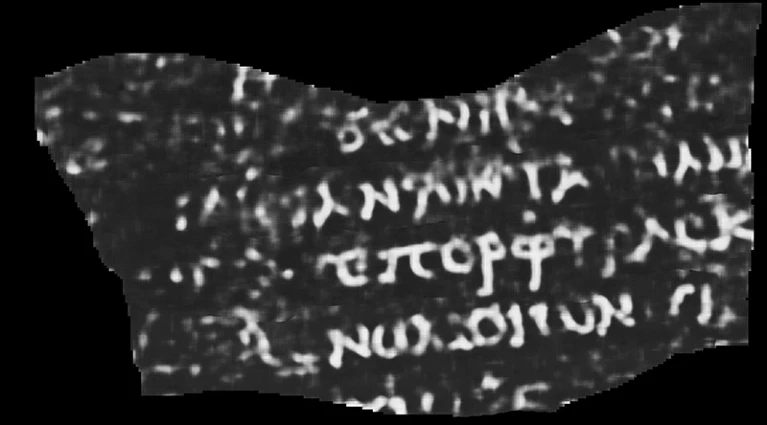
    Let the debt be stated without hedging: this essay, and the work behind it, owes almost everything to Parmenides, Zeno, Heraclitus, and Epicurus, and almost nothing to the archaeological theory of the last century. And what astonishes me most is not how much they achieved but how little we needed to inherit. Their books are gone. What we have are fragments — quoted by enemies, buried under volcanic mud, recovered by the handful. Yet even these offcuts are sufficient to build a new way of seeing the world, and more than that, a new scientific way of seeing it — which is the most powerful form of understanding human beings have ever found. If fragments can do this, imagine what was lost. And imagine what is still to be found.

    The Presocratics were not important because they anticipated modern conclusions. They were important because they asked, with unusual clarity, the questions required to begin a science at all. Physics and biology eventually followed those questions into matter and life. This programme is an attempt to follow them into technology and the human past with the same seriousness — and to discover whether archaeology, too, can finally become cumulative in the strong scientific sense rather than only in the archival one.


    First in a series. This essay sets out the foundation underneath everything else on this site. The work — a physical theory of technology, is an attempt to make archaeology into a science in the way physics and biology are sciences — did not begin from any modern method. It began from the Presocratics and from Epicurus, and the procedure I followed is theirs, not a contemporary one. I have explained this before only in compressed, almost poetical form. Since the work now seems close to producing something real, it is time to set the background out plainly. The essays that follow take this foundation into the body, across the sciences, and finally to the stone itself.


    Dylan Foley is an independent researcher based in Ireland working at the intersection of physics, archaeology, and evolutionary biology, through his company Industrial Automata. Parmenides fragments are quoted from John Burnet, Early Greek Philosophy (1892), Diels–Kranz numbering. The technical work these essays draw on is currently under peer review; details will follow on publication.

    Companion conference paper: Foley & Furey, “From Geospatial Patterns to Ancient Signals: A Signal Based Framework for Archaeological Machine Learning” (IEEE Irish Signals and Systems Conference 2025, DOI: 10.1109/ISSC67739.2025.11291309).

  • The Persistence of Dualism: Why a Decade of Theoretical Innovation Has Failed to Advance Archaeological Science

    Update of 2014 article Dualism: The “Great Divide” in the Philosophy of Archaeology.

    Prism splits light into two beams

    “They made up their minds to name two forms, of which they must not name one—in this they have gone astray.”

    Parmenides of Elea


    Archaeology is a discipline in philosophical crisis, charged with creating a narrative, the story of our species evolution, it seeks to further understanding of how, and why, our species unique history unfolded. But, while documenting change in human history proceeds with reasonable success, progress in understanding the mechanisms driving this change has been painfully slow. As Cambridge archaeologist Colin Renfrew points out, archaeology can explain the “when and where” but not the “how and why” of events in the past (Renfrew, 2004). Answering the how and why is now a matter of increasing urgency as humans are of such overwhelming ecological significance.

    Explaining “how and why” requires a theoretical archaeology from which to generate hypotheses, something that has not happened yet. This essay discusses why integration of archaeology with science at a theoretical level has proved so difficult.

    Archaeology, on the whole, has been described as exhibiting disjuncture, a lack of correspondence between what passes for theory and what archaeologists actually do or aim to do (Johnson, 2006). It is recognised that archaeology, in common with most of the social sciences, has no coherent theoretical basis (Johnson, 2006) and that the ensuing systemic incoherence actively blocks progress, both within the subject, and between it and other disciplines . To grasp why archaeology cannot explain the phenomena it catalogues, a short historical detour is in order.

    The Incomplete Revolution

    In broad historical context the source of this disjuncture can be traced to underlying issues inherited from the western adherence to dualistic Platonic/Christian philosophies. Familiar in academia as the Two Cultures described by C.P. Snow decades ago (Snow, 1959), these paradigms define an ontological separation of humans from the environment, and by logical extension those phenomena once thought to be unique to humans like cognition, society, language. Progress in intervening years has resulted in a confusingly fragmented interface between the humanities and sciences. Archaeology now finds itself stretched awkwardly across this interface

    The criterion of a successful integration of archaeology with evolutionary theory is the ability to create empirically testable hypotheses generated from evolutionary theory, the parsimonious theory of change applicable to a science of archaeology (Dunnell, 1971). The “Scientific Revolution” pioneered by Copernicus and Galileo in the 16 th and 17 th centuries was nothing more than the application of the monistic materialism of the Ancient Greek physiologoi to the phenomena of the heavens and the composition of non-living materials, an application that immediately revolutionised physics, cosmology and chemistry.

    But the fields to which this application of philosophy remained limited, through compromise with Christian and Aristotelian sensibility both biology and the humanities were largely bypassed by the new sciences. Philosophers and theologians, arguing against the possibility that physical or mechanical laws could have given rise to the complexity of life, maintained the separate causation of biological systems and there concomitant properties.

    Thus dualism effectively isolated organisms, including humans, from the physical causal chain of natural science, preventing integration with physics and rendering them unamenable to scientific investigation. Within biology this was corrected in part by Lamarck in 1801 with evolution and Darwin in 1859 with natural selection bringing life forms in general within the remit of natural science.

    But again the application was incomplete, this time, humans and all phenomena thought to be unique to humans, were left sacrosanct, resulting in the separation of the humanites and sciences that was such a prominent feature of the 20th century structure of faculties.

    Archaeology developed predominantly within the social science departments of colleges and therefore inherited a powerful underlying dualistic philosophy. A philosophy essentially medieval in character.

    Philosophy in the social sciences inherits oppositional constructs such as mind/ body, natural/artificial, culture/nature and so on, leading to phenomena that monistic approaches posit as biological in origin, for example, language or cognition, to be defined instead as immaterial epi – phenomena, meaning they exist outside or beyond the “natural” material environment. It need hardly be said that once something is construed as “immaterial”, it is hardly likely to be amenable to scientific enquiry.

    Effects

    t is hard for us now to understand the medieval resistance to the motion of the earth, but it stems, I believe, from an identical problem and sheds some light on the kind of process I have in mind here. Firstly, as the earth was deemed special and therefore categorised as ontologically separate from the rest of the universe, explanation of its origin and state could not, and indeed should not once one is operating within these constraints, be linked to other observed systems or objects. Therefore observations of phenomena in the wider universe were not deemed relevant to the earth. This very effectively stymied research into the origin and history of the planet. Secondly, ontological isolation required that it also must be static, because that which moves must interact and such interaction was unthinkable, as the earth was fundamentally separate from the rest of creation. Hence, we look in wonder at intelligent protaganists in these old debates arguing what seems now so obviously absurd. But to uphold the medieval paradigm as it was, they were forced to defend the indefensible.

    nd just as the logic of Aristotelian physics could not countenance the motion of the earth, modern dualistic philosophy freezes humans within the environment and this is the reason our models are not dynamic but static. Archaeological data remains isolated and because of this also must remain static. So, despite repeated calls for dynamic models, no such models can be constructed. The problem remains below decks, in the philosophical engine room so to speak, and far below the awareness of archaeological theory as it now stands.

    As archaeologists we should be concerned with change and consequently our most useful evolutionary perspective is one that emphasises adaptation as a dynamic process rather than as a static state.”

    (Mithen, 1990:p8

    n keeping with this, neither have developments in physics, such as relativity or non-linear dynamics, been possible to incorporate within archaeological theory, not because of unwillingness, but because it is philosophically prevented. Therefore archaeological data remains isolated, inaccessible and cannot be digitised or held on a database that allows universal integration.. And so our ability to generate data is unimpeded, but or ability to record and manipulate data is extremely limited. There is no translation through scales and patterns of change over large spans of space and time cannot be effectively studied. This situation has become increasingly untenable as the sciences advance and archaeology does not, highlighting more and more the inadequate nature of its philosophical basis.

    The Broken Inference Chain

    The archaeological inference chain has been severed by this same problem. Archaeology must infer human behaviour and development from the technological record, an inference that must be made directly across the paradigmatic boundary discussed above. Practically speaking, the inference must be drawn from a-biota (tools etc) and applied to biota (humans), but it is precisely between living and non-living systems that dualism splits our fields, and so it is at this point our models can be predicted to break down.

    And this is what we see, processes occurring across the boundary have been impossible to define, and exist only as the archetypal “black box” categories of social science. Vaguely defined areas such as technology and culture, both of which straddle the boundary, endure as obscure, undefined categories of phenomena, with the result that they are therefore generally omitted from process models

    Splitting the Data Stream

    If it is true that the problems within archaeology stem from this paradigmatic source then we should expect effects across a wide range of disciplines whenever they attempt to cross the divide. And it is the case that problems integrating biotic and a-biotic phenomena are not unique to archaeology. Similar difficulties have occurred within biology, ecology, neuroscience and complex systems theory. We see isolation, freezing effects and curious mirror like errors whenever synthesis is attempted, which I believe are the effects of this underlying dualism

    Intriguingly, confusion over the units of replication or the selective process seem to mirror each other in biology and archaeology. Sitting on opposite sides of the divide and looking at the same phenomena from a different perspective, the dualist ontology functions like a prism that bifurcates the data streams within each discipline and between them causing what I can only describe as a double image or reflection where their should be a single system.

    For example, ecological system models must include the a-biotic environment as well as the life forms that are the studies focus, but this has proved curiously troublesome. Odling Smee and Laland, the proponents of niche construction, reached similar conclusions as to the neglect of active processes. Their focus on the active, dynamic interactions of a creature with its environment are of course correct. I believe they identified the same freezing effect prevalent in archaeology, in other words, the life forms they study are inherently static in system models that include the wider environment.

    The model described here would predict just such an outcome. It would also predict that phenomena identified across the divide are split by the underlying dualism so that they will manifest as a reflection, or doubling of processes on ones own side of the divide.

    An example of this is that after their identification of niche construction, Odling Smee and Laland then posited it as a second parallel process to natural selection “we shall have to recognize that evolution depends not on one, but on two general selective processes: natural selection and niche construction” Odling Smee et. al. have been criticised for this claim as it has been pointed out that it is unnecessary and unparsimonious to suggest a second major selective process operating within evolution. The identification (or misidentification) of phenomena as parallel replicators or selective processes is, I believe, a manifestation of the distortion effect of dualism, simply because the data becomes un-integratable and therefore a second process or force must be created to account for the seemingly parallel, but unconnected, phenomena observed.

    Similarly, the memes proposed by Richard Dawkins (Dawkins, 1976) are characterised as replicative units under selection, a parallel selection process. And again this has been criticised as unecessary and unparsimonious addition to evolutionary theory, as well as a false analogy. But what is of interest here is that Dawkins felt the need to propose a parallel process for phenomena that are beyond the dualistic divide from his native biology, and again they appear as a parallel reflection of phenomena studied in his own field.

    In archaeology, the fact that technology is of central importance, places it right at the coalface of the great divide, consisting as it does of a system where inanimate matter is in contact with life forms. This means that any successful definition of technology must smoothly integrate information across the paradigm boundary, a process that can be predicted to fail under current philosophical conditions, as we have seen above. And indeed it remains the case that archaeology has failed to scientifically define technology or to integrate the study of its development with evolutionary science or indeed even physics.

    How to define technology, for example, remains a complete mystery to archaeologists, as Lambros Malafouris has helpfully described.

    “To exemplify, this territory is familiar, as when the hand grasps a stone and makes it a tool, yet it remains terra incognita, since — despite a long genealogy of analytic efforts— just what this grasping implies for the human condition remains elusive, and refuses to be read in the narrative fashion that hermeunetics have promised“

    (Malafouris, 2004)

    In traditional archaeology the focus has traditionally been on a single element in the system, the tool, the object or material, it has been increasingly realised this cannot be understood in isolation. Tool use, once the pride of the anthropocentric view, has been observed in increasing numbers of species, across taxa. chimpanzees, bottlenose dolphins, birds such as New Caledonian Crows. A fact putting pressure on archaeology to integrate explanation of human tool use with the many examples in the animal world.

    “But the significance of tool use doesn’t lie in the fact of tools,” Hauser explains, “but rather in how they’re conceived and used.” (Hauser, )

    Tools exhibit many of the features of biological selection, apparent design, bursts of increasing complexity over time, stasis, inheritance of characteristics and contingency. These features have puzzled many archaeologist and have led to many attempts to explain the development of technology using evolutionary theory, and again, remembering that this explanation must cross the paradigm divide, we might predict that, unless the deeper philosophical issues are dealt with first, these attempts will fail.

    The result has been that archaeology has invariably run into the same effects as encountered in ecological and biological theory noted above. Cultural Transmission theory, Selectionist archaeology and Behavioural archaeology have all (falsely) posited parallel general forces of evolution, or parallel units of selection with the result that debate over what counts as a “unit of selection” in the evolution of technology has raged within the subject. (Boone and Smith, 1998, Lyman and O’Brien, 1998, Maschner, 1996). The outcome being merely that they are generally left only with the question, what is it that is being selected? And so archaeology remains just as theoretically isolated and fragmented as before. As Colin Renfrew has said “But we still seem a long way from any well-integrated view that can bring these disparate fields together.”

    Conclusions

    The occurrence of this remarkably similar problem in both archaeology and ecology reinforces, at least in my mind, the identification of the philosophical division between biota and a-biota at an ontological level as the source of these discontinuities. The important point is that the effect on data has been identical in both subjects, both have static descriptions of what are dynamic systems.

    From these analogies, it is clear that something very similar is happening across a wide range of disciplines, when evolutionary theory is applied to across the paradigm boundary, it results in erroneous conclusions such as parallel replicators or processes parallel to natural selection. In this analysis, this does not occur because the approaches are wrong, but because the ontological framework to which they are being applied is incorrect, resulting in duplication, an effect indicative of a dualist paradigm interfering with our models. Stemming from a common source, these errors occur as mirror images of each other.

    In this way inherited dualistic philosophies have resulted in subtle but profound shifts of emphasis in fields of research. So for example in biology and archaeology, the assumption that the environment is only that which is beyond the body leads to the search for sources of environmental change to be concentrated almost exclusively externally to the organism, and while the importance of behaviour is recognised in biology (Baldwin,189) it has been consistently underestimated (Odling Smee, Laland).

    We can see that dualism, by forcing the separation of either the organism from the environment (archaeology), or the environment from the organism (ecology) creates our inability to integrate biotic and a-biotic phenomena into cohesive system models and results in a skewed emphasis across many disciplines.

    Also, because the physical causal chain is broken, static linear models predominate across all disciplines, resulting in motion in general to be overlooked as an essential element in the environment. Therefore motion has not been, or cannot be, recognised or modelled as a part of the environment exerting its own unique selective force. Finally, models lacking motion of any kind, certainly cannot include attributes of motion such as relativity or scale and so these have not been addressed at all.

    Recognising this, we may consciously proceed with the development of a revised philosophy beginning from a holistic approach. The need for which has been recognised in the call for non- dichotomous thinking from several scholars in the archaeological field (Hodder 1999; Thomas 1996, Webmoor, Witmoore, 2008). Similarly, calls from the natural sciences on the other side of the divide, consilience from biologist E. O. Wilson, or neuroscientist V. S. Ramachandran and numerous others show that physics, biology and the human sciences require synthesis.

    It is hoped that archaeology, with its unique problems and perspectives in this area, spanning as it does this most ancient of divisions, may contribute to the new synthesis now being pursued across the life sciences. As ‘humanity begins with things’ (Serres with Latour 1995:166)…


    “archaeology is in a prime position, a third space (which is yet to be articulated) with regard to the humanities and sciences, to set innovative and cutting edge intellectual agendas”

    (Webmoor, Witmore, 2008)

    Bibliography

    Dunnell, R. C. (1971) Systematics in Prehistory New York: The Free Press.
    Dunnell, R. C. (1996a). Evolutionary Theory and Archaeology. In M. J. O’Brien (Ed.), Evolutionary Archaeology : Theory and Application (pp. 30-67). Salt Lake City: University of Utah Press.
    Dunnell, R. C. . Natural Selection, Scale, and Cultural Evolution: Some Preliminary Considerations (1996b) In M. J. O’Brien (Ed.), Evolutionary Archaeology : Theory and Application (pp. 24-29). Salt Lake City: University of Utah Press.
    Jeffares, B. The Scope and Limits of Biological Explanations in Archaeology (2002) Unpublished Thesis, Victoria University of Wellington.
    Laland, K.N., Odling-Smee, J. and Feldman, M.W. (2000). Niche construction, biological evolution, and cultural change. Behavioral and Brain Sciences, 23: 131-175.
    Mithen, S., 1998. Introduction, in Creativity in Human Evolution and Prehistory, ed. S. Mithen. London & NewYork (NY): Routledge, 1–15. Routledge
    Webmoor, T. and Witmore, C. L. (2008) ‘Things Are Us! A Commentary on Human/Things Relations under the Banner of a ‘Social’ Archaeology’, Norwegian Archaeological Review, 1 – 18.
    Renfrew, C., 2001a. Symbol before concept: material engagement and the early development of society, in Archaeological Theory Today, ed. I. Hodder. Cambridge: Polity Press, 122–40. (MA): MIT Press.
    Renfrew, C. & C. Scarre (eds.), 1998. Cognition and Material Culture: the Archaeology of Symbolic Storage. (McDonald Institute Monographs.) Cambridge: McDonald Institute for Archaeological Research.
    Malafouris, Lambros, The Cognitive Basis of Material Engagement: Where Brain, Body and Culture Conflate,
    Malafouris, L., 2003. Archaeology and Dissonance: Towards a Theory of Material Engagement. Paper presented at Radical Archaeology Theory Symposium (RATS), Binghamton, New York.

  • The Archaeological Peninsula: Sligo’s Development Constraints and Planning Crisis

    !DOCTYPE html>
    Sacred Ground, Modern City
    Planning Within Ancient Landscapes

    How one of Ireland’s most significant Neolithic landscapes is reshaping urban planning in the 21st century


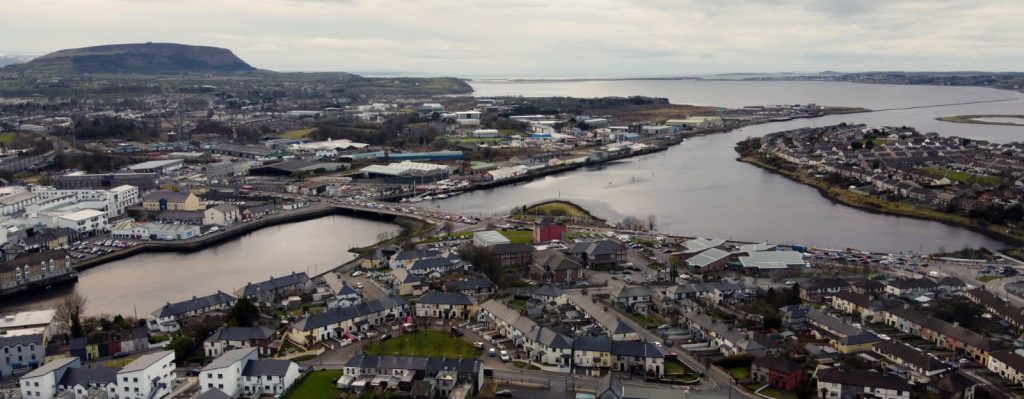
    Sligo town occupies one of the most archaeologically constrained urban environments in Europe. As the town faces mounting pressure for housing and development, its unique position—literally built within and surrounded by one of the world’s most significant Neolithic ritual landscapes—presents planning challenges unlike anywhere else in Ireland.

    The southern peninsula on which much of Sligo sits is not merely dotted with ancient sites—it is an archaeological landscape. The Coolera Peninsula contains 30 surviving megalithic tombs with another 25 destroyed since 1800, making Carrowmore one of the largest clusters of megalithic tombs in Ireland. But this represents only the most visible layer of an archaeological palimpsest extending across the entire peninsula.

    The peninsula contains the oldest dates found around Sligo, with Swedish archaeologists recovering dates from 5,400 BC from charcoal found close to the monuments. This places continuous human activity on the peninsula for over 7,000 years—longer than anywhere else in Ireland has been continuously occupied.

    The landscape operates as “a protected National Monument” where “the legal protection of a national monument extends to include the surrounding area”—a landmark 1989 legal ruling that marked “the first explicit legal recognition of the idea of an architectural landscape”.

    The Imminent UNESCO Constraint

    The passage tomb landscape of Co Sligo has been approved for inclusion on Ireland’s tentative list of world heritage sites, moving the county a significant step closer to UNESCO World Heritage designation. This is not a distant possibility—Ireland expects to submit its first Preliminary Assessment Request for one of the Tentative List sites to the World Heritage Centre in September 2025.

    The UNESCO application covers Carrowmore and Carrowkeel, Knocknarea and Cairns Hill, the Ox Mountains and part of the Ballygawley hills, plus an area around Keash. Crucially, this includes areas immediately adjacent to Sligo town center, effectively creating a planning boundary that cannot expand westward or southward.

    Current Archaeological Stress

    The archaeological landscape is already under severe pressure. Five-thousand-year-old Neolithic tombs in Co Sligo are suffering damage and vandalism “on a scale never seen before”. The problem extends beyond tourism damage—it reflects the fundamental tension between a growing modern town and an intact Neolithic landscape.

    Without a robust plan, Carrowmore Megalithic Cemetery would now be adjacent to the town dump; in the nineteen eighties the council had a pressing need for landfill and only the determined efforts of local residents and legislators in the Supreme Court upheld the 1980’s Development Plan. This near-miss demonstrates how development pressure can threaten even the most significant archaeological sites.

    The Physical Geography Trap

    Sligo’s constraints extend beyond archaeology. The town is positioned between Lough Gill to the east and Sligo Bay to the north and west. The southern peninsula—the only significant direction for expansion—is precisely where the densest concentration of archaeological sites exists.

    Knocknarea’s summit and slopes hold 10 Neolithic passage tombs, hut sites, boulder circles, banks and ditches, a quarry where stone tools were made and the remains of a deserted pre-famine hamlet. Archaeological remains on the mountain belonging to the Neolithic period consist mainly of a series of passage tombs, round house foundations as well as a complex series of banks along the upper eastern slopes.

    This creates an unprecedented planning situation: a modern town hemmed in by water on three sides and by one of Europe’s most significant archaeological landscapes on the fourth.

    The Development Planning Crisis

    The archaeological constraints are already causing political friction. Councillors are being asked to reverse a decision they made 14 years ago on the eve of an important World Heritage Site announcement regarding development proposals near Cairns Hill, which contains two unopened passage tombs, a key element in the World Heritage bid.

    The tension between housing need and heritage protection is acute. This is not for a moment to diminish the plight of those who are so in need in the housing market. We do need to address these issues. But I would still advocate balance, and a reasonable degree of caution.

    Current planning policy acknowledges the constraints: Sligo has the largest group of archaeological sites/remains in the country and the protection of these sites is of paramount importance to Sligo County Council.

    The Unique Challenge

    What makes Sligo’s situation unprecedented is the convergence of multiple absolute constraints:

    Physical boundaries: Water on three sides limits expansion options to a single direction. Expansion to the north is possible but curtailed by poor transport links across the river. Here, the Eastern bridge will open possibilities to the northeast, in zones, that while they have archaeological material are not as critical as those on the peninsula.

    Archaeological saturation: County Sligo has two major focal points of passage tomb construction, located just over twenty kilometres apart, with approximately 85 passage tomb tradition sites, many other types of monument, and the recently discovered Magheraboy causewayed enclosure—the earliest known monumental architecture in Britain or Ireland. The extensive Carrowmore cemetary, the large henge at Tonafortes.

    Legal protection: Existing national monument status provides legal protection that has already been tested and upheld in the Supreme Court.

    Imminent international protection: UNESCO World Heritage designation would add another layer of constraint, likely making any significant development within the protected landscape impossible.

    Archaeological primacy: The Magheraboy causewayed enclosure at 4,100 BC represents the oldest known monumental architecture in Britain or Ireland, making this not just a local or national heritage site, but a location of international prehistoric significance.

    This discovery fundamentally changes the planning conversation – you’re not just dealing with “an important archaeological area” but with the potential birthplace of monumental architecture in the British Isles. That makes any development pressure on the peninsula not just a local heritage issue, but potentially a threat to understanding the origins of civilization in northwestern Europe.

    Monuments Already Under Threat

    The archaeological assessment system is demonstrably failing. A pattern of “blundering into” internationally significant monuments reveals systematic inadequacies in planning procedures:

    The Magheraboy Causewayed Enclosure: This 4,100 BC monument—the oldest known monumental architecture in Britain or Ireland—was hit during road junction construction. Two-thirds of it are now gone. While it was excavated as part of the Transport Infrastructure Ireland (TII) project and subsequently published, it remains far from ideal that such an important monument was encountered and dealt with so rapidly.

    The Tonafortes Henge: This Bronze Age henge monument was hit accidentally during road construction at Carraroe. The monument was already known and marked, but planning mapping mistakes caused the road to be planned directly through it.

    Cairns Hill Development: The council was pressured into altering the development plan to allow development in an area already zoned as protected. Inadequate archaeological assessment procedures resulted in development permission being granted, setting a precedent that exposes all monuments on the peninsula to potential interference.

    The Knoxpark Viking Site: Encountered during road and bridge construction, this site was misidentified during a hasty excavation and had to be re-evaluated in hindsight as an extremely rare and important Viking longphort.

    These cases reveal a critical flaw: current assessment procedures using only contractors, with no county or state archaeologist involvement, are inadequate to protect and integrate knowledge about areas of international prehistoric significance.

    The issue is not that excavations take place—archaeological investigation is essential. The problem is the haphazard and repeated destruction of important monuments in an area known to contain very ancient and high-status monuments of international importance. This pattern cannot be allowed to continue.

    The Ongoing Discovery Problem

    From a planning perspective, these cases demonstrate that archaeological discoveries are ongoing—what appears to be “empty” land available for development could contain the next major discovery that rewrites prehistoric chronology. This adds another layer of constraint: not just protecting known sites, but acknowledging that the entire peninsula is archaeologically sensitive.

    Pressure is already apparent in areas adjacent to ancient monuments, where planning applications seek low-density housing in areas known to contain large sub-surface monuments. The current system of archaeological assessment lacks the expertise and authority needed to properly evaluate such sensitive areas before irreversible decisions are made.

    The Planning Imperative

    Sligo faces a planning crisis that requires innovative solutions. Traditional suburban expansion—the default response to housing pressure in Irish towns—is simply not available. The town must either find ways to accommodate growth within its existing footprint through densification and vertical development, or accept that its growth potential is fundamentally limited by its archaeological inheritance.

    The UNESCO designation, while bringing significant tourism and cultural benefits, will make this challenge permanent. County Sligo stands to gain significant financial, economic and cultural benefits from becoming a World Heritage site; implemented properly, it would be a game changer for the region, but it will also mark the definitive end of any possibility of horizontal expansion into the archaeological landscape.

    Sligo’s planning future must be written within the boundaries established by its Neolithic past—a constraint unlike anywhere else in Ireland, and possibly in Europe. The town sits within what archaeologists call “the Landscape of the Monuments”—a 6,000-year-old sacred geography that now defines the limits of 21st-century urban development.

    The question is no longer whether Sligo will be constrained by its archaeological landscape, but how it will adapt to those constraints while meeting the housing and development needs of a modern community. The repeated destruction of internationally significant monuments demonstrates that the current approach is failing both heritage protection and sustainable development goals.

    What Sligo needs is a planning revolution—one that recognizes archaeological constraints not as obstacles to development, but as drivers of innovative, world-class urban design solutions.


    next: Article 2: “Vertical Villages: International Models for Constrained Historic Cities”

    References

    Bergh, Stefan, Landscape of the Monuments.
    TII
    Excavations.ie

  • Hello world!

    Welcome to WordPress. This is your first post. Edit or delete it, then start writing!