
Featured Image : The Snow Ghost – Scooby Doo, 1969
How a Dublin-Controlled Civil Service in cahoots with politicians Has Systematically Blocked Western Rail for Fifteen Years — And Why They Want Your Railway Tracks for Cycle Paths
“Mr. Greenway welcomed Mystery Inc. when they came to stay at his ski resort. He issued ominous warnings to guests and dressed up as the ghost to scare people away from the diamond and jewel smuggling operation he operated with Mr. Leech.”
— Scoobypedia, on the villain of “That’s Snow Ghost” (1969)
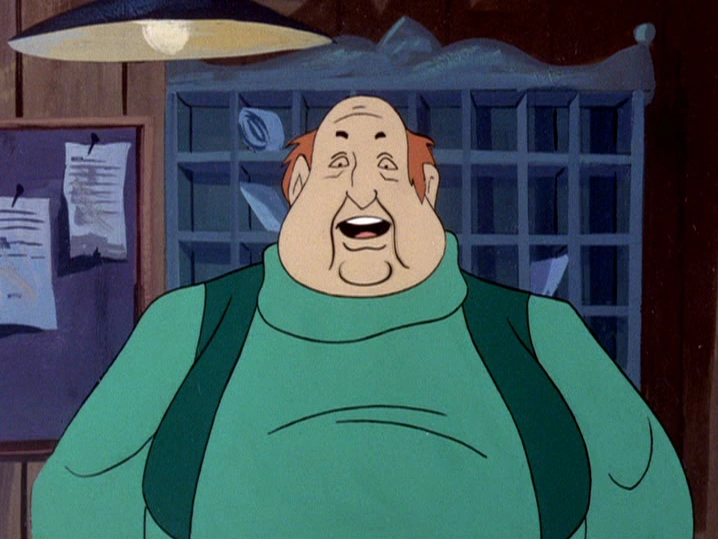
In the classic Scooby-Doo episode “That’s Snow Ghost,” the gang encounters a terrifying phantom haunting a ski resort. The locals are frightened. Tourism is dying. Everyone focuses on the ghost.
But the ghost isn’t real. It’s a costume worn by the resort’s manager, Mr. Greenway, to distract from his actual business: smuggling. The scary story keeps people from looking too closely at what’s really happening.
The parallels to Ireland’s Western Rail Corridor debate are, I must admit, a little on the nose.
For fifteen years, we’ve been told the railway is the ghost — an unviable fantasy, economically irrational, impossible to fund. The greenway, we’re assured, is the sensible alternative. Stop chasing spectres. Accept the cycle path. Move on.People are often threatened that they can have the greenway, or nothing.
But what if the greenway debate itself is the ghost costume? What if the endless studies, the truncated scopes, the predetermined conclusions are all designed to distract from the real operation underneath?
And why does the greenway have to be on the rail line? Surely an amenity can be built in many different places. But for years, no matter what is suggested, the lobby groups and politicians that support this greenway persist that it MUST be on the Sligo -Galway rail line. They show no interest whatsoever in placing it anywhere else. And this is how we know its a “Snow Ghost”, a chimera dreamed up and promoted to distract us from the real story. And so far, its worked.

Mr. Greenway had Mr. Leech, his jewellry smuggling partner. Dublin has MetroLink, Dublin Airport, and a civil service whose institutional DNA treats the west as a resource to be extracted rather than a region to be developed.
Time to pull off the mask.
The Western Rail Corridor isn’t blocked because it “unviable” It’s blocked because Dublin killed it — deliberately, repeatedly, and with malice aforethought. This is the story of how they did it, and why.
The Cost of Neglect
Before we examine the mechanism of obstruction, let’s be clear about what’s at stake.
The West and Northwest of Ireland contain more land area than the east coast. More cities. Three international airports. The largest natural harbour in these islands. The only airport in Europe with US customs pre-clearance. A major distributed university. Nineteenth-century intermodal port infrastructure that aligns perfectly with EU coastal shipping policy.
And yet this region is bleeding out. Every year, thousands of young people leave Sligo, Mayo, Roscommon, Leitrim, and Donegal — not because they want to, but because they have to. There are no jobs. There is no infrastructure. There is no future, because Dublin has decided there shouldn’t be one.
This isn’t regional jealousy or parish-pump politics. This is a systematic policy of extraction: take the people, take the talent, take the graduates — and now, as we’ll see, take the water from the Shannon — while giving nothing back. No investment. No connectivity. No opportunity.
The population imbalance in Ireland is now grotesque. The Greater Dublin Area contains over 40% of the national population and continues to grow, while rural Ireland — particularly the northwest — continues to hollow out. Young families who might stay if they could commute to regional employment centres are forced instead into Dublin’s overheated rental market, or onto emigrant flights.
Meanwhile, Brexit has fundamentally changed Ireland’s strategic position. The old UK route dependencies are fading. Direct European connections matter more than ever. Cork’s port is becoming Ireland’s primary EU-facing gateway. The EU is prioritising cross-border connectivity and coastal shipping. Everything points toward developing the western corridor.
Instead, Dublin is converting the railway tracks to cycle paths.
This didn’t happen by accident. It happened by design.
The 2011 Intervention: Where It All Began
In 2011, something remarkable happened. Leo Varadkar, then Minister for Transport, personally intervened to remove the Western Rail Corridor (WRC) and all western transport projects from Ireland’s submission to the EU’s Trans-European Transport Network (Ten-T) programme.
This wasn’t a bureaucratic oversight. It was a deliberate political act.
The Ten-T programme provides EU funding for transport infrastructure that meets specific criteria: multimodal connectivity, cross-border elements, and strategic importance. All of which the WRC fulfills. The previous Fianna Fáil government had submitted the western/Atlantic road and rail cross-border route from Cork to Derry, including the Western Rail Corridor extension.
Varadkar struck it from the list.
His own Fine Gael colleague, MEP Jim Higgins, warned him explicitly: “failure to act now might mean closing off the project to future EU funding for good.”
Varadkar proceeded anyway.
When challenged in the Dáil, Varadkar claimed that the Ten-T core network was “proposed by the European Commission and not by member states.” This was, to put it charitably, untrue. EU Transport Commissioner Violeta Bulc later confirmed in writing that the Commission’s role was to specify targets and criteria, while member states retained “substantial sovereign rights” to decide on projects.
Varadkar knew what he was doing. He did it anyway. And he lied about it afterwards.
The effect was immediate and permanent: western Ireland was locked out of EU transport funding streams. Projects must first be in the “comprehensive” network before qualifying for “core” status. Without inclusion, there is no pathway to funding. The west was written off before the decade began.
The Dublin Lock: Who Controls Transport Policy?
To understand how this obstruction continues, you need to understand who actually runs transport in Ireland.
The National Transport Authority — the body that oversees all transport policy and infrastructure — was originally constituted as the Dublin Transport Authority. That’s not a nickname. That’s what the legislation called it. The Dublin Transport Authority Act (2008) established a body whose statutory functional area covers the Greater Dublin Area: Dublin City, Dún Laoghaire-Rathdown, South Dublin, Fingal, Wicklow, Kildare, and Meath.
It gained national licensing functions later, through subsequent legislation, but its DNA remains Dublin-centric. Its board, its priorities, its institutional culture — all oriented toward the capital.
Transport Infrastructure Ireland (TII), which handles rail and roads infrastructure, operates under NTA oversight. The Railway Procurement Agency, which previously managed light rail projects, was merged into TII in 2015.
The result is a governance structure where Dublin institutions control national transport policy, and national transport policy consistently prioritises Dublin.
The former Transport Minister Eamon Ryan admitted as much in a 2025 interview, recalling how “I saw infighting between CIE, Dublin Bus, the Dublin Transportation Office (now the NTA), the Department…. and meanwhile, the NRA (National Roads Authority, now TII) just ruled the roost.”
Where is the Western Transport Authority? Where is the voice for Connacht in these structures? Where is the advocacy for the Atlantic corridor that could connect Cork to Derry?
It doesn’t exist. The west has no institutional representation in transport governance. Decisions about western infrastructure are made by Dublin bodies, staffed by Dublin officials, oriented toward Dublin priorities.
And Dublin has decided the west doesn’t need rail.
The Rigged Studies: How to Kill a Railway Without Saying No
You can’t simply refuse to build a railway. You need to prove it’s not viable. And the way you prove something isn’t viable is by designing studies that cannot possibly demonstrate viability.
This is the pattern that has repeated for over a decade.
The EY Report: Commissioned to assess the economic case for reopening the Western Rail Corridor. Scope: Athenry to Claremorris only — approximately 52 kilometres. Not the full corridor to Sligo. Not the extension to Letterkenny and Derry. Not the connection to Knock Airport. Not the southern link to Cork’s container port. Just a truncated stub that serves no major destination and connects no airports.
Result: Not viable.
The JASPERS Study: Same scope. Same 52 kilometres. Same predetermined conclusion.
Both studies ignore the 2005 McCann Report, which explicitly noted that “incorporating connections to Shannon and Knock airports could significantly enhance the economic viability of the project.”
The full Western Rail Corridor — from Cork through Limerick, Galway, and Sligo to Derry — could connect three international airports:
- Shannon: US customs pre-clearance, the most important airport for transatlantic traffic
- Knock: Ireland’s fastest-growing airport, now handling nearly a million passengers annually
- Derry: Cross-border connectivity that the EU explicitly prioritises
It could link Cork’s container port — the largest natural harbour in these islands, increasingly vital post-Brexit — to the entire western seaboard by rail.
It could connect Sligo’s existing intermodal facilities to a network, enabling the modal shift from road to rail-and-coastal-shipping that EU policy actively encourages.
It could serve Atlantic Technological University’s distributed campus, finally allowing the institution to function as an integrated university.
None of this is ever studied. Every report is scoped to examine only the 52-kilometre segment that cannot demonstrate viability. It’s like commissioning a study on whether to build a bridge, but only allowing the consultants to examine the middle span disconnected from either bank.
The parameters aren’t accidental. They’re designed to produce a predetermined conclusion.
The Conflict of Interest: ARUP’s Double Game
In 2024, ARUP was commissioned to conduct the All-Island Strategic Rail Review. Their conclusion: Sligo and the Western Rail Corridor were excluded from major new rail developments. The focus would be on “major intercity upgrades and electrification elsewhere.”
Simultaneously, ARUP was commissioned by TII to develop the Sligo Greenway — a cycling and walking path from Collooney to Bellaghy.
The proposed route? The disused railway corridor.
The same consultancy that concluded rail was not viable is being paid to design a greenway on the tracks. They have a direct financial interest in the railway remaining closed.
This is not a conspiracy theory. This is a matter of public record. ARUP is listed as the consultant for both projects. The greenway contract is funded by Transport Infrastructure Ireland.
The JASPERS studies present a similar pattern. JASPERS consulted on the Western Rail Corridor with restrictive parameters that guaranteed a negative finding — while simultaneously consulting on MetroLink, Dublin’s flagship €9-23 billion underground railway to Dublin Airport.
When the same consultants are working on competing projects, which one do you think they have an incentive to recommend?
The Timeline “Coincidence”
MetroLink is projected to be operational in the early 2030s.
The official position on the Western Rail Corridor? Nothing significant until the 2030s.
Both timelines converge on the same decade. MetroLink will be built, Dublin Airport will have its rail connection secured as the national standard, and only then — when the competitive threat has been neutralised — might western rail be “reconsidered.”
The government frames MetroLink as addressing a national embarrassment: “Ireland remains one of only a small number of countries in Europe without a metro in its biggest city or a rail connection to its main international airport.”
But which “main international airport”? They’ve pre-decided it’s Dublin. The option of connecting Knock and Shannon — creating an alternative western hub — is never examined because the studies are never scoped to examine it.
Meanwhile, Knock Airport continues to grow regardless. 2024 saw a record 818,000 passengers. 2025 is projected to exceed 945,000 — another record, representing over 5% of all air passengers in the country. A “Transformation Programme” is planned for 2026-2028 to expand capacity.
The threat Dublin fears is emerging anyway. The difference is whether it emerges with rail connectivity or without it.
The Greenway Gambit: Making Obstruction Permanent

Here’s the endgame: convert the railway corridor to a greenway, and the question of rail reopening becomes moot.
Once you’ve built a walking and cycling path on the permanent way, you’ve made a political choice that is extremely difficult to reverse. Ripping up a greenway to restore rail would face enormous opposition — even from people who support western rail in principle.
This is why the greenway push is so insistent, and why it’s being funded by the same TII that controls rail infrastructure. It’s not about providing amenities for the west. It’s about foreclosing options permanently.
The sales pitch is seductive: greenways are cheaper, quicker to build, and provide immediate recreational benefit. All true. But they also eliminate the possibility of rail, potentially forever.
And critically, greenways don’t threaten Dublin Airport’s monopoly. A cycling path from Collooney to Claremorris won’t carry business travellers to Knock. It won’t connect Shannon’s US pre-clearance facility to the northwest. It won’t create an alternative transport corridor that might reduce Dublin’s gravitational pull on the national economy.
That’s the point.
The Shannon Water Extraction: Taking Without Giving
If you needed proof that Dublin views the west purely as a resource to be extracted, consider the Shannon water pipeline.
The proposal: pump water from the Shannon basin to supply Dublin’s growing needs.
The reaction from the west: fury. Not because the west is water-hoarding, but because the ask encapsulates everything wrong with the relationship. Dublin wants western water, but won’t build western infrastructure. Dublin wants western resources, but won’t invest in western opportunity. Dublin wants to extract, but never to contribute.
This is the colonial relationship laid bare. For a century, the west has provided Dublin with its people — every generation forced to migrate for work, education, opportunity. Now the people aren’t enough. Dublin wants the water too.
The Shannon pipeline is the logical endpoint of an extractive model. The capital takes what it needs — people, talent, graduates, water — while systematically blocking any development that might allow the regions to thrive independently. The west exists, in this model, not as a place where people might live and flourish, but as a resource base for the capital’s continued growth.
Were the Shannon pipeline proposed alongside a genuine commitment to western rail, to regional investment, to balanced development — the conversation would be different. Reciprocity changes everything.
But there is no reciprocity. There is only extraction.
They want the Shannon’s water. They won’t give the Shannon region the railway that might allow it to develop. They want the west’s young people. They won’t give the west the infrastructure that might allow them to stay. They want Knock Airport to remain a regional curiosity rather than a connected hub. They want Cork’s port traffic to move by road through their tolled motorways rather than by rail along the western corridor.
The pattern is consistent. The pattern is policy. The pattern is colonial.
What Would Change Everything
Consider what the full Western Rail Corridor would actually connect:
Three international airports: Shannon (the most important airport for North American traffic, with US customs pre-clearance), Knock (Ireland’s fastest-growing airport), and Derry (providing cross-border connectivity that the EU explicitly prioritises).
Ireland’s most strategic port: Cork’s container facilities, served by the largest natural harbour in these islands. With Brexit, Cork is becoming increasingly important as Ireland’s primary EU-facing port. The old UK route dependencies are fading; direct European connections matter more than ever.
Six major cities: Tralee, Limerick, Galway, Sligo, Letterkenny, and Derry. This isn’t some rural backwater — this is a region with more area and more cities than the east coast.
A distributed university: Atlantic Technological University has formally requested rail connectivity to link its campuses stretching from Letterkenny to Galway. Students currently have no proper transport links between ATU sites. The institution that’s supposed to drive western development cannot function as an integrated university because the infrastructure doesn’t exist.
Existing intermodal infrastructure: Sligo already has a ship-to-rail link dating from the 19th century. The EU is actively encouraging smaller coastal shipping traffic to replace heavy road freight — precisely the kind of modal shift that Sligo’s port could facilitate, if it were connected to a functioning rail network.
Cross-border integration: The extension to Derry isn’t just symbolically important for all-island connectivity — it’s precisely the kind of cross-border transport project that EU funding programmes prioritise. The Ten-T criteria that Varadkar used to exclude the west actually favour projects like this.
The Western Rail Corridor isn’t a regional amenity. It’s a strategic national asset that would reorient Ireland’s transport infrastructure toward Europe at exactly the moment when Brexit demands such reorientation.
For the first time, the west would have a transport spine. Shannon’s transatlantic connections would be accessible from the northwest by rail. Cork’s growing port traffic could move by rail rather than clogging roads. Regional towns along the corridor would become viable locations for commuter housing and distributed employment.
The population drain might finally reverse.
But this is precisely what Dublin’s institutional structures are designed to prevent. An empowered west is a threat to Dublin’s primacy. A connected west is competition for Dublin’s airport monopoly. A thriving west means Dublin cannot take western resources for granted.
So the studies remain rigged. The timelines remain aligned to protect MetroLink’s first-mover advantage. The greenways advance on the railway tracks. And another generation leaves the west because there’s nothing to stay for.
The Evidence, Summarised
| Year | Event | Effect |
|---|---|---|
| 2005 | McCann Report recommends Shannon and Knock airport connections | Ignored in all subsequent studies |
| 2010 | WRC Phase 1 opens (Limerick-Galway via Ennis) | Corridor partially operational |
| 2011 | Varadkar removes WRC from Ten-T submission | EU funding blocked permanently |
| 2015 | RPA merged into TII under NTA | Rail procurement absorbed into Dublin-controlled structure |
| Various | EY, JASPERS studies with Claremorris-only scope | Reports engineered to show non-viability |
| 2024 | ARUP Strategic Rail Review excludes Sligo | Official policy confirms no WRC extension |
| 2024 | ARUP simultaneously contracted for Sligo Greenway | Same consultancy: rail not viable, build greenway on tracks |
| 2024-25 | Knock Airport breaks passenger records | Threat to Dublin growing regardless |
| 2025 | MetroLink approved, operational target early 2030s | Dublin Airport rail secured before western alternative possible |
What the truncated studies never examine:
| Asset | Strategic Value | Status |
|---|---|---|
| Shannon Airport | Only US pre-clearance in Europe | Not connected to northern corridor |
| Knock Airport | 945,000 passengers, fastest-growing | No rail connection studied |
| Derry connection | EU cross-border priority | Excluded from all scopes |
| Cork container port | Largest natural harbour, post-Brexit gateway | Southern link ignored |
| Sligo intermodal port | 19th-century ship-to-rail infrastructure | Disconnected from network |
| ATU distributed campus | Letterkenny to Galway | No student transport links |
| EU coastal shipping policy | Modal shift from road freight | Sligo facilities unused |
Conclusion: It’s Policy, Not Accident
The Western Rail Corridor hasn’t failed, and it isnt “unviable”. Quite the opposite. It’s been prevented from succeeding because it has enormous potential to change Irelands economy forever.
The pattern is too consistent to be coincidence: the deliberate removal from EU funding, the Dublin-controlled governance, the rigged study parameters, the consultant conflicts of interest, the synchronised timelines, the greenway gambit.
This is policy. It has been policy for at least fifteen years, and decades before that. And unless it’s named, challenged, and reversed, it will remain policy — while the west continues to empty out and Dublin continues to extract what it needs.
The swindle isn’t just the greenway, which is just a distraction. The swindle is the entire apparatus that makes the greenway seem like the only option.
It’s time to call it what it is.
The author welcomes corrections, additional evidence, and contrary arguments. The documents cited in this article are matters of public record, obtainable through Freedom of Information requests and official publications. Names, dates, and quotations can be verified.
Sources
https://scoobydoo.fandom.com/wiki/Mr._Greenway
https://www.irishtimes.com/news/environment/varadkar-move-blocked-funding-for-western-rail-corridor-1.3450236
https://irishcycle.com/2025/01/21/dublin-wont-work-without-metrolink-and-dart-but-eamon-ryan-says-theres-a-risk-other-areas-will-only-get-roads/comment-page-1/as limited to same scope — itrs just 52km of track
https://irishcycle.com/2025/01/21/dublin-wont-work-without-metrolink-and-dart-but-eamon-ryan-says-theres-a-risk-other-areas-will-only-get-roads/comment-page-1/
https://www.nationaltransport.ie/planning-and-investment/transport-investment/projects/metrolink/metrolink-preliminary-business-case/
https://en.wikipedia.org/wiki/National_Transport_Authority_(Ireland)