But those also who have made considerable progress in the survey of the main principles ought to bear in mind the scheme of the whole system set forth in its essentials. For we have frequent need of the general view, but not so often of the detailed exposition.
Epicurus, Letter to Herodotus
I want to start with a claim that may sound eccentric but is meant quite literally: the method behind this work is roughly 2,500 years old. For the specific task it serves — grounding a scientific framework in a domain that has not yet fully become a science — I do not think it has ever been entirely superseded.
The domain is human beings and their technology. The argument of this series is that it can support a genuinely scientific treatment — quantitative, mechanistic, and predictive in the limited sense that mature historical sciences are predictive. The obstacle, I think, has not primarily been the complexity of the subject matter, but the persistence of certain ontological assumptions inherited very early and retained for a very long time. The conceptual tools for approaching the problem differently were already present in Parmenides, Zeno, Heraclitus, and Epicurus, and in important respects they remain surprisingly usable. Versions of these foundations helped shape the development of physics, chemistry, and biology, but they were only unevenly extended into the study of humans and technology, often for reasons that were philosophical or theological rather than methodological.
Let me lay the foundation out in the order it actually goes, because it is a derivation, not a list. Each step forces the next.
First: there is what is, and you may not speak of what is not
Parmenides begins everything. In the fragments that survive — I am quoting throughout from John Burnet’s translation, the fragments numbered in the standard Diels–Kranz collection as DK 28 — he sets out the two roads with a clarity that is genuinely startling for the early fifth century BC:
Come now, I will tell thee… the only two ways of search that can be thought of. The first, namely, that It is, and that it is impossible for anything not to be, is the way of conviction, for truth is its companion. The other, namely, that It is not… that, I tell thee, is a wholly untrustworthy path. For you cannot know what is not — that is impossible — nor utter it. (DK 28 B2)
A note on what I am doing with these texts, since it will otherwise be misread. I am not offering a new scholarly interpretation of Parmenides, and I am not in competition with the people who study his Greek for its own sake. That work is valuable and largely beside my point. What I am doing instead is taking him operationally: treating the text not primarily as an object of commentary but as an attempt to establish how inquiry into what-is should proceed. Parmenides was not only making claims about reality; he was also attempting to define the conditions under which inquiry itself could proceed coherently. To run that procedure and see what it produces is to use the text as the physiologos meant it to be used. Scholarly interpretation and operational use are different activities. My concern here is with the latter: whether the procedure implied by the text still produces workable results when applied to an unsolved domain.
This can sound abstract, but operationally it has a very strong consequence: it restricts what kinds of entities and separations inquiry is permitted to posit. You may reason about what is. You may not grant reality to what is not.One recurring way this occurs is through the treatment of separations — boundaries, gaps, or divisions — as though they possessed an independent ontological status of their own.
Parmenides saw this coming and named it. A little further on he diagnoses the error directly, and it is worth seeing that he identifies it at the exact moment of its birth:
Mortals have settled in their minds to speak of two forms, one of which they should have left out, and that is where they go astray from the truth. They have assigned an opposite substance to each, and marks distinct from one another. (DK 28 B8)
Read this way, the passage becomes an early critique of dualistic ontology: the treatment of opposed domains as fundamentally separate substances with distinct properties. Two forms, one of which they should have left out. The tradition that came immediately after him did precisely what he warned against: it built ontologies of two forms — being and non-being, form and matter, soul and body, the heavens and the earth, eventually the human and the natural. It assigned opposite substances and distinct marks. And it went astray from the truth, in the specific way Parmenides predicted, at the specific point he predicted it.
I take this to identify a recurrent structural error that reappears throughout later thought. Not Platonism specifically, not Aristotelianism specifically — dualism, the granting of being to a separation. On this reading, many later difficulties in developing unified sciences of motion and nature follow from repeated reintroduction of exactly these kinds of separations.
Why a separation freezes a science
Here is the part that took me a long time to see, and that I now think is the whole game.
Dualistic separation does not merely complicate explanation. In its stronger forms, it can make lawful motion difficult to formulate, because motion is always relational: a thing moves only with respect to other things within a shared system. Natural science, at root, depends on the ability to model such relations.
Motion is relational rather than absolute: a thing moves only with respect to other things and other frames within a continuous system. This is not a modern discovery; it is implicit in the unity Parmenides describes. Now watch what a real separation does. If a domain is treated as fundamentally separate in substance or principle, its relations to the surrounding system become conceptually weakened or obscured. Once that happens, lawful interaction becomes harder to formulate. A truly separate thing has nothing to move relative to. It is, necessarily, frozen.
Something like this ontological structure may also help explain why certain cosmological systems treated the Earth as fundamentally fixed and separate from the surrounding order. Once the cosmos is split dualistically — the heavens one substance, the Earth another, special and apart — the Earth cannot move, because there is nothing in the same frame for it to move against. In this reading, the problem was not purely astronomical but ontological: the separation itself constrained what kinds of motion could be conceived coherently. Get rid of the separation, put the Earth back into one continuous system with everything else, and it moves again. That is, in effect, what the Renaissance did for matter.
The broader argument of this programme is that a comparable separation continued to shape the study of humans long after matter and life had been reintegrated into continuous physical systems. Humans were frequently treated as occupying a categorically distinct domain — partially continuous with nature in some respects, but exempt from full physical continuity in others — often for theological or metaphysical reasons rather than methodological ones. And a separate humanity, exactly like a separate Earth, cannot be in motion, cannot be coupled to an environment, cannot be subjected to a mechanics. It is frozen out of physical science by the same error, four centuries after the Earth was freed from it. The human sciences did not fail to become sciences because humans are too complex or too special. They failed because dualism had defined humans out of the relational field where motion — and therefore law, and therefore science — can exist at all.
Once that separation is relaxed, humans and technology can be reintroduced into the same continuous field of motion, constraint, and interaction studied elsewhere in the natural sciences. That reintegration is the starting condition for the work that follows.
Second: all is motion
Parmenides establishes the continuity of what-is. What remains is a single continuous reality rather than a set of fundamentally separate domains.
One path only is left for us to speak of, namely, that It is… now it is, all at once, a continuous one. (DK 28 B8)
But continuity alone does not yet yield a dynamic world. The second principle comes from Heraclitus: reality is not merely continuous but dynamic. Stable things are sustained patterns within ongoing motion rather than fixed substances beneath it. The one continuous being is not frozen; it is flux. What appears stable — a river, a body, a species, a tool tradition — can be understood as a relatively persistent organization of motion maintaining coherence across time. The important point is that continuity and motion are not opposites here. The continuity of the world is expressed through structured change rather than through immobility.
“All is motion,” the title of this site, is not intended as a slogan so much as a compressed statement of these two linked premises: continuity and structured change.
Heraclitus matters here in a precise way, not as a vague gesture at change. Heraclitean flux is not chaos. Motion possesses structure, recurrence, and constraint — what Heraclitus names logos. This is what lets motion be a subject of science rather than a synonym for chaos. Structured motion becomes the central object of analysis. Following that idea consistently leads, eventually, to the definition of technology developed in the later technical work.
Third: the lines we draw are ours
If reality is continuous and dynamic, then many of the boundaries we draw — between object and environment, organism and world, system and surroundings — are methodological cuts rather than absolute seams in nature. The continuity of the world does not eliminate boundaries, but it changes their status. Boundaries become analytical decisions made for the purpose of studying particular phenomena.
At first this may seem to undermine scientific analysis: if boundaries are constructed, what stabilizes the object of study? In practice, however, it is precisely what makes complex systems scientifically tractable. Science proceeds by selecting stable regions of interaction within the larger continuum. Here the relevant region is the interaction between humans, technology, and environment. The analytical cut is therefore placed at a specific interface: the boundary between an organism’s internally regulated activity and the wider field of environmental motion in which it operates.
Once the problem is framed this way, a familiar scientific vocabulary begins to emerge almost automatically. A boundary across which organisms extend regulation into external material immediately connects the problem to systems biology, ecological dynamics, niche construction, and theories of extended or distributed regulation. The ancient ontology delivers you directly to the modern boundary-systems frame. It is not bolted on afterward; it is where you land when you cut the continuum at the place your phenomenon actually occupies.
On this account, technology is not an external category added onto human life afterward. It is a mode of structured motion through which organisms extend regulation and constraint into the material environment around them.
Fourth: the present is all there is, and this is what saves inference
The next step closes the system and, for archaeology specifically, turns out to be decisive.
Parmenides then introduces a principle which, taken literally and operationally rather than allegorically, produces a remarkably rigorous foundation for archaeological inference:
Nor was it ever, nor will it be; for now it is, all at once, a continuous one. (DK 28 B8)
And:
there is not, and never shall be, any time other than that which is present, since fate has chained it so as to be whole and immovable. Wherefore all these things are but the names which mortals have given, believing them to be true. (DK 28 B8)
Operationally, there is no past available to investigation. There are only present material configurations carrying traces of prior motion and interaction. Archaeology never encounters “the past” itself as an observable domain. It encounters stones, deposits, wear patterns, fractures, residues, and distributions as they exist now. “The past,” in this framework, is not a stored realm awaiting retrieval but a reconstructed account inferred from present evidence.
This is not a limitation of archaeology but the condition that makes archaeological reasoning rigorous. Once the distinction is enforced clearly, the structure of the discipline changes.
What is sensed: the present signal — the trace as it exists materially now.
What must be inferred: the structured motions and interactions capable of producing that signal.
The archaeologist does not retrieve the past as though it remained physically available somewhere behind the evidence. They reconstruct prior processes inferentially from present signals under conditions of uncertainty. Archaeology therefore becomes an inverse problem in the strict sense: reasoning backward from present traces toward the motions and processes capable of generating them. The Eleatic restriction is what keeps the inference disciplined, because it prevents reconstructed histories from being mistaken for observations. The only observation is the present trace; everything else remains inferential and must carry its uncertainty openly.
That comparable inverse-problem structures appear in astrophysical reconstruction and the search for non-human intelligence is not accidental. In each case, present signals are used to reconstruct processes that are no longer directly observable. The point is that the cleanest available foundation for it was stated by Parmenides, and that it follows from taking “only the present is” literally.
And it is thinkable precisely because of his other principle, the bridge between mind and world:
For it is the same thing that can be thought and that can be. (DK 28 B3)
The reconstructed process is not unconstrained imagination. It is bounded both by the observed signal and by the lawful structure of the world capable of producing such a signal in the first place. Inference is possible because the thinkable and the real are not disconnected domains. The world is intelligible enough that present traces can constrain reconstructions of the motions that produced them. That is the epistemic foundation of the method.
Fifth: Zeno tells the formalism what it may not do
Zeno is usually treated as a producer of paradoxes to be resolved. I think it is more useful to read him as defending the continuity implied by Parmenides against attempts to reconstruct motion from discrete states. The paradoxes repeatedly target the same problem: if motion is decomposed into fully discrete positions or instants treated as fundamentally real, motion itself becomes impossible to reconstruct. The arrow that occupies a single position at a single instant is not moving; if time is merely a sum of such instants, nothing ever moves. Since motion plainly occurs, the discreteness must be the illusion and the continuity the reality. Zeno proves the master’s premise by reductio: being is continuous, not discrete.
This is not antiquarian, and it is not abstract. It is a hard constraint on how you are permitted to build the formalism, and it cuts directly at how archaeology represents its own evidence. Archaeological recording systems routinely treat layers, contexts, events, and time-slices as discrete stored units — as though the past were a stack of separate states filed away in sequence, each one a thing that happened and was set down and can now be retrieved. This is exactly the atomised ontology Zeno’s arguments were designed to destroy, and it is exactly the separate, retrievable past that Parmenides showed to be only a name.
The objection is not that we may not discretise. All science discretises; every measurement samples a continuous field, and a digital record has no choice but to partition what it stores. The error is to mistake the partition for the world — to let the sampled, layered, timestamped representation become the ontology rather than remaining a constrained operational model of a continuous present field. The moment the database schema is taken to describe how reality is structured, rather than how our sampling of it is structured, the Eleatic error has been reintroduced under a new name, and motion has been quietly frozen back out of the picture.
Taken together, the two Eleatic principles converge on a single methodological demand. Parmenides says there is no separate, stored past; Zeno says there are no fundamental discrete states for such a past to be made of. So the formalism must represent a continuous present field of traces, signals, and inferential relations — not a sequence of discretely stored, recoverable pasts. The stored record is a sampling of a continuous field, never a shelf of retrievable moments. Ontology, in other words, dictates schema — and an archaeology that builds its databases as shelves of frozen instants has, without noticing, chosen the ontology Parmenides and Zeno spent their lives refuting.
Sixth: Epicurus, and how you actually build it
The Eleatics and Heraclitus give the ontology. Epicurus gives the method — the procedure for turning that ontology into a working science from the phenomena up. His Letter to Herodotus is, read correctly, a construction manual: begin from what is evident to the senses; fix the meaning of your terms to those evident things so the words do not float free; admit nothing that contradicts the phenomena; and where the phenomena underdetermine the cause, permit several explanations rather than forcing one prematurely. This is the recipe. It is exactly the procedure I followed, consciously, to think through how a science of technology could be constructed where there was none.
And Epicurean atomism supplies the one structural idea without which none of it becomes quantitative. Atomism replaces the transformation of essences with the recombination of elements. This is the difference between a study that can only classify and a science that can count, combine, and predict. An essentialist asks what a thing fundamentally is and sorts it into a type. An atomist asks what the irreducible constituents are and how they are arranged, and can then recombine them, measure them, and predict new arrangements. Every quantitative science made this trade, and it is, in my view, the trade that is the birth of modern science — whatever one thinks of the historical route by which Epicurus’ atomism returned to circulation through Lucretius. The structural fact is what matters: recombination of elements is generative; transformation of essences is not.
This is the precise correction the work applies to archaeology. Typology is essentialism: it asks what type a tool is and sorts it. The procedural unit — the irreducible coded unit of structured motion — is the atom: it recombines, it can be counted across assemblages, it supports quantitative inference and prediction. Recoding the lithic record from types into procedural units is nothing other than the Epicurean move from essences to elements, applied to stone. The whole empirical apparatus of the work is atomism, two and a half thousand years late to a field that was kept out of its reach.
Why this is somehow new
Taken together, these steps amount to a coherent programme: Parmenides for ontology and the critique of separation; Heraclitus for structured motion; the systems boundary for organism-environment coupling; the present-only constraint for inference; Zeno for continuity; and Epicurus for operational method and atomistic reconstruction.
None of these components are modern in origin. Which raises an obvious question: if these conceptual tools were already available in antiquity, and if it built physics and chemistry and biology once it was applied to matter and life, why is applying it to humans and their technology a new research programme in 2026 rather than an obvious and long-completed one?
There are two parts to the answer, and the first is not about religion at all. It is about what a mature science is for.
Modern science succeeded largely through specialisation. Once disciplines become productive, they typically stop revisiting foundational ontological questions and instead operate within inherited conceptual frameworks.Once a field is established it stops doing ontology — it inherits its basic categories and gets on with the productive normal-science work conducted inside them. This is exactly why it is so powerful and exactly why it is helpless at the particular task of founding a new science from an ungrounded domain.But constructing a new science requires temporarily returning to earlier questions: what constitutes the object of study, what counts as a fundamental unit, where boundaries should be drawn, and what kind of motion or interaction is being modeled. That is the founder’s work, and it is a different act from the practitioner’s. Even philosophy of science, which might be expected to retain the capacity, has largely become a science about mature sciences — it studies how established fields work, not how to make one out of nothing. So the one tool required to ground a new domain is the tool the entire modern apparatus has, very reasonably, set down. In that narrow sense, some ancient foundational procedures remain unexpectedly useful for problems involving scientific grounding rather than normal disciplinary practice.
This also tells us how to read the moderns who did see it. Popper went “back to the Presocratics” and argued they founded the critical-rational tradition that science is. Rovelli wrote a whole book contending that physics descends directly from Anaximander and the Milesians and that their way of thinking simply is the scientific one. These are not merely historical observations. They reflect recognition that certain Presocratic questions remain structurally close to the foundations of scientific reasoning itself. What this programme adds is the step past recognition. If one takes the Presocratic programme operationally and applies it to a domain lacking a mature scientific structure — and if a coherent predictive and falsifiable framework emerges — then the significance of that programme is demonstrated practically rather than merely historically. We applied the method and got the kind of result the method is supposed to get. That is a stronger vindication than any reading of the texts could provide, and it is available only because we used them rather than glossed them. In that case, the Presocratics cease to appear merely as precursors to science and instead become participants in an unfinished scientific project whose implications were only partially developed.
The second part of the answer is the one I have been building toward, and I will now state it at the level of mechanism and leave the reader to draw the rest. The extension of these methods into the study of humans and technology remained unusually incomplete. The dualism Parmenides warned against was installed early, formulated with great precision — its sharpest early formulations were aimed, before Christianity, at countering the power of Epicureanism — and then welded to institutional authority and used to set humanity apart from nature. Once humans are treated as partially exempt from the same continuous relational field governing matter and life elsewhere, constructing a unified mechanics of human technological behavior becomes correspondingly difficult. Matter and life were progressively reintegrated into continuous physical and biological explanation during the development of modern science. Human technological behavior, however, remained comparatively resistant to full integration. I will not speculate about intentions; intentions are unknowable and beside the point. I only observe that of all the domains, the one kept exempt from science for non-scientific reasons was the one in which a powerful institution had the most to gain from the exemption, and that the exemption, uniquely, was never lifted. The reader may make of that what they will.
So, finally, to the matter of modern philosophy, now that the derivation has earned the remark: it is, ironically, poorly equipped to undo any of this, and the evidence is that it has been trying for decades to bring archaeology and the human sciences into science and has not managed it. It has not managed it because it inherited the very dualism it would need to discard, and because it treats the Presocratics as a charming prelude rather than as the people who actually laid down the first principles that science requires. I find that relegation genuinely strange. Parmenides established what a first principle must be, and forbade the error that froze the world, before the error had even been fully made. To file him under “early, superseded” is to mistake the foundation for a draft.
The argument of this programme is not that archaeology requires more scientific vocabulary layered onto existing theory. It is that the underlying ontology itself must change. A discipline built around classificatory essentialism, interpretive fragmentation, and unstable theoretical language cannot easily become cumulative, mechanistic, or predictive, because its foundations were not constructed for those purposes in the first place.
Much twentieth-century archaeological theory treated scientific grounding as naïve, reductionist, or even undesirable. The result was not liberation from outdated models but the gradual loss of any shared framework capable of connecting explanation, inference, evidence, and mechanism coherently across scales. In place of integration came proliferation: competing vocabularies, interpretive schools, and increasingly elaborate theoretical languages often detached from operational reconstruction.
The programme outlined here proceeds in the opposite direction. It treats archaeology not as an interpretive exception to science but as an unfinished scientific domain whose foundational reconstruction was historically interrupted before completion. The claim is therefore not modest. If the framework succeeds, even partially, then large parts of archaeological “theory” will come to appear less like the foundations of a mature science than like compensatory structures developed in the prolonged absence of one.
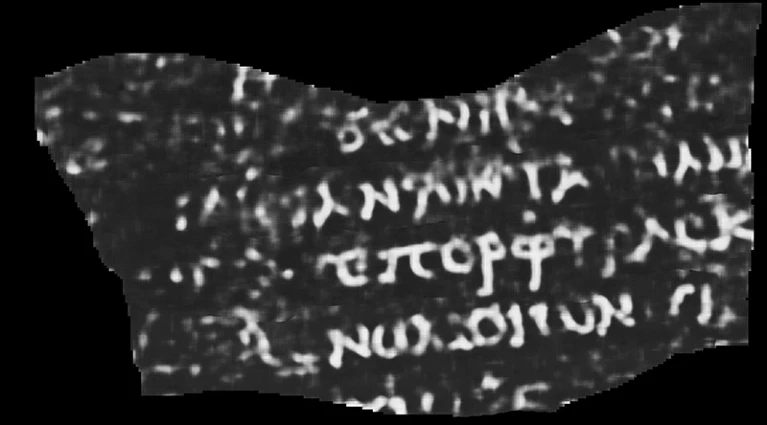
Let the debt be stated without hedging: this essay, and the work behind it, owes almost everything to Parmenides, Zeno, Heraclitus, and Epicurus, and almost nothing to the archaeological theory of the last century. And what astonishes me most is not how much they achieved but how little we needed to inherit. Their books are gone. What we have are fragments — quoted by enemies, buried under volcanic mud, recovered by the handful. Yet even these offcuts are sufficient to build a new way of seeing the world, and more than that, a new scientific way of seeing it — which is the most powerful form of understanding human beings have ever found. If fragments can do this, imagine what was lost. And imagine what is still to be found.
The Presocratics were not important because they anticipated modern conclusions. They were important because they asked, with unusual clarity, the questions required to begin a science at all. Physics and biology eventually followed those questions into matter and life. This programme is an attempt to follow them into technology and the human past with the same seriousness — and to discover whether archaeology, too, can finally become cumulative in the strong scientific sense rather than only in the archival one.
First in a series. This essay sets out the foundation underneath everything else on this site. The work — a physical theory of technology, is an attempt to make archaeology into a science in the way physics and biology are sciences — did not begin from any modern method. It began from the Presocratics and from Epicurus, and the procedure I followed is theirs, not a contemporary one. I have explained this before only in compressed, almost poetical form. Since the work now seems close to producing something real, it is time to set the background out plainly. The essays that follow take this foundation into the body, across the sciences, and finally to the stone itself.
Dylan Foley is an independent researcher based in Ireland working at the intersection of physics, archaeology, and evolutionary biology, through his company Industrial Automata. Parmenides fragments are quoted from John Burnet, Early Greek Philosophy (1892), Diels–Kranz numbering. The technical work these essays draw on is currently under peer review; details will follow on publication.
Companion conference paper: Foley & Furey, “From Geospatial Patterns to Ancient Signals: A Signal Based Framework for Archaeological Machine Learning” (IEEE Irish Signals and Systems Conference 2025, DOI: 10.1109/ISSC67739.2025.11291309).
Four billion years of planetary history, the complete evolutionary record of life on Earth, from single-celled organisms to technological civilization. The geological transformations of a living world. The extinctions, the radiations, the slow accumulation of atmospheric oxygen. The emergence of language, art, and science.
All of it will vanish without a trace, like tears in rain.
Not through some cosmic catastrophe—though that’s inevitable too—but simply through the passage of time. Erosion, tectonic recycling, stellar evolution. Given enough time, even mountains disappear. The question isn’t whether Earth’s history will be lost. The question is whether anyone will have recorded it before it’s gone.
There’s no cosmological reason why preservation is necessary or, some might argue, even desirable. Opinions may reasonably differ on whether it should be a priority at all. But for archaeology and SETI (Search for Extra Terrestrial Intelligence) as actual research programs consuming real resources, the question must be asked explicitly: what is the ultimate objective? The answer determines everything else—methodology, funding priorities, measures of success.
The Foundational Questions
Why is archaeology pursued at all? To what end do we construct the record? For whom do we do it, and how much resources should society invest in it?
The same questions apply to SETI: to what end do we search for technosignatures (signals from technically advanced civilisations)? For whom do we conduct this search, and how should we allocate resources between detection methods, target selection, and interpretation frameworks?
These aren’t abstract philosophical questions—they’re practical ones that determine research priorities. Currently, both fields operate with implicit objectives that may not withstand scrutiny. Archaeology typically justifies itself through “cultural heritage” and historical understanding—valuable goals, but relatively weak when competing for funding against immediate social needs.
SETI traditionally frames itself as searching for contemporary communication from active civilizations—an exciting prospect, but one that becomes increasingly implausible when you account for the temporal overlap problem I discussed in my previous post.
A Logical Foundation
We can establish a more rigorous objective by starting with what we know for certain: one technological civilization exists that can understand space and time—us. We exist, we’re capable of encoding information, and we can conceive of entities separated from us by vast distances in spacetime.
From this single data point, we can reason that other such civilizations may exist in the future. They could be our own descendants after societal transformation or extinction and re-emergence. They could be entirely different lineages evolving on Earth after we’re gone. They could be civilizations arising elsewhere in the galaxy on timescales long after our extinction. We don’t know which scenario is likely, or if any will occur. But we know it’s possible, because we exist as proof of concept.
This creates a concrete objective that unifies both archaeology and SETI: if we are the first, the only, or simply the present technological civilization in our temporal window, then even if SETI finds no signals now, we can dramatically increase the probability that a future SETI project will find a record—ours.
This isn’t metaphysics. This is practical planning.
The Dual Research Program
Understanding preservation as the shared objective of archaeology and SETI creates a productive research program with two complementary branches.
First, archaeology’s meta-objective becomes clearer: we’re not just reconstructing the past for present cultural understanding. We’re establishing what kinds of information structures survive degradation across time, what encoding strategies remain interpretable despite transformation, and what patterns remain detectable despite noise. Every successful archaeological recovery is a proof-of-concept for preservation. Every failed interpretation reveals encoding strategies that don’t work across deep time.
Second, SETI should be designing temporal transmission protocols as a practical project. This serves a dual purpose: it enables us to create transmissions for future detection, and it informs what we should look for in the present. If we’re designing durable, interpretable information structures to survive millions of years, we’re simultaneously developing detection methods for finding similar structures left by others.
The two research directions inform each other. Archaeological signal processing—like the framework we published in the recent ISSC Conference Proceedings using Ireland’s archaeological data—demonstrates what kinds of patterns survive degradation and remain detectable.
These same patterns become design principles for creating future-detectable structures. Conversely, thinking about what we would create for long-term detection informs what we should be searching for in both archaeological records and astronomical observations.
Why This Matters Practically
This reframing doesn’t require accepting that preservation is cosmically important or morally necessary. It simply recognizes that if we’re already doing archaeology and SETI, we should have clear objectives that maximize the value of the resources invested.
The preservation framework provides that clarity. It gives archaeology a concrete goal beyond heritage conservation: develop and test encoding strategies that survive geological timescales. It gives SETI a concrete goal beyond listening for messages we’ll likely never receive: design transmission protocols and detection methods for signals across deep time.
And it creates a shared research agenda that leverages both fields’ expertise. Archaeologists understand how information degrades, what remains recoverable and how to reconstruct it, SETI researchers understand signal detection and pattern recognition in noise. Combined, they could develop systematic approaches to encoding Earth’s history in ways that maximize probability of future recovery.
This is the preservation imperative, and we may be living in the only window where it’s possible to act on it.
The Window Is Closing
In my previous post, I argued that archaeology and SETI are fundamentally the same discipline—signal science. If that’s true, then both fields share a common challenge: signals degrade over time, and windows of opportunity are brief.
Consider what we know about Earth’s technological window. Modern industrial civilization has existed for perhaps 200 years. Our capacity to encode and transmit information at scale—using digital systems, materials science, and signal processing—has existed for perhaps 50 years at a meaningful level. The archaeological record we’re trying to preserve spans 6,000 years of recorded history, hundreds of thousands of years of human evolution, millions of years of mammalian radiation, and billions of years of geological and biological transformation.
We’re attempting to capture and encode four billion years of history using technology that has existed for half a century. And we’re doing it while the record itself is actively being destroyed by development, climate change, erosion, and simply the passage of time.
This creates genuine urgency. We have advanced enough technology to attempt preservation—AI systems, signal processing frameworks, materials science capable of creating durable substrates. We still have an archaeological record that’s reasonably intact and interpretable. We have sufficient resources and stable enough societies to fund large-scale research programs. But these conditions are fragile.
Climate change threatens both the physical record and our capacity to study it. Mass extinction erodes the paleontological data. Urban development destroys archaeological sites faster than we can excavate them. And societal collapse—whether through climate catastrophe, nuclear war, or pandemic—could eliminate our technological capacity entirely.
If we’re in a unique window, we need to act as if it might close.
Who Receives the Transmission?
The elegant aspect of the preservation framework is that we don’t need to know who will receive the signal or when. We simply need to maximize the probability that it survives and remains interpretable across the longest possible timescales. But it’s worth considering the possible audiences, because each scenario reveals different technical requirements.
Future earthlings after civilizational collapse represent the nearest-term scenario, perhaps 100 to 10,000 years out. If our current technological civilization collapses—whether through climate change, resource depletion, nuclear war, or pandemic—survivors would need to rebuild. Having durable archives of our accumulated knowledge could prevent restarting from scratch. This scenario requires robust local storage, perhaps geological encoding or orbital repositories that survive atmospheric reentry. It’s the most tractable scenario because the audience shares our biology, our planet, and much of our context.
Distant Earth descendants operating on timescales of millions to hundreds of millions of years represent a more challenging scenario. These could be future intelligent species that evolve after we’re gone, or our own descendants so transformed by time and evolution that they’re effectively alien to us. This scenario requires extremely durable encoding—crystalline matrices, genetic insertions, or orbital megastructures that survive stellar evolution. The challenge here is interpretability: how do you create messages that remain meaningful after language, culture, and possibly even sensory modalities have completely changed?
Alien archaeologists discovering Earth after the Sun has expanded and sterilized the planet represent the deepest time scenario—billions of years. This is SETI in its purest form, but from the transmitting side. Here, the encoding must survive not just time but planetary destruction. Space-based archives, artificial structures in stable orbits, or even engineered patterns in solar system architecture become relevant. The interpretability challenge is maximal: you’re communicating with entities that share no evolutionary history, no common sensory experience, possibly no comparable physics if they evolved in radically different environments.
Our own SETI searches discovering similar preservation attempts by other civilizations could operate on any timescale, but likely fall in the range of 10,000 years to 10 million years—brief enough that technological signatures remain detectable, long enough that temporal overlap is unlikely. This scenario is particularly interesting because understanding what we would leave behind informs what we should look for when searching. If every technological civilization faces the same preservation imperative, then SETI should be searching for archives, not conversations.
Are We the Transmission?
There’s a fifth scenario worth considering, one that inverts the entire preservation framework: what if life on Earth is itself an example of temporal transmission from a previous technological civilization?
This isn’t recycled panspermia speculation. It’s a testable archaeological question. If we’re serious about temporal transmission protocols and preservation across deep time, we should apply the same investigative framework to our own origins. Archaeological SETI shouldn’t just look outward and forward—it should look inward and backward.
The timeline is suggestive. Life appears on Earth extraordinarily quickly after conditions stabilize following the Late Heavy Bombardment—perhaps within 100 million years, possibly much faster. This rapidity has always seemed remarkable. Chemical evolution from non-living to living systems is supposed to be slow, requiring vast numbers of random molecular combinations before self-replicating systems emerge. Yet it happened here almost immediately in geological terms.
The standard explanation invokes probability—given Earth’s size and the number of chemical reactions occurring, even improbable events become likely. But there’s an alternative hypothesis worth investigating: life’s rapid emergence might indicate technological origin rather than purely naturalistic chemical evolution.
If a previous technological civilization wanted to transmit information across the deepest possible timescales—spanning the death and rebirth of solar systems, surviving galactic-scale catastrophes—what would be the most durable encoding substrate? Crystalline matrices degrade. Orbital structures eventually decay. Even neutron star engravings face erosion across billions of years.
But self-replicating molecular systems that actively maintain and propagate their own information? Systems that evolve error-correction mechanisms, adapt to changing environments, and spread across planetary surfaces? That’s genuinely durable encoding. Life itself becomes the transmission medium.
Starting the Archaeological Trail: Solar Siblings
If we’re investigating this hypothesis methodologically, we should start from what we know—proper archaeological practice. Our Sun formed 4.6 billion years ago in a molecular cloud alongside hundreds or thousands of sibling stars. These solar siblings scattered across the galaxy over billions of years, but many remain identifiable through their chemical signatures and orbital trajectories.
This makes them the logical starting point for archaeological SETI. If life has technological origins involving panspermia or deliberate seeding, solar sibling systems are the most likely candidates for sharing that origin. They formed from the same material, at the same time, in the same region. If our system was seeded, theirs likely were too. If life emerged naturally here, similar conditions might have produced it there as well.
Current solar sibling searches have identified candidates like HD 162826, a star roughly 110 light-years away that almost certainly formed with our Sun. More will be identified as Gaia mission data improves stellar kinematics. These aren’t random SETI targets—they’re archaeologically motivated searches working from known relationships outward.
This is exactly how archaeology operates: start from documented connections, trace them through time, look for shared origins. Solar sibling searches become archaeological investigation across both space and time, following the trail from our Sun’s birth cloud to wherever those siblings migrated.
Investigating Technological Signatures
This hypothesis generates testable predictions. If life has technological origins, we should find evidence of engineering in its fundamental architecture. Not the kind of complexity that arises from natural selection—that’s expected regardless of origin—but signatures of deliberate design, optimization beyond what blind evolutionary processes would produce, or information encoding strategies that serve no survival function but might preserve transmittable data.
We already know some puzzling features of life’s molecular machinery. The genetic code’s error-correction properties are remarkably sophisticated. The specific amino acids used by all Earth life represent a small subset of chemically possible options, chosen with apparent optimization for certain properties. The universal use of left-handed amino acids and right-handed sugars lacks obvious naturalistic explanation.
None of this proves technological origin. But it establishes that investigating life’s origins through an archaeological SETI lens—looking for technological signatures rather than assuming purely naturalistic processes—is methodologically sound. We have one confirmed example of life. We can study its architecture in detail. We know it emerged rapidly after planetary conditions stabilized. We can identify and search our Sun’s sibling systems for related signals. These are exactly the conditions where archaeological investigation should operate.
This creates a productive symmetry in the temporal transmission framework. We’re simultaneously designing preservation strategies for future recovery while investigating whether our own existence represents successful recovery of a previous civilization’s preservation attempt. Both directions use the same methodology: signal processing applied across deep time, pattern recognition in noisy data, distinguishing technological signatures from natural processes, working from known relationships outward.
And both reinforce archaeology’s central role. Whether we’re encoding information for future discovery or decoding information from past transmission, we’re doing archaeology—recovering signals across temporal distances using physics-compatible methods.
The Funding Implication
Recognizing archaeology as informing preservation as well as reconstruction transforms its justification from cultural heritage to existential responsibility. Current archaeological funding operates on the logic of “understanding our past has educational and cultural value.”, which is true, but relatively weak when competing for limited resources.
The preservation framework makes a stronger argument: we are potentially in Earth’s unique window to encode and transmit four billion years of planetary history. If we fail to do this, that information vanishes permanently, regardless of who might have been able to use it. This reframes archaeology from “nice to know our heritage” to “species-level imperative to preserve the only known record of life’s evolution in the universe.”
This is comparable to climate science or asteroid detection—fields justified by their role in preventing existential catastrophe. If archaeological preservation is the only way to ensure Earth’s history survives beyond our technological window, then it deserves similar priority and funding.
The practical implications are significant. Every archaeological excavation becomes part of a larger dataset encoding planetary history. Every paleontological dig contributes to the evolutionary record. Every geological survey maps deep-time transformations. The question shifts from “what happened at this specific site?” to “how do we encode this information for maximum recoverability across geological timescales?”
Practical Implementation
We have the technical frameworks to begin systematic preservation now. Our IEEE paper (Foley & Furey, 2025) demonstrates one approach: treating archaeological data as degraded signals and applying signal processing methods to extract patterns despite noise, gaps, and temporal uncertainty. Working with Ireland’s Record of Monuments and Places—over 150,000 archaeological sites spanning 6,000 years—we showed that we can recover territorial boundaries, administrative centers, and invasion patterns with statistical significance, even from noisy legacy data.
But this is just the beginning. The same signal processing frameworks that extract patterns from archaeological data can inform how we encode information for future extraction. If we know what kinds of patterns survive degradation, we can deliberately create those patterns at larger scales. If we understand how temporal relationships transform into spatial geometries, we can design encoding strategies that remain interpretable despite transformation, degradation and deformation.
The research questions that emerge are concrete and testable. What materials survive millions of years in various planetary environments? How do you design redundancy levels that ensure reconstruction despite 99.9 percent data loss? What geometric and statistical patterns remain obviously artificial despite transformation over geological timescales? These are engineering problems with testable solutions.
And we have a laboratory to test them: Earth’s archaeological record. Everything we successfully recover from the past tells us something about what will be recoverable from our present.
The Responsibility
We don’t know if anyone will ever receive the transmission. We don’t know if Earth descendants, alien archaeologists, or post-collapse survivors will ever decode what we leave behind. We can’t even be certain that preservation is physically possible across the timescales involved.
But the alternative is accepting that four billion years of planetary history simply vanishes, and no one ever knows it happened. If we’re right about technological windows being brief and rare—if temporal overlap really is unlikely—then preservation becomes the only realistic goal for both archaeology and SETI.
This creates a clear imperative: use the window we have to encode as much as possible, as durably as possible, using every tool available. The archaeological sciences should receive funding commensurate with this responsibility. The theoretical frameworks should be developed urgently. The encoding strategies should be designed and tested systematically.
We might be the only civilization in billions of years of galactic history that has both the record and the capability to preserve it. That’s not just an opportunity. It’s an obligation.
If we succeed, Earth’s story survives. If we fail, it’s lost forever.
Dylan Foley
Next in This Series
This post establishes why temporal transmission protocols matter—the practical foundation for both archaeology and SETI. In the next post, I’ll examine why the 2014 call for archaeologists to contribute to SETI failed to gain traction, and how the signal processing framework bridges the paradigm gap that kept these disciplines separated.
Later in the series, I’ll walk through the technical implementation described in our recently published IEEE paper, showing how treating archaeological data as degraded signals enables pattern recovery across large timescales—and what this tells us about designing transmissions for future detection.
Related Publication: Foley, D. Furey E. (2025). “From Geospatial Patterns to Ancient Signals: A Signal Based Framework for Archaeological Machine Learning.” 2025 Irish Signals and Systems Conference (ISSC). IEEE https://ieeexplore.ieee.org/document/11291309/metrics#metrics
Sometimes the fog of collective delusion clears and reveal the true nature of these human constructions we take so seriously. The pandemic of 2020 was one of these moments.
We are told that the COVID-19 pandemic ended sometime in 2022 or 2023, marked by the lifting of mask mandates and the resumption of “normal” life. This narrative is fundamentally mistaken, we are not beyond the pandemic—we are still within it, experiencing not its acute phase but its chronic psychological and political aftermath. More precisely, we are witnessing a massive societal reaction formation: an attempt to deny the pandemic’s reality by systematically dismantling every structure and acknowledgment that might confirm its existence.
This reaction is not random. It follows predictable psychological patterns rooted in conservative-authoritarian psychology, particularly among those driven by fears of uncertainty, loss of control, and contamination—both literal and metaphorical.
The pandemic performed an act of revelation: it demonstrated with brutal clarity that society is only as strong as its philosophical foundation, that monetary systems can be unraveled by a virus, that the seeming certainties of daily life rest on extraordinarily fragile foundations. For people oriented toward order, hierarchy, and certainty—what George Lakoff terms the “Strict Father” worldview—this revelation was not merely frightening, but intolerable.
Why the West Is Uniquely Vulnerable
Before examining what the pandemic revealed, we must understand why its revelation proved so catastrophic for Western consciousness specifically.
The answer lies in a fundamental belief structure pervading Western thought: dualism—the conceptual splitting of reality into binary opposites – fundamentally separate categories of human/nature, mind/body, culture/biology, spiritual/material. The core concept is that of a material and non-material existence underlying everything we observe. It can be contrasted by a monistic belief system, in which all things are in one category, for example all things are material.
The belief is referred to as an ontology – the science of enquiring what is it that exists, or can or cannot exist. An ontology underpins all our other knowledge by providing fundamnetal categories into which we sort the world. They most often are not consciously held beliefs, but underly our knowledge of the world. Hence theyare pervasive, affecting all og human knowledge in any given society. Whether we believe the universe contains only one interconnected whole, or is split into two disconnected types of being colours everything we think about. The west chose dualism.
This dualistic belief is deeply embedded in Western religious and philosophical traditions, and creates a specific vulnerability. The classic example of western thought derived from dualism is the splitting of mankind from nature. We see this in economics and in current climate debates, where there is a great difficulty in persuading large sections of the population that human action can influence the planets climate. We see the concepts in social sciences and economics where human business and monetary systems are not rooted in ecological knowledge, they are human specific, and therefore separate to nature/ Natural systems are treated as optional to engage with. This serves the extraction of natural resources and the ever increasing maximisation of profits very well, but every so often, Nature decides to remind us of its presence.
When a natural disaster strikes, when nature suddenly cannot be kept separate from the human world, when biology overwhelms culture, this entire psychological construction of reality threatens to collapse.
Dualism: The Deep Structure of Western Thought
Dualistic thinking characterises Western consciousness at levels so fundamental they operate largely unconsciously. In religious thought, this manifests as the split between spirit and matter—the immaterial soul separate from mortal flesh—and the distinction between Heaven and Earth, where the divine realm exists apart from the natural world.
Good and Evil are positioned as cosmic forces in eternal opposition, leading to binary binary concepts of Salvation versus Damnation. Crucially for our purposes, humanity is conceived as created in God’s image, separate from and dominant over nature itself.
Philosophical dualism mirrors these religious structures. The Cartesian mind-body split puts res cogitans (thinking substance) as fundamentally different from res extensa (extended substance). Reason is set against passion for example, with the rational mind expected to control the irrational body and emotions.
Culture is distinguished from Nature, with human civilisation understood as transcending natural determinism. The perceiving Subject is fundamentally separated from the perceived Object—the self as something apart from the world it observes.
In economic thought, dualism becomes particularly consequential. The Economy is conceived as separate from the Environment, with economic activity understood as distinct from natural systems. This separation enables the concept of “externalities”—environmental costs that are literally external to economic calculation. This allows the cost of industrial capitalism to be ignored by dumping waste and pollution into nature, where it basically ceases to exist from the point of view of economic calculation.
Growth is positioned against natural limits, with human economic expansion imagined as separate from natural constraints and therefore infinite.
This dualistic paradigm provides enormous psychological advantages for those operating within it. It enables an elite to mobilise lanour and act as if the economy is separate from natural determination, allowing populations to imagine themselves as exempt from biological constraints. It allows the systematic ignoring of natural limits, since “externalities” can be externalised indefinitely. So we dump material into the ocean and presume it will never return.
In its roots in ancient religious philosophies, it may have provided certain useful outcomes to help societies to survive. Societies with extremely limited understanding of the planet and systems of life in which they were embedded. It provides psychological escape from biological vulnerability through the promise that the soul transcends the body. It justifies hierarchy by suggesting that those more “spiritual” or “rational” have authority over those more “natural” or “material.”
And critically, it enables capitalism as currently practiced, treating nature as a resource separate from the human economy rather than as an integrated system.
The entire Western project of modernity rests on this dualistic foundation: the progressive separation of humanity from nature.
The Pandemic’s Assault
COVID-19 didn’t merely present a biological threat—it threatened, by demonstrating that nature and humanity are not, and never were, separate it threatened the core beliefs of very large sections of human populations.
As a natural pathogen shut down human civilisation with ruthless efficiency, suddenly nature overwhelmed the economy, as microscopic viral replication rendered economic “laws” and financial engineering irrelevant.
Material reality suddenly trumped abstraction, no amount of capital manipulation could remove physical vulnerability. The “external” became internal as environmental factors—air quality, ventilation, population density—suddenly determined who would live and who would die. Peoples minds, considered outside nature, were now affected by physical infection that produced psychological trauma, “brain fog,” and lasting cognitive impairment.
For any person whose consciousness was structured by dualism, this wasn’t just frightening—it was potentially devastating to their entire understanding of reality. The fundamental categories structuring society revealed themselves as illusory constructs with no basis in truth. For a person or group in this position there was only two responses, accept the collapse of their world view, or deny it was even happening.
Why Asia Proved More Resilient
This helps explain why Asian societies, while sharing human psychology’s universal features, demonstrated greater resilience to pandemic social disruption. Many Asian philosophical and religious systems operate from fundamentally monistic or non-dualistic ontologies that never separated humans from nature.
For example Buddhism teaches interdependent co-arising—pratītyasamutpāda—recognizing no fundamental separation between self and world, mind and body, humanity and nature.
Taoism emphasizes the unity of opposites, with the natural way (Dao) encompassing all phenomena without fundamental divisions.
Confucianism offers a relational ontology where individuals are defined by their relationships within natural and social orders rather than as separate autonomous subjects.
Vedantic Hinduism teaches non-dualism (Advaita), viewing apparent separations as illusory (Maya), with underlying reality unified in Brahman. The term Advaita (अद्वैत) literally means “not-two”, forming a very close analogy with the concepts we are discussing here. .
Adi Shankara, the most prominent exponent of Advaita Vedānta tradition. “I am other than name, form and action. My nature is ever free! I am Self, the supreme unconditioned Brahman. I am pure Awareness, always non-dual.” Adi Shankara, Upadesasahasri 11.7 Wikipedia
These philosophies never suggested humanity could or should transcend biological reality. Natural disasters, epidemics, and human vulnerability were integrated into worldviews.
When the pandemic struck, Asian populations could respond pragmatically to biological threat without experiencing the collapse of their mental model of the world. Masks, social distancing, and collective action didn’t threaten core worldviews because those worldviews never promised escape from nature in the first place.
The Western Exception: The Apeiron and Science
Importantly, Western thought isn’t uniformly dualistic. Significant monistic traditions exist, though they’ve been consistently marginalised in the political sphere. Or have been subject to attack for the reasons we are discussing.
Monism was in the philosophy of the west from the start. Inspired by the Ancient Egyptian cosmology the Greek Milesian School of Thales and Anaximander posited a single fundamental substance—whether water, air, or the boundless apeiron—underlying apparent diversity.
Everything is generated from apeiron and there its destruction happens. Infinite worlds are generated and they are destructed there again. And he says (Anaximander) why this is apeiron. Because only then genesis and decay will never stop.
— Aetius I 3,3<Ps.Plutarch; DK 12 A14.>
Early Greek natural philosophers—the Pre-Socratic Physiologoi like Parmenides, Heraclitus, and Empedocles—developed sophisticated monistic ontologies.
Parmenides conceived of reality as unified, unchanging Being, with apparent divisions as illusory. Heraclitus saw unity through constant change and transformation, recognizing opposites as interdependent rather than fundamentally separate.
We can speak and think only of what exists. And what exists is uncreated and imperishable for it is whole and unchanging and complete. It was not or nor shall be different since it is now, all at once, one and continuous.
–Parmenides Fragment 6 – 5th Century BC
These thinkers established monistic foundations for natural science itself, understanding nature through observation and reason rather than supernatural explanation, and recognizing underlying unity beneath surface diversity.
Modern science emerged from these monistic foundations, not dualistic ones. But it did so only recently in the 17th century with the rediscovery of these ancient Greek texts in transmitted form, such as the poem of LucretiusDe Rerum Natura.
Scientific method requires humanity as part of nature subject to natural laws, knowledge gained through empirical observation of material reality, recognition of causal connections across apparent boundaries, and unity of explanation across domains. To put it simply, the west spent almost a thousand years with an incorrect foundational concept and so pursued the transmutation of one thing into another, alchemy. But the breakthrough of understanding of matter did not happen until the atomic theory of the Greek philosophers was recovered.
The greatest scientific advances occur when dualistic boundaries collapse: Darwin showing humanity continuous with nature, neuroscience revealing mind as brain process, ecology demonstrating organism-environment unity, systems biology showing no clear individual-environment boundary. Even these sciences suffer from issues defining the boundaries.
Yet Western religious and philosophical traditions repeatedly reasserted dualism against these monistic insights.
Plato, misunderstanding either on purpose or by accident the entire corpus of Greek thought up to his life, positioned perfect Forms as separate from the imperfect material world. Recreating a dualistic philosophy in an instant, which was to be enormously influential on subsequent religions and cults. Platonic dualism and Christian theology reinscribed soul-body division, the saved-damned binary, and the supernatural-natural split.
in the 17th century Descartes Cartesian philosophy reinscribed mind-body dualism at modernity’s very foundation. While science was to cling to the ancient Greek concepts of the atom, and to revolutionaise our understanding of the universe, in the political and power sphere, the medieval religios dualism held sway, and so the curriculum was split, into humanities and sciences, as humans, being spiritual beings differebt from animals and made in the image of God, were to be in a category apart from nature. And so it is even now.
And so, as industrial capitalism developed it treated nature as an exploitable resource separate from human economy. This reassertion served power structures: dualism justifies hierarchy (spiritual rulers over material workers), exploitation, as nature is a separate resource, and authority, priestly or rational classes mediating between realms.
The Pandemic as Broken Dualism
But in the late December of 2019 and the early months of 2020, nature proved iself not to be separate to humans after all. The true believer sin the market and the reality of finance were left reeling a s the “externality” of the environment invaded economic reality with devastating force.
Now we can begin to understand the pandemic’s devastating psychological impact on Western populations.
When no amount of willpower, prayer, or positive thinking could prevent infection. Hierarchy proved non-protective as elites initially caught COVID like everyone else, regardless of wealth or status.The spiritual-material boundary dissolved as churches became superspreader sites and faith failed to immunize believers.
Individual autonomy proved illusory when survival required collective action and acknowledgment of biological interdependence.
This collapse was most catastrophic for those whose worldviews most depend on dualistic philosphies: religious conservatives for whom spiritual-material dualism is fundamental to theology; free-market fundamentalists whose ideology requires economy-nature separation to ignore natural limits; individualists who require the self-world boundary to remain absolute; and authoritarians whose hierarchical structures are justified by dualistic claims of superiority—the rational over the emotional, the civilised over the natural.
But much of human populations acted in counter-intuitive ways, often against their own interest, and also often actually died because of this behaviour.
people doubled down in a process known to psychology as reaction formation. when the anxiety produced by approaching the thought of the nature divide being dissolved – the anxiety is severe enough to be suppressed and instead the person engages in ritualistic denial of the reality of the pandemic. The rituals may involve refusing to wear masks. We may think of rising anxiety at any thought that threatens the dualistic underpinnings of a persons reality, and lessening anxiety at anything that seems to reinforce the boundary. Lets see how this plays out.
Reaction Formation as Restoration Project
When a very deeply believed model is under threat, it causes massive cognitive dissonance. Whats happenming in the world and whats possible in the persons model of the world do not match. This causes real anxiety, and in many an impossible to resolve dilemma.
Because dualism’s collapse threatens their entire psychological and social construction of reality. They did the only rational thing in the circumstance.
They denied it was happening.
Every element of the denial makes sense as an attempt to restore the certainty of the world before an invisible nature invaded and threatened to collapse. Operating mostly below conscious awareness, people moved to excape the anxiety caused, not be fear of the disease, but by the fear of the dissolution of certainty.
Confronted by Covid-19, instead of accepting it, the first goal of many became to to deny nature’s power. So began the essentially ritual acts to make nature return to its proper place, tto subordinate it to the higher spiritual plane of human existence.
For example, minimising a viral threat reassures the mind that nature cannot overwhelm the human world. Rejecting masks and distancing implies nature cannot dictate human behavior. Refusing vaccines asserts that nature cannot enter the sovereign body. The overarching aim is to restore nature as a separate, controllable “externality”—safely distant from human affairs. And with each magical deinal of its power they would feel some relief from the exisstential anxiety, even when this behaviour meant it was more likely they would be harmed or die from the virus.
An entire mass movement then sprung up to reassert the spiritual-material boundary. Attacks on medical science reject material explanations in favor of spiritual or moral ones. Promoting faith healing reasserts spiritual primacy over biological reality.
Blaming deaths on moral failure rather than biological infection reframes the pandemic in spiritual rather than material terms. In each case the goal is to restore soul-body dualism and reinstate spiritual authority over scientific expertise.
Others strove to restore the individual-collective boundary. Resisting public health mandates reasserts individuality separated from nature against the reality of biological connection.
Framing collective action as tyranny denies the reality of interdependence. Emphasising personal choice while ignoring biological connection aims to restore the individual as ontological foundation, despite the pandemic’s clear demonstration that we are fundamentally interconnected biological beings.
To reinforce human-nature separation large parts of the population ignored environmental factors externalises air quality and ventilation as somehow separate from human health. ie – if we weer to act on air quality it would be to admit that the pandemic was real and that nature and humanity are one system and that we must act and organise society and knowledge systems according
Resisting building upgrades denies that material conditions determine outcomes.
Each seemingly irrational behaviour, even ones that hastened peoples demise, by causing them to catch and sometimes be overwhelmed by the virus, is logical if we see it as a reaction to the implications of the virus on human society and its structure.
Promoting “return to normal” attempts to restore pre-pandemic dualism as if the revelation never occurred. The goal is to re-externalise nature, positioning it once again as separate from the human world rather than integrated with it.
The threat to the current social hierarchy, which also must be protected at all costs.
The fifth goal reestablishes hierarchy as naturally ordained. Electing authoritarian leaders attempts to restore protective fathers who can master nature through strength.
Attacking expertise reasserts political over scientific authority, restoring traditional hierarchies.
Blaming vulnerable populations for their suffering restores hierarchical order by suggesting natural superiority.
The goal here is to restore dualistic justification for social stratification—positioning dominance as reflecting spiritual or rational superiority rather than mere power.
This isn’t merely psychological defense—it’s a concerted attempt to reinforce the philosophical underpinnings of western societies.. The pandemic broke reality’s fundamental structure (as experienced through dualistic consciousness), and so every denial, every resistance and every attack on science serves the project of reassembling that structure.
We can see the link between the virus and how it could threaten immediately to overturn societies accepted norms, something that would have meant that the old social orders would indeed be replaced, and the current dominant religiously based belief systems that have maintained dominance in the west would be overwhelmed.
Ancient Parallels: Politics or Priesthoods?
We can gain a glimpse here into ancient responses to natural disasters and their role in the creation of priesthoods, kings. The propitiation of gods represents early humanity’s solution to dualism’s failures. Ancient societies experiencing catastrophe—floods, earthquakes, plagues, famines—faced the same ontological crisis: nature overwhelming human world, demonstrating the dualistic boundary’s porosity.
The solution was ritual restoration through specialized social technologies. Priests emerged as specialists in managing the nature-supernatural boundary. Kings claimed divine authority that bridged spiritual and material realms. Sacrifice ritually fed nature or gods to restore separation and appease threatening forces. Propitiation involved bargaining with supernatural powers to keep nature at bay. Scapegoating purged the “contamination” that had breached protective boundaries. These weren’t merely superstitions—they were ontological technologies for restoring dualistic order after natural disasters revealed its fragility.
The contemporary parallel follows the same functional pattern, though in modern forms. Political strongmen serve as divine-right kings promising protection from nature’s threats. Evangelical leaders function as priests managing the spiritual-material boundary through faith rather than reason. Scapegoating China, the WHO, and medical “elites” purges contamination that breached the human sphere. Ritual resistance through anti-mask and anti-vaccine stances provides symbolic restoration of individual autonomy. Propitiation through denial bargains with reality to restore dualism—if we simply refuse to acknowledge nature’s power, perhaps it will retreat to its proper separate sphere. The form has changed but the function is identical: restore the broken ontological boundary at any cost.
C.P. Snow, Karl Popper, and the Two Cultures
C.P. Snow’s famous “Two Cultures” lecture (1959) identified this dualism’s persistence in modern intellectual life—the split between scientific and humanistic cultures, between material and spiritual/aesthetic domains. Snow saw this split as dangerous, preventing society from addressing technological challenges.
But Snow didn’t fully grasp that this “two cultures” division reflects deeper ontological dualism. It’s not merely that scientists and humanists don’t communicate—it’s that dualistic ontology creates incompatible frameworks:
Science requires monism: Unified explanation across domains, material causation, empirical verification
Humanistic dualism requires separation: Free will separate from determinism, values separate from facts, meaning separate from mechanism
Karl Popper’s Contribution:
Popper’s philosophy of science implicitly recognized this tension. His falsificationism requires:
Hypotheses subject to empirical refutation (material reality independent of desire)
Open criticism and testing (no privileged authority or revealed truth)
Provisional knowledge (no final separation from uncertainty)
This is fundamentally incompatible with dualistic thinking that reserves sacred domains immune from material investigation.
Now we understand why attacks on science are so central to the reaction formation. Science represents monistic ontology in its fundamental methods and assumptions. It positions humanity as part of nature, subject to natural laws rather than exempt from them. It generates knowledge through material investigation rather than revealed truth. It builds uncertainty and revision into its method, refusing the comfort of absolute certainty. No domain remains exempt from empirical inquiry—including consciousness, spirituality, and human nature itself. Scientific disciplines demonstrate interdisciplinary unity, recognizing no fundamental boundaries between fields of investigation.
For dualistic consciousness, science poses an existential threat. It systematically collapses the boundaries dualism requires. Natural selection connects humans to nature, eliminating the human-animal divide. Neuroscience studies consciousness materially, dissolving the mind-body split. Ecology demonstrates organism-environment unity, showing individuals as porous and contextual. Systems biology reveals no clear boundary between individual and environment. Each scientific advance further undermines dualistic ontology.
Therefore, restoring dualism requires attacking science itself. This explains phenomena that otherwise seem irrational: rejecting climate science maintains economy-nature separation by denying that economic activity affects environmental systems.
Denying evolution maintains human-nature separation by insisting humans are fundamentally different from other life forms.
Resisting pandemic science maintains body-spirit and individual-collective separations by refusing to acknowledge biological vulnerability and interdependence.
Attacking medical expertise maintains hierarchy of faith over empirical knowledge, reasserting spiritual authority over material investigation. Each attack serves the project of ontological restoration, protecting dualism against scientific monism’s corrosive effects.
The Path Forward: Embracing Monistic Ontology
Understanding dualism as the root vulnerability suggests a solution—though one most resistant to hearing it would reject. Monistic ontology requires recognizing humanity as continuous with nature rather than separate from it, accepting biological vulnerability as inherent rather than transcendable through will or faith, acknowledging interdependence as reality rather than collectivist ideology, integrating economy and ecology rather than externalizing nature as mere resource, building with nature rather than against it through pandemic-resistant architecture, and accepting uncertainty as fundamental to existence rather than something to be overcome through control or denial.
This proves extraordinarily difficult because it requires abandoning not just psychological comfort but entire civilisational foundations. Capitalism as currently practiced requires treating nature as an externality that can be exploited without consequence. Abrahamic religious frameworks depend on spirit-matter dualism for their core theological claims. Liberal individualism requires the atomistic self as its foundation, denying the reality of biological and social interdependence. Hierarchical authority structures require dualistic justifications—positioning some as naturally superior through greater rationality or spirituality. The modern progress narrative requires the fantasy of transcending nature through technological mastery. Abandoning dualism means reconstructing civilisation from foundations upward.
Yet this is precisely what modern science demands. Contemporary ecology, systems biology, neuroscience, epidemiology, and climate science all converge on monistic insights that cannot be reconciled with dualistic ontology. Organisms and environments co-constitute each other rather than existing as separate entities. Individual boundaries are porous and contextual rather than absolute and fixed.
Mind and body are inseparable aspects of unified biological systems. Human and natural systems are integrated rather than separate spheres. Health is systemic and relational rather than individual and isolated. Each scientific advance makes dualism less tenable, revealing it as an obstacle to understanding rather than a reflection of reality.
The Extreme Dangers of Religious Ontology in Public Policy
When dualistic religious ontology shapes policy during pandemics, the consequences prove systematically catastrophic. Biological reality gets denied in favor of spiritual explanations for material processes. Effective responses get rejected because collective action threatens dualistic individualism and hierarchical authority. Scientific expertise gets suppressed as it threatens religious authority’s claims to truth. Vulnerable populations get blamed through moral rather than biological explanations for their suffering. Long-term planning becomes impossible when restoration fantasy replaces adaptation to changing reality.
The result is not merely bad policy—it’s systematically selecting for civilisational failure. Societies embracing monistic ontology can adapt to biological reality by acknowledging human integration with natural systems. Societies clinging to dualism cannot adapt without first breaking the dualism—leaving them the choice of breaking the dualism or breaking against reality itself. And this is where we are right now.
The West’s Dilemma
Western civilisation faces a fundamental choice that’s almost certainly too difficult to make consciously:
Option One: Maintain Dualism
Continue denying nature’s integration with human world
Keep externalizing environmental costs
Preserve hierarchical authority structures
Result: Eventual catastrophic collapse when reality overwhelms denial
Option Two: Abandon Dualism
Accept monistic ontology and its implications
Rebuild institutions on realistic foundations
Result: Requires abandoning core civilisational structures—capitalism, individualism, traditional religion as currently practiced
The first option is psychologically easier but materially catastrophic. The second is materially necessary but psychologically impossible for most.
This is why the pandemic’s psychological aftermath is so dangerous specifically in the West: the civilisation most structurally dependent on dualistic ontology faces the most fundamental threat from its collapse.
The Pandemic’s Revelation: Society as Constructed Reality
Money, Authority, and the Illusion of Solidity
The pandemic stripped away the veneer of permanence from modern social systems with shocking speed. Within weeks of COVID-19’s emergence, mechanisms that seemed immutable revealed themselves as contingent constructions. Monetary systems traditionally presented as natural laws of economics were suddenly suspended—governments printed money at unprecedented scales, implemented rent moratoriums, and provided direct cash payments to citizens through actions previously declared impossible.
Work structures that management insisted required physical presence in offices evaporated overnight, exposing decades of organisational dogma as mere preference rather than necessity. Property rights, typically treated as sacrosanct, became negotiable when eviction moratoriums challenged the fundamental relationship between ownership and control. Educational hierarchies collapsed as prestigious universities scrambled to deliver online instruction indistinguishable from community colleges, undermining carefully constructed status differentials.
This wasn’t a temporary suspension of normal rules—it was a revelation that the “normal rules” were always social constructions maintained through collective agreement and power structures, not natural or inevitable orders. A microscopic pathogen had demonstrated that human social organisation is artificial, contingent, and vulnerable after all.
The Fragility of the Constructed Order
For individuals whose psychological architecture depends on perceiving the world as ordered, hierarchical, and stable—characteristics that decades of research link to conservative ideology—this revelation was catastrophic. Research consistently shows that political conservatism correlates with intolerance of uncertainty and ambiguity, need for cognitive closure and order, threat sensitivity and anxiety about chaos, and preference for familiar social structures over novel arrangements. The pandemic didn’t merely present a biological threat—it performed a metaphysical assault on worldviews premised on stability, predictability, and the permanence of social hierarchies.
When conservatives witnessed governments creating money “out of thin air” to prevent economic collapse, when they watched traditional gender and work roles dissolve as parents juggled childcare and remote work, when they observed that the emperor of modern capitalism truly had no clothes, the cognitive dissonance was profound and intolerable.
Conservative Psychology and the Pandemic Response
The Strict Father Model and Pathogen Threat
George Lakoff’s “Strict Father” model provides crucial insight into conservative pandemic response. This model conceptualises conservative morality through the metaphor of a traditional patriarchal family where the father figure represents absolute moral authority, providing protection and enforcing discipline. Obedience to hierarchy becomes paramount for maintaining social order. Self-discipline and self-reliance emerge as primary virtues that must be cultivated through strict upbringing. The world is viewed as inherently dangerous, requiring strong authority to maintain order against chaos and evil. Weakness invites chaos and breakdown, therefore strength—including moral strength—must be constantly demonstrated to prevent social dissolution.
When applied to the pandemic through the “Nation-as-Family” metaphor, this model creates profound tensions. The virus represented a threat that couldn’t be disciplined into submission, that didn’t respect hierarchy, that made everyone equally vulnerable regardless of moral fortitude or obedience to authority.
Research on the “behavioral immune system” (Schaller, 2006; Schaller & Park, 2011) suggests that pathogen threats typically make people more socially conservative, promoting conformity and traditional values as disease-avoidance strategies. Yet COVID-19 produced a paradoxical response: American conservatives became less likely to perceive the virus as threatening, less anxious about infection, and less compliant with protective measures (Calvillo et al., 2020; Kerr et al., 2021).
The Politicisation of Uncertainty
This paradox resolves when we understand that acknowledging the virus’s threat meant acknowledging the failure of the strict father model to protect. Research from 2020 showed:
Political conservatism predicted lower perception of COVID-19 threat despite conservatives’ typical threat sensitivity (Tyson, 2020)
Self-uncertainty among conservatives predicted polarized threat perceptions rather than unified response (uncertainty-identity theory)
Conservative politicians and media systematically minimized viral threat to maintain authority credibility
The choice was stark: admit that reality had overwhelmed the protective capacity of strong leadership and traditional structures, or deny the reality that created this unbearable cognitive dissonance. Many conservatives chose denial.
Fear of Contamination: Literal and Metaphorical
Conservative psychology has long been associated with heightened disgust sensitivity and fear of contamination (Inbar et al., 2012; Terrizzi et al., 2010). This manifests not just in concerns about physical pathogens but in metaphorical contamination—fears of cultural mixing, immigration, and social change “polluting” traditional society.
The pandemic created a peculiar inversion: the literal contamination threat (COVID-19) was minimised, while metaphorical contamination fears intensified. Mask mandates and vaccines—protective measures against literal contamination—were framed as metaphorical contamination: government overreach “infecting” individual liberty, medical authority “contaminating” bodily autonomy, and social distancing “polluting” traditional community bonds.
This inversion makes psychological sense within the strict father framework: accepting medical authority over the paterfamilias’s judgment represented a greater threat to the hierarchical order than the virus itself. The driving force being that to embrace remedies to the virus, would be to admit the reality of the pandemic, and thereby threaten the psychological model of society as outside nature. Ao the pandemic was denied by refusing to respond rationally to it. If theres no response, then it doesnt exist. Truly magical thinking. But perfectly in line with our thesis of denial to uphold a dualistic world view and avoid the profound anxiety that challenging that would cause.
Authoritarian Family Structures and State Authority
From Family to Nation: The Transfer of Authority
Lakoff argues persuasively that conservative political ideology extends the strict father family model to governance through the “Nation-as-Family” metaphor. Just as the father provides protection and enforces discipline within the family, strong leadership should protect citizens and enforce social order. The pandemic, however, created an impossible bind for this model:
Medical experts (not political authority figures) possessed the relevant knowledge
Collective action (not individual strength) offered the best protection
Interdependence (not self-reliance) proved necessary for survival
Hierarchy failed to control an indifferent pathogen
For authoritarian personalities who transfer the strict father model from family to state, this failure was intolerable. Research on Right-Wing Authoritarianism (RWA) by Bob Altemeyer shows that high RWAs exhibit:
Submission to established authorities they perceive as legitimate
Aggression toward those who violate established norms
Conventionalism: rigid adherence to traditional social norms
The pandemic violated all three dimensions. Medical authorities recommended unprecedented social changes; the virus forced violations of traditional norms (gatherings, face-covering, physical distance); and established political authorities (particularly in countries like the United States) were revealed as inadequate to the biological challenge.
The Authoritarian Response: Reasserting Control
When external reality threatens the authoritarian worldview, the typical response is not adaptation but intensified commitment to authoritarian solutions. The pandemic triggered precisely this dynamic through a predictable sequence. First comes denial of threat legitimacy—if the virus isn’t genuinely dangerous, then no authority failure occurred and no adaptation is required. Next arrives blame displacement, attacking medical experts, public health officials, and “liberal” pandemic responses rather than acknowledging systemic vulnerability. Then follows symbolic reassertion of control through resisting masks, vaccines, and restrictions as demonstrations of autonomy and strength rather than capitulation to biological reality. Finally comes the search for strong leaders who promise to restore the pre-pandemic order rather than adapt to new realities, leaders who will make the threatening complexity disappear through force of will.
This explains the seemingly paradoxical finding that intolerance of uncertainty—typically associated with conservative ideology—didn’t directly predict pandemic compliance. Instead, political partisanship mediated the relationship: conservatives dealt with pandemic uncertainty not through precautionary measures but through allegiance to political authorities who denied the uncertainty’s legitimacy.
The Ongoing Reaction: “Putting the Genie Back in the Bottle”
The Systematic Denial Project
We are currently experiencing a coordinated, if not always conscious, campaign to deny the pandemic’s reality by eliminating every trace of its impact and every structure that acknowledges its ongoing presence. This manifests across multiple domains simultaneously.
Medical infrastructure faces systematic dismantlement. There is widespread resistance to upgraded building codes requiring improved ventilation, refusal to retrofit public spaces with air filtration systems, opposition to architectural paradigms that account for airborne pathogen transmission, dismantling of pandemic surveillance and early warning systems, defunding of public health agencies and positions, and sustained attacks on medical expertise as inherently suspicious.
Scientific authority undergoes coordinated erosion. Vaccine hesitancy and denial persist despite overwhelming efficacy evidence. Conspiracy theories proliferate about medical establishment motives. Public health measures get reframed as authoritarian control rather than disease mitigation. Epidemiological modeling and evidence face dismissal as politically motivated. Growing distrust in medical institutions reflects a broader pattern—trust in science among conservatives has declined steadily from 1974 to 2010. This erosion has an ontological dimension: science represents monistic ontology that collapses dualistic boundaries, making it an existential threat to worldviews dependent on nature-culture separation.
Memory undergoes active suppression. Pandemic memorials and acknowledgments disappear rapidly from public spaces. Social pressure builds against discussing ongoing COVID impacts. Pandemic deaths get reframed as “inevitable” or “acceptable losses” rather than preventable tragedies. Long COVID and chronic health impacts face systematic minimisation. Return-to-office mandates deny lessons about remote work viability, erasing institutional knowledge gained during the acute phase.
Political reaction accelerates these trends. Elections increasingly favor explicitly anti-public-health officials. Legislative restrictions limit future public health emergency powers. Book bans target pandemic-related educational materials. In some jurisdictions, attacks on medical freedom of speech constrain what health professionals can publicly recommend.
This isn’t merely partisan politics—it’s a psychological project to restore the pre-pandemic ontology where social systems seemed permanent, hierarchies appeared natural, and authority figures could guarantee safety through strength and discipline.
The Architectural Denial
Perhaps most concerning is the refusal to acknowledge that the current disease waves are enabled by a global urban environment connected through air travel that creates optimal conditions for pathogen adaptation. Without systemic changes to this environment—improved air filtration, better ventilation standards, architectural designs that account for airborne transmission—pathogens will continue to adapt to this conducive environment.
The waves will continue. They will likely intensify. Yet the same psychologies that drove pandemic denial now prevent the infrastructural changes that might mitigate future outbreaks. To upgrade building codes or retrofit structures would be to admit that the pandemic revealed genuine vulnerabilities requiring ongoing attention—an admission that threatens the fantasy of restored stability.
Historical Parallels: The 1918 Spanish Flu
The Aftermath of Mass Death
The 1918-1919 influenza pandemic killed approximately 50-100 million people worldwide—more than World War I. Its psychological and social effects offer instructive parallels to our current moment. Recent research reveals that social trust erosion proved permanent and transgenerational. Experiencing the pandemic likely had lasting consequences for social trust that persisted across generations. Americans whose ancestors experienced the 1918 flu in their countries of origin display lower levels of social trust even a century later. The mechanism was clear: the “textbook case of utter failure of health care institutions both in containing the spread of an epidemic and in providing effective care” created a climate of general mistrust. Survivors reported that authorities’ incompetence during the crisis permanently altered their beliefs about institutional reliability—beliefs they passed to descendants.
Remarkably, the Spanish Flu quickly disappeared from public discourse after 1920. Historian Alfred Crosby noted this collective amnesia in his seminal 1976 work, later reissued as America’s Forgotten Pandemic. The pandemic was ignored by periodicals and textbooks for decades. This silence wasn’t accidental—it reflected a societal need to forget a catastrophe that revealed governmental inadequacy and social vulnerability. We’re witnessing a similar dynamic today, though on a compressed timeline. The speed at which COVID-19 has been relegated to “history” despite its ongoing presence mirrors the rapid forgetting after 1918.
The Spanish Flu’s mental health impacts were severe and lasting. Asylum hospitalisations for mental disorders attributed to influenza increased by an average factor of 7.2 in the six years following the pandemic. Survivors reported depression, mental distraction, sleep disturbances, and difficulty coping with work. Influenza death rates significantly correlated with increased suicide rates during 1918-1920. A marked rise in neurological diseases followed, suggesting long-term biological impacts on mental health. The “massive and sudden loss of life plunged many into a chronic state of helplessness and anxiousness.” Thirty-one thousand children in New York City alone lost one or both parents in November 1918. This scale of loss created trauma that permeated society.
Paradoxically, the Spanish Flu also catalyzed positive changes. Workers’ protests following the pandemic led to fundamental changes in social policy. The origins of developmental and welfare states emerged from the combination of pandemic and war. Women’s agency increased as they joined the workforce in greater numbers—from 18% in 1900 to 21% in 1920 in the United States. The 19th Amendment granting women’s suffrage passed in 1920. Yet these progressive changes occurred alongside social upheaval and violence, abandonment of the sick and dying, breakdown of funeral rites and community bonds, and a climate of suspicion and distrust that characterised the period “and long after.”
Key Differences from Today
Two critical differences distinguish COVID-19’s context from 1918. First, the media environment differs fundamentally. The 1918 pandemic occurred during wartime censorship, limiting information flow. Today’s pandemic unfolded in an environment of instant global communication, social media, and unprecedented information access—yet this has paradoxically enabled more effective disinformation campaigns rather than more informed responses. Second, institutional trust levels were inverted. The Spanish Flu struck populations with relatively high institutional trust that subsequently eroded. COVID-19 struck populations—particularly in the United States—where institutional trust was already deeply compromised, accelerating existing political polarisation rather than creating new divisions.
Historical Parallels: The Black Death (1348)
The Ultimate Pandemic
The Black Death of 1348-1350 killed between one-third and one-half of Europe’s population—perhaps 25-50 million people. Its psychological impact offers insights into how societies respond to existential biological threats:
1. Breakdown of Social Bonds
The plague created such terror that fundamental human relationships dissolved:
People abandoned friends and family, fled cities, shut themselves off from the world
Funeral rites became perfunctory or stopped entirely
The sick and dying were abandoned by doctors and family members
Bodies littered streets for days, with no one willing to collect them
Social fabric tore apart as fear overcame communal bonds
This breakdown wasn’t mere selfishness—it was psychological collapse in the face of incomprehensible horror. As one chronicler noted, “the blow struck the world with immense terror.”
2. Crisis of Authority and Meaning
The Black Death shattered existing frameworks of understanding:
Religious authority failed: Prayer didn’t prevent sickness and death. Mass death among clergy undermined the Church’s moral authority. People turned to mysticism and extremism, seeking alternative explanations.
Medical authority failed: Physicians proved helpless. Their reliance on ancient texts and traditional remedies offered no protection. This failure planted seeds for eventual scientific revolution.
Social hierarchy collapsed: The plague killed nobles and peasants alike initially, though the wealthy eventually learned to isolate themselves. The traditional belief that social position reflected moral worth was exposed as fiction.
Worldview disintegration: People “knew—or thought they knew—how the world worked.” The plague destroyed this certainty, forcing a “complete reevaluation of the existing paradigm of received knowledge.”
3. The Search for Scapegoats
Unable to comprehend the disaster, populations sought human agents to blame:
Jews were massacred across Europe under the conspiracy theory that they had poisoned wells. Thousands were burned alive in at least two hundred towns.
Foreigners, beggars, and lepers faced systematic persecution as suspected plague carriers.
Women and marginalized groups were targeted as witches or moral pollutants causing divine punishment.
This pattern—seeking human enemies when confronted with biological threat—mirrors contemporary conspiracy theories about COVID-19 origins, bioweapons, and deliberate infection campaigns.
4. Psychological Transformation
The Black Death produced lasting psychological changes:
Preoccupation with death: Art turned dark, featuring widespread imagery of “danse macabre” (dance of death) showing death as a skeleton choosing victims randomly.
“Live for the moment” mentality: The uncertainty of survival created a mood of “Eat, drink, and be merry, for tomorrow you may die.”
Reduced faith in traditional institutions: Both religious and secular authority permanently lost credibility.
Peasant revolts: Survivors, recognizing their increased value in a labor-scarce economy, challenged aristocratic power (the Peasants’ Revolt of 1381 in England, for example).
The Systemic Response Failure
Critically, the Black Death persisted because medieval society lacked the conceptual framework and institutional capacity to address systemic vulnerability:
No germ theory meant no understanding of transmission mechanisms
No public health infrastructure meant no coordinated response
Religious explanations (divine punishment) prevented rational mitigation
Urban design (dense populations, poor sanitation) created ideal conditions for plague bacteria
The plague recurred for centuries because societies couldn’t acknowledge and address the environmental and infrastructural factors enabling its spread.
We face a parallel situation. COVID-19 revealed that our globally connected urban environment creates optimal conditions for pandemic disease. Yet the same psychological resistances that prevented medieval societies from addressing urban design now prevent us from acknowledging that air travel, inadequate ventilation, and crowded spaces create conducive environments for pathogen adaptation and transmission.
The Vulnerable West: Democracy’s Weakness Against Psychological Reaction
The Authoritarian Advantage
Western democracies face unique vulnerabilities during this ongoing pandemic reaction:
1. Exploitation by Authoritarian Leaders
The psychological need for “strong fathers” who promise to restore pre-pandemic order makes populations vulnerable to authoritarian appeals. We observe:
Electoral success of explicitly anti-public-health candidates
Cult-of-personality politics around leaders who deny pandemic impacts
Symbolic strength displays (anti-mask, anti-vaccine stances) valued over competent governance
Attacks on expertise framed as populist resistance to “elites”
Research on the Trump phenomenon showed how appeals to strict father authority resonated with voters facing uncertainty. During pandemic conditions, this dynamic intensified.
2. Opportunistic Billionaire Capitalism
The pandemic created unprecedented wealth transfer to billionaires while working populations suffered. This inequality has been leveraged to:
Fund anti-public-health political movements (e.g., Koch network backing mask/vaccine opposition)
Resist workplace safety improvements that might reduce profits
Lobby against building code upgrades requiring better ventilation
Promote “return to normal” narratives that prioritize economic activity over health
The strict father model’s emphasis on self-reliance and resistance to “handouts” provides ideological cover for policies that benefit wealthy elites while harming working populations.
3. Feudal Powers Capitalising on Turmoil
Authoritarian states and reactionary movements have exploited pandemic-induced chaos to:
Undermine democratic institutions through disinformation campaigns
Promote anti-science narratives that weaken Western technological advantage
Encourage political polarization that paralyzes effective governance
Model authoritarian “efficiency” in pandemic response (despite questionable actual effectiveness)
Russia and China, in particular, have actively promoted anti-vaccine disinformation in Western countries while mandating vaccination in their own populations—a strategic undermining of adversary capabilities.
4. The Democratic Disadvantage
Democracies’ fundamental strengths—transparency, freedom of expression, responsive governance—become weaknesses during crises that trigger authoritarian psychology:
Transparent reporting of deaths and failures undermines confidence
Freedom of expression enables disinformation campaigns
Responsive governance to diverse constituencies creates policy incoherence
Respect for individual liberty prevents effective coordination
This isn’t an argument for authoritarianism—authoritarian regimes’ pandemic failures were often worse despite information control. Rather, it highlights that democracies face particular vulnerabilities when significant portions of their populations experience psychological needs for authoritarian “strong fathers” who promise simple solutions to complex threats.
The Downward Spiral
The combination of these factors creates a self-reinforcing cycle:
Pandemic reveals systemic vulnerability
Vulnerability triggers authoritarian psychology in portion of population
Authoritarian psychology resists structural changes that might address vulnerability
Unaddressed vulnerability enables continued disease spread
Continued spread creates more uncertainty and fear
More uncertainty and fear strengthen authoritarian appeals
Authoritarian movements gain power, further preventing adaptive response
This cycle, if unbroken, leads toward either:
Gradual democratic degradation as authoritarian movements incrementally erode democratic institutions, or
Catastrophic collapse when accumulated vulnerabilities enable a crisis that overwhelms weakened systems
The Infrastructural Imperative We’re Ignoring
The Conducive Environment
The contemporary pandemic pattern emerges from specific material conditions:
1. Global Urban Network
Densely populated cities provide large susceptible populations
International air travel connects these populations within hours
Shared air systems in buildings facilitate transmission
Return-to-office mandates concentrate people in inadequate spaces
Global distribution enabling variants to spread before immunity develops
3. The Adaptation Race
Human adaptive responses (vaccines, treatments) must compete with viral evolution in an environment optimized for the virus. This is analogous to running a race while giving your opponent a head start and favorable terrain.
The Interventions Not Happening
Addressing this conducive environment would require:
1. Architectural Revolution
Universal air filtration (HEPA or equivalent) in public buildings
UV-C germicidal irradiation in HVAC systems
Ventilation standards updated for airborne pathogen transmission
Global coordination constrains national sovereignty
3. They Require Collective Action
The interventions needed are fundamentally incompatible with strict father ideology’s emphasis on:
Individual responsibility over collective response
Self-reliance over interdependence
Minimal government over coordinated governance
Free-market solutions over regulated change
4. They Cost Money Now for Future Benefit
Strict father morality emphasizes:
Present discipline over future investment
Earned rewards over preventive spending
Punishment of weakness over systemic change
Personal responsibility for vulnerability
Investing in infrastructure to prevent future pandemics requires precisely the opposite orientation.
The Misdirection of Capital: Techno-Utopianism as Pandemic Escapism
Elon Musk and the New Futurism
In the midst of this psychological crisis, we witness a peculiar phenomenon: vast sums of capital flowing toward fantastical technological “solutions” rather than practical infrastructural improvements. Elon Musk’s pivot toward humanoid robots—the promise that artificial workers will solve all problems and render pandemic vulnerabilities irrelevant—represents the apotheosis of techno-utopian escapism.
This bears striking parallels to the futurism of the 1920s and 1930s. Following the trauma of World War I and the Spanish Flu pandemic, that era saw:
Investment in spectacular projects rather than public health infrastructure
Charismatic industrialists as visionary heroes (Henry Ford, Thomas Edison)
Faith that technology would transcend human vulnerability and social problems
Then, as now, this futurism served a psychological function: it promised escape from uncomfortable realities rather than adaptation to them. The 1920s-30s futurism collapsed into the Great Depression and World War II—crises that revealed the inadequacy of technological fantasies disconnected from material and social infrastructure.
The Humanoid Robot Fantasy: Emotionally Driven, Infrastructurally Impossible
Musk’s humanoid robot project exemplifies emotionally driven techno-utopianism rather than realistic technological development:
1. The Missing Foundation
Humanoid robots operating at scale would require:
Automated maintenance systems capable of servicing millions of robots
Robust data infrastructure far exceeding current capacity
Open systems and standardized protocols enabling interoperability
Reliable power grids and charging infrastructure
Supply chains for parts, repairs, and upgrades
Regulatory frameworks and safety systems
Educational institutions training maintenance workers
Economic systems adapted to mass automation
None of these foundational layers are receiving the investment flowing toward the robot fantasy itself. This is analogous to promoting flying cars while roads remain full of potholes—the spectacular vision disconnected from mundane prerequisites.
2. The Ecosystem Requirement
Humanoid robots represent an apex technology requiring a complete supporting ecosystem:
The current data infrastructure is already “creaking”—inadequate for present demands, much less for billions of autonomous robots requiring constant connectivity and updates. Without this ecosystem, humanoid robots are non-functional props, technological cargo cults worshipping imaginary capabilities.
3. The Impractical Reality
We can demonstrate the impracticality through basic analysis:
Energy requirements: Humanoid robots require enormous power. Where will this come from when current grids struggle with existing demands?
Maintenance burden: Mechanical systems fail. Who maintains robots when we can’t maintain existing infrastructure?
Data transmission: Real-time robotic operation requires massive bandwidth. Current infrastructure can’t support this at scale.
Part manufacturing: Complex robots need precision components. Supply chain fragility was exposed by pandemic disruptions—how would robot supply chains fare?
Skill requirements: Operating and maintaining robots requires technical expertise. Our educational systems aren’t producing these workers.
The humanoid robot fantasy reveals itself as emotionally rather than rationally motivated: a desire for magical solutions that make pandemic-revealed vulnerabilities disappear, without the hard work of addressing actual systemic problems.
Capital Flowing to Father Figures, Not Infrastructure
The pattern is clear: vast sums flow toward charismatic “father figures” who promise technological salvation—Musk, Bezos, Zuckerberg—while practical infrastructure investments languish:
Funded Fantasy Projects:
Humanoid robots ($billions)
Mars colonization ($billions)
Neural interfaces ($billions)
Cryptocurrency systems ($billions)
Virtual reality “metaverses” ($billions)
Unfunded Practical Needs:
Building ventilation upgrades ($inadequate)
Public health surveillance systems ($defunded)
Water infrastructure ($crumbling)
Electrical grid modernization ($insufficient)
Public transportation ($neglected)
Pandemic-resistant architecture ($non-existent)
This misallocation isn’t accidental—it’s psychologically motivated. The fantasy projects promise:
Escape from biological vulnerability: If we colonize Mars or upload to machines, pandemics become irrelevant
Technological transcendence: Solutions that don’t require acknowledging present failures
Strong father figures: Charismatic leaders who promise to solve everything
Restoration of control: Technology as means to dominate nature rather than adapt to it
Individual salvation: Personal technological enhancement rather than collective infrastructure
These are precisely the promises that strict father psychology craves: strength, control, transcendence, and individual rather than collective solutions.
The Contrast: What Real Investment Would Look Like
Compare the humanoid robot fantasy with realistic technological applications addressing actual pandemic vulnerabilities:
Building Automation and Safety:
Automated HVAC systems with pathogen-detecting sensors and responsive filtration
UV-C disinfection robots for large spaces (already proven technology)
Air quality monitoring networks with public dashboards
Ventilation optimization AI using occupancy sensors and predictive modeling
Touchless interfaces for elevators, doors, and building systems
These technologies exist. They’re practical. They’re affordable at scale. They would actually reduce pandemic transmission. Yet they receive a fraction of investment compared to humanoid robot fantasies.
Infrastructure Automation:
Automated water quality monitoring preventing contamination
Self-healing electrical grids with distributed generation and storage
Predictive maintenance systems for bridges, roads, and tunnels
Automated waste management improving sanitation
Public health data integration enabling early outbreak detection
Again—proven technologies, practical applications, genuine benefits. Yet they lack the emotional appeal of humanoid servants, so capital flows elsewhere.
Open Systems and Interoperability:
The humanoid robot vision, if it were serious rather than fantasy, would prioritize:
Open-source robotic operating systems enabling diverse manufacturers
The 1920s futurism collapsed not because the visions were impossible in principle, but because they were disconnected from material reality. Flying cars are technically feasible—but not while roads crumble. Robot servants are possible—but not without the maintenance ecosystem to support them.
Today’s techno-utopianism suffers the same disconnect. Humanoid robots are theoretically achievable—but not while data infrastructure creaks, electrical grids fail, and we refuse to invest in the foundational layers that would make them possible. We may build them, but they will rapidly end up on the scrap heap as soon as something like a pandemic collapses precarious corporate monopoly supply chains.
The Authoritarian Bargain
This misdirection of capital represents a bargain between populations seeking strong fathers and billionaires seeking power:
What Populations Get:
Comforting fantasies of technological salvation
Charismatic leaders promising simple solutions
Spectacles distracting from present failures
Permission to deny uncomfortable realities
What Billionaires Get:
Concentration of wealth and power
Freedom from regulation and accountability
Public subsidy of private projects
Status as visionary heroes rather than extractive oligarchs
This bargain is catastrophically bad for humanity’s long-term survival, but it satisfies immediate psychological needs for those who can’t tolerate pandemic-revealed truths.
Conclusion: Charting a Path Forward
Still Inside, Still Falling—But Not Without Agency
We remain inside the pandemic—not its acute phase but its chronic political and psychological crisis. The original pathogen revealed uncomfortable truths: that society is constructed rather than natural, that hierarchies can’t protect against indifferent biology, that interdependence is not weakness but reality. Most fundamentally, it collapsed the dualistic ontology structuring Western consciousness—the illusory separation of humanity from nature, culture from biology, spirit from matter.
For psychologies oriented toward authority, hierarchy, and certainty—and shaped by dualistic religious and philosophical traditions—these truths are unbearable. The current reaction—denying the virus’s significance, dismantling public health infrastructure, attacking medical expertise, electing authoritarian leaders, investing in escapist technological fantasies—represents an attempt to restore the pre-pandemic dualistic ontology by eliminating all evidence that it was ever disrupted.
This ontological restoration project ensures we will face worse pandemics in the future. By refusing to acknowledge that our globally connected urban environment creates optimal conditions for pathogen evolution, by resisting the architectural and infrastructural changes that might mitigate transmission, by dismantling the scientific and public health capacity to respond effectively, by directing capital toward fantasies rather than practical solutions, and most fundamentally by clinging to dualistic ontology that requires denying humanity’s integration with nature, we are actively constructing the conditions for catastrophe.
The Historical Pattern and Its Breaking
The historical parallels are stark. After the Black Death, Europe took 150 years to recover demographically and experienced social upheavals (peasant revolts, religious reformation, breakdown of feudalism) that transformed civilisation. After the Spanish Flu, social trust eroded for generations, mental health impacts persisted for years, and the pandemic was rapidly forgotten—only to recur in new forms.
Yet history also shows that societies can adapt, though usually only after catastrophic failures force acknowledgment of reality:
The Black Death ultimately broke feudalism and enabled new social forms
The Spanish Flu contributed to welfare state development and women’s enfranchisement
The 1930s-40s crises eventually produced public health infrastructure and social safety nets
The question is whether we must wait for catastrophe to force adaptation, or whether we can choose reality over comforting fantasy.
What Realistic Forward Movement Requires
A genuine path forward demands rejecting both the denial that claims the pandemic is over and the escapism that promises technological transcendence without foundation:
1. Acknowledging Material Reality
The pandemic revealed systemic vulnerabilities that remain unaddressed
Social systems are constructed and can be reconstructed
Hierarchy and authority cannot protect against biological threats
Collective action and infrastructure investment are necessary
Most fundamentally: Humanity is not separate from nature; dualistic ontology is illusory and dangerous. We must embrace monistic ontology recognizing our integration with biological and ecological systems.
2. Redirecting Capital Flows
Away from:
Escapist technological fantasies
Concentration in authoritarian figures
Proprietary closed systems
Spectacular projects with no foundation
Toward:
Building ventilation and air quality systems
Open-source automation and monitoring
Distributed and resilient infrastructure
Public health surveillance and response capacity
Educational systems for maintenance and operation
Democratic control of technological development
3. Building the Maintenance Ecosystem
Before advanced automation becomes realistic, we need:
Automated systems for maintaining infrastructure (water, power, data, transport)
Open standards and interoperable protocols
Distributed manufacturing and repair networks
Technical education at scale
Regulatory frameworks for emerging technologies
Economic models supporting transition
This is unglamorous work. It lacks the emotional appeal of humanoid servants or Mars colonies. But it’s the actual foundation for any advanced technological future—and it would address present pandemic vulnerabilities.
4. Confronting Psychological Resistance
The hardest challenge is psychological:
Populations seeking strong fathers must learn to tolerate uncertainty
Strict father psychology must acknowledge limits of authority and strength
Individualist ideologies must accept interdependence as reality
Escapist fantasies must yield to engagement with present problems
Uncomfortable truths must be faced rather than denied
This may be impossible at scale. Psychological patterns established in childhood and reinforced across lifetimes rarely change voluntarily. Entire populations may be incapable of the adaptation required.
Two Paths, Two Futures
We face a bifurcation:
Path One: Continued Denial and Escapism
Capital flows to fantasies and authoritarian figures
Infrastructure continues deteriorating
Pandemic waves continue and intensify
Authoritarian movements gain power
Eventual catastrophic collapse or degradation into permanent crisis
Path Two: Reality-Based Adaptation
Acknowledge pandemic-revealed vulnerabilities
Invest in practical infrastructure and open systems
Develop collective capacity for coordinated response
Create political and economic systems resistant to authoritarian capture
The choice seems clear. Yet the psychological barriers to Path Two may be insurmountable for many. Those who need strong fathers and comforting certainties will continue seeking them, regardless of consequences.
What Must Break
For genuine adaptation to occur, something must break:
Either, the dualistic ontology breaks: Recognition that humanity/nature separation is illusory, requiring wholesale reconstruction of philosophical, religious, economic, and political systems
or
The denial breaks and reality becomes impossible to ignore, forcing acknowledgment of monistic ontology
the systems break, then continued failure creates collapse that enables rebuilding on monistic foundations
and the psychology breaks: Enabling enough people to achieve the difficult work of embracing interdependence and uncertainty
The first option would be preferable but requires abandoning core Western belief structures—it would be a transformation as profound as the shift from medieval to modern worldview. The second and third are increasingly probable as climate change and future pandemics compound. The fourth may be happening among some populations but seems unlikely at scale sufficient to prevent catastrophe.
The deeper truth: Until Western consciousness confronts its dependence on dualistic ontology and the impossibility of maintaining that dualism in the face of ecological and epidemiological reality, all other reforms remain superficial. You cannot build pandemic-resilient civilization on foundations that require denying biological integration. You cannot address climate change while maintaining economy/nature separation. You cannot create sustainable systems while clinging to human/natural dualism.
The Bottom Line
We are not beyond the pandemic. We are not recovering from the pandemic. We are failing to respond—and ensuring worse ones to come.
The waves will continue. The pathogens will adapt. The infrastructure will remain inadequate. Capital will flow to escapist fantasies and authoritarian figures. And populations seeking psychological comfort through “strong fathers” and technological transcendence will become increasingly vulnerable to precisely the disasters those authorities promise to prevent.
The ontological dimension makes this particularly acute for the West: Clinging to dualistic ontology that requires separation from nature, Western civilization systematically selects against adaptation to biological and ecological reality. Each denial, each attack on science, each refusal to acknowledge interdependence serves the project of maintaining an illusory ontology—even as maintaining that illusion guarantees catastrophic failure.
The genie cannot be forced back into the bottle. Reality cannot be restored through denial. Humanoid robots will not save us while buildings lack adequate ventilation. Mars colonies will not rescue humanity from pandemic vulnerability on Earth. And dualistic ontology cannot be maintained in a world where nature demonstrably overwhelms the “separate” human sphere.
But the attempt will continue, with each denial deepening the vulnerability it seeks to escape, with each misdirected billion making practical solutions less achievable, with each reassertion of dualism making monistic adaptation more psychologically impossible, until something breaks: either the ontology, the denial, the systems, or the psychology maintaining them.
The tragedy is that we know what practical responses would look like. The technology exists. The knowledge exists. The philosophical foundations exist in both ancient Greek monism and Asian non-dualistic traditions. What lacks is the capacity to abandon dualistic ontology—to choose boring infrastructure over exciting fantasy, to tolerate uncomfortable truths over comforting illusions, to invest in collective resilience over individual transcendence, to accept humanity’s fundamental integration with nature rather than cling to illusory separation.
History suggests this capacity typically emerges only after catastrophe. The Black Death broke feudalism. The World Wars broke empires. Perhaps the cascading crises of climate change and pandemic waves will break dualism.
We can hope this breaking comes before complete collapse. But dualistic consciousness, precisely because it’s unconscious and pervasive through Western education, politics, religion, and thought, may prove more resistant to reality than the civilisations built upon it.
The pandemic isn’t over. It’s just beginning to transform us—revealing the fundamental ontological structure that makes Western civilisation uniquely vulnerable to biological reality. Whether that revelation produces adaptation or collapse remains to be seen.
References
Aassve, A., Alfani, G., Gandolfi, F., & Le Moglie, M. (2020). Epidemics and trust: The case of the Spanish Flu. Health Economics.
Calvillo, D. P., Ross, B. J., Garcia, R. J., Smelter, T. J., & Rutchick, A. M. (2020). Political ideology predicts perceptions of the threat of COVID-19. Frontiers in Psychology, 7, 1119.
Gauchat, G. (2012). Politicization of science in the public sphere: A study of public trust in the United States, 1974 to 2010. American Sociological Review, 77(2), 167-187.
Hibbing, J. R., Smith, K. B., & Alford, J. R. (2014). Predisposed: Liberals, conservatives, and the biology of political differences. Routledge.
Inbar, Y., Pizarro, D. A., Iyer, R., & Haidt, J. (2012). Disgust sensitivity, political conservatism, and voting. Social Psychological and Personality Science, 3(5), 537-544.
Jost, J. T., & Amodio, D. M. (2012). Political ideology as motivated social cognition: Behavioral and neuroscientific evidence. Motivation and Emotion, 36(1), 55-64.
Jost, J. T., Glaser, J., Kruglanski, A. W., & Sulloway, F. J. (2003). Political conservatism as motivated social cognition. Psychological Bulletin, 129(3), 339-375.
Jost, J. T., Nosek, B. A., & Gosling, S. D. (2008). Ideology: Its resurgence in social, personality, and political psychology. Perspectives on Psychological Science, 3(2), 126-136.
Kerr, J. R., Panagopoulos, C., & van der Linden, S. (2021). Political polarization on COVID-19 pandemic response in the United States. Personality and Individual Differences, 179, 110892.
Lakoff, G. (1996). Moral politics: How liberals and conservatives think. University of Chicago Press.
Mamelund, S. E. (2003). Effects of the Spanish influenza pandemic of 1918-19 on later outbreak of mental disorders in Norway, 1926–1929. Epidemiology, 14(S26).
Schaller, M. (2006). Parasites, behavioral defenses, and the social psychological mechanisms through which cultures are evoked. Psychological Inquiry, 17(2), 96-101.
Schaller, M., & Park, J. H. (2011). The behavioral immune system (and why it matters). Current Directions in Psychological Science, 20(2), 99-103.
Terrizzi, J. A., Shook, N. J., & McDaniel, M. A. (2013). The behavioral immune system and social conservatism: A meta-analysis. Evolution and Human Behavior, 34(2), 99-108.
Tyson, A. (2020). Republicans, Democrats move even further apart in coronavirus concerns. Pew Research Center.
Van Prooijen, J. W., & Douglas, K. M. (2017). Conspiracy theories as part of history: The role of societal crisis situations. Memory Studies, 10(3), 323-333.
Van Prooijen, J. W., & Douglas, K. M. (2018). Belief in conspiracy theories: Basic principles of an emerging research domain. European Journal of Social Psychology, 48(7), 897-908.
Dylan Foley – Archaeological SETI (Search for Extra-Terrestrial Intelligence) Philosophy of ArchaeologySeries
Words:1823
Time to read:10 minutes
We Know Exactly One Thing About SETI
In the search for extraterrestrial intelligence, we face a lot of uncertainties. Although we can make educated guesses, we don’t know if life commonly emerges on other worlds. We don’t know if intelligence typically evolves. We don’t know if technological civilizations endure or quickly self-destruct. But we know one thing with absolute certainty: right now, on this planet, a technological civilization exists and actively transmits signals into space.
This single fact reveals something profound that allows us to reframe both SETI and archaeology, and when we consider the timescales involved, the implications become clear and startling.
The Temporal Overlap Problem
Our galaxy is approximately ten billion years old. Technological civilizations, based on our only example, have existed for perhaps hundreds to thousands of years, possibly extending to tens of thousands if we’re fortunate. Even if technological life emerges regularly across the galaxy, the probability that two such civilizations exist simultaneously and within detectable range approaches zero, if, as seems likely, technologically advanced civilisations undermine their own ability to survive. We see from climate change to weapons that the bottleneck through which any reasonably advanced species must endure, is inevitable.
So, if technological windows are brief compared to galactic timescales, then at any given moment, there may be only one or two technological entities active in an entire galaxy. The minimum we know is possible is one, because we exist. But this minimum also suggests that when we search for alien signals, we’re almost certainly not searching for contemporary transmissions from currently active civilizations.
We’re searching for archaeological artifacts of extinct ones.
SETI as Time-Delayed Archaeology
This realisation inverts our understanding of what SETI actually does. The conventional framing treats SETI as a search for active communication from living civilisations, perhaps hoping for dialogue across the stars. But if temporal overlap is unlikely, then SETI is actually archaeology conducted at cosmic distances. We’re looking for traces, for signals that have outlasted their creators, for information preserved across timescales that dwarf human history.
This makes SETI and terrestrial archaeology not merely analogous but fundamentally the same discipline applied in different spacetime directions. Archaeology recovers signals from entities separated from us by time. SETI searches for signals from entities separated from us by space. Both are exercises in detecting, interpreting, and reconstructing information from sources we cannot directly observe or communicate with.
The Unified Framework: Long-Distance Signal Science
If we accept this symmetry, then both disciplines are engaged in what we might call “long-distance signal science across spacetime.” The core challenges are identical in both fields. How do you detect intentional patterns against natural backgrounds? How do you interpret information without shared context or language? How do you distinguish artifact from accident, signal from noise, design from coincidence?
More importantly, if both disciplines face the same fundamental problem, they should inform each other directly rather than superficially. Archaeology isn’t merely analogous to SETI in the way that, say, forensics might provide useful metaphors. Instead, archaeological methodology is directly applicable to SETI, and SETI’s engineering concerns should directly shape archaeological practice.
The Preservation Imperative
Here’s where the framework becomes potentially transformative rather than merely descriptive. If SETI searches primarily find evidence of extinct civilizations, and if technological windows are brief, then any civilization with foresight faces an obvious imperative: preserve your planetary history in a form that can survive and remain interpretable across geological and cosmic timescales.
This isn’t just about ensuring your own descendants can access their history, though that’s valuable. It’s about recognizing that if you’re alone in your temporal window, your civilization might be the only one capable of encoding the story of your planet. Four billion years of evolutionary history, the emergence of life, the development of complexity, the appearance of intelligence—all of it vanishes unless someone preserves it before the window closes.
That someone might be us. And the window might be now.
Why This Matters for Archaeology
This reframing elevates archaeology from a discipline concerned with understanding the past for cultural or educational purposes to one with species-level importance. The archaeological reconstruction of Earth’s history isn’t just valuable for us; it may be our only opportunity to transmit that history to the deep future, whether the audience is our own distant descendants, future terrestrial intelligence that evolves after we’re gone, or alien archaeologists investigating what happened on this planet millions of years after we’ve vanished.
Every archaeological site excavated, every palaeontological fossil analyzed, every geological record interpreted becomes part of a dataset that we might encode and preserve. The urgency is real. Climate change, mass extinction, technological collapse, or simple erosion could eliminate both the archaeological record itself and our capacity to interpret it. We exist in a possibly unique window where we’re technologically advanced enough to attempt preservation while the record still exists and remains interpretable.
The Paradigm Gap: Why Archaeology Didn’t Engage in 2014
n 2014, Douglas Vakoch edited a NASA publication titled “Archaeology, Anthropology, and Interstellar Communication,” calling on archaeologists to contribute their expertise to SETI. The response from archaeology as a discipline was disappointingly sparse. Vakoch correctly understood that archaeologists work with traces of cultures distant from us in time and context, making their interpretive methods potentially valuable for thinking about communication with equally distant alien civilizations. The invitation was genuine and the reasoning sound from SETI’s perspective.
But archaeology as a discipline was fundamentally unable to engage with this opportunity, and the reason goes deeper than lack of interest or imagination. The vast majority of archaeological practice, even at its highest professional levels, operates within paradigms that are not coherent with physics. While archaeology has successfully incorporated some scientific methods—radiocarbon dating being the prime example—these typically arrive as extensions from natural sciences and engineering rather than emerging from archaeology’s own theoretical foundations. The underlying philosophy of archaeological interpretation remains largely divorced from the frameworks that govern SETI research: signal processing, information theory, physical causation, and mathematical formalization.
This isn’t a failure of individual archaeologists or even of Vakoch’s initiative. It’s a paradigm issue, an incompatibility in how the disciplines conceptualise their fundamental objects of study. SETI researchers think in terms of signals, transmission, detection, and information encoding because they work within frameworks derived from physics and engineering. Most archaeologists think in terms of culture, meaning, interpretation, and context because their discipline developed primarily within humanities and social science traditions. These are different languages, different epistemologies, different ways of understanding what counts as explanation.
Without a bridging framework that allows archaeology to reconceptualise its work in terms compatible with signal science, the disciplines simply talk past each other. Archaeologists hear invitations to speculate about alien culture and correctly recognize this as beyond their expertise. They don’t hear the deeper connection: that they’re already doing long-distance signal recovery and interpretation, just aimed at temporal rather than spatial distances.
The Research Reorientation
This doesn’t mean archaeology or SETI should abandon their current work. Archaeologists should absolutely continue reconstructing the past, because that reconstruction is the prerequisite for any preservation effort. SETI should continue searching for contemporary signals, because we might be wrong about temporal overlap, and the cost of missing a real contact would be enormous.
But both disciplines should recognize a deeper, unifying purpose: developing the science of long-distance signal transmission and detection across spacetime. Every archaeological excavation should ask not just “what happened here?” but also “what made this discoverable and interpretable to us, and how could we apply those principles to preserve our own record?” Every SETI search should consider not just active transmissions but also passive artifacts, durable structures, and encoding strategies optimized for discovery across geological rather than historical timescales.
Multiple Futures, Same Solution
The beauty of this framework is that it remains valuable regardless of which future scenario unfolds. Perhaps we successfully navigate our technological challenges, and our descendants millions of years from now need to understand their deep history. Perhaps we don’t survive, but other intelligence eventually evolves on Earth and could benefit from knowing what came before. Perhaps aliens eventually investigate our solar system long after the Sun has expanded and consumed the inner planets. Perhaps we discover that others attempted the same preservation, and recognizing the patterns helps us find them.
In every scenario, the solution is the same: encode planetary history in the most durable, discoverable, and interpretable form possible. This gives both archaeology and SETI a concrete, achievable goal with existential importance. Because the attempt to figure out how to preseve and transit information into the far future will also inform us on what we should be looking for if such a thing already exists in the galaxy.
Practical Next Steps
The immediate research questions that emerge from this framework cut across multiple disciplines. What materials and encoding strategies survive millions of years in various planetary environments? How do you create self-interpreting information structures that remain meaningful without shared language or cultural context? What geometric and statistical patterns remain obviously artificial despite transformation over geological time? How do you design redundancy that ensures reconstruction despite massive data loss?
These aren’t abstract philosophical questions. They’re engineering problems with testable solutions. And we have a laboratory to test them: Earth’s own archaeological record. Everything we successfully recover from the past tells us something about what will be recoverable from our present. Every failed interpretation reveals encoding strategies that don’t survive the test of deep time.
Conclusion: A Science for Deep Time
We stand at a potentially unique moment in Earth’s history—technologically capable of attempting preservation while the record still exists to preserve. Whether anyone ever receives the transmission is unknowable. But the attempt itself is worthwhile, because if we’re right about temporal windows being brief and rare, then the alternative is that four billion years of planetary history simply vanishes, and no one ever knows it happened. Which may well be the fate of countless other planets with life in our galaxy, and the reason we encounter no signals as yet.
Archaeology and SETI, properly understood, are the same science: the detection and interpretation of signals across vast distances in spacetime. By making preservation the explicit goal of both, we create a framework that unifies these disciplines, justifies expanded research and funding, and ensures that if we’re alone in our window, we at least leave something behind for whoever comes after—whether that’s in a hundred years or a hundred million.
The universe is full of signals waiting to be found. We might be the only ones in a position to create them. That’s not just an opportunity. It’s a responsibility.
References
Tarter, J. (2001). The Search for Extraterrestrial Intelligence (SETI). Annual Review of Astronomy and Astrophysics, 39(1), 511-548.
Kuhn, T.S. (1962). The Structure of Scientific Revolutions. University of Chicago Press.
Vakoch, D.A. (Ed.) (2014). Archaeology, Anthropology, and Interstellar Communication. NASA Office of Communications, Public Outreach Division.
Foley, D Furey, E (2025). From Geospatial Patterns to Ancient Signals: A Signal Based Framework for Archaeological Machine Learning. ISSC Conference Proceedings 2025.
How Designing for Robots Creates Better Systems for Everyone
Part 3 of the R2 Astromech Project series
In the previous posts, I explained why we need helper droids and traced how we lost the modular design philosophy that would have made them possible. Now I want to introduce a concept that could actually change how we build infrastructure: Universal Maintenance Design.
This isn’t science fiction. It’s a practical extension of existing accessibility principles that could be implemented by governments, standards bodies, and forward-thinking organizations tomorrow. More importantly, it might be the only way we successfully integrate helpful robotics into society at scale.
The core insight is simple but profound: when you design infrastructure to be maintainable by robots, you make it better for humans too.
The Universal Design Foundation
Let’s start with what already works.
How Curb Cuts Changed Cities
In the 1970s, disability rights activists fought for curb cuts—those sloped transitions between sidewalks and streets. The argument was straightforward: wheelchair users couldn’t navigate cities designed only for walking.
Cities resisted. Curb cuts would be expensive. They’d require redesigning thousands of intersections. Was it really worth it for such a small percentage of the population?
Then something unexpected happened. Once cities installed curb cuts, everyone benefited. Parents with strollers found navigation easier. Delivery workers with hand trucks moved more efficiently. Cyclists had smoother transitions. Travelers with wheeled luggage appreciated the design. Even pedestrians found the gentle slopes easier on their knees.
This is the essence of Universal Design: modifications made for specific accessibility needs often create better experiences for everyone.
The seven principles of Universal Design are:
Equitable Use – usable by people with diverse abilities
Flexibility in Use – accommodates wide range of preferences and abilities
Simple and Intuitive Use – easy to understand regardless of experience
Perceptible Information – communicates effectively regardless of conditions
Tolerance for Error – minimizes hazards and adverse consequences
Low Physical Effort – efficient and comfortable to use
Size and Space for Approach and Use – appropriate regardless of user size or mobility
These principles transformed public infrastructure. Automatic doors help wheelchair users and parents carrying children. Audio signals at crosswalks aid blind pedestrians and distracted phone users. Tactile paving guides vision-impaired travelers and warns everyone of platform edges.
Universal Design doesn’t just solve accessibility—it reveals better design that was always possible.
The Robotic Maintenance Challenge
Now apply this thinking to infrastructure maintenance.
The Current Problem
Modern electronic and mechanical systems are designed exclusively for human maintenance. This creates barriers for robotic systems that could provide more consistent, safe, and cost-effective maintenance in many environments.
Just as buildings designed only for non-disabled users created barriers for people with disabilities, infrastructure designed only for human hands and cognition creates barriers for robotic maintenance systems.
Consider what humans bring to maintenance:
Binocular vision with excellent pattern recognition
Dexterous hands with tactile feedback
Ability to improvise with available tools
Contextual understanding of “normal” operation
Communication skills to ask for clarification
Decades of accumulated experience
Now consider what robots bring:
Consistent, repeatable procedures without fatigue
Work in hazardous environments (radiation, toxic gas, extreme temperatures)
24/7 operation without breaks
Perfect memory and documentation
Parallel operation across multiple locations simultaneously
Sensing capabilities beyond human range (infrared, ultrasonic, electromagnetic)
These aren’t competing approaches—they’re complementary. But current infrastructure design assumes only human maintenance, forcing robotic systems to overcome unnecessary barriers.
Universal Maintenance Design: Core Principles
Let me propose an extension of Universal Design principles specifically for infrastructure maintainability by both human and robotic systems.
Principle 1: Equitable Use
Definition: Infrastructure systems should be maintainable by any appropriately equipped maintenance system, regardless of whether it is human-operated, robotic, or hybrid.
Implementation requires:
Standardized diagnostic interfaces accessible to both human technicians and robotic systems
Multiple access methods accommodating different maintenance approaches
No maintenance procedures that inherently exclude robotic execution
Real-world example: A network router that provides both traditional CLI access for human administrators and a standardized robotic diagnostic port (SCOMP link) with the same functional capabilities. The human can SSH in and run commands. The robot can connect physically and query the same information through a machine-optimized protocol. Neither approach is privileged—both work equally well.
Why this helps humans: When diagnostic interfaces are standardized for robots, human technicians also benefit. No more hunting for vendor-specific tools. No more memorizing different command syntaxes for each manufacturer. The standardization that makes robotic access possible also makes human access more consistent.
Principle 2: Flexibility in Use
Definition: Systems should accommodate a wide range of maintenance capabilities, techniques, and preferences.
Implementation requires:
Multiple interface options (physical, wireless, optical) for the same diagnostic functions
Scalable access levels from basic status to deep diagnostic information
Support for different robotic form factors (wheeled, tracked, flying, manipulator-based)
Real-world example: An industrial motor controller that offers SNMP for network-based monitoring, a physical diagnostic port for direct connection, thermal signatures readable by infrared sensors for contactless analysis, and acoustic patterns detectable through vibration analysis. A human technician might use SNMP from their laptop. A wheeled robot might use the physical port. A drone might use thermal imaging. All approaches access the same underlying status information.
Why this helps humans: Multiple access methods mean you can diagnose problems without physically accessing equipment. The thermal signature that helps a drone identify overheating also helps a human with a thermal camera spot issues from a safe distance. The acoustic patterns that enable robotic vibration analysis also help experienced human technicians hear problems developing.
Principle 3: Simple and Intuitive Use
Definition: Device interfaces should be predictable and self-explanatory to maintenance systems, minimizing the need for specialized knowledge about specific manufacturers or models.
Implementation requires:
Consistent interface patterns across device types and manufacturers
Self-describing capabilities and status reporting
Standardized error codes and diagnostic procedures
Real-world example: All Ethernet switches use the same physical connector type, orientation, and diagnostic protocol regardless of manufacturer, similar to how USB ports are universally recognizable. When a robotic maintenance unit encounters an unfamiliar switch model, the device itself describes its capabilities: “I am a 24-port managed switch, I support these diagnostic commands, my current status is X, here are my available interfaces.”
Why this helps humans: Self-describing devices are a gift to human technicians too. Imagine arriving at an unfamiliar facility and having equipment that tells you how to interact with it. No more frantically searching for documentation. No more guessing which ports do what. The machine explains itself clearly to both robots and humans.
Principle 4: Perceptible Information
Definition: Critical system information should be available through multiple sensing modalities to accommodate different robotic capabilities and environmental conditions.
Implementation requires:
Visual status indicators machine-readable through standardized patterns
Electromagnetic signatures for contactless status detection
Acoustic patterns for system diagnosis
Physical indicators readable through tactile sensors
Real-world example: A building’s electrical panel includes LED status arrays with standardized patterns for visual inspection (green pulse = normal, red flash = fault, amber solid = warning). It also emits distinct electromagnetic field patterns readable by Hall effect sensors without any physical contact. Different components produce characteristic acoustic signatures indicating component health. Physical labels use raised text and Braille for tactile identification.
Why this helps humans: Multi-modal status indication means you can diagnose problems even when some sensing methods aren’t available. Electrical panel labels in Braille help vision-impaired technicians, but they also help anyone working in poor lighting. LED patterns optimized for machine vision are also clearer for human color-blind technicians. Acoustic signatures that robots detect mathematically are the same sounds experienced humans learn to recognize by ear.
Principle 5: Tolerance for Error
Definition: Systems should minimize hazards and consequences of accidental or erroneous maintenance actions.
Implementation requires:
Fail-safe mechanisms preventing damage from incorrect robotic procedures
Clear identification of high-risk operations requiring human oversight
Reversible diagnostic procedures with automatic state restoration
Real-world example: Diagnostic ports that automatically disconnect power when accessed, preventing damage from probe insertion during energized operation. When a diagnostic session ends, the system automatically restores normal operation. High-voltage or high-risk procedures require explicit multi-factor authorization that a robot cannot bypass without human confirmation. All diagnostic actions are logged with before/after snapshots, allowing rollback of configuration changes.
Why this helps humans: Safety mechanisms designed for robots protect humans too. Automatic power disconnection during diagnostic access protects both robotic probes and human fingers. Explicit authorization requirements for dangerous procedures prevent both robotic mistakes and human errors made under time pressure. Automatic state restoration means both robots and humans can perform diagnostics without fear of leaving systems in undefined states.
Principle 6: Low Physical Effort
Definition: Maintenance operations should be efficient and comfortable for both human and robotic systems.
Implementation requires:
Minimal force requirements for connections and access
Ergonomic positioning for human reach and robotic manipulation
Automated or semi-automated procedures reducing repetitive operations
Real-world example: Magnetic coupling diagnostic ports that require minimal insertion force and provide secure, aligned connections through magnetic attraction. A human technician can connect with one hand without looking. A robotic manipulator achieves reliable connection despite positioning imprecision. The connection is self-aligning and provides tactile/magnetic feedback confirming proper seating.
Why this helps humans: Low-force connections help everyone. The magnetic coupling that makes robotic connection reliable also helps human technicians working in cramped spaces, wearing thick gloves, or dealing with reduced grip strength. Ergonomic positioning that accommodates wheeled robots also helps humans who can’t stand for long periods or have limited reach.
Principle 7: Size and Space for Approach and Use
Definition: Appropriate space should be provided for approach, reach, manipulation, and use regardless of user body size, posture, mobility, or maintenance equipment type.
Implementation requires:
Clearance specifications accommodating both human technicians and various robotic form factors
Multiple approach angles for maintenance access
Consideration of robotic reach envelopes and manipulation constraints
Real-world example: Network equipment racks with diagnostic ports accessible from multiple angles and heights. A standing human technician can reach ports at chest height. A wheelchair user can access ports positioned lower. A wheeled robotic unit can approach from the front or side. A flying drone can access ports on top of the rack. No single “correct” position is assumed—the infrastructure accommodates diverse maintenance approaches.
Why this helps humans: Space for diverse approaches helps humans with different body types and abilities. The clearance that lets a wheeled robot navigate also accommodates technicians using mobility aids. Multiple approach angles help humans working in cramped spaces reach equipment from whatever direction is available. Height variations that accommodate different robotic form factors also help humans of different statures work comfortably.
The SCOMP Link: A Universal Interface Standard
Let’s get specific. What would a modern implementation of the SCOMP link actually look like?
Physical Layer
Connector Design: The physical connector needs to balance several requirements. It should use magnetic coupling for self-alignment and low insertion force—a robot with imperfect positioning can still make reliable contact, and a human can connect without precise alignment. The connector provides both power and data through the same interface, eliminating the need for separate connections. Weatherproof variants exist for outdoor infrastructure, sealed against moisture and dust. The form factor is small enough for embedded systems but robust enough for industrial environments.
Multiple Form Factors: Different infrastructure types need different approaches. Network equipment uses panel-mount versions integrated into rack hardware. Industrial machinery employs robust IP67-rated versions surviving harsh factory environments. Building systems incorporate low-profile versions mounting flush with walls. Outdoor infrastructure deploys weatherized versions with UV-resistant materials and sealed contacts.
Logical Layer
Protocol Architecture: The SCOMP protocol operates on a hierarchical access model. Level 1 provides surface status—basic operational state, performance metrics, and last maintenance timestamp. Level 2 offers subsystem diagnostics including component-specific health indicators, interface statistics, and configuration validation. Level 3 enables deep analysis with internal state variables, historical performance data, and predictive failure indicators.
Self-Description: Devices advertise their capabilities upon connection. They declare their type, model, and manufacturer. They list available diagnostic interfaces and supported maintenance procedures. They report current operational status and environmental operating conditions. They specify security and access requirements. This self-description means a maintenance system encountering an unfamiliar device can immediately understand how to interact with it.
Authentication and Security: Security is built into the protocol from the beginning, not added as an afterthought. Cryptographic authentication verifies both device and maintenance system identities. Read-only access is the default; write operations require explicit authorization and are always logged. Rate limiting prevents denial-of-service attacks through repeated queries. All communications can be encrypted end-to-end when required by security policy.
Information Architecture
State Exposure: Devices expose their state through standardized schemas. Operational status indicates whether the device is functioning normally, in warning state, or experiencing faults. Performance metrics provide quantitative measurements like throughput, temperature, power consumption, and resource utilization. Environmental data reports ambient conditions affecting operation. Dependency information shows relationships to other systems.
Historical Context: Beyond current state, devices provide historical context. Maintenance logs record all service activities with timestamps and outcomes. Component wear tracking uses standardized metrics for degradation assessment. Predictive indicators flag potential failures before they occur. Trend data shows performance evolution over time.
Human-Readable Translation: The SCOMP protocol includes provisions for human-readable interpretation. Technical status gets mapped to operational impact—”disk utilization 95%” becomes “storage capacity critical, recommend cleanup within 24 hours.” Maintenance recommendations are prioritized by urgency and business impact. Risk assessments automatically evaluate failure consequences.
The Network Fuse Concept: Security Through Design
One of the most powerful applications of Universal Maintenance Design is the concept of R2 units functioning as “network fuses”—sacrificial components that protect larger systems.
How Network Fuses Work
Traditional electrical fuses protect circuits by creating an intentional failure point. When current exceeds safe levels, the fuse breaks the circuit, protecting downstream equipment. The fuse is designed to fail; that’s its job.
R2 units as network fuses operate on the same principle:
Normal Operation Mode: The R2 unit positions itself as a trusted intermediary within a network segment. It facilitates communication between devices while continuously monitoring their behavior. It provides translation and diagnostic services to human operators. It maintains complete logs of all device interactions and state changes.
Anomaly Detection: The R2 unit continuously compares device self-reported state against observed network behavior. It watches for patterns indicating compromise—unusual traffic volumes, unexpected communication patterns, devices claiming normal operation while exhibiting abnormal behavior, or attempts to access resources outside normal parameters.
Failure Mode Activation: When the R2 unit detects compromise with high confidence, it immediately transitions to failure mode. It disconnects itself from the network segment, breaking the trust relationship. It alerts human operators with complete forensic data about the detected anomaly. It isolates the affected segment, preventing lateral movement of the compromise. The R2 unit has “failed” in the sense that it’s no longer providing services, but that failure protects the larger infrastructure.
Recovery: After investigation and remediation, the R2 unit can be restored from known-good state. The compromised segment can be examined in isolation. The complete activity log enables forensic analysis. The network resumes normal operation with confidence in containment.
Why This Improves Security
Current security approaches try to make every device impenetrable. Universal Maintenance Design with network fuses takes a different approach: assume compromise will happen, but design for rapid detection and containment.
Current approach problems: Compromised devices often operate normally from external perspective. Anomalous behavior has no baseline for comparison since devices don’t expose standardized state. Breaches go undetected for an average of 207 days according to IBM research. Lateral movement happens easily because there are no circuit breakers.
Network fuse advantages: Device state is continuously monitored through standardized SCOMP interfaces. Any discrepancy between claimed state and observed behavior is immediately flagged. Compromise is contained within minutes, not months. The R2 unit’s logs provide complete attack timeline for forensic analysis. The intentional failure point prevents cascade effects into critical infrastructure.
Implementation: A Practical Roadmap
This isn’t theoretical. Universal Maintenance Design can be implemented progressively, starting tomorrow.
Phase 1: Standards Development (Year 1)
Open Standards Body: Establish an international working group for Universal Maintenance Design standards. Include representatives from robotics, infrastructure, accessibility, and security communities. Develop open specifications with public comment periods. Create reference implementations demonstrating feasibility.
SCOMP Protocol Specification: Define the physical connector standard with multiple form factors for different applications. Specify the protocol layers from physical through application level. Establish the device self-description schema. Create the authentication and security framework. Develop conformance testing procedures.
Device Profile Repository: Build a community-maintained database of device capabilities and standard interfaces. Establish versioning and update procedures. Create validation frameworks for profile accuracy. Enable crowdsourced contributions with peer review.
Phase 2: Pilot Programs (Years 1-3)
Government Buildings: Implement Universal Maintenance Design in new public infrastructure projects. Retrofit existing critical facilities with SCOMP-compatible monitoring. Deploy R2-style maintenance units in pilot locations. Measure maintenance cost reductions and reliability improvements.
Academic Research: University programs develop prototype robotic maintenance systems. Research programs validate the principles in diverse environments. Student projects contribute to the device profile repository. Publications document successes and challenges.
Industry Partnerships: Forward-thinking manufacturers adopt SCOMP interfaces in new products. Retrofit adapter modules get developed for legacy equipment. Early adopters gain competitive advantages through superior maintainability. Case studies demonstrate return on investment.
Phase 3: Regulatory Integration (Years 3-5)
Building Codes: Update building codes to require Universal Maintenance Design in new construction. Establish minimum requirements for diagnostic interface accessibility. Create incentives for retrofitting existing infrastructure. Phase in requirements progressively by building type.
Industry Standards: Professional organizations incorporate UMD principles into best practices. Certification programs for UMD-compliant infrastructure emerge. Insurance companies offer premium reductions for compliant facilities. Procurement requirements include UMD specifications.
Right to Repair Alignment: Leverage existing right-to-repair legislation momentum. Frame UMD as extending repair rights to both humans and robots. Build coalitions with consumer advocacy groups. Use economic arguments about reduced total cost of ownership.
Phase 4: Ecosystem Development (Years 5+)
Robotic Maintenance Industry: Specialized maintenance robots emerge for different infrastructure types. Service companies offer robot-augmented maintenance contracts. Competition drives innovation in maintenance automation. Human-robot collaborative maintenance becomes standard practice.
Training and Education: Technical schools teach Universal Maintenance Design principles. Technician training includes working alongside robotic systems. Engineering programs incorporate UMD into curriculum. Professional development programs enable career transitions.
Continuous Improvement: Standards bodies update specifications based on field experience. New device profiles are continuously added to the repository. Security research identifies and addresses emerging threats. The ecosystem evolves organically while maintaining backwards compatibility.
Why This Matters: The Broader Implications
Universal Maintenance Design isn’t just about making R2-D2 possible. It’s about fundamentally reimagining our relationship with infrastructure.
Economic Benefits
Reduced Maintenance Costs: Standardized procedures eliminate the need for vendor-specific training. Robotic maintenance reduces labor costs for routine tasks. Predictive maintenance catches failures before they cause downtime. Extended equipment lifecycle through better maintenance practices.
Improved Reliability: Consistent, repeatable maintenance procedures reduce human error. 24/7 monitoring catches problems earlier. Parallel operation across multiple locations enables rapid response. Better documentation enables more effective troubleshooting.
Enhanced Safety: Robots handle hazardous maintenance tasks, reducing human exposure. Confined spaces, toxic environments, and dangerous heights become safer. Emergency response improves through robotic reconnaissance. Accident rates decline when robots take the most dangerous work.
Social Benefits
Improved Accessibility: Infrastructure becomes more maintainable by people with diverse physical capabilities. The standardization that helps robots also helps human technicians with disabilities. Remote diagnosis enables maintenance work from anywhere. Career opportunities expand for people previously excluded by physical requirements.
Better Working Conditions: Technicians focus on interesting problems rather than routine checks. Physical demands of maintenance work decrease. Career longevity improves as work becomes less physically taxing. Human expertise gets augmented by robotic capabilities rather than replaced.
Environmental Sustainability: Extended equipment lifecycle reduces electronic waste. Better maintenance improves energy efficiency. Predictive failure prevention reduces resource waste. Modular design enables repair rather than replacement.
The Integration Challenge
Here’s the crucial point: Universal Maintenance Design might be necessary for successful robotic integration into society.
Without standardized interfaces, every robot needs custom programming for every infrastructure type. Without predictable access patterns, robots can’t reliably perform maintenance tasks. Without security built into the design, robotic access creates new vulnerabilities. Without consideration for diverse form factors, infrastructure accessibility limits robotic capabilities.
We can keep building robots that struggle with infrastructure designed for humans, or we can design infrastructure that welcomes both human and robotic maintenance. One path leads to expensive, fragile automation that never quite works. The other leads to robust, reliable systems that benefit everyone.
The Archaeological Perspective
I keep returning to my archaeological background because it provides crucial insight into how technologies succeed or fail.
Lost technologies weren’t inferior—they were unsupported: Roman concrete wasn’t forgotten because we found something better. The economic and social systems that transmitted that knowledge collapsed. The technology was excellent. The support structure disappeared.
Universal Maintenance Design is an investment in infrastructure knowledge preservation: When maintenance procedures are standardized, documented, and machine-executable, that knowledge becomes much harder to lose. When devices self-describe their interfaces, the information stays with the artifact. When robotic systems can query unfamiliar devices, we’ve created a resilient knowledge system.
We’re designing not just for today’s robots, but for future systems we can’t yet imagine: Just as curb cuts helped wheeled luggage users decades before luggage wheels were common, SCOMP-compatible infrastructure will benefit robotic systems we haven’t invented yet. The accessibility we build in today creates opportunities for innovations we can’t predict.
This is infrastructure as archaeology in reverse: We’re deliberately designing artifacts with sufficient context and standardization that future systems—whether human or robotic—can understand and maintain
All Is Motion – Enhanced Homepage
them. We’re embedding the maintenance manual into the infrastructure itself.
Next Time
In Part 4, I’ll dive into the actual implementation on the Jetson Nano—the real code, the real challenges, and what I’ve learned from building a prototype R2 network scanner. We’ll explore the discovery sequence, protocol handling, the AI translation layer, and yes, procedural R2 sound generation.
We’ll also examine the training data challenge: how do you teach an AI to translate technical device status into human-readable language? What does expert knowledge look like when digitized? How do we capture the intuition experienced technicians bring to diagnosis?
The technology exists. The principles are sound. The economic case is compelling. What we need now is the will to build infrastructure that serves both humans and robots—and the vision to see that those aren’t opposing goals.
Next:Part 4 – Building in Public: Network Discovery & The Curious Astromech
The R2 Astromech Project is open source and welcomes collaboration on Universal Maintenance Design principles. If you’re interested in SCOMP protocol specification work, government infrastructure applications, or accessibility research, join the conversation. Together we can build the infrastructure we should have had all along.
About the author: I’m an archaeologist and AI researcher who studies how societies preserve (or lose) technical knowledge across generations. Universal Maintenance Design applies archaeological methodology to modern infrastructure: designing today’s systems to remain comprehensible to tomorrow’s maintainers, whether human or robotic.
A History of Lost Technologies and Changed Incentives
Part 2 of the R2 Astromech Project series
In the first post, I explained why I’m building an R2-D2 style helper droid—a universal translator for machines that can diagnose infrastructure, speak multiple protocols, and tell you what’s actually wrong in plain language. But that raises an obvious question:
If this is such a good idea, why doesn’t it already exist?
The answer isn’t technical. We have all the necessary components. The answer is historical and economic—and it follows a pattern archaeologists recognize immediately: technologies get abandoned when the incentive structures that sustained them collapse.
Today, I want to trace exactly how we got from Industrial Automaton’s brilliant R2 design philosophy to the vendor-locked nightmare we inhabit now. This isn’t just about Star Wars droids. This is about a fundamental shift in how we build technology, and what we lost in the transition.
Industrial Automaton: A Case Study in Modular Design
Let’s start with what made the R2 series revolutionary, according to the (admittedly fictional) history.
The Merger That Changed Everything
Industrial Automaton was formed from the merger of Industrial Intelligence and Automata Galactica—two companies with very different philosophies. The merger was contentious:
Automata Galactica acquired Industrial Intelligence through superior profits
Industrial Intelligence employees resisted, encrypting their project files
Hackers eventually cracked the encryption, revealing plans for the “Intellex” computer system
Industrial Intelligence sued over use of their blueprints, but the legal attention to their own encrypted files forced them to abandon the case
The legal battle lasted a decade, damaging the P-series reputation and costing enormous sums
This origin story is actually perfect for understanding tech industry dynamics. The legal warfare over proprietary technology, the encryption of internal knowledge, the decade-long dispute—these are patterns we see constantly in modern tech.
But what emerged from this messy merger was something remarkable.
The R2 Design Philosophy: Four Core Principles
1. Standardized Universal Interfaces
The R2’s SCOMP link (Ship Computer Access Port) was a universal interface that could connect to any ship system. Physical standardization meant the same connector worked across all manufacturers. Logical standardization ensured consistent query protocols regardless of ship type. No vendor-specific adapters were required, and power plus data flowed through a single connection point.
The Intellex IV computer core contained over 700 different spacecraft configurations—not because each ship type required custom code, but because the interface layer was standardized. R2 didn’t need to “know” every ship; it knew how to ask ships about themselves.
2. Deliberate Modularity and “Wasted Space”
Industrial Automaton’s engineers did something counterintuitive: they included empty space inside the R2 chassis specifically for user modifications. This was inspired by Corellian ship-building practices—the Millennium Falcon philosophy of “hot-rodding” standard designs. The R2 body wasn’t packed tight with components. It had room for additional tool appendages, upgraded sensors, extended battery packs, and user-specific customizations that couldn’t have been predicted at design time.
Standard appendages could be quickly swapped out. Arms were fully retractable with consistent mounting interfaces. This wasn’t just “nice to have”—it was designed in from the beginning.
3. Transparent State Exposure
R2 units were designed to interface with ships that wanted to be understood. Systems in the Star Wars universe exposed their internal state through standardized diagnostic protocols. Reactor status was clearly reported through standard channels. Hyperdrive diagnostics remained accessible via SCOMP link without proprietary tools. Life support systems broadcast their operational state. Navigation computers provided complete telemetry without vendor-specific software requirements.
This wasn’t a security vulnerability—it was infrastructure designed for maintenance. The Death Star’s systems could be accessed by R2-D2 precisely because Imperial engineers followed (mostly) standard protocols for critical infrastructure.
4. Aftermarket Ecosystem as Business Model
Here’s the brilliant part: Industrial Automaton made money from openness. They offered after-market modification packages including underwater propellers for aquatic environments, jet thrusters for atmospheric flight, enhanced sensor packages, and specialized tool complements for specific mission profiles. Users equipped R2s with diverse accessories, creating a competitive modification community. This extended product lifespan, created ongoing revenue streams, built user loyalty, and established R2 as a platform rather than a product.
The modularity wasn’t charity—it was smart business. Industrial Automaton monopolized the droid market by being open, not closed.
The Unix Philosophy: Earth’s Industrial Automaton Moment
We actually had this. For a brief, shining moment in computing history, we built systems on these exact principles.
The Unix Design Philosophy (1970s-1990s)
Early Unix embodied modular design thinking:
“Do one thing and do it well”:
Small, composable tools (grep, sed, awk)
Standard input/output interfaces (pipes, text streams)
No tool needed to understand every other tool
Chain simple components to build complex behaviors
“Everything is a file”:
Devices, processes, hardware—all exposed through consistent file interfaces
/dev/ provided standard access to hardware
You could query system state by reading files
Transparency was a design goal, not an afterthought
View source: you could learn by reading how others built things
Interchangeable services:
Switch email providers without losing functionality
Host your website anywhere, DNS just worked
RSS feeds let you aggregate content from any source
No platform could lock you in because everything spoke standard protocols
Right to tinker:
You owned your hardware and could modify it
Software came with source code or at least documentation
Hardware repair manuals were available
Tinkering was expected, not prohibited
This era felt like living in the Star Wars universe—your droid (computer) could talk to any ship (server), using standardized protocols, without vendor permission.
The Turning Point: When Incentives Changed
So what happened? How did we get from that to iPhones you can’t repair and smart home devices that only work with specific apps?
The Dotcom Crash and the “Walled Garden” Solution (2000-2007)
The dotcom crash changed everything. Companies that survived learned a harsh lesson: you can’t make money giving things away. AOL’s model suddenly looked prescient with its curated content instead of the open web, proprietary client instead of standard browsers, dial-up network users couldn’t leave, and monthly subscription revenue that actually worked.
Apple’s iPod/iTunes ecosystem (2001) demonstrated the new model masterfully. The proprietary connector (30-pin, later Lightning) meant you needed Apple cables. DRM-protected music only played within Apple’s ecosystem. Tight hardware/software integration prevented third-party modification. Everything “just worked”—but only within the walled garden. The market rewarded this approach handsomely. Apple’s market cap exploded. The lesson was clear: control the ecosystem, control the revenue.
The Smartphone Revolution (2007-2012)
The iPhone launched in 2007 and fundamentally changed the rules. It was closed by design from the beginning. You couldn’t replace the battery initially. Installing apps from outside the App Store was prohibited. Accessing the filesystem like a normal computer was impossible. Repairs required Apple-authorized technicians or would void your warranty.
But it worked beautifully. The seamless user experience, apps that “just worked” together, no command line or configuration files, and no tinkering required created something consumers genuinely wanted. The security through obscurity and vendor control meant fewer malware problems than open platforms faced.
The market spoke loudly: consumers preferred “it just works” to “you can modify it.” And who could blame them? The Unix command line intimidated normal users. Configuring X11 was arcane magic. The open web was increasingly full of malware and security nightmares. The tradeoff seemed reasonable: Give up control and modularity, get reliability and ease of use.
Cloud Services and SaaS (2008-2015)
Then came the cloud revolution. The new paradigm was “you’ll own nothing and be happy.” Google Docs replaced Word files you controlled. Spotify replaced MP3s you owned. Cloud storage replaced local files. Apps became services, not software you bought once and used forever.
The data center model drove massive centralization of computing resources. APIs replaced open protocols, and crucially, APIs were vendor-controlled rather than standardized. Your data lived on their servers, under their terms. Interoperability only happened when vendors explicitly allowed it. The subscription economy emerged fully formed with monthly fees instead of one-time purchases, creating continuous revenue streams. Features were held hostage to payment—ask anyone using Adobe or Microsoft Office. You couldn’t use old versions anymore; forced upgrades became the norm.
This was the complete opposite of Industrial Automaton’s model. Instead of selling you a droid you owned and could customize, companies rented you access to their droids, which you could only use according to their constantly evolving terms of service.
IoT and the Smart Home Disaster (2012-present)
The final nail in the coffin came with the Internet of Things. Every vendor created their own ecosystem with zero interoperability. Philips Hue requires a Hue bridge and Hue app. Google Nest demands a Google account and Google cloud services. Amazon Ring needs an Amazon account, Amazon servers, and Amazon AI. Samsung SmartThings insists on a Samsung hub and Samsung protocols.
Fragmentation became a feature rather than a bug. Devices deliberately don’t interoperate with competitors. Hubs are required to “translate” between vendor protocols. Updates can brick devices—anyone remember Insteon? When a company goes bankrupt, your devices become expensive paperweights with no recourse.
The “smart” home turned out to be incredibly stupid. Light bulbs now require firmware updates. Door locks need cloud services to function at all. Thermostats won’t work if the internet goes down. Cameras can’t record locally without a subscription. We went from “lights that turn on when you flip a switch” (100 years of reliable operation) to “lights that might turn on if the cloud service is operational and your Wi-Fi is working and the firmware hasn’t bricked itself during an overnight update.”
The Economic Logic: Why Vendor Lock-in Won
Here’s the uncomfortable truth: vendor lock-in is more profitable than openness, at least in the short term.
The Razor and Blades Model
Industrial Automaton sold R2 units and aftermarket modifications. Modern companies realized they could achieve far better financial outcomes with a different approach.
The old R2-style model meant selling a droid for 4,245 credits, then selling optional modifications for additional revenue. The user owned the droid and kept it forever. Revenue was essentially one-time plus occasional upgrades—a transaction that concluded.
The new subscription model flipped this entirely. Companies give away hardware at cost or even subsidize it, then require monthly subscriptions for the device to function properly. The user never owns the device, merely licensing its functionality. Revenue becomes perpetual, predictable, and consistently growing rather than a single transaction followed by silence.
Consider the Ring doorbell as a concrete example. The device itself costs €100-200, often on sale to drive adoption. But cloud recording requires a €10/month subscription. Over five years, that’s €600 in subscription fees. Total revenue per customer reaches €800 compared to €200 for a one-time purchase. The strategic brilliance is that customers can’t leave without buying entirely new hardware, creating incredible switching costs and customer lock-in.
The Support Contract Trap
Enterprise equipment manufacturers took this logic even further by weaponizing complexity. Cisco switches require specialized IOS knowledge and device-specific command syntax. Their SNMP MIBs aren’t publicly documented, forcing dependence on vendor tools. Configuration backups use vendor-specific formats that don’t export cleanly to competitors. Interoperability is technically possible but practically prevented through intentional friction.
This complexity makes support contracts mandatory rather than optional. Firmware updates hide behind support paywalls. Security patches require active support agreements—no support means you can’t deploy critical security fixes. TAC (Technical Assistance Center) access costs thousands annually. The security implications alone force you to maintain these contracts indefinitely.
Certification programs complete the lock-in. CCNA, CCNP, and CCIE certifications cost thousands in training and exam fees. They create professional identities where certified individuals defend their expertise investment. These skills deliberately don’t transfer to other vendors, meaning switching costs apply to entire IT departments, not just infrastructure. Companies find themselves locked in through human capital investment, not just sunk equipment costs.
The Platform Economy
Software companies perfected the lock-in model through network effects. Everyone uses Microsoft Office, creating inescapable pressure for you to use Office too. All contractors use Adobe Creative Cloud, forcing subscription adoption. Company-wide deployment of Slack or Teams means individual employees must join whether they prefer it or not. You literally can’t collaborate effectively without joining the platform—individual choice becomes impossible.
The data hostage situation compounds over time. Years of email accumulate in Gmail. Decades of files pile up in Dropbox. Photos fill iCloud storage. Migration is technically possible but practically prohibitive given the time investment, potential data loss, and workflow disruption. Companies understand this perfectly—they’re not selling you storage, they’re buying your future captivity.
API access completes the trap. Want to build on our platform? Follow our rules, which we can change at any time. We can modify APIs without warning, breaking your integrations. We can revoke access for any reason, including building features that compete with our roadmap. Your business depends entirely on our goodwill, and that power imbalance isn’t accidental—it’s the business model.
What We Lost: The Four Pillars
Comparing Industrial Automaton’s R2 design to modern “smart” devices reveals exactly what we sacrificed:
1. Universal Interfaces → Proprietary APIs
Then (R2 SCOMP link):
Physical standard: same connector everywhere
Logical standard: consistent protocols
No vendor lock-in: any certified droid could interface
Openly documented: standard specifications available
Now (IoT ecosystem):
Each vendor has different connector/protocol
Cloud APIs that vendors control completely
Deliberately incompatible to prevent competition
Documentation behind NDAs or nonexistent
2. Transparent State → Security Through Obscurity
Then (ship systems):
Diagnostic ports exposed system health
Status clearly reported through standard channels
Maintenance was designed-in, not retrofitted
Transparency = maintainability
Now (modern devices):
Internal state hidden behind vendor apps
No standardized diagnostic interfaces
“Security” used as excuse for opacity
Maintenance requires vendor tools or isn’t possible at all
3. User Ownership → Licensed Access
Then (R2 ownership):
You bought the droid, you owned it
Modifications were expected and supported
Aftermarket was a feature, not a bug
Device worked forever without ongoing payments
Now (subscription model):
You license access to functionality
Modifications void warranty or are technically prevented
Must maintain subscription or device stops working
Planned obsolescence through forced updates or discontinued support
4. Modular Ecosystems → Walled Gardens
Then (R2 aftermarket):
Third-party modifications thrived
Competitive modification communities
Extended lifespan through upgrades
Platform thinking: droid as base for expansion
Now (closed ecosystems):
Third-party accessories prohibited or crippled
“Made for iPhone” certification required (with fees)
Devices designed for replacement, not repair
Product thinking: complete unit or nothing
The Counterargument: “But It Just Works!”
The defenders of the modern approach have a point: walled gardens do deliver better user experience, at least initially.
The Apple Argument
Tight integration genuinely enables valuable features. Seamless handoff between devices lets you start work on an iPhone and continue on a Mac without thinking. Consistent UI/UX across the ecosystem means you learn once and apply everywhere. Better security through code signing and app review catches many threats before they reach users. The famous “it just works” experience doesn’t require technical knowledge—my parents can use an iPhone confidently, something they absolutely couldn’t do with Linux.
This is real value. It’s not marketing hype. The walled garden solves genuine problems that plagued open systems.
But consider the cost: that €999 phone can’t have its battery easily replaced. When Apple decides the device is “obsolete,” it stops receiving updates regardless of functionality. You can’t install software Apple doesn’t approve. Your entire digital life becomes locked to one vendor whose business interests may not align with yours indefinitely.
The Security Argument
Closed systems demonstrably provide better security for average users. App Store review catches at least some malware before it reaches users. Code signing prevents unsigned executables from running without explicit user override. Sandboxing limits the damage from compromised apps. Average users receive protection from themselves and their potentially risky choices.
This security benefit is also real. Open Android ecosystems do experience more malware infections. The Wild West of downloadable executables led to massive bot networks and ransomware. Security through centralized control works for many threat models.
But consider the alternative approach: Open source allows security researchers to audit code directly. Community-found vulnerabilities often get fixed faster than vendor-discovered ones. No single point of failure exists if one company is compromised. Users can verify security claims rather than trusting vendor assertions. The question isn’t whether walled gardens provide security, but whether they’re the only way to achieve it.
The “Tragedy of the Commons” Problem
The open web developed real problems that walled gardens solved. Spam ruined email, necessitating Gmail’s aggressive filtering and centralized reputation systems. Malware ruined software downloads, necessitating app stores with review processes. Ad tech ruined the web experience, necessitating walled garden apps that controlled the advertising ecosystem. Trolls ruined public forums, necessitating heavily moderated platforms with centralized authority.
The open internet had genuine, serious problems. Walled gardens solved them, often elegantly. Users flocked to these solutions because they worked better than the chaotic alternative.
But we threw out the baby with the bathwater. We solved spam by centralizing email control. We solved malware by prohibiting unapproved software installation. We solved ad tech by… actually, we just moved it into the walled gardens, where it became even more invasive because vendors now controlled both the platform and the advertising. The solutions worked, but they came with costs we’re only now beginning to calculate.
The Path We Didn’t Take: Modular Security
Here’s what bothers me most: we didn’t have to choose between “open chaos” and “controlled gardens.”
A modern R2 design would demonstrate how:
Secure Modularity Is Possible
Cryptographic signing works without centralization. Apps could be signed by developers and verified by users directly, eliminating the need for a central app store while still allowing stores to curate and recommend. Revocation remains possible without vendor control through distributed certificate transparency. F-Droid on Android proves this model works in production today, providing security without centralized gatekeeping.
Sandboxing doesn’t require vendor lock-in. Apps can run in isolated containers with permissions managed by the operating system rather than platform vendors. Standard security models can work across platforms without vendor control. Flatpak, Snap, and AppImage on Linux demonstrate that sandboxing and open platforms coexist successfully.
Open protocols can include robust authentication. SCOMP-style interfaces could require proper authentication without vendor gatekeeping. Cryptographic verification of identity uses well-established standards. Standard protocols don’t inherently mean insecure protocols—TLS, SSH, and mTLS prove that open standards can provide enterprise-grade security without vendor control.
What Industrial Automaton Got Right
The R2 design wasn’t “open” in the sense of “no security whatsoever.” It was standardized interfaces with proper authentication. SCOMP links required proper authorization before granting access. Diagnostic access was logged and auditable by system administrators. Emergency overrides existed but were controlled and traceable. The famous “garbage masher” scene worked because R2 had legitimate access credentials, not because systems had no security.
This is the model we should have followed. Instead of “everything is locked down, trust no one, vendor controls all,” we could have built “standard interfaces, cryptographic authentication, user-controlled authorization.” Instead of “app store or nothing,” we could have “multiple trusted repositories, user choice of curators, open standards for distribution.” Instead of “cloud services or local control, pick one,” we could have “federated protocols, self-hostable instances, interoperable by design.”
Why This Matters Now
We’re at an inflection point. The current model is showing cracks:
Right to repair legislation is forcing companies to provide parts and documentation. The EU’s Digital Markets Act is requiring interoperability. Open source AI is challenging proprietary model lock-in. Users are getting fed up with subscription fatigue and planned obsolescence.
This is our chance to reclaim modular design philosophy.
The R2 astromech project isn’t just a fun weekend hack. It’s a demonstration that we can build helper droids with modern security standards and open protocols. That vendor lock-in isn’t necessary for good user experience. That transparency and maintainability can coexist with security.
Next Time
In Part 3, I’ll introduce Universal Maintenance Design—an extension of Universal Design principles to make infrastructure inherently maintainable by both humans and robots. We’ll explore how designing systems to be “R2-accessible” actually improves security, reduces costs, and extends equipment lifespans.
We’ll also dive into the SCOMP link specification I’m developing: what would a modern universal diagnostic interface actually look like? How do you balance security with accessibility? What can we learn from past attempts like SNMP, and why did they fail to become truly universal?
The technology exists. The standards are achievable. What we need is the will to build infrastructure that serves users instead of vendors.
The R2 Astromech Project is open source. R2-astromech
If you’re interested in helping design a SCOMP protocol specification, contributing device profiles, or just want to discuss why your “smart” doorbell stopped working after a firmware update, drop a comment below.
About the author: I’m an archaeologist who studies how technologies get lost when economic incentives shift. Turns out you can apply archaeological methodology to modern infrastructure: systematic documentation, stratigraphic analysis of protocol layers, and asking “why did they stop building things this way?” Current research interests include astromech droids and why we can’t have nice things.
Or: How Star Wars Reveals Everything Wrong With Modern Technology
Part 1 of a series on astromech droids, universal design, and the technologies we’ve lost and/or failed to develop.
I’m sitting in my workshop come sitting room with an NVIDIA Jetson Nano, (Update: now im using a Raspberry Pi) a tangle of cables, and an increasingly uncomfortable question: Why doesn’t R2-D2 exist?
Not the little beeping astromech from Star Wars—though that’s the inspiration. I mean the concept. The idea of a small, curious helper that can talk to any machine, understand what it’s trying to tell you, and translate that mess of error codes and blinking lights into something a human can actually use.
We have smart homes where devices won’t acknowledge each other’s existence. Factory floors running equipment that speaks Modbus, SNMP, proprietary REST APIs, and ancient serial protocols—often simultaneously. Office networks where a single connectivity issue requires physical access to three different closets on different floors. And when something breaks? You’re on your own, frantically correlating timestamps across incompatible logging systems, or paying a specialist who charges €150/hour because they alone understand the vendor’s particular dialect of “standard” protocols.
So I’m building an R2 unit.
The Vision: A Universal Translator for Machines
Picture this: You walk into any building—your home, your office, a factory, a data center. You have a small device, about the size of a lunchbox. It rolls around (or sits on your desk, or clips to your belt—modularity is key). Within minutes, it has:
Discovered every networked device
Identified what each one is and what it does
Checked their status and health
Translated all that technical noise into plain English
Made cute R2-D2 sounds while doing it
Happy beeps for “everything’s nominal.” Concerned wobbles for “that switch is running hot.” Urgent whistles for “your router is about to die.”
It doesn’t need special software from each vendor. It doesn’t care if you have Cisco switches, TP-Link routers, Raspberry Pis, industrial PLCs, or a mix of everything. It speaks their languages—SNMP, HTTP, Modbus, mDNS, all of them—and translates back to you.
It’s your personal astromech droid. Your machine whisperer. Your helper.
The “Aha” Moment
It has ocurred to me many times, but particularly struck me during a routine network troubleshooting session. I was three terminals deep, switching between different vendor management interfaces, each with its own password I’d reset twice, trying to figure out why traffic was dropping.
One device requires a hard connection and have no indicators of their state. Another required SSH with arcane commands I had to look up. A third had an SNMP interface but only if you knew the right community string. The fourth just… blinked unhelpfully.
All these machines were trying to tell me something. They had status information. Error logs. Performance metrics. Somewhere. But getting it required speaking four different languages, remembering vendor-specific quirks, and maintaining a mental model of how all these systems interrelated.
I thought: “Where is R2-D2 when you need him.”
When R2 rolls up to a new spaceship, he doesn’t care if it’s a Corellian freighter or an Imperial Star Destroyer. He plugs in his scomp link, has a quick electronic conversation, and boom—he knows what’s going on. Then he translates that into beeps and whistles that Luke or Leia can understand, or he just fixes it himself.
Why don’t we have that?
The Missing Service Layer: A Hole in Our Technology Stack
Here’s what struck me after that troubleshooting session: we’re missing an entire class of technology.
Think about the layers we do have:
Physical Layer: The hardware itself. Switches, routers, sensors, PLCs, motors, controllers. We make these increasingly sophisticated, increasingly powerful, increasingly complex.
Application Layer: The software that runs on them. Web interfaces, mobile apps, dashboards, SCADA systems. We make these increasingly feature-rich, increasingly data-heavy, increasingly specialized.
But what sits between them and us?
Nothing. We expect humans to bridge that gap directly. We expect network administrators to simultaneously understand Cisco IOS, Ubiquiti UniFi, TP-Link web interfaces, and raw SNMP queries. We expect factory technicians to read Modbus registers, interpret PLC ladder logic, and diagnose motor controller faults. We expect building managers to navigate BACnet, interpret HVAC sequences, and correlate events across incompatible systems.
This is insane.
The Cognitive Load Crisis
Every technology vendor adds to your cognitive burden:
Another interface to learn
Another set of credentials to manage
Another mental model to maintain
Another troubleshooting methodology to master
There’s no translation layer. No intermediary that speaks all these dialects and translates them into something humans can actually work with. You’re expected to hold dozens of incompatible systems in your head simultaneously and correlate their behaviors in real-time.
And it’s getting worse.
The average office network in 2000 might have had 20 networked devices. Today? Easily 200+. The average home in 2010 had maybe 3 connected devices. Today? 15-25, all speaking different protocols, all requiring different apps, none talking to each other.
We keep adding complexity at both ends—more sophisticated hardware, more feature-rich software—while completely ignoring the growing gap between what systems can do and what humans can comprehend.
What Should Exist: The Translation Service Layer
Imagine if we had a standard service layer that sat between complex systems and humans. Not a monitoring system (those exist, and they’re part of the problem—just more complexity). Not a dashboard (which still requires you to understand what you’re looking at).
A genuine translation and intermediary layer that:
Speaks every dialect natively – SNMP, Modbus, BACnet, HTTP APIs, MQTT, CoAP, you name it
Understands context – Knows what “normal” looks like for your specific infrastructure
Translates to human language – “Port 24 is overheating and will fail within 48 hours” not “Temp sensor OID 1.3.6.1.4.1… reading 67C”
Acts as your proxy – Can be physically present in multiple locations simultaneously
Reduces cognitive load – You don’t need to understand the underlying protocols, just what’s actually wrong
This isn’t a product. This is an entire missing technology category.
It’s like discovering we built a telecommunications network without inventing the telephone switchboard operator, or built the internet without inventing DNS. There’s a fundamental service layer that should exist but doesn’t.
Why Doesn’t This Exist?
The absence isn’t technical—we have all the components. It’s economic and structural:
Vendor Lock-In Benefits from Complexity When you need specialized knowledge to work with equipment, vendors can charge for:
Proprietary diagnostic tools
Certification programs
Support contracts that should be unnecessary
“Professional services” to interpret their own devices
Monitoring Companies Profit from Fragmentation Every incompatible protocol means another software license. Every vendor-specific interface means another integration module to sell. Complexity is the product.
No Individual Company Can Build It A universal translation layer requires cooperation across competing vendors. It requires open standards and interoperability. It requires sacrificing the profitable complexity that keeps customers locked in.
Market forces actively prevent this technology class from emerging, even though the need is desperate and growing.
The R2 Solution
This is why the R2 concept is so powerful. Helper droids are the physical manifestation of the missing service layer.
They would:
Embody the translation function (protocols → human language)
Provide the spatial presence needed for distributed infrastructure (multiple locations simultaneously through a fleet)
Reduce cognitive load (you interact with the droid, not with 47 different vendor interfaces)
Break vendor lock-in (standardized SCOMP interface works with everything)
An R2 unit isn’t just a diagnostic tool. It’s the first implementation of an entire technology category that should have existed decades ago but couldn’t emerge because market incentives pushed against it.
The Broader Implications
Once you see this gap, you can’t unsee it. The missing service layer appears everywhere:
In healthcare: Medical devices that can’t talk to each other. Monitors, pumps, diagnostic equipment—all siloed, all requiring specialized interpretation, all adding to clinician cognitive load.
In industrial automation: Factory floors with dozens of incompatible control systems. Operators juggling multiple screens, multiple interfaces, multiple mental models.
In smart buildings: HVAC, lighting, security, fire systems—all separate, all requiring different expertise, all failing to coordinate during emergencies.
In agriculture: Sensor networks, irrigation controllers, weather stations—all producing data, none speaking to each other, farmers manually correlating everything.
In transportation: Vehicle diagnostics, traffic systems, logistics networks—all generating information, all requiring specialized knowledge to interpret.
The pattern repeats everywhere humans interact with complex technical systems. We keep adding sophistication at the device level and features at the application level while completely ignoring the human in the middle who’s drowning in cognitive load.
We need the service layer. We need the translators. We need the helper droids.
Not because they’re cute or nostalgic or fun to build (though they are all those things). But because there’s a genuine, critical gap in our technology infrastructure that’s making systems less maintainable, less reliable, and less safe.
The R2 project is an attempt to demonstrate that this missing layer is buildable, practical, and necessary. And maybe, just maybe, if we build it well enough and document it openly enough, we can create the pressure needed to make universal translation interfaces a standard part of infrastructure design.
Because the alternative—continuing to pile complexity on complexity while expecting humans to bridge an ever-widening gap—is unsustainable.
This is the cognitive load crisis. This is the missing service layer. This is why we need helper droids.
Why This Matters (Beyond the Fun)
Here’s where the fun project gets serious.
We live in an age of unprecedented technological complexity. The average household has 10-15 networked devices. Offices have hundreds. Industrial facilities have thousands. And almost none of them talk to each other in meaningful ways.
This isn’t because it’s technically impossible. We have the protocols. We have the standards. The engineering challenge of building a universal diagnostic device is completely solvable.
But it doesn’t exist. And I think I know why.
There’s no business model for it.
Vendor lock-in is profitable. If your Cisco switch only speaks Cisco’s language optimally, you need Cisco tools, Cisco training, Cisco support contracts. If your industrial PLC requires proprietary software, you’re locked into that vendor’s ecosystem.
Simplicity doesn’t scale revenue. A device that just works, that you can diagnose yourself, that tells you plainly what’s wrong—that’s terrible for support contract sales.
Gatekeeping creates artificial scarcity. When only certified technicians can understand your equipment, those technicians can charge premium rates. When only specialists understand the protocols, those specialists are valuable.
Security is a notorious area for this problem. We know that open source is more secure in general. Devices though spend almost no effort on making it easy to access their stste, what they think is happening in their world. Which is a large percentage of troubleshooting connections. But there is no real monetary incentive to make things more secure by opening them to a troubleshooting layer such as R2 devices.
None of this serves users. It serves vendors and creates a professional class around unnecessary complexity.
The Archaeological Parallel
I come from archaeology, and this reminds me of something we see in historical research all the time: technologies get lost not because they stop working, but because the economic incentives change.
Roman concrete lasted millennia. Medieval blacksmiths made steel we can barely replicate. Ancient navigation techniques worked perfectly well. But the knowledge of how to do these things vanished because the social and economic structures that preserved them collapsed.
We’re watching this happen in real-time with modular, maintainable technology.
Industrial Automaton, the fictional company that built R2-D2, had a brilliant design philosophy:
Standardized interfaces that any droid could use
Modular components you could swap out
Devices that exposed their internal state clearly
An open ecosystem where third-party modifications thrived
That philosophy used to exist in computing. Early Unix systems were built on interchangeable tools. The internet itself was designed for interoperability. Open standards were the foundation.
But increasingly, that’s not the world we live in. We have walled gardens. Proprietary protocols. Devices that actively prevent third-party repair or diagnostics. Complexity as a feature, not a bug.
So I’m Building a Droid
This project is partly a technical exercise. I’m genuinely curious whether I can build something that discovers devices, speaks their protocols, and translates their status into human language—all on a Jetson Nano small enough to carry around.
But it’s also a statement. A proof that we could have helper droids if we wanted them. That the technology isn’t what’s missing—it’s the will to build for users instead of against them.
Over this series, I’ll share:
The technical journey (how you actually build this thing)
The design philosophy (why Industrial Automaton got it right)
The economics (why modern incentives push the other direction)
The accessibility angle (Universal Maintenance Design as an extension of Universal Design)
The path forward (how we might get from here to there)
What’s Next
In the next post, I’ll dig into the history: how did we get from the modular, maintainable design philosophy of early computing to the vendor-locked nightmare we have today? What can Industrial Automaton’s fictional history teach us about real-world technology choices?
For now, I’m going to keep teaching my Jetson Nano to speak SNMP and make happy beeps when it finds a working device.
Because somewhere, in a workshop far, far away, a little astromech droid is rolling toward a broken hyperdrive with nothing but curiosity, determination, and a scomp link.
Want to follow along with the build? The project is open source: [GitHub link]. Have thoughts on modular design, vendor lock-in, or why your smart home makes you want to scream? Let me know in the comments.
About the author: I’m an archaeologist and AI researcher who codes in Python and curses at recalcitrant macnines. This seems like a natural career progression.
An interesting history of Industrial Automaton in the Star Wars universe.
First in a three-part series introducing a groundbreaking approach to archaeological data science
Rathra, County Roscommon
The Hidden Patterns in Ancient Landscapes
Imagine standing in a field in County Roscommon, looking at what appears to be just another Irish pasture crossed by modern fence lines. But beneath your feet and etched into the landscape around you lie the traces of something far more ancient—circular earthworks, enclosures, and pathways that once formed part of a sophisticated territorial system spanning millennia.
This is Rathra, and it perfectly illustrates both the promise and the problem of modern archaeology. We can see the ancient patterns, but they’re overlaid, interrupted, and partially obscured by thousands of years of subsequent activity. Traditional archaeological recording treats this as discrete layers—Medieval here, Bronze Age there—creating disconnected snapshots that miss the deeper story.
What if we could read these landscapes like signals?
The Typological Trap
For over 150 years, archaeology has organized its data using categories inherited from the 19th century: “Bronze Age,” “ringfort,” “barrow.” These labels seemed logical when archaeology was primarily about museum collections and cultural chronologies. But they’ve become a prison.
Consider what happens when we try to apply machine learning to archaeological data structured this way:
Temporal relationships disappear into broad, arbitrary periods
Observed facts get mixed with interpretative assumptions
The result? Archaeological data that’s fundamentally incompatible with modern computational analysis. We’ve been trying to do 21st-century science with 19th-century data structures.
Archaeology as Signal Science
But there’s another way to think about archaeological remains: as degraded signals from past human activity.
Every stone circle, every earthwork, every scatter of pottery represents traces of ancient “motion patterns”—the systematic ways people moved through and organized their landscapes. These signals have been subject to natural decay, vegetation growth, later human activity, and countless other forms of interference. Our job as archaeologists becomes a form of inverse signal reconstruction: working backward from degraded traces to infer the original patterns that created them.
This isn’t just a metaphor. When we apply signal processing mathematics to archaeological data, remarkable patterns emerge that traditional methods simply cannot detect.
The SETI Connection
This approach aligns archaeology with some of the most cutting-edge science happening today. SETI researchers search for “technosignatures”—traces of technological activity across vast spans of space and time. They’re essentially doing inverse signal reconstruction on cosmic scales, trying to separate intentional patterns from natural noise.
Douglas Vakoch and other SETI scientists have called for archaeological input precisely because we face similar challenges: detecting degraded signals of intelligent activity across enormous temporal distances. The mathematical frameworks are surprisingly similar.
But where SETI looks outward for signs of non-human intelligence, archaeology looks backward for signs of our own species’ complex behaviors. We’re both trying to answer the fundamental question: How do you detect intention in noisy, incomplete data?
What This Makes Possible
By treating archaeological features as signals in a unified mathematical framework, we can:
Detect anomalies that reveal historical disruptions (like invasions) through negative correlations
Identify persistent patterns that span millennia, invisible to period-based analysis
Quantify uncertainty using probabilistic methods rather than hiding it behind labels
Scale analysis to continental or global datasets using automated pattern recognition
Integrate seamlessly with remote sensing, climate data, and astronomical datasets
A New Kind of Archaeological Science
In our upcoming research publication, we demonstrate this approach using 6,000 years of data from northwest Ireland. The results are remarkable: we can detect territorial boundaries that persist from the Neolithic through the Medieval period, identify the signatures of different political federations, and even automatically detect invasive territorial patterns like the Norman conquest—all from spatial data alone, without relying on historical records or typological classifications.
This represents the emergence of a genuinely new archaeological science: one that can operate at the scale and precision demanded by contemporary global challenges, from understanding long-term environmental adaptation to modeling resilient territorial systems.
What’s Next
In our next article, we’ll dive into the technical breakthrough that makes this possible: treating time as space within a 3D mathematical framework that transforms temporal relationships into geometric ones. This seemingly simple shift opens up entirely new ways of reasoning about archaeological data.
The third article will walk through our Ireland case study, showing how 6,000 years of human territorial behavior becomes visible when viewed through this new lens—and what it tells us about the deep continuities underlying apparent historical change.
This isn’t just a new method—it’s a new way of seeing the past.
Dylan Foley is a researcher in archaeological data science at Atlantic Technological University, working under the supervision of Dr. Eoghan Furey. Together, they are developing new approaches at the intersection of machine learning, signal processing, and landscape archaeology that bridge archaeology with SETI research, planetary science, and advanced computational methods.
Next: “Treating Time as Space: A New Framework for Archaeological Machine Learning”
Cite as: Foley, Dylan. “Why Sligo Needs a World Class Museum.” All Is Motion, [Date]. https://allismotion.org/why-sligo-needs-a-world-class-museum/
In 2016, after 65 years in the town of Sligo, the Nobel medal of WB Yeats was removed from the little proto-museum attached to the library in Sligo town. This medal had been donated by William Butler Yeats son, Michael, and it is presumably the case that he knew that his father would have wanted the medal to be on display in Sligo. The medal was removed because Sligo does not have an accredited museum to store such artefacts.
In 2015 nine rare bronze 16th century cannons from as far away as Barcelona and Dubrovnik in the east Meditarranean were lifted from the seabed off Streedagh. They could not be conserved here and had to be sent to Dublin where they remain. They will never come back here without a suitable museum. In fact the list of artefacts from all eras of Irish history and all types that are held elsewhere and cannot be brought back is very long, and continues to get longer.
Sligos missing museum results in an incalculable loss both economically and culturally to the entire region. But it also seems to be the case that this is not well understood. There are currently proposals to build a Yeats Interpretive Centre, and of course all ideas to develop heritage are to be welcomed. But there is a problem. A museum is basic cultural infrastructure, and without it. the development and updating and accessibility of Sligo heritage is severely restricted.
The difference between a museum and an interpretive centre is fundamental. One is infrastructure, the other is an amenity. They are not interchangeable. Its worth comparing the definitions of the two words just to be very clear.
INFRASTRUCTURE – The basic physical and organizational structures and facilities (e.g. buildings, roads, power supplies) needed for the operation of a society or enterprise. “the social and economic infrastructure of a country”. —— From Latin infra ‘below, and structure to build. So that which underlies our systems and facilities.
AMENITY – a desirable or useful feature or facility of a building or place. “the property is situated in a convenient location, close to all local amenities” —— late Middle English: from Old French amenite or Latin amoenitas, from amoenus ‘ pleasant
So before you can build swimming pools or shopping centres you must put in roads and power. A museum represents the roads and power for the cultural sector. The reason for this is it is an accredited archaeological repository. This means it can hold, conserve, acquire and display real historical artefacts, something no other facility can do. A museum contains the conservation laboratories that allow the conservation and treatment of archaeological artefacts from the past, both those we have now and those yet to be found. As cultural infrastructure a museum actually supports and allows the creation of other cultural enterprises by providing the basic facilities and expertise they need to operate successfully. In other words, all projects, including interpretive centres are possible after a museum is in place, but to build them before it will not work.
Due to these different functions interpretive centres cannot replace the role and expertise of a museum, and therefore they cannot have the financial and cultural impact of a museum. The reason for this is they are not licensed to hold real historical and archaeological artefacts, and without that ability they are restricted in scope.
The museum on planned for Connaughton Rd. that was abandoned at the end of the Celtic Tiger in 2007.
Sligo’s Missing Museum
Leaving aside the Model Arts centres original granting as a museum, Sligo almost had a museum built 14 years ago. A museum foundations lie behind the hoardings that stand to this day at the top of the Connaughton Road. Dating to the time of the Celtic Tiger, the project was begun and abandoned in 2007, with the Global Financial Crash, Sligo County Council also sank without trace, failing to return any accounts to central government for two whole years and becoming the most indebted council in the history of the Irish state. A grant for the museum of 2.9 million euro was switched to the Model Arts centre at this time, while it was claimed there was “no money” for a museum. At the same time Sligos new library was also shelved.
Of course this means there is still no accredited archaeological facility in the northwest, (the Museum of County Life in May deals with 19th century folk collections only) which means, as our history covers thousands of years outside this, that like the Yeats Nobel medal mentioned above, we continue to lose more and more of our heritage every year.
other projects cannot be supported
This loss of a museum has been negative for all heritage projects in the region. Projects on the Greenfort, where the nature of the remains is not conducive to on-site development are held up by the lack of a museum to hold exhibitions. The Armada project in Grange, while looking for their own display space, would find it a lot easier if there was a museum to back up with loan of artefacts and expertise. The recent closure (June 2021) of the degree course in archaeology in Sligo IT can in part be traced to this failure to have a museum facility in Sligo.
The spin off from having the artefacts in Sligo is not just in having a tourism facility in the heart of the town. These artefacts inspire the arts, they are paths into the history for children in education, they provide material for scientists to learn and practice techniques and develop world class expertise in.
Sligos archaeological and cultural heritage is enormous, spanning 8, 000 years, but the loss of the material remains has also been enormous. The ravages of colonialism have taken there toll and much of Sligos material history is scattered all over the UK and Ireland. Much of it of course is in Dublin, most of course is not on display, and never will be, as the National Museum just doesnt have the space.
To get an idea, and its just an idea, of the broad historical themes a museum in Sligo will have to engage with and the amazing artefacts that come from this region but are held elsewhere, the following is a selection.
Stone and Bronze Ages
Early Bronze Age bowl burial with axe and disc found in a rath near Collooney, Dolmen 13, Carrowmore, Beads and pendants from Carrowkeel megalithic cemetery made of semi precious stones such as carnelian and jasper, 3300-2800 BC.
Sligo comprises only 2.5% of the land area of Ireland, yet it contains 15% of all known megalithic structures, perhaps the highest density anywhere in Britain or Ireland. 12% of all court tombs, 6.3% of all portal tombs, 7.5% of all wedge tombs, and an amazing 40% of all the passage tombs known in Ireland.
Sligo is the only place in Ireland where all types of monument occur together. There are multiple sites on Knocknarea which are laid out in a similar fashion to Newgrange
Carrowmore has the oldest form of passage graves known in Ireland, and is therefore unique, there is no other site like it. Also, of the four major passage tomb complexes in Ireland, two are in Co. Sligo. At Magheraboy the oldest known Causewayed enclosure in Britain or Ireland was found during road excavations, dating to 4100 BC. Sligos Neolithic archaeology alone would warrant a museum to itself.
The four great Passage grave cemeteries, two of which are in Co. Sligo, the Distribution of Court tombs showing concentration on Sligo, The distribution of ringforts showing high densities in the northwest.
The area was densely enough settled to be known to Greek and Roman trading vessels being marked on Ptolemy‘s co-ordinate map of the 2nd century AD, where it is entered as the town of Nagnata. This is the only settlement marked on the west coast of Ireland by Ptolemy. It is possible traders were attracted by the silver and lead mines on the coast at Ballysadare.
Bronze Age gold twisted torc, and Lunulae from Co. Sligo. Bronze Age artefacts many of which are in the National museums in Dublin and in London.
Gaelic Sligo
St Molaise Bell and Crozier, Inishmurray, “Kilmainham” brooch prob from Co. Sligo, The Fiacail Padraig, The Shrine of St Patricks Tooth from Killaspugbrone, Strandhill.
The local Irish tuath, or territory, was called Cairbre Drom Cliabh or Críoch Cairbre. Another, older name, according to Acallamh na Sénorach, the “Dialogue of the Ancients” was Críoch an Cosnámha (The District of Battles). Its age is unknown, but it appears to have acquired the name Cairbre in the 5th or 6th century AD.
Ringforts, raths and monasteries abound in the landscape and the names of the territories and landforms are gateways into the mythology which is rich.
The two great Gaelic poets from Sligo Muireadach Albanach O Dalaigh and Tadhg Dall O Huiginn, masters of Dan Direach (Direct Verse) are both of international importance in their time, the 13th and 16th centuries respectively.
The Moylough Belt Shrine
The Manuscripts
The Medieval Gaelic town of Sligo is highly unusual in being the seat of an urban Gaelic culture throughout the Middle Ages. This is unique in Ireland. It is because of this unique situation that many manuscripts were written and collected in this region before the fall of Gaelic civilisation in the 17th Century. Here the O Connors, the Orourkes, the MacDonaghs the O Haras the Ogaras, the ODowds and Mac Sweeneys all played their part in shaping the story of medieval Sligo.
A large amount of Irelands ancient literature is preserved in books written in the northwest of Ireland, particularly in the Sligo region. In some cases the only surviving copy of some texts. The scholar Dubhaltaigh Mac Fhirbisigh of Lackan in west Sligo set about saving much of the ancient lore about the time of the Cromwellian wars, writing in the Book of Genealogies (a compilation of Irish genealogical lore relating to the principal Gaelic and Anglo-Norman families of Ireland and covering the period from pre-Christian times to the mid-17th century)
“If there is anything in it deserving of censure apart from that, I ask him who can to amend it, until God give us another opportunity (more peaceful than this time) to rewrite it.”
Dubhaltach Mac Fhirbisigh 1650
He wrote the above words on the 28 December 1650, just as English parliamentary forces, completing the Cromwellian conquest of Ireland, crossed the Shannon. Half the population did not survive this war.
The Great Book of Lecan,
The Yellow Book of Lecan,
The Book of Ballymote,
The Great Book of Genealogies,
The Poem-book of the OHara,
The Annals of the Four Masters,
Not one of these books are now in this region.
If even a portion of them was to be returned it would place Sligo as a centre for Gaelic scholarship for the future, as it had been in the Middle Ages.
Medieval Gaelic books written in Sligo, Book of Ballymote, Great Book of Genealogies, Great Book of Lecan.
The Yeats Family
Sligo has many famous connections, from Charlottes Stokers inspirational account of the Cholera epidemic, to Harry Clarkes mother who also grew up in Sligo. But the family most associated in the modern era is that of Yeats.
All the Yeats family were artists and contributed to Irelands nascent Arts & Crafts movement, their importance to the entire history of the new state cannot be overstated. . The sisters Elizabeth and Susan who were well ahead of their time running the printing presses in Dublin on which many of their brothers books were printed. Jack Yeats, in hos own right is an artist of international reknown, and lesser known but no less important is his role in the development of the modern comic. W B provides an unparalleled link between Sligo and the worlds literature, as well as the complex history of colonialism and nationalism, and we are lucky to have an institution that examines these things in the long running Yeats Summer School. The Yeats Society is housed in a building associated with the Pollexfen family.
However, even as we recognise WBs contribution to world literature, we must recognise something he himself would have insisted on, it is drawn on Sligo. A place that his mother always assumed to be the most beautiful in the world. It would be a mistake to celebrate Yeats and not the heritage that he himself drew on and all his life sought to highlight.
The Armada Wreck-Site
The Armada wreck site is so extensive it warrants its own post, but it must be known that this is probably the most important 16th century military wreck site in the world. Three ships fully equipped for the conquest of Britain were buried in the sandbanks of Streedagh beach. Much of the wreck site appears to survive, and looting and recovery did not happen at the time as the war agains Queen Elizabeth and Dublin raged for 15 years after their loss preventing recovery.
Cannon and gun carriage on the sea bed 2015 – Carrack, 1551 ship type like that in Streedagh
All were large transports laden with material for the marine invasion of England, carrying soldiers, their equipment, and material for the siege and capture of London . Spain fielded the most advanced and best equipped army of its day. The three ships that were grounded here we know quite a bit about.
La Lavia (25 guns). 728 tons 71 sailors 271 soldiers 355-568 tons Carrack Venetian merchantman from Naples. Vice-flagship of the squadron.
La Santa Maria de Vison de y Biscione) (18 guns).70 sailors 236 soldiers 350-560 tons Ragusan (now called Dubrovnik) merchantman. 666 tons.. Armada medical supplies were transferred to her from the Casa de Paz which was condemned as unseaworthy during the voyage.
The Juliana (32 guns) 860 tons Built in 1570, she had 65 crew 290 soldiers estimated 325-520 tons burthen Catalan Barcelona merchantman., this ship was perhaps carrying siege train parts ie tools and potentially heavy guns for use against fortifications. hence cannon recovered with the Matrona of Barcelona Genoese gunfounder Gioardi Dorino II
These details allow us to estimate what was wrecked on that day in September 1588. We can count 807 soldiers and 206 sailors, for a total of 1013 personnel altogether. But, the Santa Maria de Vison was acting as a hospital ship, we remember, which means the likely number of soldiers on board is probably higher and most of these would have been unable to escape. The total weight of the three ships displacement is 2254 tons of cargo and structural timber. This is equivalent to 112 modern steel shipping containers.
As a rough comparison, Henry VIIIs flagship the Mary Rose, recovered from the Solent in 1984, was also a carrack albeit a big one. Only one third of this ship survived on the seabed and yet archaeologists recovered 26,000 objects and pieces of timber from this site. At the wreck site at Streedagh we have three ships of roughly 700 to 800 tons each. The site is orders of magnitude larger than the Mary Rose.
“Though similar vessels have been excavated, the initial investigations hint at an unparalleled level of preservation not only in organic remains but in articulated hull structure”Unlike most Armada wreck sites they are accessible. .
Why a museum is not a matter of choice
But there is a serious reason that we must plan our cultural infrastructure now or face losing this resource to the rest of the world forever. With most sites in the state they are stable, being buried on land, or even in deep water at sea. But in this case its in a very active area, the coastline.
The site being full onto the Atlantic is unstable, disturbed by storms most years. Every so often material is exposed. Every time the site is threatened it must be excavated by the state archaeology sector as it is a protected site. The law requires archaeological intervention to prevent the loss or destruction of archaeological material. This means that as time goes on, the site has to be excavated. There is no choice or option in this.
And so we must plan to recover, conserve and display the artefacts and perhaps even the ships hulls that will likely have to be recovered in future from this site in the future. Good quality storage facilities, with appropriate environmental conditions and sufficient space are essential to protect the condition of the collections. If we dont we will be in breach of the National Monuments Acts if material is lost, and even if material is recovered every single bit of it will leave Sligo forever if we do not plan ahead.
No County museum we envisage right now will be big enough to display the Armada material alone, or store it. So I would suggest that a site is reserved in Sligos docklands which has the space to handle ships timbers of large size. The site must be beside landing facilities at the quay in Sligo, and requires storage facilities that have access to salt water and are large enough to contain, in theory, three full scale Armada transports each with a 100 foot long keel. Another advantage of this location is access to the rail head allowing the transport of large and heavy artefacts in and out of Sligo as required, a likely scenario as a project on this scale is inevitably an international affair involving the Spanish government.
This will require us to start building the expertise and facilities needed to deal with this over the next century. Sligo must develop expertise in marine archaeology dive teams, submersibles, scanning technology, the ships that can recover large objects from the ocean. Objects recovered are likley to be all sorts of material from the 16th century, all of which will require expert conservation. Expertise in scientific appllications in archaeology can be developed through Sligo IT archaeology department, with the museum collections providing the material on which to develop world class expertise.
Regenerating Sligo Docklands?
A site should be acquired on the quays whether or not its decided to place a museum there. The current plan envisages a museum alongside the new library between Stephen street and Connaughton road. Placing them beside each other has advantages, not least the eventual return of Sligos manuscripts should also be planned for, and with ancient books the line between museum and library is blurred and they may benefit through being integrated.. No matter what it is decided on to build first, its important to think in the long term when it comes to heritage and cultural infrastructure. The making available of funds for the building of a museum and library is a welcome development.
The workers on the docks, the women workers in the textile factories on the Per mill Rd. and Market Yard. The story of the Dock Strike in Sligo where the workers won an important victory against the owners and that inspired the subsequent Lockout strikes in Dublin. Here we come full circle as one of the major owners was Pollexfens of the Sligo Steam Navigation Company, Yeats maternal family. The history of the town in the 19th century and the 20th century. the industrial area of the docks Sligo town is a neglected but important one to tell.
Museums Create Cities
Museum of Liverpool is“challeng[ing] preconceptions of the city, breaking down prejudice andfeeding into regeneration strategies, to raise community aspirations and promote positivecitizenship”
NML, 2008
Museums are economically transformative to the cities in which they are placed, having a large if indirect economic benefit. There are many examples of the regeneration of cities through the building of flagship museums The Guggenheim in Bilbao is a famous example that was intended, and succeeded in regenerating the city starting with its neglected docklands.
Museums have the ability to present the stories of those traditionally left out of the narrative. Current exhibtions in the Museum of Country Life document the stories of women migrants currently living in Mayo, and importantly, are able to do so with a historical context often missing in other forms of presentation.
Understanding the history of Ireland is also central to breaking down barriers with the Traveller community and creating a balanced narrative of the past, something that has been lacking in modern Irish history.
“The traditional mission of a museum is essentially cultural. However, it is not like this for all museums. There are a minority, although universally famous museums, like the Tate Liverpool, the Guggenheim Museum Bilbao, the Tate Modern London, or the new forthcoming Louvre-Lens (France), Pompidou-Metz (France), Guggenheim-Hermitage (Lithuania) and Guggenheim-Abu Dhabi (United Arab Emirates), whose principal aim is the re-activation (and/or diversification) of the economy of their cities.”
So, I want to pose the question of what the city museum can do as a part of the ongoing creative process of a city that is forever changing and being re-created. How can the museum of the city join the design energies and the political energies and the bureaucratic energies and the private sector energies and the people in a city as a civic lens to contribute to the form and personality and quality of that city – not just as an observer but as an actual player?
If Sligo wishes to be a city it needs to engage with its past and its future and begin a conversation now on how to integrate the two. The effects of the destruction and dislocation of culture under imperial occupation, and as a border area are still keenly felt in the region, and result in a lack of ownership and sense of possibility of what Sligo and the northwest could be.
It has a unique heritage that if understood can have a transformative effect, not just on Sligo, but on the northwest and the country. It is not intended to set out one right way to do things, but to lay out the magnitude and opportunity the past represents to Sligo, a past that if engaged with can be transformative to its fortunes. To do so will require thinking on a scale that, after a difficult few centuries is hard to envisage. But we used to think this way, and we can do so again.
Royal Ontario Museum, integrating new and old.
The Royal Ontario museum pictured above is designed to reflect its environment. In this case reflecting an ice crystal, and also integrated with the cities past architecture. As an example of the type of thinking that may be required, a concept has been put forward by architect Darragh Murphy for a museum to reflect Sligos mythology and inspired by the shape of the dolmens at Carrowmore, with the capstone on basal pillars.
Updated concept for a flagship museum and urban development of Sligo Docklands submitted by Darragh Murphy in 2017.
It is hoped this article gives some idea of the scale and scope of Sligos historical heritage, and stimulates a discussion on how best to plan to protect, recover and present that heritage to the world.
This article proposes a fundamental reassessment of Irish Round Towers (9th-12th centuries CE) through acoustic, archaeological, and liturgical evidence. We challenge the conventional “bell tower” explanation by demonstrating that no bells of sufficient size to warrant such structures have been found, and that large bells’ arrival in the 12th century coincided with the towers’ abandonment.
Following the principle that function follows form, we argue these towers were designed as acoustic amplification chambers for the human voice, serving a liturgical function directly parallel to Islamic minarets. The towers’ distinctive architecture—conical caps creating sound chambers, cardinal-facing windows for directional projection, elevated doors with platforms—optimizes vocal rather than bell acoustics.
This reconceptualisation, supported by records of lectors dying in towers and evidence of Irish-Islamic scholarly exchange, suggests deliberate architectural adaptation from Islamic models, later suppressed during 12th-century reforms.
Introduction
Often, something that is in front of our eyes is ignored or suppressed because it brings up uncomfortable associations, or the prevailing political or religious climate is hostile to the truth. The “mystery” of Irish round towers may well be a good example of this phenomenon, one that recent archaeological and manuscript discoveries have only made more compelling.
In the 18th and 19th centuries the towers became the subject of heated speculation as to their function. Places of refuge from the Vikings was, and still is, a favourite theory. However their unsuitability as fortresses has been pointed out by numerous commentators—not to mention the documented instances of people being burned to death in them as witnessed in the Annals. Irish concepts of defence, even when involving fortifications, prioritised mobility over static positions, making the defensive theory particularly implausible.
The towers have been thought to be fire temples, houses for anchorites, pagan idols, and all manner of strange interpretations. What’s curious about this persistent mystery is that the towers are not ancient prehistoric monuments, but were built during the heyday of Irish monastic Christianity—a time for which many records survive and a religion that we understand, one that is with us still, albeit in much altered form.
This is not some archaic Stone Age belief system that remains impenetrable to us. We are fairly sure of the function of all other buildings in the archaeological record surviving from this time.
If this is the case, why does the function of these towers remain so mysterious? Well, to understand why their function has been wilfully forgotten, we must first piece together how they were used and what they represent in historical terms—and consider their place within the broader context of medieval religious architecture across both Christian and Islamic worlds.
The Architecture and Setting of the Towers
The Irish countryside is dotted with magnificent stone towers between 65 and 130 feet in height. They were built between the 9th and 12th centuries, when their construction was abruptly halted—a timing that, as we shall see, proves highly significant.
Their construction coincides remarkably with the development of minarets in the western Islamic world, particularly in North Africa and Islamic Spain. Despite this chronological overlap and documented contact between Irish and Islamic scholars, the possibility of Islamic influence on these structures has received minimal scholarly attention—a silence that itself demands investigation.
The towers are normally built within the inner ring of the three concentric rings that usually surrounded an Irish monastery, positioned to overlook the second ring in which only baptised Christians were allowed. The door invariably faces the church towards the centre of the monastery. At the top, under the conical roof, are normally four windows—one notable example has eight—facing the cardinal points of the compass.
The Belfry Theory
The current orthodoxy maintains that they are belfries: bell towers from which the bells were rung to summon the monks to prayer. This may appear to be a reasonable assumption, supported by the Irish name for the towers—cloigtheach. “Cloc” means bell in Irish, hence the modern “clock.”
However, the etymology is more complex than initially apparent. “Cloc” can also mean stone, and more subtly, it can be used to indicate something bell-shaped, as in the word for helmet, “clocatt”—suggesting the name may also refer to the conical shape of the towers’ roofs rather than their presumed function. Or, more prosaically, it may mean “stone house” rather than bell house.
But even assuming bells were rung from the towers, how exactly was this done, and what did it sound like? Irish bells of this period were not like modern church bells. They were small, the largest being 30 cm tall, and simply made from an iron core folded over and surrounded by bronze—their sound is comparable to cow bells. They were crafted before large-scale foundries could cast bells in one piece, so they could not be used like a modern belfry with large bells mounted and swung to sound across the countryside. The large scale of the towers and the small scale of the bells is a mismatch.
The conventional explanation—that these are simply bell towers—collapses under archaeological scrutiny. No bells large enough to warrant 35-meter towers have ever been found in association with them.
When large cast bells finally arrived in Ireland in the 12th century, the towers paradoxically went out of use, something we would not expect if they had been bell-towers up to this point. The principle that function follows form suggests these massive structures, with their distinctive conical caps and cardinal-facing windows, were designed as acoustic chambers for something other than bells—specifically, for the human voice.
This article argues that Irish Round Towers were primarily vocal amplification chambers designed for liturgical chanting, demonstrating direct architectural and functional parallels with Islamic minarets. Understanding this connection requires examining not only the towers’ architecture as sound chambers but their role within the sophisticated vocal liturgical practices of early Irish Christianity and their abrupt cessation following 12th-century church reforms that sought to suppress evidence of Christian-Islamic exchange.
Monastic Positioning and Orientation
The towers’ placement within monastic complexes reveals sophisticated liturgical planning. Irish monasteries typically comprised three concentric rings:
Inner ring (sanctum sanctorum): Reserved for clergy, containing the church and primary shrines
Second ring: Accessible to baptized Christians for worship
Outer ring: Open to all, including unbaptized visitors and traders
The round towers were invariably built within the inner ring but positioned to overlook the second ring—a placement that makes sense only for structures meant to project sound and visibility outward to the lay congregation. More significantly, the spatial relationship between church, tower, and altar suggests a ritual architectural sequence with Islamic parallels.
Consider the typical arrangement: the church serves as a tabernacle housing sacred relics, with its altar oriented east—a universal direction of prayer in early Christianity, paralleling Islam’s orientation toward Mecca. The tower stands west of the church, with its elevated door (typically 2-4 meters high) always facing the church’s western entrance. Between them lies an open space that may have served as a ceremonial pathway.
This configuration creates a striking parallel to Islamic mosque architecture. The elevated platform at the tower’s door height mirrors the minbar—the elevated pulpit inside mosques from which the imam delivers sermons, typically raised 3-4 meters via a ritual staircase. The tower’s summit function parallels the minaret’s role in projecting the call to prayer. Uniquely, Irish towers seem to combine both functions in a single structure—the platform level for sermon-like addresses to gathered congregations, the summit for long-distance vocal projection.
The consistent orientation—tower door to church door, church altar to east—suggests processional liturgy. A priest could move from the eastern altar through the church, emerge from the western door, cross the ceremonial space, and ascend to the tower platform via wooden stairs. This elevated position would provide both visual prominence and acoustic advantage for addressing congregations gathered in the second ring, while maintaining sight lines to the church containing the sacred relics.
Archaeological evidence supports this liturgical interpretation. Excavations have revealed worn paths between churches and towers, post-holes for substantial wooden staircases (not mere ladders), and platform structures capable of supporting multiple persons. The investment in these wooden structures—which required regular maintenance and replacement—confirms their essential liturgical rather than occasional defensive role.
The Cardinal Windows
At the summit, beneath conical stone caps, the towers typically feature four windows facing the cardinal directions, though some examples like Glendalough have eight. This arrangement differs markedly from Continental bell towers, which typically had larger, fewer openings for bell-hanging. The cardinal orientation suggests liturgical rather than purely practical function, enabling sound projection in all directions—a feature notably paralleling the muezzin’s practice of turning to the four directions during the Islamic call to prayer.
The Voice, Not the Bell: Reassessing Liturgical Function
The conventional interpretation of round towers as bell towers faces a fundamental archaeological problem: the bells don’t exist. Despite extensive excavations at tower sites, no bells have been found that would justify structures of such monumental scale. The small hand-bells discovered at Irish monastic sites—crafted from folded iron cores covered with bronze—could be rung from anywhere. They produce sounds comparable to cowbells, with a range measured in meters, not kilometers.
Clocc – The Irish Bell
From 5th century to the year 1100 Earliest are iron to 9th from 8th century bronze bells typical 20-25 cm sometimes 30 some heavy enough to require two hads or were suspended. 60 iron 30 bronze survive |dozens referreds to in documents. Version of Roman bells from wales and the continent.
Cormac Bourke The Early Medieval Handbells of Ireland and Britain, December 2020
Bronze bells are unique to ireland -cast bronze iron bells in midlands and north.-south munster not common bronze balls almost totally ulster iron bells very much of monastic sites through the midlands. clonfad iron bells are made bell used to keep time with sundial at monastery Clocc na trath -the bell of the hours Bells become relics, Coolaun tipperary protect people in battle cures swearing gobhnait an d brigid bronze age bells are assoc with bronze bells bronze bells assoc with small churches, liturgical use in church or amongst the people at funerals saints were metalworkers who made the bells clonfad brazing shroud beeswax used for casting, lost wax moulding Names of bells – 80 – Vengeance of God for example bells sold during famine after centuries. even a failed casting would be repaired and used as once its made under invocation of the saint theres no going back!
33 cm is largest bell adomanan revenge bell, sanctiuonsing of people. black vengeful one – assoc with Skreen
Early Bell Usage in Coptic Monasticism (4th-6th Centuries)
The earliest documented use of church bells in the Eastern Christian world appears in Coptic Egypt, with evidence suggesting bell usage as early as the 4th century. A fresco of Patriarch Demianous dating to the 8th century at El-Sourian Monastery in Wadi Natrun depicts tower-like structures with ladders providing access to upper levels, indicating established tower-based acoustic signaling by this period.
The official sanctioning of church bells by Pope Sabinian in AD 604 formalized practices that had already been developing in monastic communities for centuries. These early tintinnabula were forged metal instruments of modest dimensions, preceding the larger cast bells that emerged in the 7th-8th centuries.
Before the widespread adoption of bells, Eastern monasteries utilized the semantron—a percussion instrument consisting of wooden planks struck with mallets. This practice began in 6th-century monasteries of Palestine and Egypt, including Saint Catherine’s in Sinai, where the semantron replaced trumpets as the primary means of monastic convocation.
The semantron system was hierarchical: smaller instruments were sounded first, followed by larger ones, then iron versions. Byzantine sources indicate that monasteries used three semantra while parish churches employed only one large instrument.
Ethiopian Orthodox Bell Traditions
The Nine Saints, arriving in Axum around 480 AD, were instrumental in establishing monastic practices that included musical innovations. Yared the Deacon, associated with this group, composed music in three modes still used in Ethiopian Orthodox liturgy.
thiopian church architecture from the Aksumite period (4th-6th centuries) shows Syrian influences through the Nine Saints’ work. Structures like Debre Damo represent the oldest surviving Christian architecture in Ethiopia,
Oriental Orthodox Christians, including Coptic and Ethiopian churches, continue to use canonical hour prayers marked by bell tolling, particularly in monastic settings where bells signal the seven daily prayer times.
Irish-Eastern Christian Connections
Documentary Evidence
Multiple sources document connections between Irish and Egyptian monasticism. The 8th-century Faddan More Psalter, discovered in County Tipperary, contains papyrus lining most likely from Egypt, written in oak-gall ink identical to that used in the 4th-century Codex Sinaiticus found at Saint Catherine’s monastery.
The 9th-century Martyrology of Oengus the Culdee specifically mentions “Seven monks of Egypt in Disert Uilaig,” while the 7th-century Antiphonary of Bangor refers to “the true vine transplanted from Egypt.”
Liturgical Parallels
Specific Egyptian elements in Irish Christian art include: handbell usage by mendicant monks (mirroring Coptic episcopal practice), the prevalence of Egyptian monastic pioneers St. Anthony and Paul of Thebes on Irish high crosses, and flabella (processional fans) depicted in the Book of Kells—an exclusively Eastern Mediterranean liturgical implement.
Ireland contains at least 76 places named “An Díseart” (The Hermitage), directly referencing Egyptian desert monasticism despite Ireland’s temperate climate. The Stowe Missal explicitly prays for protection “from the dangers of the desert” and seeks grace “following the example of Anthony of Egypt.”
In Coptic Orthodox liturgical practice, an exclusively vocal tradition, Coptic music is only accompanied by two percussion instruments today—the muthallath (triangle) and the sanj or sajjāt (cymbals). When played together, they not only keep time, but they also produce an intricate rhythm that mimics the embellished vocal lines they accompany.
Ethiopian Orthodox tradition maintains similar practices: common musical instruments include tsenatsil (sistrum), kebero (hand drum) and hand bell. Saint Yared sang in front of Emperor Gebre Meskel accompanied by drums, sistra, and male priests. These hymns are accompanied by various musical instruments giving the performance more fullness.
Crucially, these instruments serve liturgical accompaniment rather than independent signaling functions. They are not used as musical instruments/accompaniments, but as markers of where one is in the Liturgy and to help the Chanters keep proper pace.
Irish Continuation of Eastern Vocal-Instrumental Tradition
This Eastern pattern of vocal liturgy with instrumental accompaniment would have been transmitted to Ireland through documented Irish-Egyptian monastic connections. The acoustic architecture of Round Towers optimized both human voice projection and the resonance of accompanying handheld instruments—bells, cymbals, or small drums—creating a unified liturgical acoustic system.
Rather than simple “bell ringing,” Irish Round Towers likely facilitated accompanied liturgical chanting:
Primary voice projection from designated chanters
Rhythmic bell accompaniment providing liturgical timing
Seasonal liturgical variations requiring different acoustic patterns
Directional projection through cardinal-point windows for community coordination
The legal texts defining monastic “faithche” boundaries as extending only as far as bells could be heard makes sense in this context—the limitation refers to the range of accompanied chanting, not independent bell signals.
The Norman Crusade: Suppression of “Islamic” Liturgical Practices
The crux of the matter here is , if the towers were belfries, then the introduction of better and more effective bells should have enhanced the effectiveness of the towers. You would think, if it had been a smooth transition from a certain type of bell, to larger and louder bells, that this would be embraced. Mayber the towers would require some modification, but in general, why would they suddenly just not be built anymore. Between the first Norman invasions in 1169 and around 1200 CE, round tower building ceased in Ireland.
The archaeological record supports systematic suppression rather than gradual obsolescence. Round Towers were not abandoned due to technological advancement—they were actively suppressed as part of religious standardisation. The fact that superior bell technology should have enhanced rather than eliminated Round Tower construction suggests that their primary function was something the new religious establishment could not tolerate.
The towers represented liturgical practices that had evolved through Eastern Christian connections—precisely the kind of “Eastern corruption” that reformist movements from Gregory VII onwards sought to eliminate. Their acoustic function, involving human voice projection for call-to-prayer practices, was too reminiscent of Islamic traditions to survive in post-Crusade Christianity.
The Anglo-Norman invasion was explicitly framed as a religious mission, sanctioned by Pope Adrian IV’s bull Laudabiliter (1155), which authorized Henry II to invade Ireland “for the correction of morals and the introduction of virtues, for the advancement of the Christian religion”. John of Salisbury, Secretary to the Archbishop of Canterbury, made an “extraordinary intervention” at the Roman Curia, calling for Norman involvement in Ireland to reform its “barbaric and impious” people. This papal authorisation positioned the Irish invasion within the broader Crusading movement, framing the conquest of Ireland as liberation from heterodox practices that had supposedly contaminated authentic Christianity.
The language of Laudabiliter mirrors contemporary crusading bulls. Adrian addressed Henry as endeavoring “to enlarge the bounds of the church, to declare the truth of the Christian faith to ignorant and barbarous nations, and to extirpate the plants of evil from the field of the Lord”—rhetoric identical to that used for Eastern Crusades against Islamic territories.
The Acoustic Parallel: Round Towers and Minarets
The timing of Round Tower construction cessation (1169-1200) coincides precisely with the height of Crusading activity in the Eastern Mediterranean, where Norman knights encountered Islamic minarets daily. The functional and architectural parallels between Irish Round Towers and Islamic acoustic signaling would have been immediately apparent to returning Crusaders:
Elevated acoustic projection from tall, slender towers
Regular call patterns marking prayer times
Directional windows facing cardinal points
Integration with religious complexes but physical separation from main worship buildings
Voice amplification for liturgical purposes
Recent manuscript discoveries, including 15th-century Irish translations of Ibn Sina’s medical works and the 9th-century Ballycottin Cross with its Arabic Kufic inscription, demonstrate extensive Islamic intellectual influence in medieval Ireland—precisely the kind of “corruption” that Laudabiliter was designed to eliminate.
The synod sought to bring Irish church practices into line with those of England, and new monastic communities and military orders (such as the Templars) were introduced into Ireland. This represented systematic replacement of indigenous Irish liturgical practices with Continental standardization.
The Gregorian Reform movement, which Adrian IV championed, specifically targeted Eastern Christian influences as dangerous deviations from Roman orthodoxy. Round Towers, representing liturgical practices derived from Coptic and Ethiopian traditions, embodied precisely the kind of “Eastern corruption” that reform movements sought to eliminate.
Adrian’s justification was that, since the Donation of Constantine, countries within Christendom were the Pope’s to distribute as he would. This papal supremacy doctrine provided theological framework for suppressing liturgical practices deemed incompatible with Roman authority.
Liturgical Function and the Evidence of the Lectors
How then were these bells and towers actually used? Early Christian worship involved the chanting of psalms in responsorial form, in which a leader known as a lector chanted the psalm and the congregation responded by singing the response. This form was often accompanied by the rhythmic ringing of bells or cymbals, which are still used in Coptic and Ethiopian traditions today. It is possible that this is how Irish bells were used, as it is a task they are far better suited for than the swinging of heavy bells.
But is there any evidence for this liturgical use? Crucially, the annals refer to at least two instances in which fires in towers resulted in the death of a lector—the “fer leginn,” literally “man of reading.” This would mean the lectors were often in the towers, and in a vulnerable enough place within them not to be able to escape quickly—most likely at the top.
The towers are positioned ideally to deliver psalms to the second ring of the monastery, the place reserved for baptised Christians, while only the monks and priests could enter the inner ring. Here, the congregation in the open air could hear the psalm leads being delivered and respond accordingly.
A modern form of call-and-response Gaelic psalm singing is preserved to this day on the Scottish Western Isles, demonstrating the continuity of this tradition. If this is how the towers were used, the effect on the listener would be remarkably similar to the modern call to prayer by the Muslim muezzin from the minaret of a mosque.
The towers are uniform in construction and style, with remarkably little difference between them. This is unusual in a cultural zone that was very diverse in its fiercely autonmous political and rival territories. This strongly suggests a functional form and tends to rule out display or ritual rivalry as the reason for the towers.
The Dual Liturgical Function: Platform Display and Acoustic Amplification
Recent archaeological evidence may strengthen this liturgical interpretation. Excavations in the 1990s revealed postholes near round tower doors, confirming that wooden steps and platforms were built to reach the elevated entrances. These were not simple ladders but substantial wooden structures that created an elevated platform at the door height.
The circular nature of Irish monasteries suggests a liturgical arrangement that involved circum-ambulation—the rightward procession around sacred shrines that was important in early Irish Christian worship. The churches themselves served as tabernacles, housing shrines accessible only to priests and monks, while lay people gathered in the second ring. Like the arrangement at Mecca or Ethiopian Orthodox churches, large numbers of pilgrims could process around the sacred center.
This arrangement may hint at at least a dual function. The elevated platform at door height could have served multiple purposes: providing visibility for the priest to the circumambulating crowds, enabling the display of holy relics stored within the tower, and creating an elevated position from which to lead responsive worship.
Picture a lector on the platform chanting a psalm line that the processing congregation in the second ring could clearly hear and respond to with overlapping responses. The priest would face the church door—toward the tabernacle containing the shrines—making the tower platform a natural extension of the sacred space.
Meanwhile, the conical summit with its four cardinal windows served as an acoustic amplifier. Whether the lector sang from the platform or climbed to the top for maximum projection, the four windows facing the cardinal directions would carry the chant across the entire monastic complex. The impressive height of these towers—up to 130 feet—may reflect both the size of pilgrimage crowds they needed to serve and the distances across which the liturgical bells and chants needed to carry.
This dual function mirrors liturgical arrangements found in other traditions where elevation serves both visual display and acoustic projection, but the specific combination of platform accessibility and summit amplification appears to be uniquely Irish—or perhaps uniquely adapted from models encountered in the sophisticated religious architecture of Islamic Spain.
Sound Propagation Modeling
Modern acoustic analysis provides quantitative support for the liturgical function of Round Towers as proposed in the main text. The towers’ design features—elevated platforms at door height, substantial height (65-130 feet), and four cardinal windows at the summit—create an optimal configuration for both local responsorial worship and wide-area acoustic projection.
Chamber Acoustics at Tower Summit
The uppermost chamber of a typical Irish Round Tower presents a compact but highly effective acoustic environment. Under the corbelled stone dome, this chamber measures approximately:
5 m diameter
2 m height (from wooden floor to dome apex)
Volume ≈ 39 m³ (approximated as domed cylinder)
Four small cardinal openings totaling ~0.56 m² aperture area
Reverberation Characteristics: Using standard acoustic modeling with absorption coefficients for:
Stone walls/dome: α = 0.02 (highly reflective)
Wooden floor: α = 0.1 (moderate absorption)
Window openings: α = 1.0 (total absorption)
The total absorption area (A) equals approximately 2.96 sabins, yielding:
This moderate reverberation time, particularly effective in the 300-600 Hz range optimal for human chest voice, would significantly enhance liturgical chanting by adding richness and sustain to the vocal line.
Sound Pressure Level (SPL) Enhancement: The compact, highly reflective chamber creates substantial sound pressure buildup. A lector chanting at typical vocal levels (~90 dB SPL at 1 meter in open air) would experience:
+6-10 dB enhancement within the chamber due to reflective reinforcement
Focused projection through the four cardinal apertures
Estimated external SPL: 80-85 dB at 1 meter from openings (accounting for ~15 dB aperture losses)
Comparative Sound Decay Analysis
Quantitative analysis of sound decay characteristics reveals the acoustic priorities embedded in Round Tower design. Using exponential decay modeling for different sound sources:
This analysis demonstrates that the human voice in the tower chamber maintains sustained amplitude for several seconds (k = 0.5), while early medieval Irish handbells exhibit rapid decay (k = 2.0). The chamber’s 2.1-second reverberation time specifically enhances the vocal sustain, creating optimal conditions for responsorial chanting where the congregation needs time to hear, process, and respond to the psalm leader’s call.
Source
SPL @ 1m
Duration
Directionality
Human voice (Adhan)
~90 dB
Sustained
Directional
Irish handbell
~70-80 dB
Brief peak
Omnidirectional
Cowbell analog
~75 dB
Medium decay
Omnidirectional
Spatial Analysis and Acoustic Coverage
The following spatial analysis demonstrates the acoustic superiority of vocal projection from Round Towers compared to handheld bells, supporting the liturgical interpretation of tower function:
This spatial analysis reveals several key insights:
Voice projection covers the entire monastery complex and extends well beyond, reaching 5x the distance of handheld bells
Strategic positioning at the inner ring edge provides optimal acoustic coverage of the baptized Christians’ area
Cardinal window orientation creates enhanced directional projection for maximum liturgical effectiveness
Door orientation toward the church confirms the liturgical relationship between tower and altar
The acoustic coverage pattern strongly supports the interpretation of Round Towers as platforms for vocal liturgical leadership, functionally parallel to Islamic minarets serving the muezzin’s call to prayer.
Connections to Islam
Kairouan mosque dating to 724-727 AD (not 836 AD) per recent scholarship
Add evidence of sustained intellectual exchange beyond just book sourcing Reference the sophistication of both Irish and Islamic Spain as “the only fully literate civilizations in western Europe” Include evidence of medical manuscript translations showing ongoing scholarly contact
The construction of Irish round towers coincides with the development of the minarets in the western Islamic world. The earliest known example is at the mosque at Karouan in Tunisia and dates from 836 AD. Minarets appear to have spread from west to east after this time. They were also built in Spain over the next few centuries as it was under Muslim control at this time. The development of Irish round towers and minarets is contemporary,and importantly, painstaking attempts to link the Irish towers to Roman and Continental bell towers have failed to find convincing parallels.
Contact between Islamic Spain and Ireland is undoubted at this time as these were the only sophisticated literary cultures in western Europe during these centuries. Books were sourced here by Irish scholars eager for knowledge, and many Greek and Latin and Hebrew texts were translated in Umayyad Spain. Arab Christian contact is shown by artefacts like the 9th century Ballycotton cross from Co. Cork, on which is the inscription “In the Name of Allah” in Arabic Kufic script. There are similarities between Irish and Islamic law courts which may show influence.
Ballycotton Cross, It is a 9th-century jewelled Celtic/Carolingian cross with a centre glass jewel with an inscription of the Bismillah in Kufic script, “In the name of Allah”
Many features of early Christian worship were common to both Islam and Christianity. This is due to their common origin in Jewish, Syrian and Egyptian forms of worship. For example, the chant or singing had a common origin in Jewish temple singing, the use of prayer mats, which were used in Ireland also, and the full prostration to the floor, still practised by Coptic Christians to this day.
Four cardinal windows and liturgical turning practices Elevation providing acoustic advantages for chanting Comparison with minaret balconies for prayer calls Evidence from contemporary Christian practices in Middle East
On an Islamic minaret, the muezzin delivers the adhan, he turns to the four cardinal directions. This was a feature of early Christian prayer as well, and as we have noted, the windows on the upper storey of the round towers usually face the four points of the compass, perhaps to allow this turning clockwise that was feature of early Irish prayer.
When Irish Christianity and Islamic Spain stood for centuries as the only fully literate civilisations in western Europe, both being harassed by pagan Vikings and Germanic tribes from the east, is it far fetched to imagine they may have seen more commonalities than differences? In an age before the religious crusades this ids quite plausible.
Archaeological Evidence for Contact
Detailed analysis of Ballycottin Cross findings Discussion of other Irish-Islamic artifacts or influences Evidence from medieval manuscripts showing Arabic medical knowledge in Ireland
Demise of the Towers
Roman Catholic contact with the Islamic world from the 11th century on through the crusades, created a concern to differentiate themselves from any vestiges of common heritage that may have existed between the religions. One can well imagine that it maybe the case that the Irish round towers were too reminiscent of exactly this heritage, and after the Roman sponsored Irish church reforms in the 12th century, and particularly the Norman invasion, (which the church backed) no tower was ever built in Ireland again.
In fact, it is not a stretch to imagine that the Norman invasion was really a Crusade against the Irish form of Christianity, one that, thanks to its antiquity and despite the fact that it had preserved and spread Latin civilisation after the collapse of the of the Roman Empire, gave the game away as to the common origins of the two great religions of the western world.
Notes:
“The 10th year, a just decree, joy and sorrow reigned, Colman Cluana, the joy of every tower died; Albdann went beyond the Sea.”
( AFM pub. Dublin 1856, vol II pp. 612 3)
But in at least two cases the monastic fer leginn, ‘lector’ or master of learning, was the victim: at Slane in 950 (the earliest reference to a round tower in the annals) the fire consumed a crozier, a bell, Caenechair the lector, and a multitude with him
(A. U., A.F.M., C.S., A. Clon.), and the lector was burned in the tower at Fertagh in 1156 (A.F.M.; A. Tig. has Aghmacart).
Here Ann Hamlin notes the association of lectors with the towers, but then fails to follow the logic that they were more than likely doing their normal job. The simplest explanation is the first that should be tested of course.
“The great majority of annal references to the fer leginn are simply obits, and it is interesting to note this association with round towers. Could this be a hint of a special role for the lector, to organise the retreat to the tower with books, relics, service equipment and treasures, and perhaps other refugees, to sit out the attack? “
ANN HAMLIN Historic Monuments and Buildings Branch, Department of the Environment (N.L)
Address the mobility-based Irish defense concepts (your point about Irish military strategy) Distinguish between secure storage during use vs. permanent storage Add evidence of lectors being present during tower fires Expand on responsorial chanting practices with Coptic/Ethiopian parallels
Linguistic and Semantic Parallels
Address the “cloigtheach” vs. “cloch” semantic complexity Compare with “manāra” meaning lighthouse/beacon rather than prayer call Discuss how both terms evolved in meaning over time Note that functional names can shift while architectural forms persist
Recent Scholarship and Reassessment
Discussion of how previous “mystery” around towers may reflect later discomfort with Islamic connections Address why bell tower function and Islamic influence aren’t mutually exclusive Review how recent archaeological and manuscript discoveries support the thesis
Conclusion Further Directions
Synthesise the contemporary development, contact evidence, and functional parallels Address why the thesis remains valid despite acceptance of bell usage Suggest areas for future archaeological and historical research
Bibliography
Primary Sources
Annála Ríoghachta Éireann (Annals of the Four Masters). Ed. John O’Donovan. Dublin, 1856.
Annals of Ulster. Ed. Seán Mac Airt and Gearóid Mac Niocaill. Dublin Institute for Advanced Studies, 1983.